
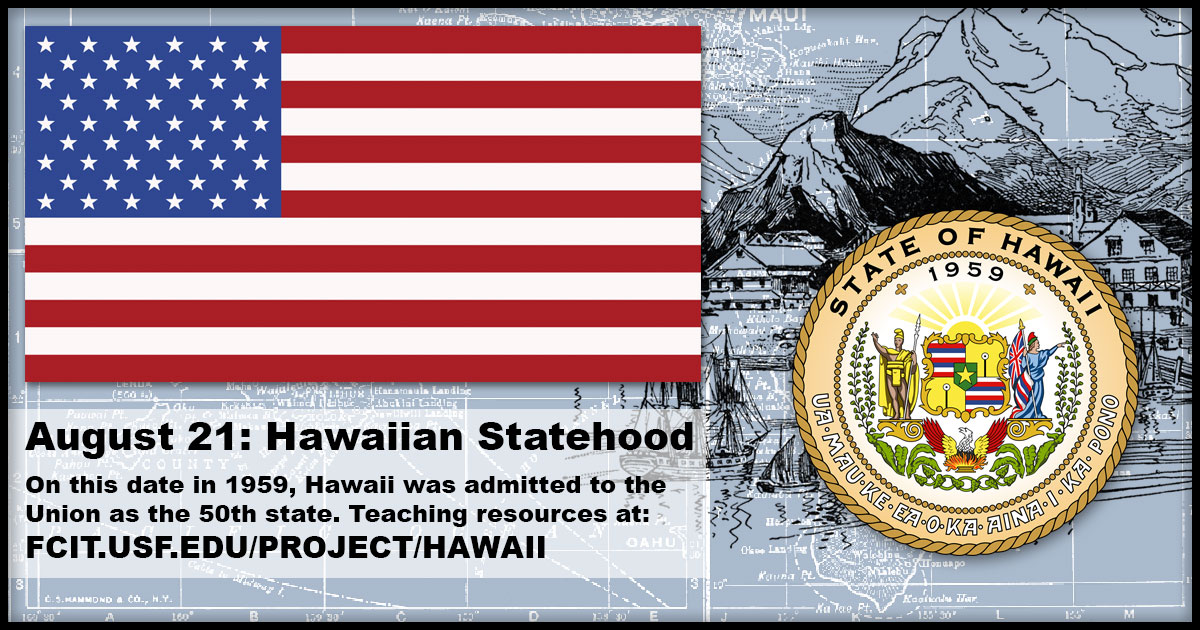
The year 1959 stands as a monumental milestone in the history of the United States, marking the final expansion of the nation’s borders to include the tropical archipelago of Hawaii. On August 21, 1959, the islands were officially admitted as the 50th state, a transition that fundamentally altered the political, cultural, and geographic landscape of the Pacific Ocean region. This achievement was the culmination of decades of advocacy, political maneuvering, and a complex historical journey that saw the islands evolve from an independent kingdom to a strategic territory, and finally, to a full-fledged member of the union.
Understanding the year Hawaii was made a state requires looking beyond the date itself and into the landmarks and historical shifts that defined the process. From the halls of Iolani Palace to the bustling streets of Honolulu, the story of statehood is etched into the very architecture and soil of the islands.
The Long Road to Statehood: A Historical Landmark Journey
The journey toward statehood was neither swift nor simple. It was a process spanning more than sixty years, beginning long before the official proclamation in 1959. To understand why statehood took so long, one must examine the landmarks of power that governed the islands during the late 19th and early 20th centuries.
The Overthrow of the Hawaiian Kingdom
The political history of Hawaii is unique among American states. Unlike many Western territories that were sparsely populated before federal organization, Hawaii was a recognized sovereign nation. The Hawaiian Kingdom, led by Queen Liliuokalani, faced a turning point in 1893. A group of American businessmen and sugar planters, supported by U.S. Marines, orchestrated an overthrow of the monarchy.
The primary site of this transition was Iolani Palace, a landmark that remains the only royal palace on United States soil. Following the overthrow, a provisional government was established, and the islands were declared a republic in 1894. This period marked the first step away from sovereign monarchy toward eventual American integration.
The Annexation of 1898
While the provisional government sought immediate annexation by the United States, the process was delayed by political opposition in Washington DC. However, the outbreak of the Spanish-American War highlighted the strategic importance of Pearl Harbor as a mid-Pacific coaling station.
In 1898, through the Newlands Resolution, Hawaii was officially annexed as a territory. The formal ceremony took place at Iolani Palace, where the Hawaiian flag was lowered and the American flag was raised. For the next six decades, Hawaii would exist in a state of political limbo—governed by federal laws but without the full representation or voting rights afforded to states.
The Territorial Years and the Push for Equality
During the territorial years, Hawaii underwent rapid modernization. Landmarks like Aliiolani Hale, which today serves as the home of the Hawaii State Supreme Court, became centers of American-style judicial administration. Despite the growth of the economy and the construction of iconic landmarks like the Aloha Tower in Honolulu, residents grew increasingly frustrated with their lack of self-governance.
The push for statehood gained momentum after World War II. The bravery of the 442nd Regimental Combat Team, composed primarily of Japanese-Americans from Hawaii, challenged racial prejudices that had previously blocked statehood discussions in the United States Congress.
1959: The Turning Point in Pacific History
The year 1959 was the definitive moment when the aspirations of the islands’ residents finally aligned with the political will of the federal government. After years of “Statehood Now” campaigns and multiple petitions, the path was cleared for Hawaii to join Alaska, which had become the 49th state earlier that same year.
The Statehood Act and the Plebiscite
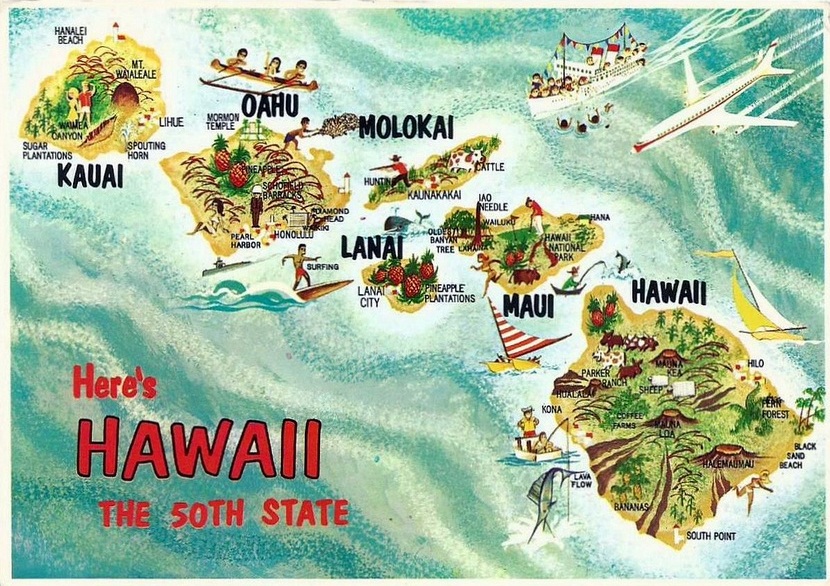
In March 1959, the United States Congress passed the Hawaii Admission Act. However, the process required the consent of the people living on the islands. In June 1959, a plebiscite was held across the islands of Oahu, Maui, Kauai, Molokai, Lanai, and the Big Island.
The results were overwhelming. Approximately 94% of the voters cast their ballots in favor of statehood. This massive mandate demonstrated a clear desire for the protections and rights of the United States Constitution. The news sparked celebrations from Waikiki to Hilo, as residents anticipated a new era of prosperity and political voice.
The Official Proclamation
On August 21, 1959, President Dwight D. Eisenhower signed the official proclamation in Washington DC, making Hawaii the 50th state. The announcement was met with the ringing of bells and sirens across the islands.
This date is still commemorated in the islands as Statehood Day (or Admission Day), typically observed on the third Friday of August. For many, it represented the end of a long period of colonial-style territorial governance and the beginning of a modern, democratic chapter.

Iconic Landmarks Rooted in Statehood History
The story of 1959 is not just found in history books; it is visible in the landmarks that dot the landscape of Honolulu and beyond. These structures serve as physical reminders of the transition from a kingdom to a territory and finally to a state.
Iolani Palace: The Heart of Monarchy and Statehood
As mentioned previously, Iolani Palace is perhaps the most significant historical landmark in Hawaii. Completed in 1882 by King Kalakaua, it was the seat of the monarchy. After the overthrow, it served as the executive building for the Republic, the Territory, and eventually the State.
Visitors to the palace today can see the very rooms where the transition of power occurred. It stands as a symbol of the Native Hawaiian heritage and the complex political shifts that led to the 1959 statehood.
Washington Place
Located just across from the Hawaii State Capitol, Washington Place is another landmark deeply tied to the year Hawaii became a state. This historic mansion was the private residence of Queen Liliuokalani and later became the official residence of the Governor of Hawaii. It represents the bridge between the old guard of the monarchy and the new leadership of the 50th state.
The Hawaii State Capitol: A Modern Landmark
While Iolani Palace represents the past, the Hawaii State Capitol represents the future that began in 1959. Commissioned shortly after statehood and completed in 1969, the building’s architecture is a tribute to the islands’ natural beauty.
The columns are shaped like palm trees, and the two legislative chambers are cone-shaped to represent volcanoes, such as Diamond Head. The open-air design allows the trade winds to blow through, symbolizing a government that is open to the people—a stark contrast to the fortified structures of the past.
The Geographic and Cultural Landmarks of the 50th State
The admission of Hawaii in 1959 did more than just change the flag; it elevated the islands’ unique geographic landmarks to national prominence. These sites became symbols of the American spirit in the Pacific Ocean.
Pearl Harbor and the USS Arizona Memorial
Pearl Harbor is a landmark of international significance. While the attack on December 7, 1941, occurred during the territorial period, the resulting unity and the role of the islands in the war effort were major catalysts for the 1959 statehood.
Today, the USS Arizona Memorial stands as one of the most visited landmarks in the United States. It serves as a somber reminder of the sacrifices made on the path to the peace and stability that eventually allowed statehood to flourish.
Diamond Head (Leahi)
The profile of Diamond Head is perhaps the most recognizable natural landmark in the Pacific Ocean. As Hawaii transitioned into statehood, this volcanic crater became a symbol of the “Paradise of the Pacific.”
The statehood era saw a massive boom in travel and development around Waikiki, with Diamond Head serving as the backdrop for the 50th state’s burgeoning tourism industry. It was designated a National Natural Landmark in 1968, reflecting the new state’s commitment to preserving its unique environment.
Punchbowl Crater: The National Memorial Cemetery of the Pacific
Nestled within the Punchbowl Crater in Honolulu, the National Memorial Cemetery of the Pacific is a landmark that honors those who served in the United States Armed Forces. Established in 1949, just a decade before statehood, it became a focal point for national mourning and pride. The cemetery’s importance grew as Hawaii took its place as a full state, ensuring that the contributions of Pacific islanders were recognized on a national scale.
Conclusion
The question of what year Hawaii was made a state is answered by the date August 21, 1959, but the story is far richer than a single point in time. It is a narrative of evolution, from the sovereign Hawaiian Kingdom to the strategic Pearl Harbor naval base, and finally to the vibrant 50th state of the United States.
Today, landmarks like Iolani Palace, the Hawaii State Capitol, and Diamond Head stand as testaments to this journey. They remind residents and visitors alike that Hawaii is a place where history, culture, and nature converge to create a unique American identity in the heart of the Pacific Ocean. As the 50th state, Hawaii continues to be a landmark of diversity and beauty, bridging the gap between the traditions of Polynesia and the democratic ideals of the United States.
LifeOutOfTheBox is a participant in the Amazon Services LLC Associates Program, an affiliate advertising program designed to provide a means for sites to earn advertising fees by advertising and linking to Amazon.com. Amazon, the Amazon logo, AmazonSupply, and the AmazonSupply logo are trademarks of Amazon.com, Inc. or its affiliates. As an Amazon Associate we earn affiliate commissions from qualifying purchases.