
The story of how Hawaii became a part of the United States is a complex narrative of international diplomacy, cultural shift, and landmark legislation. On August 21, 1959, Hawaii was officially admitted as the 50th state of the Union. While the date itself marks a definitive moment in history, the journey toward statehood spanned over a century, involving the transformation of an independent kingdom into a strategic American territory and, finally, a full member of the republic.
To understand the historical weight of this transition, one must look beyond the tropical landscapes to the architectural and historical landmarks that bore witness to these changes. From the throne room of monarchs to the naval harbors that shaped global conflict, Hawaii’s history is etched into its physical geography and its most famous sites.
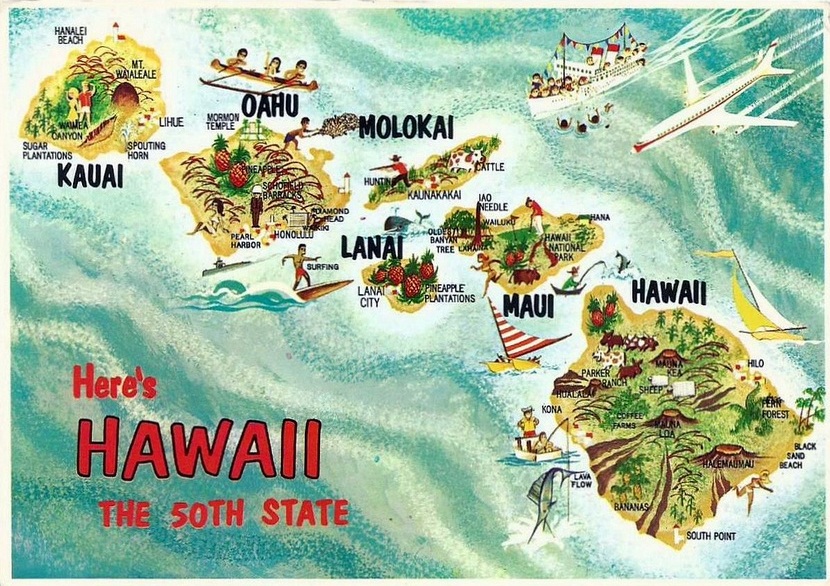
The Path to Statehood: From Kingdom to Republic
The journey of Hawaii into the United States began long before 1959. Throughout the 19th century, the Hawaiian Kingdom was a recognized sovereign nation with diplomatic ties to Great Britain, France, and the United States. However, the rising influence of American sugar plantation owners and missionary descendants began to shift the political landscape of the islands.
The Overthrow of Queen Liliuokalani
The most pivotal moment in the lead-up to annexation occurred in 1893. Queen Liliuokalani, the last reigning monarch of Hawaii, sought to implement a new constitution that would restore power to the monarchy and the native Hawaiian people. In response, a group of businessmen, backed by United States Marines, staged a coup. This led to the establishment of a provisional government and later the Republic of Hawaii.
The Newlands Resolution and Annexation
Following the Spanish-American War, the strategic importance of Hawaii as a mid-Pacific refueling station became undeniable to the United States government. In 1898, President William McKinley signed the Newlands Resolution, officially annexing the islands. This action bypassed the traditional treaty process, which would have required a two-thirds vote in the Senate, reflecting the controversial nature of the acquisition at the time.
The Territorial Years
For over 60 years, Hawaii remained a territory. During this period, the islands underwent massive economic growth driven by the “Big Five” sugar corporations. The social fabric of Honolulu and other major towns changed as laborers from Japan, China, the Philippines, and Portugal arrived to work on the plantations, creating the multicultural society that defines Hawaii today.
Iconic Landmarks of the Monarchy and Annexation
The transition from a kingdom to a state is best preserved in the architecture of Honolulu. These landmarks serve as physical reminders of the sovereignty that once existed and the political shifts that followed.
Iolani Palace
Located in downtown Honolulu, Iolani Palace is perhaps the most significant historical landmark in the islands. Completed in 1882 by King Kalakaua, it was the only official royal palace on American soil. The palace was equipped with modern amenities that predated even the White House, including electricity and telephones. It was here that Queen Liliuokalani was held under house arrest following the overthrow, making it a powerful symbol of Hawaiian national identity.
Ali’iolani Hale
Directly across from the palace stands Ali’iolani Hale. Originally designed as a palace, it was repurposed to serve as the administrative center of the kingdom. Today, it houses the Hawaii State Supreme Court. Outside the building stands the iconic gold-leaf statue of King Kamehameha I, the monarch who first unified the islands. This site was where the proclamation of the provisional government was read in 1893, effectively ending the monarchy’s rule.
Washington Place
This historic mansion in Honolulu was the private residence of Queen Liliuokalani and later became the official residence of the Governor of Hawaii. Washington Place bridges the gap between the royal era and the statehood era, representing the continuity of leadership and the integration of Hawaiian history into the American political framework.
Landmarks of World War II and the Final Push for Statehood
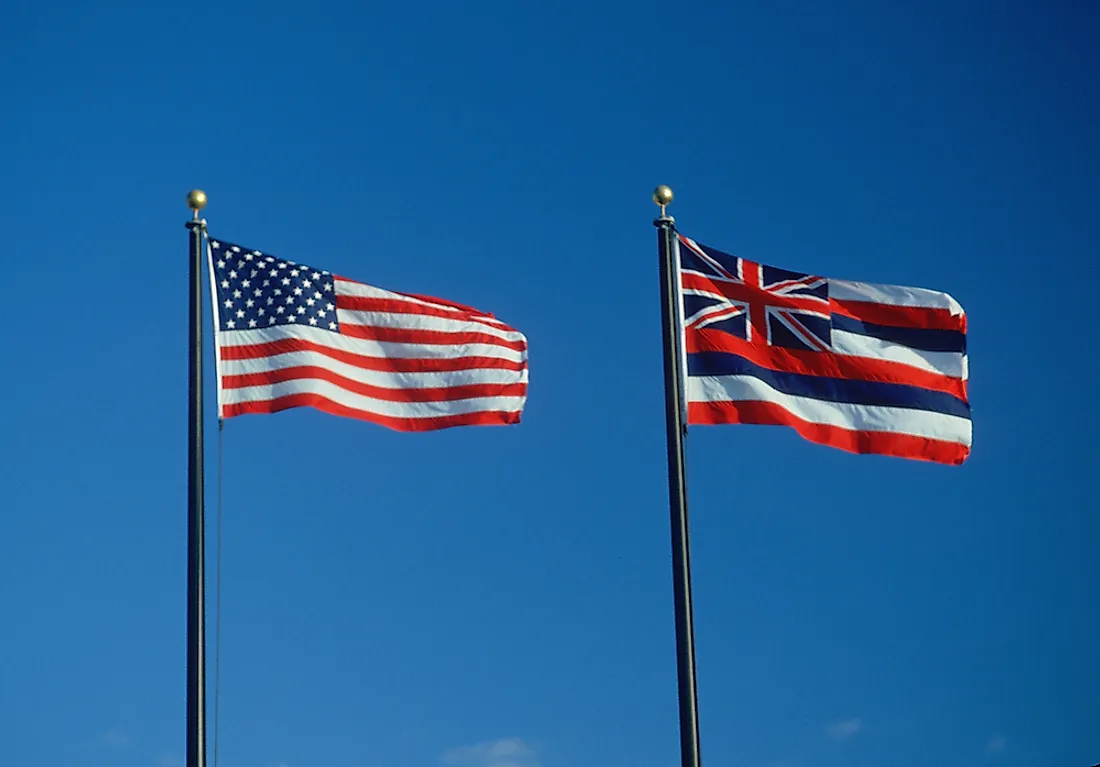
The 20th century brought challenges that would eventually solidify Hawaii’s place within the United States. The events of World War II, in particular, proved that the islands were an integral part of the nation’s defense and identity.
Pearl Harbor and the USS Arizona Memorial
The attack on Pearl Harbor on December 7, 1941, changed the course of history. As a landmark, the USS Arizona Memorial stands as a somber tribute to those who lost their lives. The events at Pearl Harbor accelerated the integration of Hawaii into the American consciousness. Residents of the territory, particularly those of Japanese descent who served in the 442nd Regimental Combat Team, demonstrated a level of patriotism that dismantled many of the arguments against statehood.
Punchbowl Crater
The National Memorial Cemetery of the Pacific, located within the Punchbowl Crater, is another vital landmark. It serves as the final resting place for thousands of service members. The crater itself is an extinct volcanic tuff cone, offering a panoramic view of Oahu. The site symbolizes the sacrifice made by Hawaiians and Americans alike, further cementing the bond between the islands and the mainland.
The Hawaii State Capitol
While built shortly after statehood was achieved, the Hawaii State Capitol is a landmark of the modern era. Its architecture is deeply symbolic; the columns represent palm trees, and the two legislative chambers are shaped like volcanoes. The open-air design allows the elements to enter, symbolizing a government that is open to the people. It stands as a testament to the new era of self-governance that began in 1959.
Cultural and Natural Landmarks Defining the 50th State
The history of Hawaii joining the United States is also tied to its natural landmarks, which have long been celebrated for their beauty and geological significance. These sites were often the subject of early tourism and scientific study, bringing international attention to the islands.
Diamond Head State Monument
Known to Hawaiians as Leahi, Diamond Head State Monument is perhaps the most recognizable natural landmark in the world. Used by the United States military as a lookout point in the early 20th century, its iconic profile dominates the Waikiki skyline. The preservation of this site as a monument reflects the state’s commitment to protecting its natural heritage as part of its historical identity.
Hawaii Volcanoes National Park
Located on the Big Island, Hawaii Volcanoes National Park was established in 1916, even before Hawaii became a state. Home to Kilauea and Mauna Loa, the park is a landmark of ongoing creation. For the Native Hawaiian people, these lands are sacred, housing the deity Pele. The dual status of this land as a National Park and a sacred site highlights the ongoing dialogue between American governance and indigenous culture.
Mauna Kea
Mauna Kea is a landmark of both spiritual and scientific importance. As the highest point in Hawaii, it has become a global center for astronomy. However, it remains a site of historical contention and deep cultural significance for those who trace their ancestry back to the kingdom. The history of statehood is continually negotiated at landmarks like these, where modern American interests meet ancient traditions.

Understanding Hawaii’s Legal and Historic Legacy Today
When Hawaii joined the United States in 1959, it was the result of a popular vote where over 90% of the island’s residents favored statehood. This landslide victory was seen as a move toward full democratic representation, allowing residents to vote in presidential elections and send representatives to Washington DC.
However, the history of how Hawaii became the 50th state is still a subject of active discussion. In 1993, the United States Congress passed the “Apology Resolution,” signed by President Bill Clinton. This document acknowledged the illegal nature of the 1893 overthrow and the deprivation of the rights of Native Hawaiians to self-determination.
Today, visiting the landmarks of Hawaii offers a multi-layered experience. In Lahaina on the island of Maui, or in the quiet valleys of Kauai, one can find the remnants of a history that is at once American and uniquely Hawaiian. The date of August 21, 1959, is not just a calendar entry; it is the culmination of a century of struggle, change, and the merging of two very different political worlds.
The landmarks of Hawaii stand as silent narrators of this journey. Whether it is the grand halls of Iolani Palace or the rugged beauty of the Na Pali Coast, these sites provide the context for why Hawaii remains one of the most unique and historically significant states in the union. Understanding the history of its statehood allows for a deeper appreciation of the islands, recognizing that their beauty is matched only by the depth of their story.
LifeOutOfTheBox is a participant in the Amazon Services LLC Associates Program, an affiliate advertising program designed to provide a means for sites to earn advertising fees by advertising and linking to Amazon.com. Amazon, the Amazon logo, AmazonSupply, and the AmazonSupply logo are trademarks of Amazon.com, Inc. or its affiliates. As an Amazon Associate we earn affiliate commissions from qualifying purchases.