
Entering the world of hospitality development is a monumental undertaking that blends architectural vision with complex financial strategy. For investors, developers, and hospitality enthusiasts, the question of “how much does it cost to build a hotel?” is rarely met with a single number. Instead, the answer is a variable equation influenced by geography, brand positioning, and the ever-evolving expectations of the modern traveler. From a boutique stay in Paris to a sprawling resort in Dubai, the capital required to bring a structure from blueprint to reality is significant and multifaceted.
In the current economic climate, particularly within the United States and major global hubs, construction costs have seen a shift due to supply chain fluctuations, labor shortages, and an increased focus on sustainable building practices. Understanding these costs is essential for anyone looking to make their mark in the world of luxury Hotels or functional midscale accommodations.
Breaking Down the Primary Construction Costs
The financial architecture of a hotel project is typically divided into several key categories. These are broadly classified as hard costs, soft costs, land acquisition, and FF&E (Furniture, Fixtures, and Equipment).
Land Acquisition and Site Selection
The first and often most volatile expense is the land itself. In high-demand urban centers like New York City or London, the cost of the dirt can represent a massive percentage of the total budget. Developers must weigh the “highest and best use” of a site, often competing with residential developers for the same prime real estate. A central location near major landmarks or business districts ensures higher occupancy rates but requires a much higher upfront investment. Conversely, developing a resort in a remote area of Costa Rica might offer lower land costs but higher infrastructure expenses to bring utilities and roads to the site.
Hard Costs vs. Soft Costs
“Hard costs” refer to the physical construction of the building. This includes the foundation, structure, roofing, plumbing, electrical systems, and landscaping. As of recent years, the price of raw materials like steel and lumber has seen significant volatility, directly impacting the bottom line of projects in cities like Chicago or Los Angeles.
“Soft costs,” on the other hand, cover the intangible but necessary expenses. These include architectural fees, engineering services, legal permits, insurance, and taxes. In highly regulated markets like California or France, the permitting process alone can take years, adding substantial interest carrying costs to the project before a single brick is laid.
Furniture, Fixtures, and Equipment (FF&E)
For a hotel to be operational, it must be furnished. FF&E encompasses everything from the beds and desks to the kitchen equipment and lobby chandeliers. For a luxury brand like the Ritz-Carlton, the FF&E budget is astronomical, as every item must meet stringent brand standards and convey a sense of opulence. In contrast, an economy brand like Motel 6 focuses on durability and cost-efficiency, significantly lowering the per-room expenditure.
Cost Variations by Hotel Category
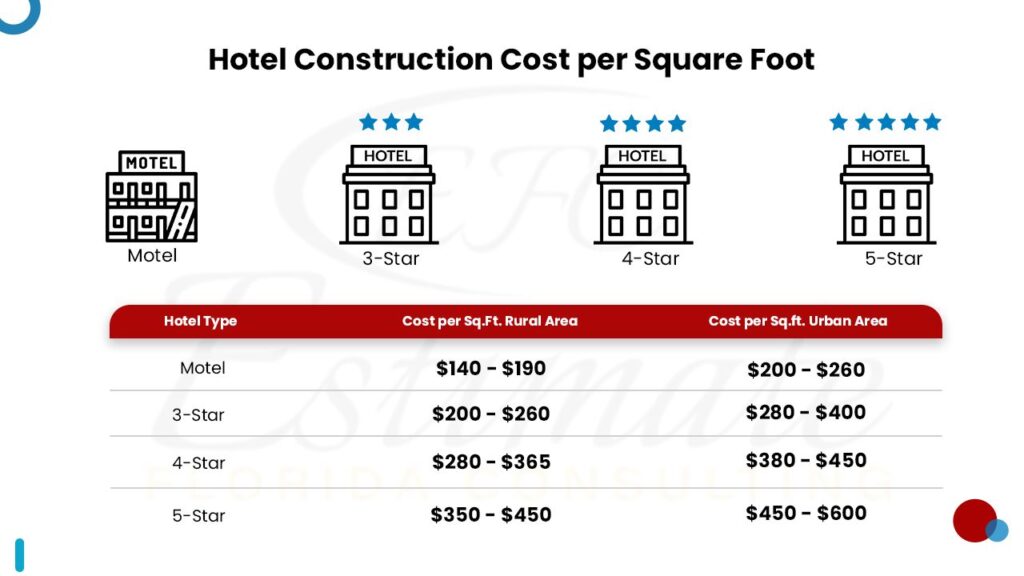
The type of hotel being built is the single greatest determinant of the final price tag. The hospitality industry categorizes properties into tiers, each with its own set of expectations and price points.
Economy and Midscale Properties
Economy and midscale hotels, such as those operated by Hilton or Marriott International under their limited-service banners, are designed for efficiency. These buildings often use modular construction techniques to save time and money. On average, an economy hotel in the United States might cost between $150,000 and $200,000 per “key” (room). These properties typically lack extensive food and beverage outlets or large-scale meeting spaces, focusing instead on providing a clean, comfortable place to sleep for the budget-conscious traveler.
Upscale and Luxury Developments
When moving into the luxury segment, the costs escalate exponentially. A Four Seasons or a Park Hyatt requires premium finishes, oversized guest rooms, and world-class amenities. In global finance hubs like Singapore or Hong Kong, the cost per key for a five-star hotel can easily exceed $800,000, and in some cases, surpass $1.5 million. These projects often involve “starchitects” and bespoke interior designers, ensuring that the property itself becomes a destination. The integration of high-end spas, fine-dining restaurants, and grand ballrooms adds layers of complexity and cost to the mechanical and structural requirements of the building.

Boutique and Lifestyle Hotels
Boutique hotels offer a middle ground that focuses on unique experiences and localized aesthetics. While they may not have the massive footprint of a Las Vegas mega-resort like the Bellagio, their costs can be high due to the custom nature of their design. Rather than using standardized layouts, boutique hotels in places like Austin or Berlin often repurpose historic buildings. While historic renovations can sometimes be more expensive than new builds due to unforeseen structural issues, they offer a character that brand-new builds often lack.
Geographical Impact on Construction Budgets
Where you build is just as important as what you build. Regional economic factors, labor availability, and climate-specific requirements play a massive role in the final tally.
Urban vs. Rural Development
Building in a dense urban environment like Tokyo presents unique logistical challenges. Staging construction materials in limited space, adhering to strict noise ordinances, and navigating complex underground utility networks all drive up costs. In contrast, building a resort in Texas may offer more space and lower labor costs, but developers might face higher expenses related to environmental impact studies or extending infrastructure to a previously undeveloped area.
International Considerations and Labor
Labor costs vary wildly across the globe. In Switzerland or Norway, high wages for skilled tradespeople significantly inflate construction budgets. Conversely, in emerging markets throughout Southeast Asia or parts of Africa, labor may be cheaper, but the cost of importing high-quality materials and specialized technology can offset those savings. Furthermore, developers in places like Dubai, home to the iconic Burj Al Arab, often have to contend with extreme heat, requiring specialized cooling systems and high-performance glass that add to the specialized “hard costs” of the project.
Hidden Costs and Long-term Planning
Beyond the physical structure, several “hidden” costs can catch inexperienced developers off guard. These expenses are vital for the successful launch and long-term viability of the hotel.
Pre-opening and Working Capital
A hotel does not start making money the day it opens. Months before the first guest checks in, the developer must hire and train staff, launch marketing campaigns, and set up reservation systems. This pre-opening budget can range from several hundred thousand to several million dollars for a large-scale resort. Additionally, “working capital” is required to cover operating losses during the initial “ramp-up” period, which can last anywhere from one to three years before the hotel reaches a stabilized occupancy level.
Technology and Sustainability Integration
In the modern era, a hotel’s digital infrastructure is as important as its physical one. High-speed internet, smart room controls, and advanced property management systems are now baseline expectations. Furthermore, there is a growing push for “green” hotels. Achieving LEED certification or incorporating renewable energy sources like solar panels in a Florida resort requires a higher initial investment. However, these sustainable features often lead to lower long-term operating costs and appeal to the growing demographic of eco-conscious travelers.
Contingency Planning
No construction project goes exactly according to plan. Weather delays in Miami, supply chain disruptions in China, or unexpected archaeological finds in Rome can all stall progress. A standard hotel development budget will include a contingency fund of 5% to 10% of the total project cost to cover these unforeseen circumstances. Without this cushion, a project can easily stall, leading to missed opening dates and mounting debt.

Conclusion: The Investment Outlook
Building a hotel is a high-stakes investment that requires a deep understanding of the hospitality market and a disciplined approach to financial management. While the costs are substantial—ranging from a few million for a small roadside inn to billions for a flagship property like Wynn Las Vegas—the potential for return on investment remains strong in a world that prizes travel and connection.
By meticulously analyzing land costs, choosing the right brand tier, and accounting for the nuances of local markets from Mexico to Japan, developers can navigate the complexities of construction. Ultimately, the cost of building a hotel is an investment in an experience, a landmark that, if executed correctly, will serve guests and stakeholders for decades to come.
LifeOutOfTheBox is a participant in the Amazon Services LLC Associates Program, an affiliate advertising program designed to provide a means for sites to earn advertising fees by advertising and linking to Amazon.com. Amazon, the Amazon logo, AmazonSupply, and the AmazonSupply logo are trademarks of Amazon.com, Inc. or its affiliates. As an Amazon Associate we earn affiliate commissions from qualifying purchases.