
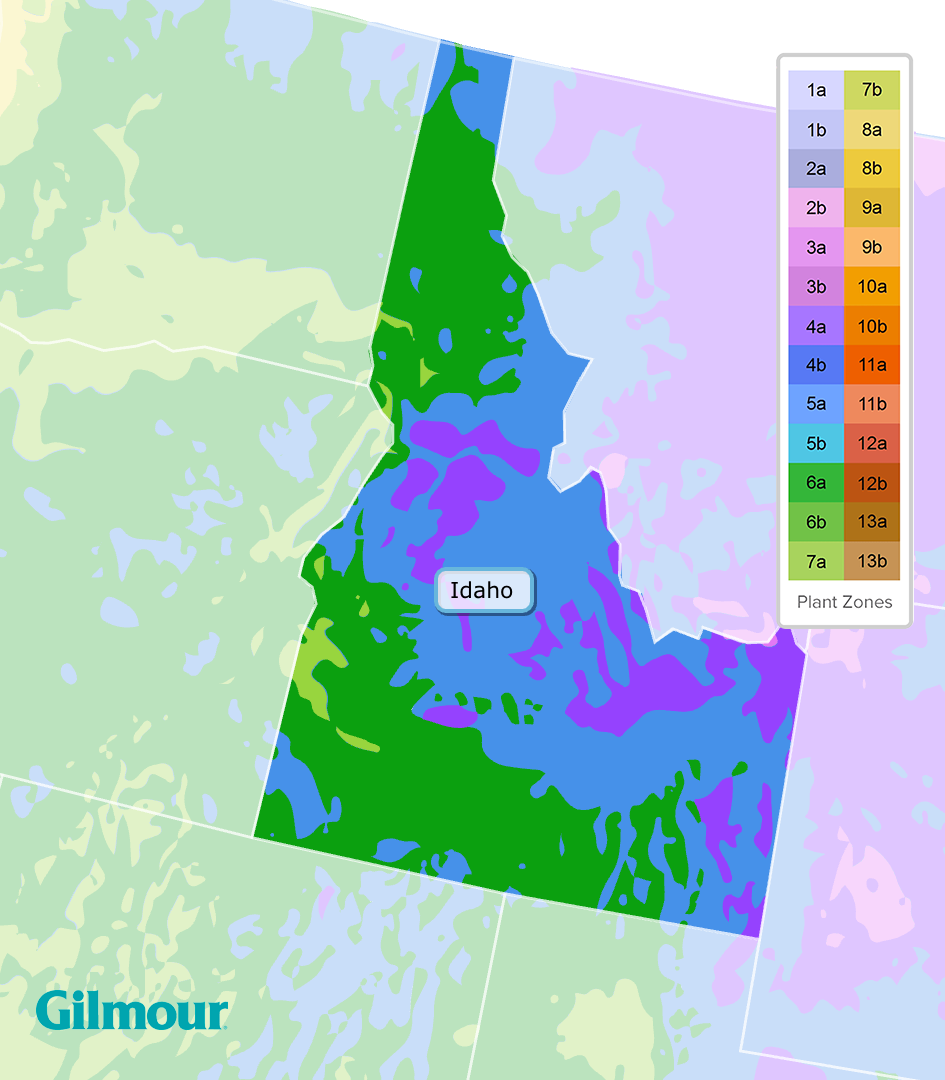
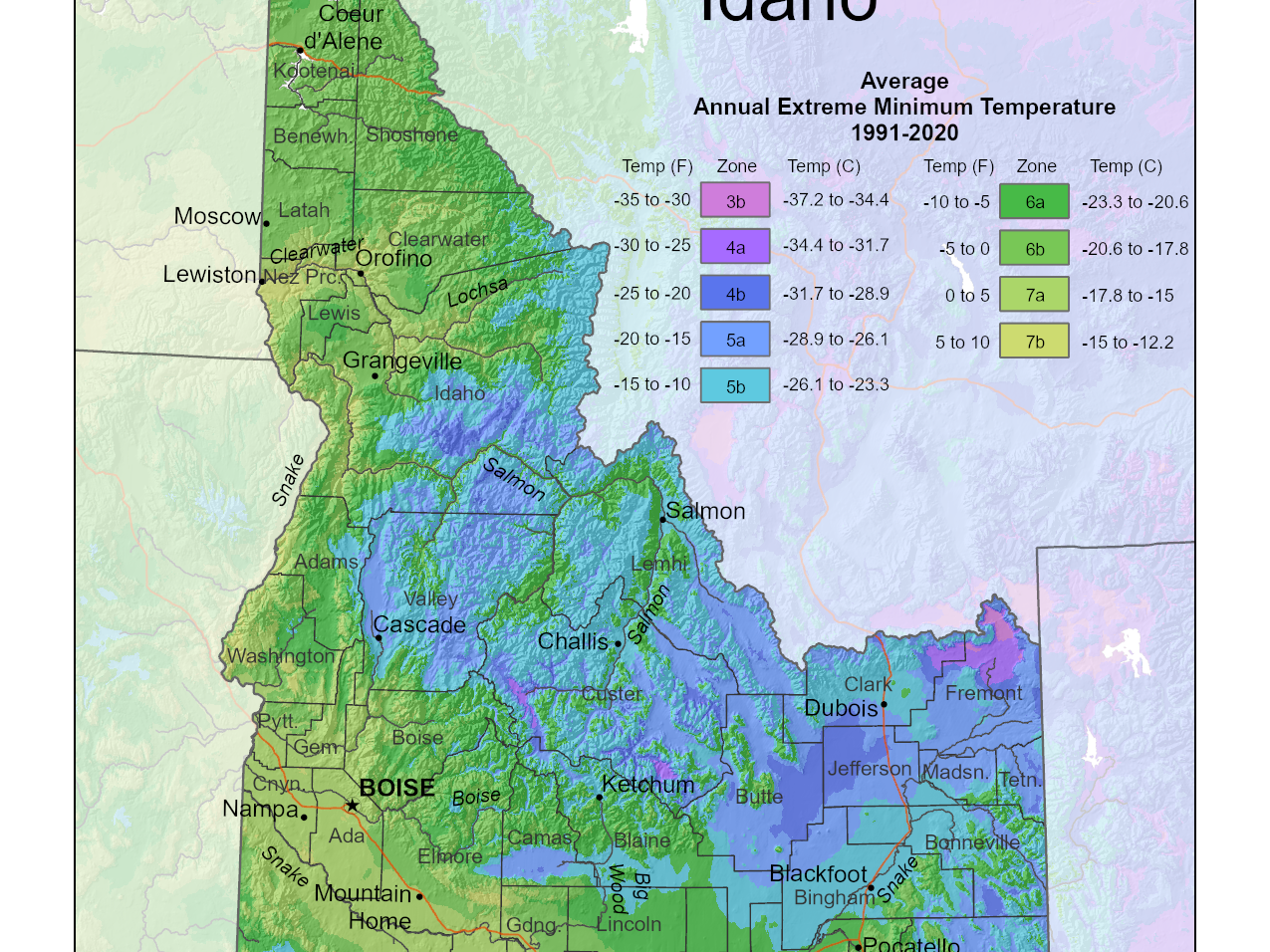
Understanding the environmental heartbeat of a city requires looking beyond its skyline and into its soil. For those exploring the natural wonders of the United States, the capital of Idaho offers a fascinating case study in resilience and adaptation. Boise is frequently referred to as the City of Trees, a nickname that reflects its lush canopy amidst a semi-arid landscape. To understand how this greenery thrives, one must look at the USDA Plant Hardiness Zone Map. As of the most recent updates, Boise primarily falls into Zone 7a and 7b, a shift that speaks volumes about the changing climate and the unique geography of the Treasure Valley.

The Ecological Landscape of the Treasure Valley
The geography of Southwestern Idaho is defined by its position within the Snake River Plain. This region is a high-desert environment, characterized by hot, dry summers and cold, snowy winters. The planting zone designation—Zone 7—indicates that the area experiences minimum winter temperatures between 0°F and 10°F. This specific classification is a cornerstone for understanding the natural landmarks and biodiversity that define the region.
The High Desert Climate and the Boise River
The lifeblood of the city’s natural landscape is the Boise River. While the surrounding hills are dominated by sagebrush and bunchgrass, the river corridor creates a riparian oasis that allows for a much more diverse range of flora than the “high desert” label might suggest. The Boise River acts as a thermal regulator for the valley, slightly buffering the extreme temperatures and providing the hydration necessary for the towering cottonwoods and willows that line its banks.
This transition from the arid Owyhee Mountains to the fertile valley floor is what makes the Treasure Valley a unique ecological landmark. Visitors traveling through Idaho often remark on the sudden shift in color as they descend into the city, where the brown hues of the steppe give way to the vibrant greens of an urban forest supported by an intricate irrigation system dating back to the late 19th century.
Hardiness Zones and the Intermountain West
The Intermountain West presents a challenging environment for any living thing. In Boise, the planting zone is not just a number for gardeners; it is a testament to the city’s history of land management. Historically, this area was classified as Zone 6, but a warming trend over the last several decades has pushed it into Zone 7. This shift allows for a wider variety of ornamental plants and fruit trees to survive the winters, further enhancing the city’s reputation as a horticultural landmark.
However, the “Zone 7” label can be deceptive. Because Boise is located at an elevation of approximately 2,700 feet, it is subject to “temperature inversions” during the winter. This is a meteorological phenomenon where cold air is trapped on the valley floor by a layer of warmer air above. These inversions can create microclimates that challenge even the hardiest of species, making the city’s natural landmarks a site of constant ecological interest.
Natural Landmarks Defined by the Planting Zone
The unique climate of Boise has birthed several landmarks that serve as living museums of the region’s plant life. These sites provide a visual representation of what Zone 7 looks like in the shadow of the Rocky Mountains.
The Idaho Botanical Garden
Located on the grounds of what was once the Old Idaho Penitentiary, the Idaho Botanical Garden is perhaps the most significant landmark for anyone interested in the local flora. This garden serves as a living laboratory for the plants that thrive in the Treasure Valley. It features various themed areas, including a Mediterranean Garden and a Lewis and Clark Native Plant Garden.
The Idaho Botanical Garden showcases how the Zone 7 climate allows for a mixture of drought-tolerant succulents and lush, flowering perennials. By wandering through its paths, visitors can see how the architecture of the garden utilizes the natural slope of the foothills to protect sensitive species from the harsh winds that occasionally sweep across the Snake River Plain.
Julia Davis Park and the Boise River Greenbelt
As the oldest park in the city, Julia Davis Park is a historical and natural landmark that serves as the heart of the City of Trees. Within its boundaries, you will find the Rose Garden, which has been a staple of the community since the mid-20th century. The roses here thrive in the long, sun-drenched days of an Idaho summer, benefiting from the Zone 7 climate that provides a long enough growing season for multiple blooms.
Connecting Julia Davis Park to the rest of the city is the Boise River Greenbelt. This 25-mile long park is a landmark in its own right, offering a continuous corridor of nature through the urban center. The Boise River Greenbelt is home to massive Black Cottonwood trees and serves as a critical habitat for bald eagles and blue herons. It is the ultimate expression of how the local planting zone and water management come together to create a world-class natural attraction.
Camel’s Back Park and Hull’s Gulch Reserve
For a look at the “wilder” side of Boise, one must visit Camel’s Back Park. This landmark is the gateway to the Boise Foothills, where the planting zone shifts slightly as elevation increases. At the base of the hill, you find the managed turf and shade trees typical of Zone 7 urban planning. However, as you climb the sandy trails of Hull’s Gulch Reserve, you enter the native shrub-steppe ecosystem.
This area is a landmark of geological and botanical history. The plants here—bitterbrush, rabbitbrush, and sage—are the true masters of the High Desert. They are adapted to survive not just the cold of Zone 7 winters, but the intense evaporation of the summer months. Camel’s Back Park offers a panoramic view of the city, allowing visitors to see the distinct line where the irrigated “forest” ends and the natural desert begins.
The Impact of Climate on Historical and Cultural Landmarks
The planting zone doesn’t just dictate what grows; it has historically dictated how the city was built and how its landmarks were preserved. The relationship between the environment and human history is nowhere more evident than in Boise.
The Old Idaho Penitentiary and Arid Landscaping
The Old Idaho Penitentiary is a landmark of grit and stone. Built in 1872 using locally quarried sandstone, the site is a stark reminder of the harsh conditions early settlers faced in Idaho. The grounds of the prison were originally devoid of the lush greenery seen today. The inmates themselves were responsible for much of the early landscaping, planting gardens to provide food and a sense of order.
Today, the juxtaposition of the heavy stone architecture against the delicate blooms of the Idaho Botanical Garden next door highlights the evolution of the city. The ability to maintain such gardens in a Zone 7 environment is a relatively modern luxury, made possible by the Boise Project, a massive federal undertaking in the early 1900s that created dams and reservoirs like Lucky Peak State Park to manage the region’s water.
Urban Forestry and the City of Trees Legacy
The very identity of Boise as a landmark city is tied to its urban forest. In the late 1800s, the area was mostly a treeless plain. Early residents, many of whom came from the eastern United States or Europe, were desperate for shade. They planted thousands of non-native trees, including maples, oaks, and chestnuts, which were able to survive thanks to the temperate Zone 7 conditions and the availability of river water.
This legacy is preserved in landmarks like Ann Morrison Park, a massive urban green space that features a diverse collection of tree species. These trees are not just for aesthetics; they are a critical part of the city’s infrastructure, reducing the “urban heat island” effect that can plague high-desert cities. The survival of these giants through a century of Idaho winters is a testament to the stability of the local climate zone.
Seasonal Resilience: Experiencing Nature Across the Calendar
Visitors to Boise will find that the natural landmarks change dramatically with the seasons, each phase highlighting a different aspect of the Zone 7 climate.
Spring Blooms and Summer Heat
Spring in the Treasure Valley is a celebrated event. After the dormancy of winter, the city explodes into color. The foothills turn a brilliant green for a few short weeks, and the Idaho Botanical Garden becomes a destination for those seeking to see the first tulips and fruit blossoms. This is the period when the benefits of being in Zone 7 are most apparent, as the risk of a killing frost diminishes and the growing season begins in earnest.
As summer takes hold, the focus shifts to the Boise River. The heat can be intense, often exceeding 100°F. During this time, the “Landmarks of Nature” provide much-needed refuge. The Boise River Greenbelt becomes a cool corridor, and the high-altitude escapes like Bogus Basin offer a respite from the valley’s heat. Bogus Basin, located just 16 miles from downtown, sits in a completely different climate zone due to its elevation, demonstrating the vertical diversity of the Idaho landscape.
Winter Resilience in the Rocky Mountain Foothills
Winter is the true test of a planting zone. While Zone 7 is relatively mild compared to the Panhandle of Idaho, it still brings snow and ice. The natural landmarks take on a skeletal beauty during this time. The Black Cottonwood trees along the river stand as stark silhouettes against the grey winter skies, and the foothills are often dusted with snow.
For those interested in the history of the region, winter is a great time to visit the Idaho State Capitol. The grounds of the capitol are meticulously landscaped to represent the various regions of the state. Even in the dead of winter, the evergreen trees—symbolic of the northern forests—provide a splash of color against the white marble of the building. The ability of the city to maintain its “green” reputation throughout the winter is a point of pride for residents and a defining characteristic of Boise as a destination.
Conclusion
The question “What planting zone is Boise, Idaho?” reveals much more than a simple numerical value. It uncovers the story of a city that has fought against its high-desert origins to become a lush, green landmark in the American West. From the historical walls of the Old Idaho Penitentiary to the thriving ecosystems along the Boise River Greenbelt, the Zone 7a/7b climate is the invisible hand that shapes the beauty of this region. Whether you are a nature lover, a history buff, or a casual traveler, understanding the ecological foundations of Boise provides a deeper appreciation for the unique landmarks that make the City of Trees a jewel of the Rocky Mountains.
LifeOutOfTheBox is a participant in the Amazon Services LLC Associates Program, an affiliate advertising program designed to provide a means for sites to earn advertising fees by advertising and linking to Amazon.com. Amazon, the Amazon logo, AmazonSupply, and the AmazonSupply logo are trademarks of Amazon.com, Inc. or its affiliates. As an Amazon Associate we earn affiliate commissions from qualifying purchases.