
The skyline of Las Vegas has long been defined by its neon lights, towering resorts, and the shimmering heat of the Mojave Desert. However, the architectural landscape of Nevada was permanently altered with the arrival of The Sphere. This massive structure is not just another entertainment venue; it is a feat of engineering that pushes the boundaries of what is possible in modern architecture. As a landmark, it stands as a testament to human ingenuity and the desire to create immersive, larger-than-life experiences. To understand the true scale of this project, one must look beyond the flashing lights and delve into the specific dimensions and technical achievements that make it the largest spherical structure on the planet.
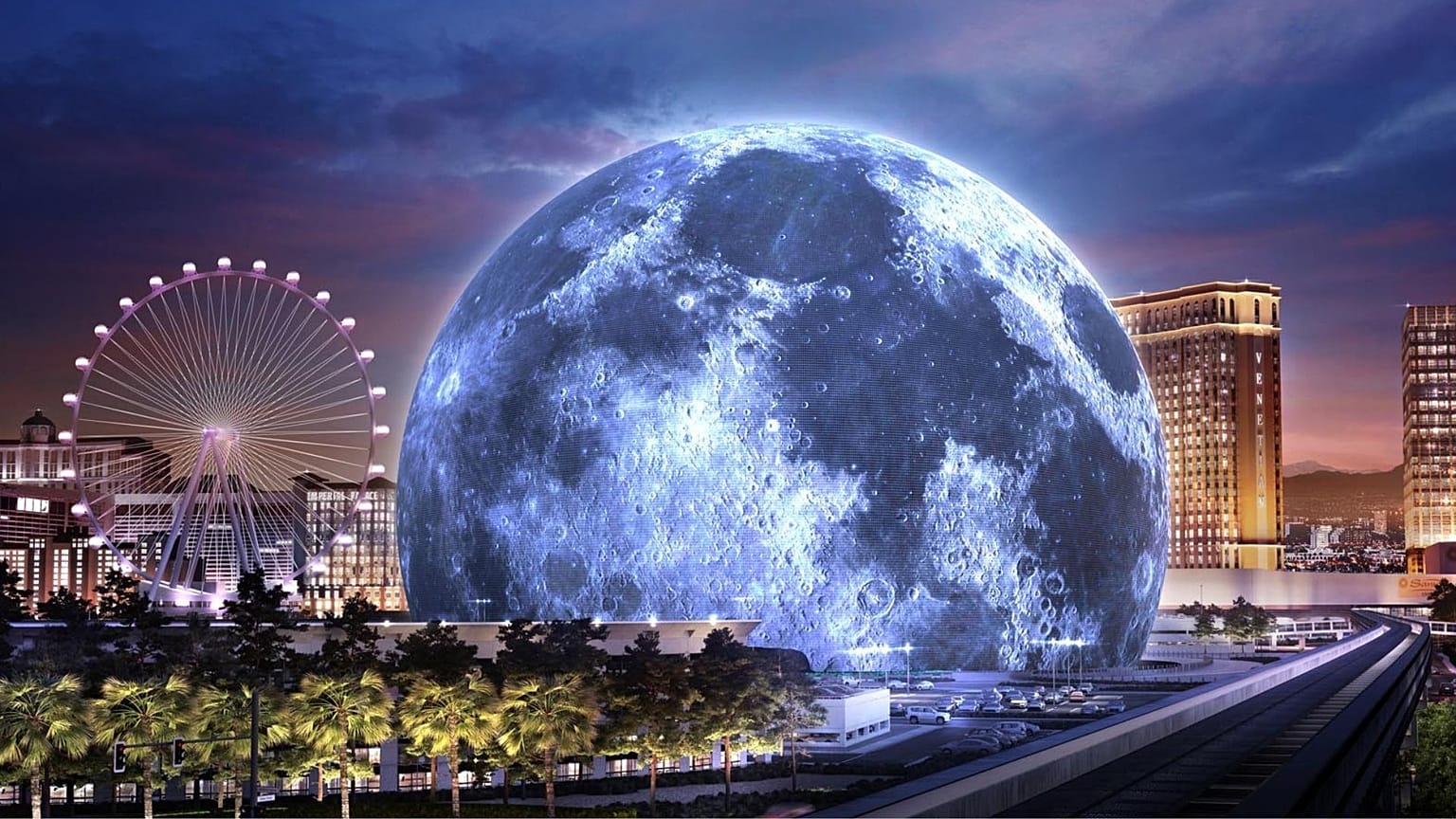
The Massive Physical Dimensions of The Sphere
When discussing the sheer size of The Sphere, the numbers are staggering. Designed by the global architectural firm Populous, the structure was built to be a dominant presence on the Las Vegas Strip. It is not merely a dome or a curved building; it is a mathematically precise sphere that required groundbreaking construction techniques to realize.
Height and Width: A Record-Breaking Profile
The structure stands at a height of 366 feet (112 meters) and spans a width of 516 feet (157 meters) at its widest point. To put this in perspective, if one were to place the Statue of Liberty inside the venue, it would fit with room to spare. The footprint of the building covers several acres, situated just east of The Venetian Resort.
The verticality of the building is particularly impressive when viewed from the surrounding Clark County area. Unlike traditional skyscrapers in Las Vegas, which use height to maximize floor space, The Sphere uses its volume to create an internal cavity capable of housing the most advanced cinematic and acoustic technology in the world. The exterior surface area is approximately 580,000 square feet, all of which is utilized as a digital canvas.
The Engineering of the Geodesic Skeleton
Supporting such a massive structure required an unprecedented amount of steel and concrete. The primary structure consists of a concrete core surrounded by a massive steel frame. The steel exoskeleton, which supports the exterior LED display, is composed of thousands of intersecting beams that form a perfect geodesic pattern.
During the construction phase, Madison Square Garden Entertainment utilized one of the largest cranes in the world—brought in from Belgium—to lift the heaviest components into place. The compression ring at the top of the structure alone weighs hundreds of tons. This structural integrity is necessary not only to support the weight of the building itself but also to withstand the high winds and extreme temperature fluctuations common in Nevada.
The Exosphere: The World’s Largest LED Screen
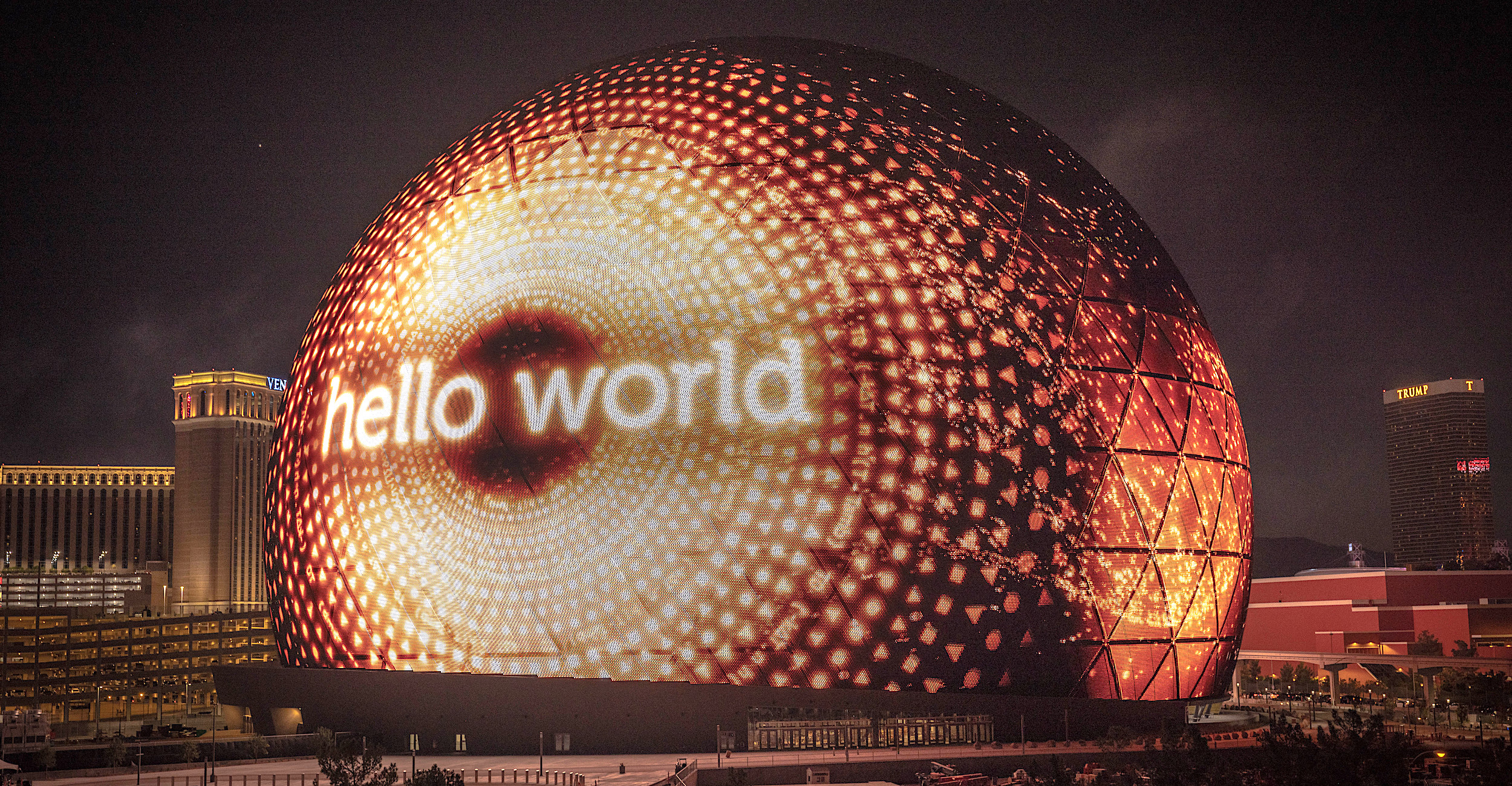
The most visible aspect of The Sphere is its exterior, known as the Exosphere. This is where the landmark truly sets itself apart from any other building in the United States or the world. The Exosphere is a fully programmable LED display that covers the entire outer shell of the building.
Technical Specifications of the Exterior Display
The Exosphere consists of approximately 1.2 million LED “pucks,” each about the size of a hockey puck. Each puck contains 48 individual LED diodes, allowing for a palette of 256 million colors. This creates a 580,000-square-foot canvas that can project everything from the surface of Mars to a giant blinking eyeball or a realistic rendering of the Moon.
The resolution of the exterior is such that it can be seen clearly from miles away, including from flights arriving at Harry Reid International Airport. The brightness and clarity of the display have made it an instant landmark, visible even against the bright lights of the Las Vegas Strip.
Visual Impact on the Las Vegas Landscape
As a landmark, The Sphere has redefined the visual identity of Las Vegas. It serves as a digital lighthouse, often displaying artistic content that reflects local events or global celebrations. During the Formula 1 Las Vegas Grand Prix, the Exosphere was used to display real-time data and immersive graphics, proving its utility as both an architectural marvel and a functional communication tool. Its presence has turned a previously underutilized area of land behind The Venetian Resort and the Sands Expo into a primary destination for sightseers and photographers.

Inside the Sphere: Volume and Immersive Scale
While the exterior is what catches the eye from the street, the interior of The Sphere is where the true scale of the landmark is realized. The design focuses on an “immersive” experience, which requires a massive internal volume to host the proprietary technology that defines the venue.
Seating Capacity and Internal Space
The interior has a seating capacity of approximately 17,500 people, with additional standing room that can bring the total capacity to 20,000. However, the seat count only tells part of the story. The internal volume of the building is nearly 875,000 square feet. This space is dominated by a 160,000-square-foot internal LED screen that wraps over and around the audience.
This interior screen has a resolution of 16K by 16K, making it the highest-resolution LED screen in the world. The sheer size of this screen allows for a field of view that completely envelops the audience, removing the traditional “frame” of a cinema or concert stage. This sense of scale is further enhanced by 10,000 “haptic” seats that vibrate in sync with the on-screen action, and a spatial audio system developed by Holoplot, which uses beamforming technology to deliver crystal-clear sound to every individual seat.
Comparing Internal Volume to Global Icons
To understand how big The Sphere is, it is helpful to compare it to other famous landmarks. While it is not as tall as the Eiffel Tower in Paris, its total volume is significantly greater than many traditional arenas. For instance, it is much larger in volume than the Colosseum in Rome.
The internal height of the ceiling is so vast that it creates its own microclimate. The air conditioning and ventilation systems required to maintain a comfortable temperature in such a large, open space are among the most complex ever designed for a public building. This focus on volume over floor count is what classifies The Sphere as a landmark of modern architectural philosophy, where the space within is just as important as the structure itself.
Comparative Scale: The Sphere vs. The World
In the world of architecture and landmarks, scale is often relative. The Sphere occupies a unique niche because it is the largest of its kind, but how does it stack up against other icons of the United States and beyond?
A Comparison with Las Vegas Landmarks
Within Las Vegas, The Sphere holds its own against massive resorts. While it is shorter than the Strat Tower, it is much wider and more voluminous. It occupies a similar footprint to the Allegiant Stadium, the home of the Las Vegas Raiders, but its spherical shape gives it a completely different visual presence.
When compared to the Luxor Las Vegas pyramid, The Sphere represents a shift in architectural trends—from the literal recreations of the 1990s (like the Eiffel Tower at Paris Las Vegas) to the abstract, high-tech futurism of the 2020s. It stands as a neighbor to the High Roller observation wheel, and together they create a futuristic silhouette against the desert sunset.
Global Standing and Future Influence
On a global scale, The Sphere is a one-of-a-kind structure, though there have been discussions about building similar versions in cities like London or within the United Arab Emirates. Its architectural significance lies in its use of “geometry as branding.” Much like the Gherkin in London or the Burj Al Arab in Dubai, The Sphere is instantly recognizable from its shape alone.
The sheer size of the project also reflects a trend in “entertainment architecture,” where the building is not just a container for an event but is the event itself. By combining the massive scale of a stadium with the precision of a laboratory, The Sphere has set a new benchmark for what a city landmark can be in the 21st century.
As a final note on its size, the construction of The Sphere required over 600,000 cubic feet of concrete and thousands of tons of steel. It is a permanent fixture of North America, a landmark that can be seen from space, and a massive reminder that in Las Vegas, bigger is almost always better. Whether viewed from the ground on the Las Vegas Strip or from the air, its dimensions are a clear signal that the future of landmarks has arrived.
LifeOutOfTheBox is a participant in the Amazon Services LLC Associates Program, an affiliate advertising program designed to provide a means for sites to earn advertising fees by advertising and linking to Amazon.com. Amazon, the Amazon logo, AmazonSupply, and the AmazonSupply logo are trademarks of Amazon.com, Inc. or its affiliates. As an Amazon Associate we earn affiliate commissions from qualifying purchases.