
In the heart of Las Vegas, Nevada, a city already renowned for its architectural audacity and neon-soaked skyline, a new giant has emerged to redefine the structural limits of the United States. This landmark, known simply as The Sphere, is not merely a venue; it is a mathematical marvel and a feat of modern engineering. Standing as the largest spherical structure on the planet, it commands attention from miles away, casting a digital glow that can be seen from space. To understand how tall The Sphere is, one must look beyond simple measurements and delve into the complexities of its design, the precision of its construction, and its place among the most famous landmarks in the world.

The Vertical Grandeur: Measuring the World’s Largest Spherical Structure
When discussing the physical presence of The Sphere, the numbers are as staggering as the visuals. The structure stands at a height of 366 feet (approximately 112 meters) and spans a width of 516 feet (157 meters) at its widest point. While 366 feet might not rival the height of the world’s tallest skyscrapers, the sheer volume of a sphere at this scale creates a massive footprint that occupies approximately 875,000 square feet.
Concrete and Steel: The Engineering Behind the Height
The construction of The Sphere required a revolutionary approach to structural engineering. Designed by Populous, a global architectural firm known for its work on iconic sporting venues, the building utilized a massive steel exoskeleton to support its weight. The foundation alone required the excavation of 110,000 cubic yards of dirt and the placement of thousands of tons of concrete to ensure stability in the desert soil of Las Vegas.
A critical component of its height and structural integrity is the crown of the building. To lift the heavy steel components into place, the construction team utilized the DEMAG CC-8800, which at the time was the fourth-largest crawler crane in the world. This massive machine was essential for placing the 170-ton compression ring at the very top of the structure, which essentially “locks” the sphere into place. This engineering precision allows the building to maintain its perfect spherical shape while supporting the immense weight of the internal and external LED displays.
Comparing Scales: How It Towers Over the Strip
To put the height of The Sphere into perspective, it is helpful to compare it to other landmarks along The Strip. While the Stratosphere Tower remains the tallest observation point in the city, The Sphere occupies a much larger cubic volume. It is roughly two-thirds the height of the Eiffel Tower Experience at Paris Las Vegas and stands taller than many of the surrounding luxury resorts.
When viewed from the High Roller, the massive observation wheel located nearby, the scale of The Sphere becomes even more apparent. It dwarfs the Venetian Resort, which sits adjacent to the venue. The way The Sphere interacts with the horizon demonstrates a shift in Las Vegas architecture, moving away from traditional rectangular towers toward organic, geometric forms that challenge the eye’s perception of space and distance.
A Visual Marvel: The Exosphere and Digital Architecture
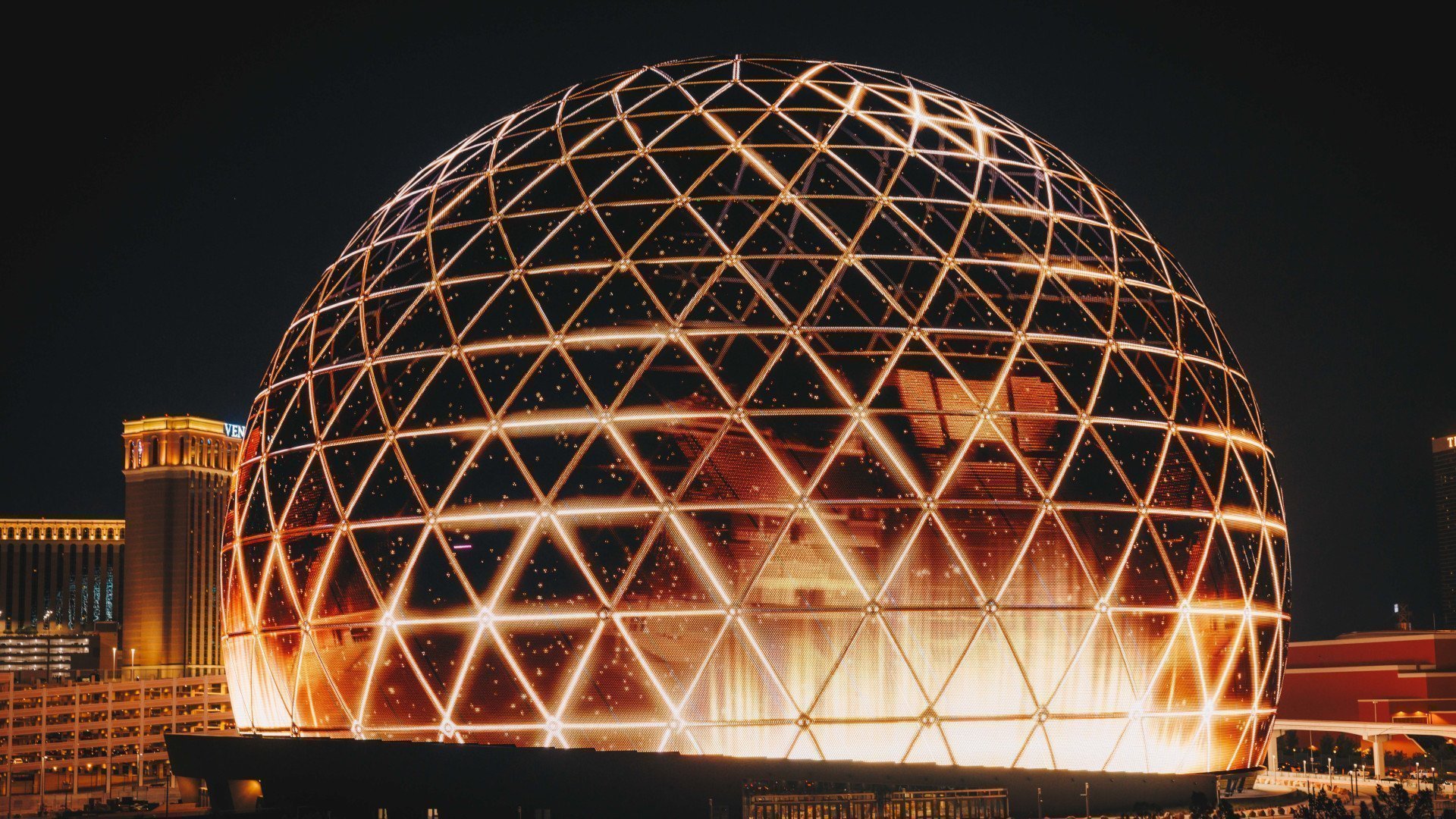
The height of The Sphere is emphasized by its outer shell, known as the Exosphere. This is not a static wall but a living, breathing canvas of light. Covering 580,000 square feet, the Exosphere is the largest LED screen on Earth. This digital skin transforms the 366-foot-tall structure into anything from a realistic moon to a giant blinking eyeball, or even a swirling nebula.
The LED Skin: 1.2 Million Pixels of Light
The Exosphere consists of approximately 1.2 million LED “pucks,” each spaced about eight inches apart. Each puck contains 48 individual LED diodes capable of displaying 256 million different colors. This technology allows the building to change its appearance completely within seconds. Because the screen wraps around the entire upper half of the structure, the height of the building feels more dynamic than a traditional landmark.
From an architectural standpoint, this integration of technology and structure is a landmark achievement. It represents a “media-centric” design where the building’s function as a digital display is as important as its physical height. This has turned The Sphere into a global focal point for Madison Square Garden Entertainment, the company behind the project, showcasing how landmarks can evolve from static stone and steel into interactive digital entities.
Redefining the Skyline of Nevada
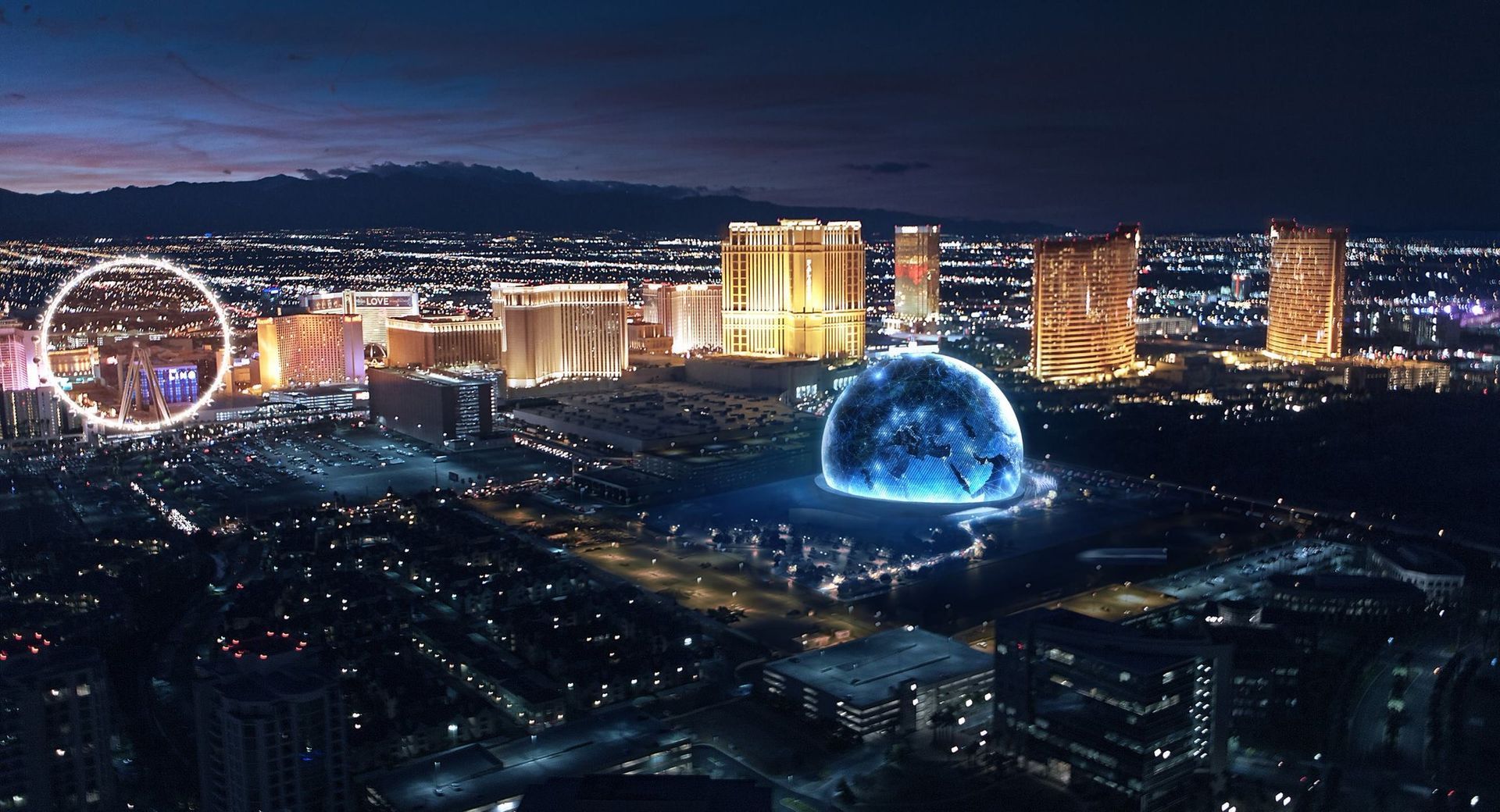
For decades, the skyline of Nevada was defined by the neon signs of Downtown Las Vegas and the massive hotel towers like Wynn Las Vegas and Caesars Palace. The Sphere has fundamentally altered this vista. Because it lacks the sharp corners and vertical lines of a typical building, it creates a unique silhouette against the Spring Mountains.
The impact of its height is felt most strongly at night. The luminosity of the Exosphere is such that it can be seen by pilots flying into Harry Reid International Airport. This presence has made it an instant icon of North America, comparable in its immediate recognizability to the Sydney Opera House or the Guggenheim Museum Bilbao.
Interior Innovation: The Science of Immersive Sound and Sight
While the exterior height of 366 feet is impressive, the interior architecture of The Sphere is where the true scale of the project is realized. Inside, the venue houses a massive theater that utilizes the vertical space to create an unparalleled immersive experience. The interior LED screen is even higher resolution than the exterior, standing at 16K by 16K, creating a visual field that wraps over and around the audience.
The Atrium and the Sphere Experience
Upon entering the landmark, visitors are greeted by a high-ceilinged atrium that sets the tone for the scale of the building. The interior layout is designed to maximize the verticality of the sphere. The seating bowl is steeply raked, ensuring that every one of the 17,600 seats (or 20,000 standing capacity) has a clear view of the stage and the wrap-around screen. This design mimics the natural curve of the human eye’s peripheral vision, making the 366-foot-tall structure feel like an infinite world once you are inside.
Acoustic Engineering in a Round Space
One of the greatest challenges in building a structure of this height and shape was the acoustics. Spherical rooms are notorious for creating “dead spots” and echoes. To solve this, The Sphere utilizes a specialized audio system called Holoplot. This system uses “beamforming” technology to direct sound waves with laser-like precision to specific seats.
This means that despite the massive vertical volume of the interior, the sound remains crisp and intimate. The integration of 167,000 speaker drivers within the interior walls allows the building to “speak” to its audience in a way no other landmark in Las Vegas can. The engineering required to balance the weight of these audio systems with the height of the screen is a testament to the sophistication of modern landmark construction.
The Legacy of the Sphere in Global Architecture
The completion of The Sphere marks a significant moment in the history of landmarks. It is the culmination of years of development in geodesic design, a concept popularized by Buckminster Fuller in the mid-20th century. However, The Sphere takes these principles to an industrial scale never before seen.
From Populous Design to MSG Ventures
The collaboration between Populous and the visionary team at MSG Ventures has resulted in a building that serves as a blueprint for future entertainment venues. The height and geometry were specifically chosen to accommodate the “Big Sky” camera system, a custom ultra-high-resolution camera designed to capture content specifically for the interior’s unique dimensions. This synergy between the building’s physical height and the content created for it represents a new era of “functional architecture.”
Future Landmarks Inspired by the Las Vegas Model
The success of The Sphere has already sparked interest in similar projects across the globe. Proposals have been discussed for a similar sphere in London and other major metropolitan hubs. As cities look to create new landmarks that offer more than just a view, the 366-foot-tall model in Las Vegas stands as a beacon of what is possible when geometry, light, and engineering converge.
Whether one is viewing it from a balcony at the Bellagio or flying over the Grand Canyon on the way into the city, the height of The Sphere is a reminder of human ingenuity. It is a landmark that does not just sit in the city; it interacts with it, changes with it, and ultimately elevates the very idea of what a building can be. As Las Vegas continues to evolve, The Sphere remains its most prominent and luminous resident, a 366-foot testament to the power of imagination and the future of architectural design.
LifeOutOfTheBox is a participant in the Amazon Services LLC Associates Program, an affiliate advertising program designed to provide a means for sites to earn advertising fees by advertising and linking to Amazon.com. Amazon, the Amazon logo, AmazonSupply, and the AmazonSupply logo are trademarks of Amazon.com, Inc. or its affiliates. As an Amazon Associate we earn affiliate commissions from qualifying purchases.