
Life has a fascinating way of presenting unexpected turns. For many, a disability can be one such significant change, impacting not just daily routines but also long-term plans, including how one enjoys the vibrant lifestyle and travel opportunities that a state like Florida offers. While the focus often shifts to medical care and adaptation, a critical component of maintaining one’s quality of life and even continuing to explore new destinations involves securing the necessary financial support. Navigating the disability application process in Florida can seem daunting, but understanding the steps and resources available is the first stride toward ensuring stability, peace of mind, and the ability to continue embracing life’s adventures.
This article delves into the specifics of applying for disability benefits in the Sunshine State, weaving in how such support can underpin a resilient lifestyle, allowing individuals to still partake in Florida’s unparalleled tourism, accessible attractions, and diverse accommodation options. Whether you’re a long-term resident or considering relocating to Florida for its climate and accessibility, understanding this process is paramount.
Understanding Disability Benefits: Your Foundation for a Florida Lifestyle
Before diving into the application mechanics, it’s crucial to distinguish between the two primary federal programs administered by the Social Security Administration (SSA) that provide disability benefits: Social Security Disability Insurance (SSDI) and Supplemental Security Income (SSI). While both are designed to assist individuals with disabilities, their eligibility requirements and funding mechanisms differ significantly. Securing either of these benefits forms the financial bedrock that can enable an individual to maintain a fulfilling lifestyle, potentially including accessible travel and enjoyment of Florida’s many offerings.
Social Security Disability Insurance (SSDI)
SSDI is a benefit program for individuals who have worked and paid Social Security taxes, much like an insurance policy. Eligibility is based on your work history and the accumulation of “work credits.” Generally, you need to have worked for a certain number of years, depending on your age at the time your disability began. If you’ve been working consistently and contributing to Social Security, SSDI can replace a portion of your lost income due to a disabling condition. This program is not needs-based, meaning your other assets or income (apart from earned income above a certain limit) typically do not affect your eligibility, only your inability to work due to your medical condition. For someone who has built a career and contributed to the system, SSDI offers a crucial safety net, providing the means to cover living expenses, medical costs, and even allow for budget travel or specific accommodations in resorts or hotels designed for comfort and accessibility.
Supplemental Security Income (SSI)
SSI is a needs-based program designed to provide financial assistance to aged, blind, or disabled individuals who have limited income and resources, regardless of their work history. It is funded by general tax revenues, not Social Security taxes. Unlike SSDI, you don’t need to have worked a specific number of years to qualify for SSI. The primary criteria are your financial need and the severity of your disability. For those who may not have a substantial work history or whose income and assets fall below certain thresholds, SSI provides a vital lifeline. This support is particularly important for ensuring basic needs are met, which in turn allows for a broader perspective on life, including potentially exploring local tourism opportunities or finding suitable long-term accommodation that fits within a budget.

The Definition of Disability
For both programs, the Social Security Administration uses a very specific and strict definition of disability. To be considered disabled, you must meet two main criteria:
- Inability to Engage in Substantial Gainful Activity (SGA): Your medical condition must prevent you from doing any substantial work. The SGA limit changes annually; in simple terms, it means you cannot earn above a certain income threshold.
- Long-Term or Terminal Condition: Your condition must have lasted, or be expected to last, for at least 12 months, or be expected to result in death. Short-term disabilities do not qualify.
This stringent definition means that the application process requires comprehensive medical evidence and a clear demonstration of how your condition limits your ability to perform work-related activities.

Navigating the Application Process: Your Path to Support
Applying for disability benefits in Florida involves several critical steps, each requiring careful attention to detail and thorough documentation. This methodical approach ensures your application accurately reflects your situation, increasing your chances of approval. For those new to the state or those managing a disability while still aiming to experience Florida’s rich landscape, understanding each phase is essential for a smoother journey.
Step 1: Gathering Your Comprehensive Documentation
The foundation of a successful disability claim is robust and thorough documentation. The Social Security Administration relies heavily on medical evidence to determine if your condition meets their definition of disability.
- Medical Records: This is arguably the most crucial component. Gather all relevant medical records, including doctor’s notes, hospital discharge summaries, laboratory results, imaging scans (X-rays, MRIs, CT scans), psychological evaluations, and physical therapy reports. Ensure these records accurately reflect the onset, diagnosis, treatment, and prognosis of your disabling condition. The more detailed and consistent your medical history, the stronger your case.
- Work History: For SSDI applicants, a detailed work history is necessary. This includes information about your past employers, job titles, dates of employment, and a description of your duties. This helps the SSA assess whether your disability prevents you from performing your previous work or any other substantial gainful activity.
- Personal Information: You’ll need standard identification documents, such as your birth certificate, Social Security card, and proof of Florida residency. For SSI applicants, financial records, including bank statements, property deeds, and other asset information, will also be required to demonstrate limited income and resources.
- Medication List: A comprehensive list of all prescription and over-the-counter medications you are taking, including dosages and prescribing physicians, is important for understanding your treatment regimen.
Step 2: Submitting Your Application
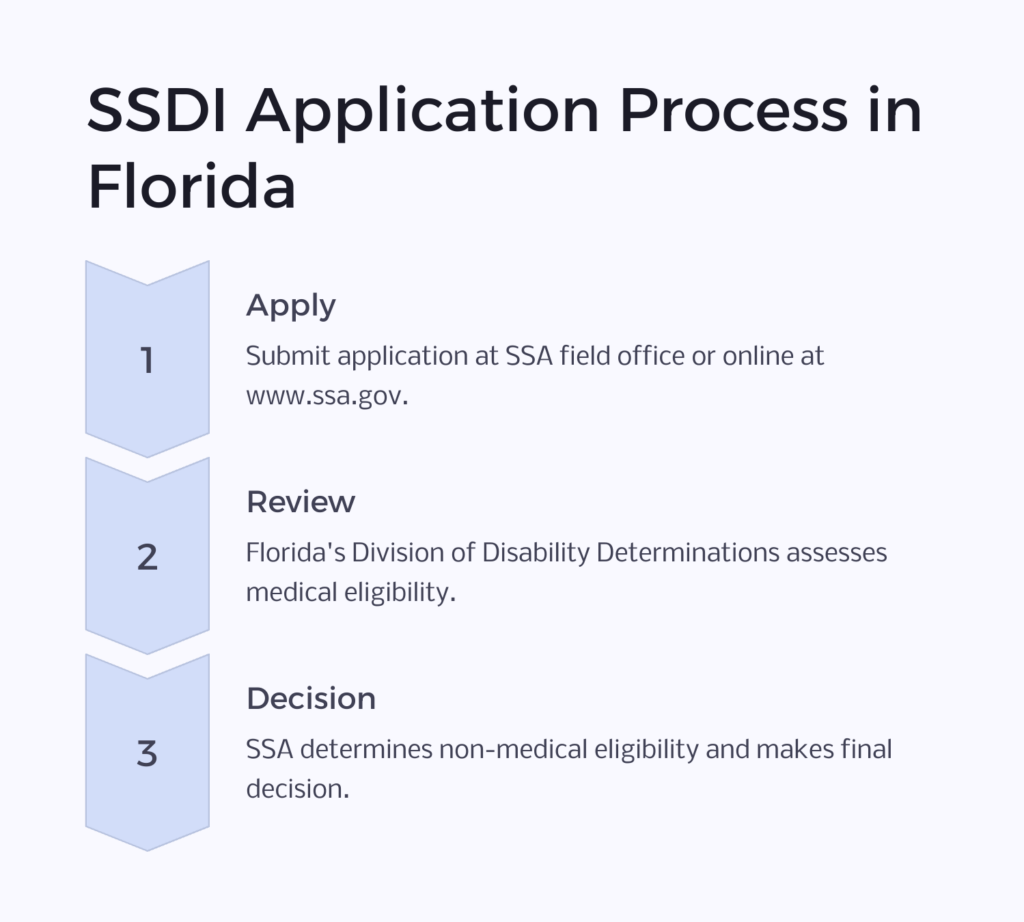
Once you have meticulously gathered all necessary documentation, the next step is to submit your application. The SSA offers several convenient ways to do this:
- Online Application: For many, the most straightforward method is to apply online through the official Social Security Administration website. This platform allows you to complete the application forms at your own pace and upload digital copies of your documents.
- By Phone: You can call the SSA’s toll-free number to schedule an appointment or complete your application over the phone with the assistance of a representative.
- In Person: Visiting a local Social Security Administration office in Florida allows you to receive direct assistance from an SSA employee. This can be particularly helpful if you have complex questions or need guidance through the forms. There are numerous offices throughout the state, from Miami to Jacksonville, ensuring accessibility for residents across various regions.
Regardless of the method, ensure all information is accurate and complete. Any discrepancies or missing details can significantly delay the processing of your claim.
Step 3: The Review Process and Medical Evaluation
After submission, your application will undergo a rigorous review process. The SSA forwards your application to the Disability Determination Services (DDS), a state agency in Florida that makes the initial medical determination of disability.
- DDS Review: DDS staff, including disability examiners and medical consultants, will review all the medical evidence you provided. They may contact your doctors to obtain additional information or clarification.
- Consultative Examinations (CE): In some cases, if the existing medical evidence is insufficient or conflicting, DDS may schedule you for a consultative examination (CE) with an independent doctor. The SSA covers the cost of these exams. It’s crucial to attend any scheduled CEs, as failure to do so can lead to a denial of benefits.
- Decision: After evaluating all medical and non-medical information, DDS will make a decision. You will receive a letter informing you whether your application has been approved or denied. The initial review process can take several months.
Step 4: The Appeals Process
Many initial disability applications are denied. This is a common occurrence and does not mean your claim is without merit. If your application is denied, you have the right to appeal the decision. The appeals process typically involves several stages:
- Reconsideration: This is the first level of appeal. Your application will be reviewed by a different DDS examiner and medical consultant who were not involved in the initial decision. New medical evidence can be submitted at this stage.
- Hearing by an Administrative Law Judge (ALJ): If reconsideration is denied, you can request a hearing before an Administrative Law Judge (ALJ). This is often the most successful stage for claimants, as you and your representative (if you have one) can present your case in person, offer testimony, and cross-examine vocational or medical experts.
- Appeals Council Review: If the ALJ denies your claim, you can request a review by the SSA’s Appeals Council. They can either decide the case themselves, remand it back to an ALJ for a new hearing, or deny your request for review.
- Federal Court Review: The final level of appeal is to file a lawsuit in a federal district court. While less common, this option is available if all other administrative appeals are unsuccessful.
Throughout the appeals process, it is highly recommended to seek assistance from a qualified disability attorney or advocate. They can help gather additional evidence, prepare for hearings, and present your case effectively, significantly improving your chances of success.
Florida’s Accessibility Landscape and Lifestyle Considerations
Beyond the intricacies of the application process, it’s vital to recognize how securing disability benefits in Florida intertwines with maintaining and enhancing one’s lifestyle, particularly concerning travel, tourism, and finding suitable accommodation. Florida is renowned for its efforts in making the state accessible, allowing individuals with disabilities to truly experience its beauty and vibrant culture.
Accessible Destinations and Attractions
Florida prides itself on offering a wide array of accessible destinations, making it a prime location for individuals with disabilities who wish to continue traveling and exploring. From world-famous theme parks to serene natural landscapes, many attractions have made significant strides in providing inclusive experiences.
- Theme Parks: Iconic destinations like Walt Disney World Resort in Orlando and Universal Studios Florida are leaders in accessibility. They offer detailed guides for guests with disabilities, including information on accessible rides, restrooms, parking, and specific accommodations for various needs, such as sign language interpreters or service animal relief areas.
- Beaches: Many of Florida’s stunning beaches, including Siesta Key Beach, Clearwater Beach, and sections of Miami Beach, offer beach wheelchairs, accessible ramps, and Mobi-Mats to ensure everyone can enjoy the sand and surf. This commitment to accessibility transforms a simple beach day into an unforgettable experience.
- National and State Parks: Everglades National Park, for instance, provides accessible trails and visitor centers, allowing individuals with mobility challenges to witness Florida’s unique ecosystems and wildlife. Many state parks also offer accessible cabins and fishing piers, encouraging outdoor recreation.
- Museums and Cultural Sites: Cities like St. Petersburg, Sarasota, and Fort Lauderdale boast numerous museums, art galleries, and historical landmarks that are fully accessible, featuring ramps, elevators, and assistive listening devices to cater to diverse needs.
Accommodation and Travel Planning
Access to disability benefits significantly impacts the ability to secure appropriate accommodation, whether for a short trip or a long-term stay. Planning for accessible accommodation is crucial for a comfortable and stress-free experience.
- Accessible Hotels and Resorts: When booking hotels or resorts in Florida, it’s essential to specify your accessibility needs. Look for hotels that explicitly state compliance with the Americans with Disabilities Act (ADA), offering features like roll-in showers, grab bars, wider doorways, and accessible common areas. Many luxury travel options and boutique hotels now prioritize these amenities, recognizing the growing demand for inclusive hospitality.
- Vacation Rentals: For longer stays or family trips, vacation rentals and apartments can offer more space and privacy. Platforms often allow filtering for accessibility features, though it’s always advisable to contact the property owner directly to confirm specific requirements like ramp access or accessible kitchens.
- Transportation: Florida’s major cities offer accessible public transportation options, including buses with lifts and accessible taxis. For longer distances, several companies specialize in accessible van rentals or private transportation services, ensuring smooth travel between destinations.
- Long-term Stay Considerations: For those considering a permanent move or extended stay in Florida due to its accessible environment and healthcare, disability benefits provide the financial stability to secure suitable housing. Many communities are designed with accessibility in mind, offering amenities that support independent living and a high quality of life.
Support Services and Community Resources
Florida also offers various state-level support services and community resources that enhance the lifestyle of individuals with disabilities. Organizations like the Florida Department of Health and local centers for independent living provide information, advocacy, and services that can include assistive technology, vocational rehabilitation, and personal care assistance. These resources play a vital role in empowering individuals to lead active, engaged lives within their communities and beyond. Connecting with these local resources can provide invaluable insights and support, further enriching your Florida experience.
Maximizing Your Florida Experience with Disability Benefits
Securing disability benefits is more than just about financial support; it’s about reclaiming agency over your life and opening doors to continued experiences. For residents of Florida, this means having the opportunity to fully immerse oneself in the unique lifestyle the state offers. With the financial stability provided by SSDI or SSI, individuals can better plan for accessible travel, explore new destinations, and engage in local tourism without undue financial stress.
- Financial Freedom for Accessible Travel: Disability benefits can help cover the additional costs sometimes associated with accessible travel, such as specialized transportation, adapted equipment rentals, or choosing accommodations with specific accessibility features. This freedom empowers individuals to explore landmark destinations like the historic St. Augustine or the vibrant arts scene in Tampa.
- Enhanced Quality of Life: The peace of mind that comes with financial security allows for a focus on personal well-being and engagement in activities that bring joy. This could mean enjoying leisurely cruises from Port Canaveral, visiting the Kennedy Space Center, or simply enjoying the diverse culinary scene in Key West.
- Community Integration: Disability benefits can facilitate participation in community events and local activities, fostering a sense of belonging and reducing social isolation. Florida’s many festivals, outdoor markets, and cultural performances often have accessible options for attendees.
Applying for disability in Florida is a journey that requires patience, diligence, and a clear understanding of the process. While the path to securing benefits can be complex, the support it provides is invaluable, forming a crucial foundation that enables individuals to maintain a rich, fulfilling, and adventurous lifestyle. By understanding the programs, meticulously preparing your application, and leveraging the accessible resources throughout the state, you can ensure that a disability doesn’t close the door to experiencing all the wonders that Florida has to offer. Whether it’s a weekend getaway to a resort in Naples or discovering a hidden gem in a local park, disability benefits empower you to continue living life to the fullest.
LifeOutOfTheBox is a participant in the Amazon Services LLC Associates Program, an affiliate advertising program designed to provide a means for sites to earn advertising fees by advertising and linking to Amazon.com. Amazon, the Amazon logo, AmazonSupply, and the AmazonSupply logo are trademarks of Amazon.com, Inc. or its affiliates. As an Amazon Associate we earn affiliate commissions from qualifying purchases.