
The skyline of Las Vegas, Nevada, is defined by its architectural ambition, a neon-lit testament to entertainment and structural grandeur. However, certain landmarks within this desert metropolis carry a weight that transcends their aesthetic or commercial value. When tourists and history enthusiasts ask about the geographical specifics of the 2017 tragedy, they are often looking to understand the spatial relationship between the landmarks of the South Las Vegas Strip. The event was inextricably linked to two primary locations: a world-renowned resort and an open-air festival ground, both situated in the heart of the world’s most famous hospitality corridor in the United States.
The Architectural Epicenter: Mandalay Bay Resort and Casino
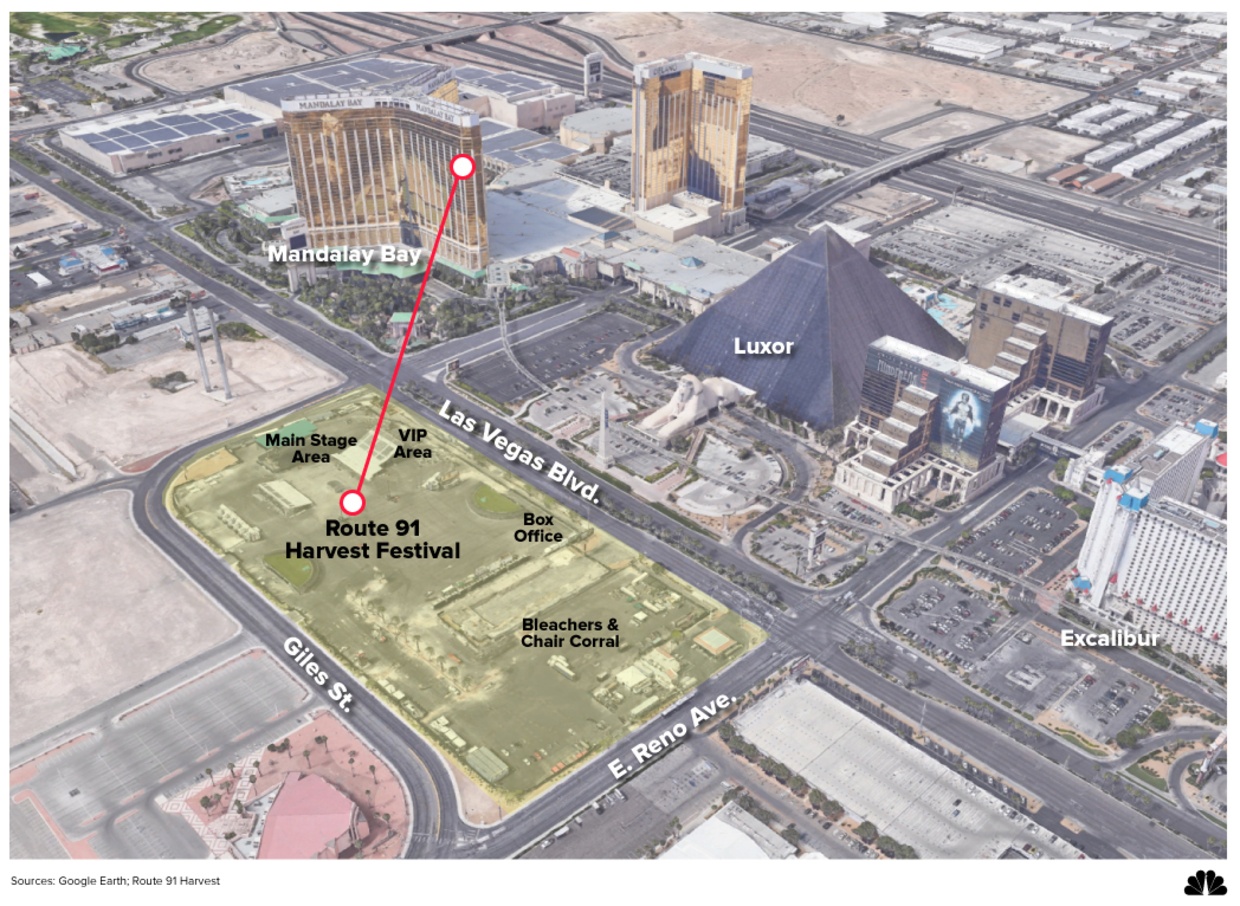
To identify the location of the event, one must first look to the golden towers of the Mandalay Bay Resort and Casino. Situated at the southernmost end of the main boulevard, this landmark is one of the most recognizable structures in Las Vegas. Its unique y-shaped architectural footprint and gold-leaf windows make it a focal point for visitors entering the city from the south.
The Significance of the 32nd Floor
The specific site within the hotel was a large suite on the 32nd floor. This level of the Mandalay Bay Resort and Casino offers panoramic views of the entire valley, a feature that is usually a major selling point for luxury travelers. The suite in question, numbered 32-135, occupied a corner position, providing a direct line of sight to the vast open spaces across the street. Architecturally, the building’s height and the floor-to-ceiling glass windows played a significant role in the geography of the incident.
In the years following, MGM Resorts International, the parent company of the property, made several structural and administrative changes. The room number was eventually removed and the floor was re-indexed to distance the physical landmark from the tragedy, yet the hotel remains a central point of interest for those studying the history of the Las Vegas Strip.
Integrated Luxury: Delano and Four Seasons
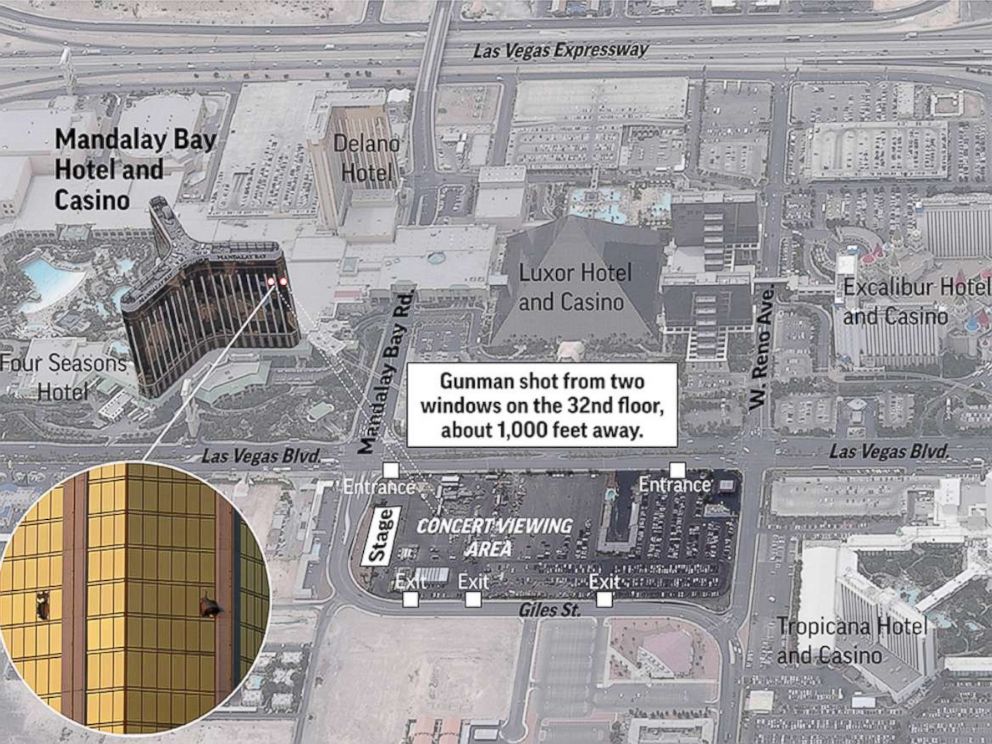
It is important to note that the Mandalay Bay Resort and Casino is not a standalone tower but part of a massive complex. This landmark includes the Delano Las Vegas and the Four Seasons Hotel Las Vegas, which occupies several of the upper floors of the main Mandalay Bay tower. This density of luxury accommodation is a hallmark of the area’s design, creating a vertical city that houses thousands of guests at any given time. The proximity of these high-end brands emphasizes the contrast between the typical leisure atmosphere of the landmark and the gravity of the events that took place there.
The Festival Grounds: Las Vegas Village
The second primary location was an open-air venue known as the Las Vegas Village. This 15-acre lot was a prominent outdoor landmark used for large-scale concerts and festivals, located directly across Las Vegas Boulevard from the Luxor Hotel and Casino and diagonally across from Mandalay Bay Resort and Casino.
The Route 91 Harvest Festival Site
At the time, the lot was hosting the Route 91 Harvest Festival, a major country music event that had become a staple of the local tourism calendar. The site was designed to accommodate tens of thousands of people, featuring stages, food vendors, and viewing areas. Because the site was essentially a flat, paved lot surrounded by temporary fencing, it lacked the permanent architectural barriers found in indoor venues.
The relationship between the high-rise vantage point of the hotel and the open layout of the Las Vegas Village is a key aspect of the site’s historical analysis. The festival grounds were situated just north of the McCarran International Airport (now known as Harry Reid International Airport), adding a complex layer of airspace and ground-level logistics to the location’s profile.

Proximity to the Luxor and Excalibur
The Las Vegas Village sat in the shadow of the Luxor Hotel and Casino, the iconic black pyramid that serves as one of the most famous landmarks in the world. To the north of the site lies the Excalibur Hotel and Casino, with its multicolored castle spires. This cluster of themed resorts creates a unique urban canyon. During the event, these landmarks served as both obstacles and refuges for those fleeing the festival grounds, illustrating how the built environment of Las Vegas can dictate movement during a crisis.
Landmarks of Healing and Remembrance
In the aftermath of the shooting, the geography of Las Vegas shifted to include new landmarks dedicated to the victims and the resilience of the community. These sites have become essential stops for those looking to pay their respects and understand the city’s recovery.
The Las Vegas Community Healing Garden
One of the most significant landmarks created in response to the tragedy is the Las Vegas Community Healing Garden. Located in Downtown Las Vegas, rather than on the Las Vegas Strip, this garden was designed and built in just a few days by local volunteers and businesses.
The garden features a “Wall of Remembrance,” 58 trees (at the time) planted to represent the lives lost, and a variety of flowers and art installations. It serves as a stark, peaceful contrast to the high-energy environment of the South Strip. As a landmark, it represents a permanent shift in the city’s identity, moving from a place exclusively of “sin” and entertainment to one of community and deep empathy.
The Future of the Route 91 Site
For several years, the Las Vegas Village remained a vacant lot, a silent landmark that stood as a reminder of the night’s events. MGM Resorts International eventually announced plans to transform a portion of the site into a permanent memorial and community center. In 2023, the Clark County commission approved the design for the Forever One Memorial. This new landmark will feature 58 laser-cut steel candles and a commemorative plaza, ensuring that the physical space where the festival took place is permanently preserved as a site of reflection rather than just another development opportunity on the Las Vegas Strip.
The Evolving Landscape of the South Las Vegas Strip
The geography of the South Las Vegas Strip has changed significantly since 2017, not just in terms of memorials but also in its broader architectural and commercial development. The area has become a hub for sports and large-scale entertainment, altering how people interact with the landmarks in this specific corridor.
The Rise of Allegiant Stadium
Directly west of the Mandalay Bay Resort and Casino, across the I-15 freeway, sits Allegiant Stadium. This massive, sleek black stadium is the home of the Las Vegas Raiders. Its construction has completely revitalized the southern end of the strip, bringing a new landmark of massive proportions to the area. The stadium is connected to the Mandalay Bay Resort and Casino via a pedestrian bridge, creating a new flow of foot traffic that passes right by the sites associated with the 2017 shooting.
Security and Hospitality Landmarks
The incident also led to a transformation in the “invisible” architecture of Las Vegas. Security protocols at major landmarks like the Bellagio Hotel and Casino, Caesars Palace, and The Venetian Resort Las Vegas were overhauled. The way hotels are designed and managed—from the monitoring of guest elevators to the implementation of more sophisticated surveillance—has become a landmark study in hospitality safety.
Furthermore, the T-Mobile Arena, located slightly north of the festival site, became a central point for community gatherings and tributes in the days following the event. These venues are no longer seen merely as places for games or concerts, but as landmarks that are part of a larger, more interconnected and secure urban fabric.
In summary, when asking “where was the Las Vegas shooting,” the answer lies within a specific triangular area of the South Strip. It is anchored by the Mandalay Bay Resort and Casino to the west, the Las Vegas Village to the east, and is now balanced by the Las Vegas Community Healing Garden in the north. These sites, while part of the city’s tourism industry, have evolved into landmarks of historical significance that tell a story of tragedy, resilience, and the enduring spirit of Nevada.
LifeOutOfTheBox is a participant in the Amazon Services LLC Associates Program, an affiliate advertising program designed to provide a means for sites to earn advertising fees by advertising and linking to Amazon.com. Amazon, the Amazon logo, AmazonSupply, and the AmazonSupply logo are trademarks of Amazon.com, Inc. or its affiliates. As an Amazon Associate we earn affiliate commissions from qualifying purchases.