
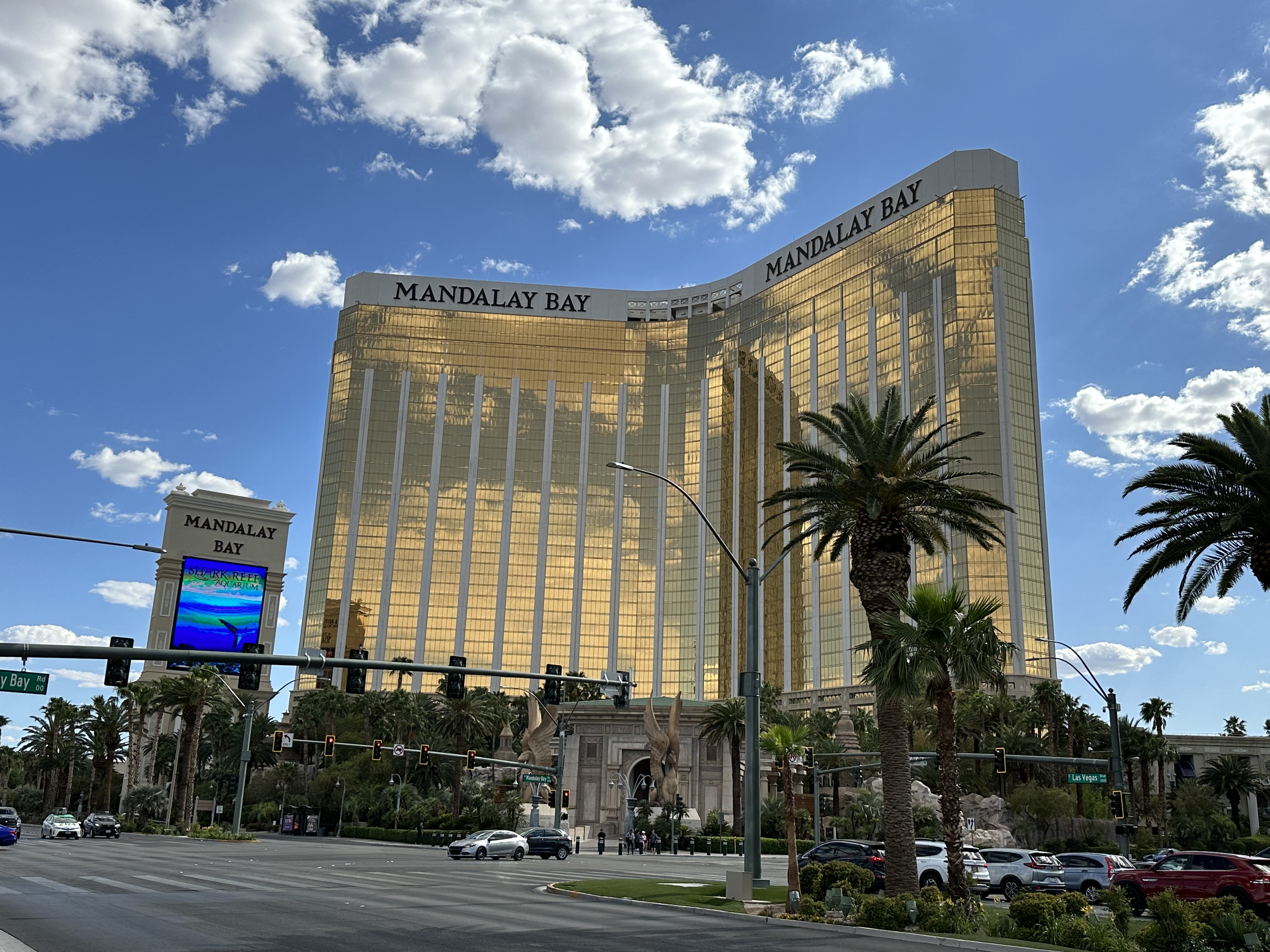
The skyline of the Las Vegas Strip is defined by architectural marvels that compete for the attention of millions of global travelers. Among these giants, Mandalay Bay Las Vegas stands out with its shimmering gold facade and expansive tropical-themed grounds. For many guests checking into this massive resort, the question of ownership is more than just a matter of corporate curiosity; it is a reflection of the intricate web of real estate investment trusts and hospitality management companies that govern the modern Las Vegas experience. To understand who owns Mandalay Bay, one must look at the evolution of Nevada gaming history and the shift toward specialized property ownership.
The Corporate Powerhouse: MGM Resorts International and Vici Properties
The ownership structure of Mandalay Bay Las Vegas is a prime example of the “asset-light” strategy that has swept through the hospitality industry in recent years. Today, the ownership is split between the entity that operates the day-to-day business and the entity that owns the physical land and buildings.
The Role of MGM Resorts International
While many people still associate the resort entirely with its operator, MGM Resorts International does not technically own the real estate. Instead, MGM Resorts International serves as the long-term tenant and management firm. This global hospitality giant is responsible for everything a guest experiences, from the gaming floor to the housekeeping services and the booking systems. MGM Resorts International acquired the property as part of its 2005 merger with Mandalay Resort Group (formerly known as Circus Circus Enterprises), a move that consolidated a significant portion of the South Strip under one corporate umbrella.
The Real Estate Giant: Vici Properties
In a landmark series of transactions, the physical real estate of Mandalay Bay was transitioned into the hands of Vici Properties. Vici Properties is a real estate investment trust (REIT) that specializes in casino properties and high-end entertainment destinations. The transition occurred through a partnership involving the Blackstone Group, which initially held a significant stake in the real estate through Blackstone Real Estate Income Trust. Eventually, Vici Properties completed its acquisition of the remaining interests, making it the definitive landlord of the 120-acre site. This arrangement allows MGM Resorts International to focus on hospitality excellence while paying rent to Vici Properties.
A Deep Dive into the Resort’s Luxurious Amenities
Beyond the corporate ledger, Mandalay Bay Las Vegas is owned, in spirit, by the luxury and entertainment it provides. Spanning 43 stories, the resort is a self-contained ecosystem designed to offer every conceivable amenity within its golden walls.
The Iconic Mandalay Bay Beach
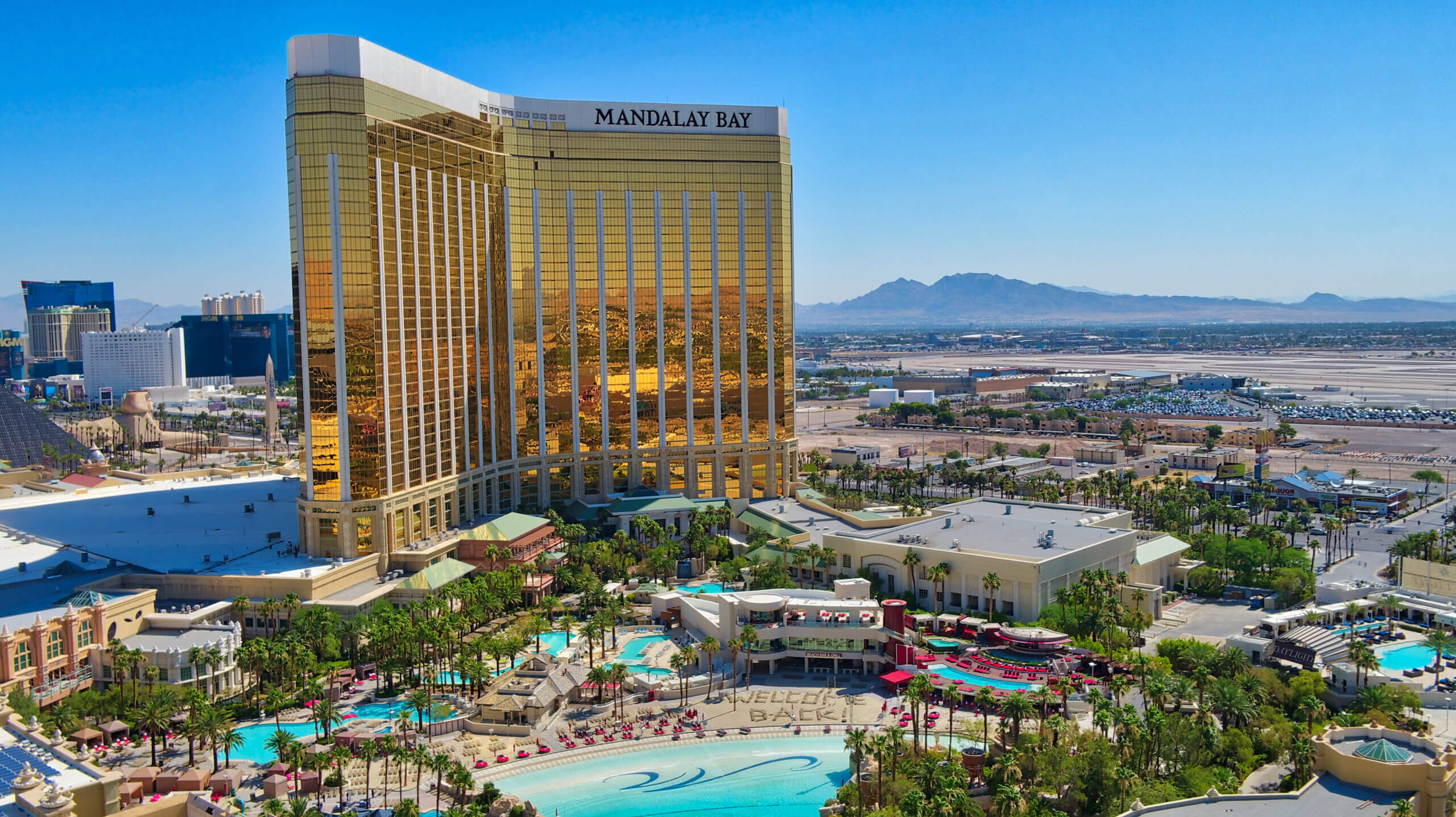
One of the most significant assets of the property is Mandalay Bay Beach, an 11-acre aquatic playground that frequently ranks among the best hotel pools in the United States. This world-class amenity features 2,700 tons of real sand imported to create a genuine beach feel in the middle of the Mojave Desert. The area includes a massive wave pool, a lazy river, and several heated pools. For those seeking privacy, the beach area offers luxury cabanas and the Moorea Beach Club, an upscale, “toptal optional” enclave that caters to an adult-only demographic.
Signature Suites and Accommodations
The resort features over 3,200 guest rooms, each designed with a blend of tropical elegance and modern sophistication. The ownership has invested heavily in renovations to ensure that the Mandalay Bay rooms remain competitive with newer properties like Resorts World Las Vegas. The suites at Mandalay Bay are particularly noted for their floor-to-ceiling windows, which offer panoramic views of the Las Vegas Valley and the nearby McCarran International Airport.
The Shark Reef Aquarium and Entertainment
Unique to the property is the Shark Reef Aquarium, a highly specialized facility that houses over 2,000 animals, including several species of sharks, giant rays, and a komodo dragon. This attraction serves as a major draw for families and marine enthusiasts, distinguishing Mandalay Bay from more gaming-focused resorts like Caesars Palace. Additionally, the Michelob Ultra Arena and the House of Blues provide a constant stream of high-profile concerts and sporting events, ensuring the property remains a hub of activity.
Strategic Alliances: The “Hotel Within a Hotel” Concept
What makes the ownership and operational structure of Mandalay Bay Las Vegas truly unique is its integration of third-party luxury brands within the same physical structure. This “hotel within a hotel” strategy allows the property to capture different market segments under one roof.
Delano Las Vegas: Modern Sophistication
Occupying one of the towers on the Mandalay Bay campus is Delano Las Vegas. Formerly known as THEhotel, this all-suite tower was rebranded through a partnership between MGM Resorts International and Morgans Hotel Group. Delano Las Vegas brings a touch of South Beach style to the desert, offering a non-gaming, non-smoking environment that appeals to business travelers and those seeking a quieter, more boutique experience. While it shares the amenities of the larger resort, it maintains its own distinct lobby, spa, and signature restaurant, Rivea.
Four Seasons Hotel Las Vegas Integration
Perhaps the most prestigious partnership on-site is with the Four Seasons Hotel Las Vegas. Located on the 35th through 39th floors of the main Mandalay Bay tower, this hotel operates completely independently of the casino. It features its own private entrance, check-in desk, and five-star services. The Four Seasons Hotel Las Vegas is one of the few properties in the city that does not have its own gaming floor, relying instead on its reputation for unparalleled luxury and personalized service. This arrangement allows MGM Resorts International to offer a tier of luxury that rivals The Venetian Las Vegas or Wynn Las Vegas.
The Economic Impact and Market Position
The ownership of Mandalay Bay Las Vegas carries with it a massive responsibility toward the local economy. As one of the largest employers in Clark County, the resort’s health is a bellwether for the Las Vegas tourism industry.
Comparison with Strip Competitors
In the competitive landscape of the Strip, Mandalay Bay occupies a middle-to-high-tier position. It is more upscale than its neighbors, the Luxor Hotel and Casino and the Excalibur Hotel and Casino, both of which are also operated by MGM Resorts International. However, it offers a more convention-heavy and family-friendly atmosphere compared to the ultra-luxury focused Bellagio Las Vegas or Aria Resort and Casino. The Mandalay Bay Convention Center is one of the largest privately owned convention spaces in the world, making the property a primary destination for major trade shows and corporate gatherings.
Proximity to Allegiant Stadium and Future Outlook
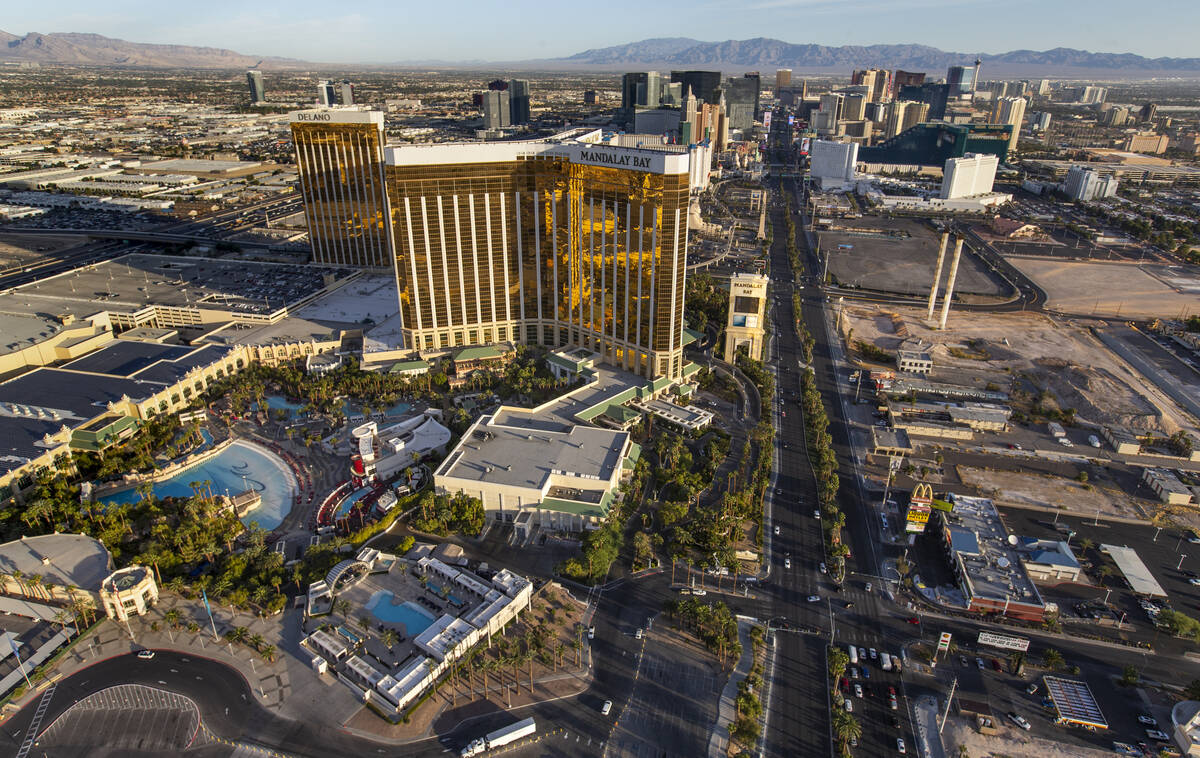
The strategic value of Mandalay Bay skyrocketed with the construction of Allegiant Stadium, the home of the Las Vegas Raiders. Located just across the Hacienda Avenue bridge, Mandalay Bay Las Vegas has become the unofficial headquarters for football fans and event-goers. This proximity has drastically increased the property’s weekend occupancy rates and driven up the value of its retail and dining outlets, such as those found in the Shoppes at Mandalay Place.
Under the joint stewardship of Vici Properties and MGM Resorts International, the resort continues to evolve. Recent investments have focused on sustainable practices and digital integration, ensuring that the property remains a leader in the Nevada hospitality market. Whether through the lens of corporate finance or the eyes of a traveler enjoying the Wave Pool, the ownership of Mandalay Bay represents a commitment to the grand, immersive experiences that define Las Vegas.
As the South Strip continues to develop, Mandalay Bay Las Vegas remains an anchor of stability and luxury. Its complex ownership model—blending the real estate expertise of Vici Properties with the operational prowess of MGM Resorts International—ensures that it will remain a cornerstone of the Las Vegas skyline for decades to come. From the Shark Reef Aquarium to the quiet luxury of the Four Seasons Hotel Las Vegas, the property continues to prove that in Las Vegas, ownership is about more than just a name on a deed; it is about maintaining a legacy of wonder.
LifeOutOfTheBox is a participant in the Amazon Services LLC Associates Program, an affiliate advertising program designed to provide a means for sites to earn advertising fees by advertising and linking to Amazon.com. Amazon, the Amazon logo, AmazonSupply, and the AmazonSupply logo are trademarks of Amazon.com, Inc. or its affiliates. As an Amazon Associate we earn affiliate commissions from qualifying purchases.