
The geographical profile of the United States is often defined by the soaring peaks of the west, yet the northeastern corner of the country holds a rugged, ancient secret. When asking “Does Maine have mountains?”, the answer is not merely a simple affirmative, but a journey into some of the most storied and ecologically diverse landmarks in North America. Maine is home to the northern reaches of the Appalachian Mountains, a range that predates the Himalayas and provides a stark, granite-edged silhouette against the Atlantic Ocean.
From the legendary heights of the north to the sun-drenched coastal elevations, the mountains of Maine are more than just geographical features; they are historical landmarks that have shaped the culture, industry, and identity of the Pine Tree State. This exploration delves into the prominent peaks and ranges that define this corner of New England, examining their geological origins and their status as iconic natural monuments.
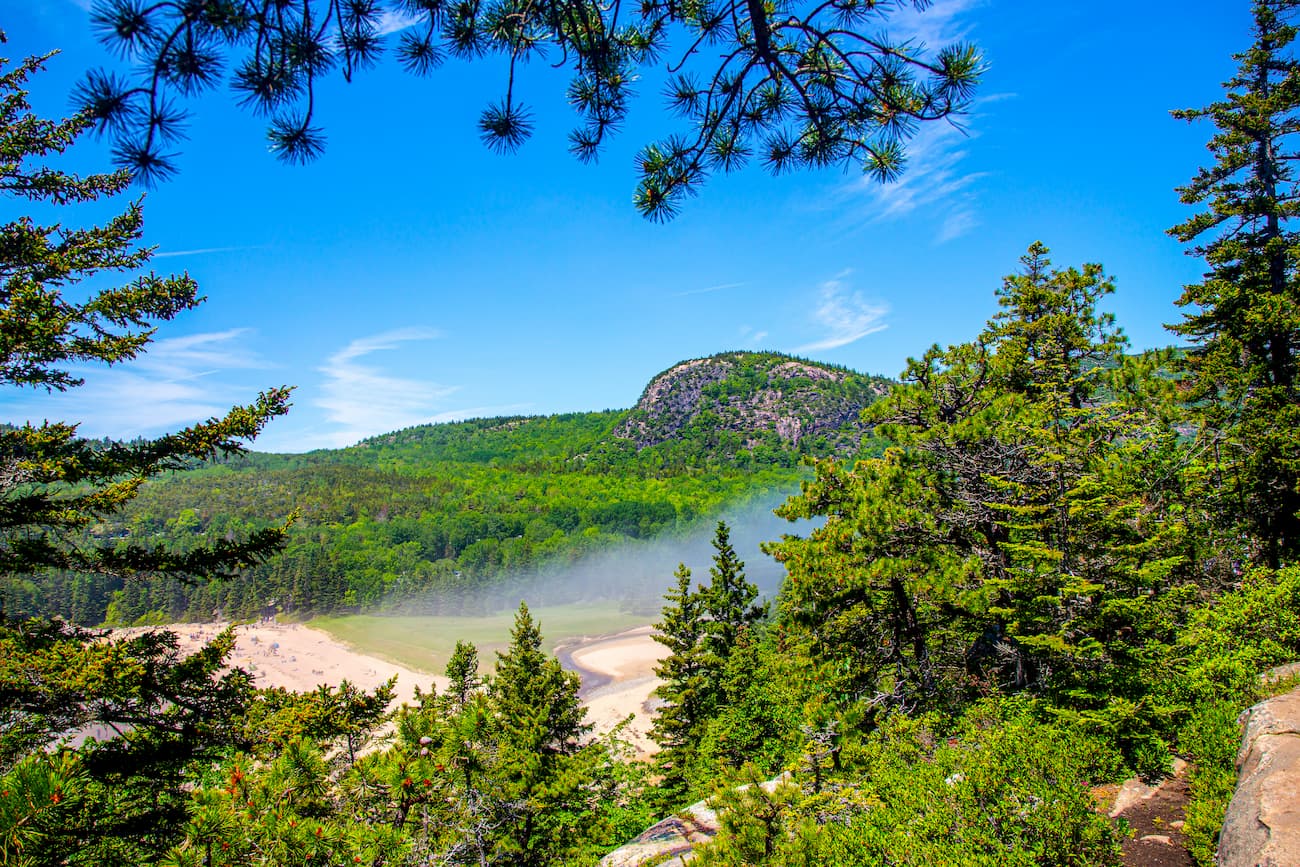
The Northern Giant: Mount Katahdin and the Maine Highlands
At the heart of Maine lies a landmark so significant that it is often considered the soul of the state’s wilderness. Mount Katahdin, standing at 5,267 feet, is the highest point in Maine and the centerpiece of Baxter State Park. Its name, given by the Penobscot people, translates to “The Greatest Mountain,” a fitting title for a massif that dominates the horizon of Piscataquis County.
The Significance of the Northern Terminus
Mount Katahdin is globally recognized as the northern terminus of the Appalachian Trail. This 2,190-mile footpath, stretching from Georgia to Maine, concludes its grueling journey at Baxter Peak. As a landmark, the mountain represents a monumental achievement for long-distance hikers and serves as a symbol of the untamed spirit of the United States wilderness. The terrain here is sub-alpine, featuring flora that is typically found much further north in the Arctic, making it a unique ecological landmark.
The Knife Edge and Glacial Scars
One of the most famous architectural features of Mount Katahdin is the Knife Edge. This narrow arête was carved by retreating glaciers thousands of years ago, leaving a jagged spine of granite that connects Pamola Peak to Baxter Peak. The sheer drops on either side of this narrow path highlight the raw, geological power that shaped the Maine Highlands. For those studying the history of the earth, Mount Katahdin serves as a living laboratory of glacial geomorphology.
The Coastal Splendor of Acadia National Park
While the interior of Maine offers towering heights, the coastline presents a different kind of mountainous beauty. Acadia National Park, primarily located on Mount Desert Island, features the highest coastal mountains on the eastern seaboard of the United States. Here, the mountains do not just exist alongside the sea; they emerge directly from it.
Cadillac Mountain: The First Light
Cadillac Mountain is perhaps the most famous landmark within Acadia National Park. Rising 1,530 feet, it is the highest point on the North Atlantic seaboard. Because of its height and eastern positioning, it is the first place in the United States to see the sunrise during the fall and winter months. This landmark provides a panoramic view of Bar Harbor, the Porcupine Islands, and the vast expanse of the Atlantic Ocean.
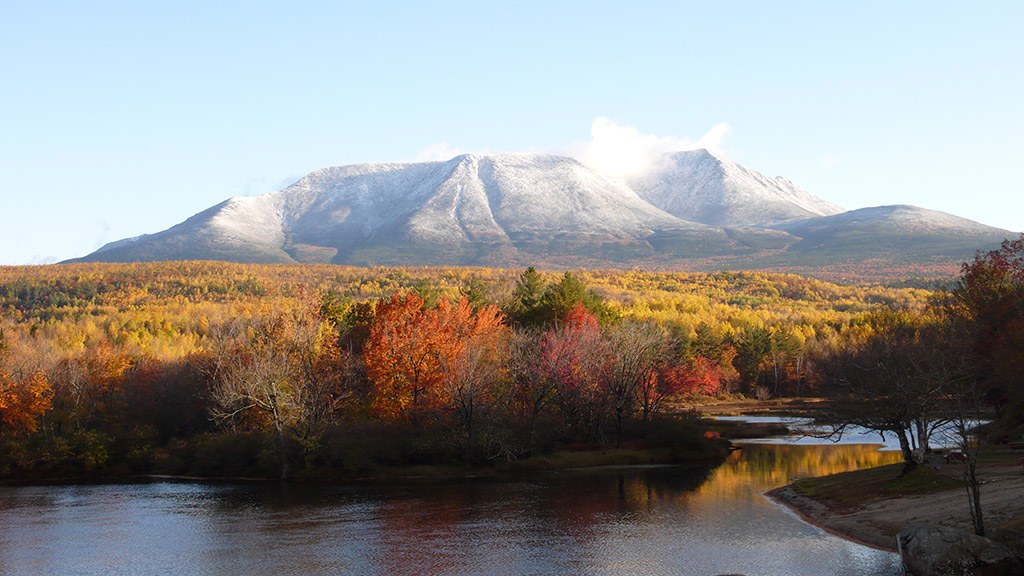
The Bubbles and Pemetic Mountain
The landscape of Mount Desert Island is dotted with distinctive peaks like The Bubbles and Pemetic Mountain. The Bubbles, two rounded hills overlooking Jordan Pond, are classic examples of glacial “roches moutonnées.” One of the most photographed landmarks in the park is Bubble Rock, a massive glacial erratic perched precariously on the edge of a cliff. These landmarks serve as a reminder of the Wisconsin Glaciation, which retreated roughly 15,000 years ago, leaving behind a scarred but beautiful granite terrain.
The Western Mountains and the Longfellow Range
The western part of Maine contains a continuation of the White Mountains of New Hampshire. This region, often referred to as the Longfellow Mountains, contains some of the state’s most rugged and high-elevation terrain. This range acts as a natural border and a significant landmark for the region’s timber and recreational history.
Sugarloaf and the Bigelow Range
Sugarloaf Mountain, located in Carrabassett Valley, is the second-highest peak in the state. While it is widely known as a premier destination for winter sports, its landmark status is defined by its massive, conical shape and its position within the Franklin County skyline. Nearby, the Bigelow Mountain range stretches across the horizon, featuring several peaks over 4,000 feet, including Avery Peak and West Peak. These mountains are preserved within the Bigelow Preserve, ensuring that their natural beauty remains untouched by modern development.
Sunday River and Old Speck
Further south in the western range lies Old Speck Mountain, the third-highest peak in Maine. Located in Grafton Notch State Park, Old Speck is a landmark of the Oxford Hills. The surrounding area is also home to the Sunday River peaks, which consist of eight interconnected mountain heads. This region is a testament to the sheer scale of Maine’s mountainous interior, offering deep gorges, waterfalls like Screw Auger Falls, and high-altitude alpine bogs.
Geological Evolution and Preservation Efforts
The existence of mountains in Maine is a story of plate tectonics and erosion. Unlike the younger, sharper Rocky Mountains in the western United States, the mountains of Maine are ancient. They are the weathered roots of a once-mighty range that was as tall as the Alps.
The Acadian Orogeny
The landmarks we see today, from Saddleback Mountain to the cliffs of Acadia National Park, were primarily formed during the Acadian Orogeny, a mountain-building event that occurred roughly 400 million years ago. This period of intense geological activity involved the collision of tectonic plates, which folded and uplifted the earth’s crust. Over millions of years, wind, water, and ice have smoothed these peaks into the rounded, resilient landmarks we recognize today. The granite that comprises Mount Katahdin and the coastal peaks is particularly resistant to erosion, which is why these landmarks still stand tall while surrounding softer rock has washed away.
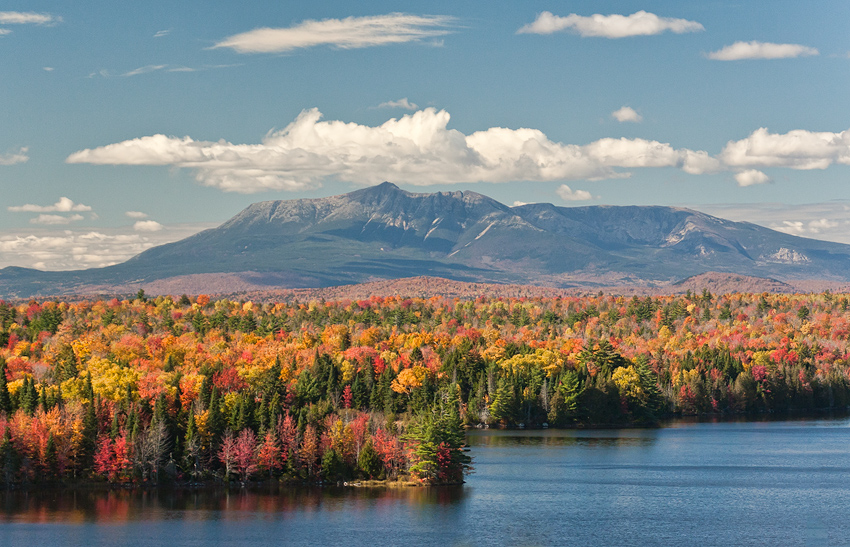
Conservation as a Cultural Landmark
In Maine, the mountains are not just physical landmarks but also monuments to conservation. The story of Percival Baxter, the former governor of Maine who personally purchased the land for Baxter State Park to ensure Mount Katahdin remained “forever wild,” is a central part of the state’s history. Similarly, the establishment of Acadia National Park through land donations by private citizens like George B. Dorr and John D. Rockefeller Jr. highlights a legacy of protecting natural landmarks for future generations.
The mountains of Maine serve as a bridge between the state’s industrial past—characterized by logging and quarrying—and its present as a haven for ecological study and natural preservation. Whether it is the wind-swept summit of Mount Abraham or the historic carriage roads that wind through the mountains of Mount Desert Island, these landmarks are integral to the identity of the Northwest Atlantic region.
In conclusion, Maine most certainly has mountains, and they are among the most distinct and historically significant landmarks in the United States. From the rugged northern peaks of the Appalachian Trail to the granite cliffs where the mountains meet the sea in Acadia National Park, these natural wonders provide a dramatic backdrop to a state defined by its wilderness and its enduring connection to the earth. For anyone seeking to understand the natural history of New England, the mountains of Maine are the ultimate destination for discovery.
LifeOutOfTheBox is a participant in the Amazon Services LLC Associates Program, an affiliate advertising program designed to provide a means for sites to earn advertising fees by advertising and linking to Amazon.com. Amazon, the Amazon logo, AmazonSupply, and the AmazonSupply logo are trademarks of Amazon.com, Inc. or its affiliates. As an Amazon Associate we earn affiliate commissions from qualifying purchases.