
The question of how far it is from Fort Lauderdale to Miami is one of the most frequently asked by travelers exploring South Florida. These two vibrant cities, often considered sister destinations, are intrinsically linked by geography, culture, and a shared stretch of coastline. While distinct in their offerings and ambiance, the relatively short distance between them makes it incredibly convenient for visitors to experience the best of both worlds. Whether you’re a tourist flying into one airport and departing from another, a cruise passenger needing to transfer between ports, or a local looking for a weekend getaway, understanding the logistics of this journey is key to a smooth and enjoyable South Florida adventure.
The Proximity and Popularity of the Route
The corridor connecting Fort Lauderdale and Miami is one of Florida’s most traversed routes, bustling with commuters, tourists, and business travelers alike. This stretch of highway and rail lines serves as a vital artery, linking major airports, cruise ports, and popular attractions. The demand for efficient and varied transportation options is high, reflecting the dynamic nature of these world-class destinations.
Geographical Overview: South Florida’s Coastal Corridor
Geographically, Fort Lauderdale and Miami are situated along Florida’s southeastern coast, forming a continuous urbanized area. This proximity means that while they are distinct cities, the transition between them is often seamless, characterized by sprawling suburbs, commercial centers, and shared natural beauty. The primary routes run parallel to the Atlantic Ocean, offering occasional glimpses of the coastal landscape, though much of the journey typically navigates through metropolitan areas. This dense development underscores the importance of efficient transportation networks designed to handle significant traffic volumes.
Why Travel Between These Two Iconic Cities?
The reasons for traveling between Fort Lauderdale and Miami are as diverse as the travelers themselves. Many visitors flying into Fort Lauderdale-Hollywood International Airport (FLL) often make their way south to explore Miami’s iconic South Beach, vibrant Art Deco District, or trendy neighborhoods like Wynwood and Brickell. Conversely, those arriving at Miami International Airport (MIA) might head north to enjoy Fort Lauderdale’s “Venice of America” canals, its beautiful beaches, or to depart from Port Everglades. Both cities are major cruise hubs, with PortMiami and Port Everglades serving millions of passengers annually, necessitating easy transfers. Business travelers also frequently commute for meetings, conferences, or to access specific industry hubs in either city. This constant flow of people ensures that a robust and varied transportation infrastructure is not just a convenience, but a necessity.
Calculating the Distance and Travel Time
Understanding the exact distance and realistic travel time between Fort Lauderdale and Miami is crucial for planning. While the mileage might seem modest, the impact of South Florida’s notorious traffic can significantly alter estimated journey durations.
The Direct Drive: Miles and Minutes
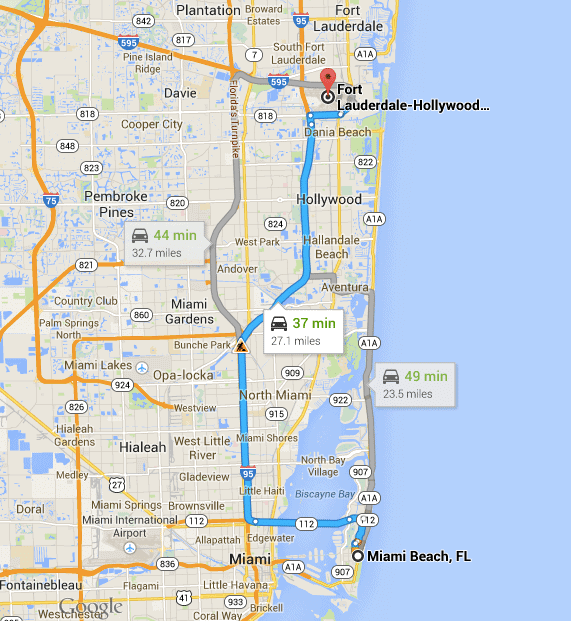
The most direct and commonly used route between Fort Lauderdale and Miami is via I-95 South. This interstate highway provides a relatively straight shot from one city to the other.
- Distance: The approximate driving distance ranges from 25 to 30 miles (40 to 48 kilometers), depending on your specific starting point in Fort Lauderdale (e.g., downtown, airport, beach) and your destination in Miami (e.g., Downtown Miami, South Beach, Miami International Airport).
- Travel Time: Under ideal conditions with light traffic, the drive can take around 30 to 40 minutes. However, “ideal conditions” are often rare in South Florida. During peak hours (typically 7-9 AM and 4-6 PM on weekdays), this travel time can easily swell to 60-90 minutes, or even longer if there are accidents or major roadwork. It is always advisable to check real-time traffic updates via navigation apps before departing.
Alternative Routes and Scenic Detours
While I-95 is the quickest option, other routes offer different experiences, though generally at the cost of speed.
- US-1 (Federal Highway): Running parallel to I-95, US-1 is a major arterial road that passes through numerous towns and commercial districts. It’s often slower due to many traffic lights and lower speed limits but can be an alternative if I-95 is severely congested. The drive can take 1 to 1.5 hours or more.
- A1A (Ocean Drive): For those with ample time and a desire for scenic beauty, a drive along A1A offers stunning coastal views. This route hugs the coastline, passing through charming beachfront communities like Hollywood, Florida and Hallandale Beach. It’s the longest and slowest option, often taking 2 hours or more, but it provides a unique perspective of South Florida’s beach culture and luxurious oceanfront properties. This route is less about efficiency and more about the journey itself.
Transportation Options: A Comprehensive Guide
Traveling between Fort Lauderdale and Miami offers a plethora of transportation choices, each with its own benefits regarding cost, convenience, and travel time. The best option often depends on individual preferences, budget, and specific destination within each city.

Driving Yourself: Freedom and Flexibility
Driving your own vehicle or a rental car provides the most flexibility, allowing you to stop whenever and wherever you please.
- Rental Cars: Available at both Fort Lauderdale-Hollywood International Airport and Miami International Airport, rental cars offer convenience for exploring beyond the city centers. However, consider the cost of rental, fuel, tolls (some express lanes on I-95 are toll roads, and the Florida Turnpike is entirely tolled), and parking, especially in crowded Miami areas like South Beach or Downtown Miami, where parking can be expensive and scarce.
- Ride-Sharing Services (Uber/Lyft): Uber and Lyft are readily available in both cities. They offer a convenient door-to-door service without the hassle of parking. Fares can vary significantly based on demand (surge pricing) and traffic, typically ranging from $40 to $70 for a standard ride, but potentially higher during peak times or for premium services. This is a popular choice for airport and cruise port transfers.
Public Transportation: Cost-Effective and Convenient
South Florida has invested in public transport options that can be surprisingly efficient and budget-friendly, especially for those who prefer to avoid driving.
- Brightline (High-Speed Rail): Brightline offers a premium, high-speed rail service between Fort Lauderdale and Miami, with sleek trains and comfortable seating.
- Stations: In Fort Lauderdale, the station is the Fort Lauderdale Brightline Station, located Downtown Fort Lauderdale. In Miami, it arrives at MiamiCentral, a sprawling transportation hub in Downtown Miami.
- Travel Time: The journey itself is remarkably fast, taking approximately 30 minutes train-to-train.
- Cost: Fares typically range from $10 to $30+ one-way, depending on the class of service (Smart or Premium) and how far in advance you book.
- Pros: Fast, comfortable, reliable, avoids traffic. Brightline also offers last-mile connection services like ride-shares or shuttle vans to get you to your final destination from the station.
- Tri-Rail (Commuter Rail): Tri-Rail is a commuter train service that connects Palm Beach, Broward, and Miami-Dade counties.
- Travel Time: Slower than Brightline, with more stops. The journey from Fort Lauderdale (e.g., Fort Lauderdale/Hollywood International Airport at Dania Beach Station) to Miami (e.g., Miami Airport Station) can take around 1 hour to 1 hour 30 minutes.
- Cost: More affordable than Brightline, typically a few dollars for a one-way trip.
- Pros: Very cost-effective, especially good for airport transfers as it directly connects to both FLL and MIA via shuttle buses from the station.
- Bus Services: Intercity bus services (like Greyhound or regional services offered by Broward County Transit and Miami-Dade Transit) can connect the cities. These are generally the slowest options due to frequent stops and traffic, often requiring transfers. They are the most budget-friendly, but may not be the most convenient for direct travel between central points.
Private Transfers and Shuttles: Comfort and Efficiency
For those seeking maximum comfort, convenience, or traveling with a group, private transfer services are an excellent choice.
- Private Car/Limousine Services: Ideal for business travelers, luxury travel, or those with specific schedules. These services offer door-to-door transportation in comfortable vehicles. Costs are higher, usually starting from $100+ one-way, but provide a personalized and often seamless experience.
- Airport/Cruise Port Shuttles: Numerous shuttle companies operate between Fort Lauderdale-Hollywood International Airport, Miami International Airport, Port Everglades, and PortMiami. These can be shared-ride or private, offering a cost-effective solution for transfers, particularly for cruise passengers. Shared shuttles are cheaper but may involve multiple stops, while private shuttles offer direct service.
Choosing Your Mode of Transport: Factors to Consider
Selecting the best way to travel between Fort Lauderdale and Miami depends on a blend of personal priorities. There’s no single “best” option, as each traveler’s needs differ.
Time vs. Cost vs. Convenience
- If Time is Critical: Brightline is often the fastest way to get between the downtown areas, bypassing traffic entirely. Private transfers and ride-sharing are also quick, assuming traffic cooperates.
- If Budget is Tight: Tri-Rail and bus services offer the most economical fares. Self-driving can be cost-effective for groups, but parking and tolls add up.
- If Convenience is Key: Ride-sharing services, private transfers, and airport/cruise shuttles offer door-to-door service, eliminating the need to navigate public transport systems or find parking. Brightline also scores high for comfort and directness between city centers.
Solo Travelers, Families, and Groups: Different Needs
- Solo Travelers: Might prefer the affordability of public transport like Brightline or Tri-Rail, or the flexibility of a ride-share.
- Families with Children: A rental car offers space for luggage and car seats, and the ability to stop for breaks. Private shuttles are also excellent for door-to-door service with minimal fuss.
- Groups: Ride-sharing (especially larger vehicles like Uber XL or Lyft XL), private vans, or shuttles can be more cost-effective per person than multiple smaller ride-shares, and offer the convenience of traveling together.
Specific Destinations: Downtown, Beaches, Airports
The ultimate destination within Fort Lauderdale or Miami heavily influences the best transport choice.
- Airport Transfers: Tri-Rail directly links to both FLL and MIA via shuttle, making it very efficient. Ride-shares and dedicated airport shuttles are also popular.
- Downtown to Downtown: Brightline is unbeatable for speed and comfort between Downtown Fort Lauderdale and Downtown Miami.
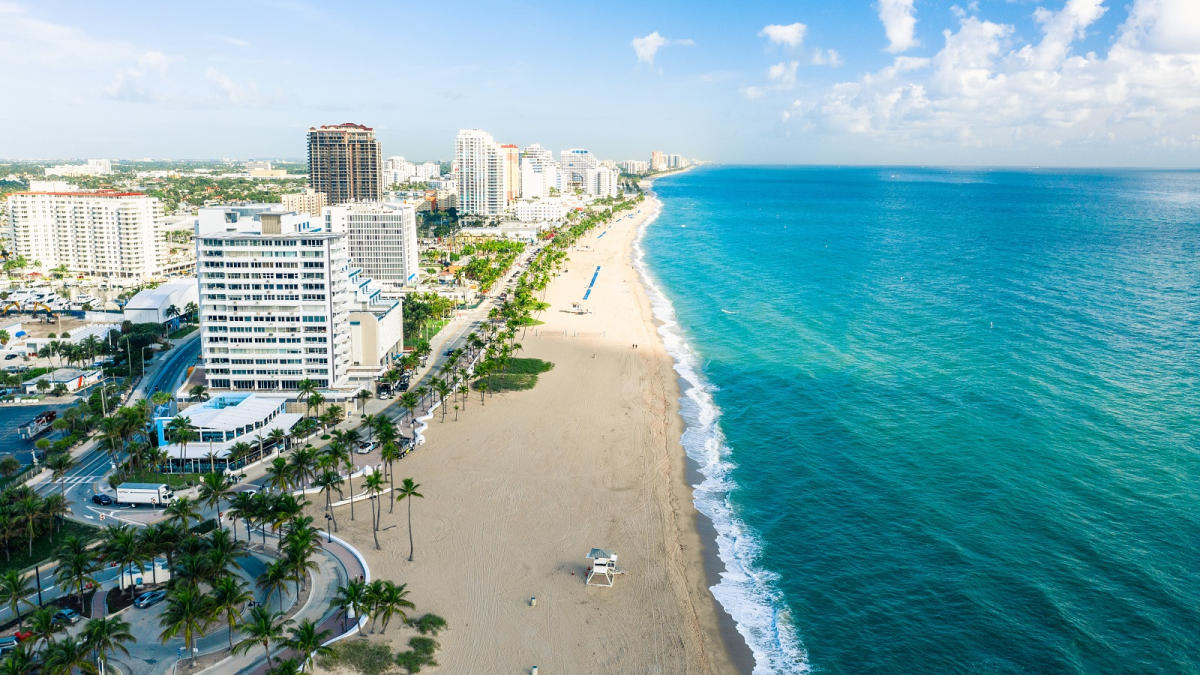
- Beach Areas (e.g., South Beach): If your destination is South Beach, a ride-share or taxi from MiamiCentral (if taking Brightline) or directly from Fort Lauderdale is often the most practical, as public transport connections to the beaches can be multi-leg.
- Cruise Ports: Both Port Everglades and PortMiami are well-served by ride-shares, taxis, and specialized cruise shuttles, making direct transfers efficient.
In conclusion, the distance between Fort Lauderdale and Miami is relatively short, but the travel time can be variable due to traffic. With a range of options from high-speed rail to flexible rental cars, every traveler can find a suitable way to navigate this popular South Florida corridor, ensuring that experiencing both iconic cities is an accessible and enjoyable part of their journey.
LifeOutOfTheBox is a participant in the Amazon Services LLC Associates Program, an affiliate advertising program designed to provide a means for sites to earn advertising fees by advertising and linking to Amazon.com. Amazon, the Amazon logo, AmazonSupply, and the AmazonSupply logo are trademarks of Amazon.com, Inc. or its affiliates. As an Amazon Associate we earn affiliate commissions from qualifying purchases.