
Setting up a Limited Liability Company (LLC) in Nebraska is a strategic move for entrepreneurs looking to protect their personal assets while operating a business. Nebraska, known for its welcoming business environment and steady economic growth, offers a streamlined process for establishing an LLC. This guide will walk you through the essential steps, from initial considerations to the final filing, ensuring you navigate the process with confidence and clarity. Understanding these steps is crucial for anyone embarking on a new business venture in the Cornhusker State.
Understanding the Benefits of an LLC in Nebraska
Before diving into the procedural aspects, it’s vital to grasp why forming an LLC is advantageous. An LLC combines the pass-through taxation of a partnership or sole proprietorship with the limited liability of a corporation. This means the business’s debts and liabilities are generally separate from the owners’ personal assets, offering a significant layer of protection.
Limited Liability Protection
The cornerstone of an LLC’s appeal is its ability to shield its owners, known as members, from personal responsibility for the company’s debts and lawsuits. If the LLC incurs debt or faces legal action, creditors and litigants can typically only pursue the LLC’s assets, not the personal property of its members, such as homes or personal bank accounts. This distinction is paramount for risk management, especially for businesses operating in industries with inherent liabilities.
Tax Flexibility
Nebraska, like many states, allows LLCs to choose how they are taxed. By default, a single-member LLC is taxed as a sole proprietorship, and a multi-member LLC is taxed as a partnership. This means the business itself doesn’t pay separate income taxes. Instead, profits and losses are “passed through” to the members’ personal income tax returns. However, an LLC can elect to be taxed as a corporation (either an S-corp or a C-corp), which can sometimes offer tax advantages depending on the business’s profitability and the members’ overall tax situation. Consulting with a tax professional is highly recommended to determine the optimal tax election for your specific circumstances.
Operational Flexibility
Compared to corporations, LLCs generally have less stringent administrative requirements. There are typically no mandatory annual board meetings or extensive record-keeping protocols that are common for C-corporations. This operational flexibility can significantly reduce the administrative burden on small business owners, allowing them to focus more on their core business activities.
Step-by-Step Guide to Setting Up Your Nebraska LLC
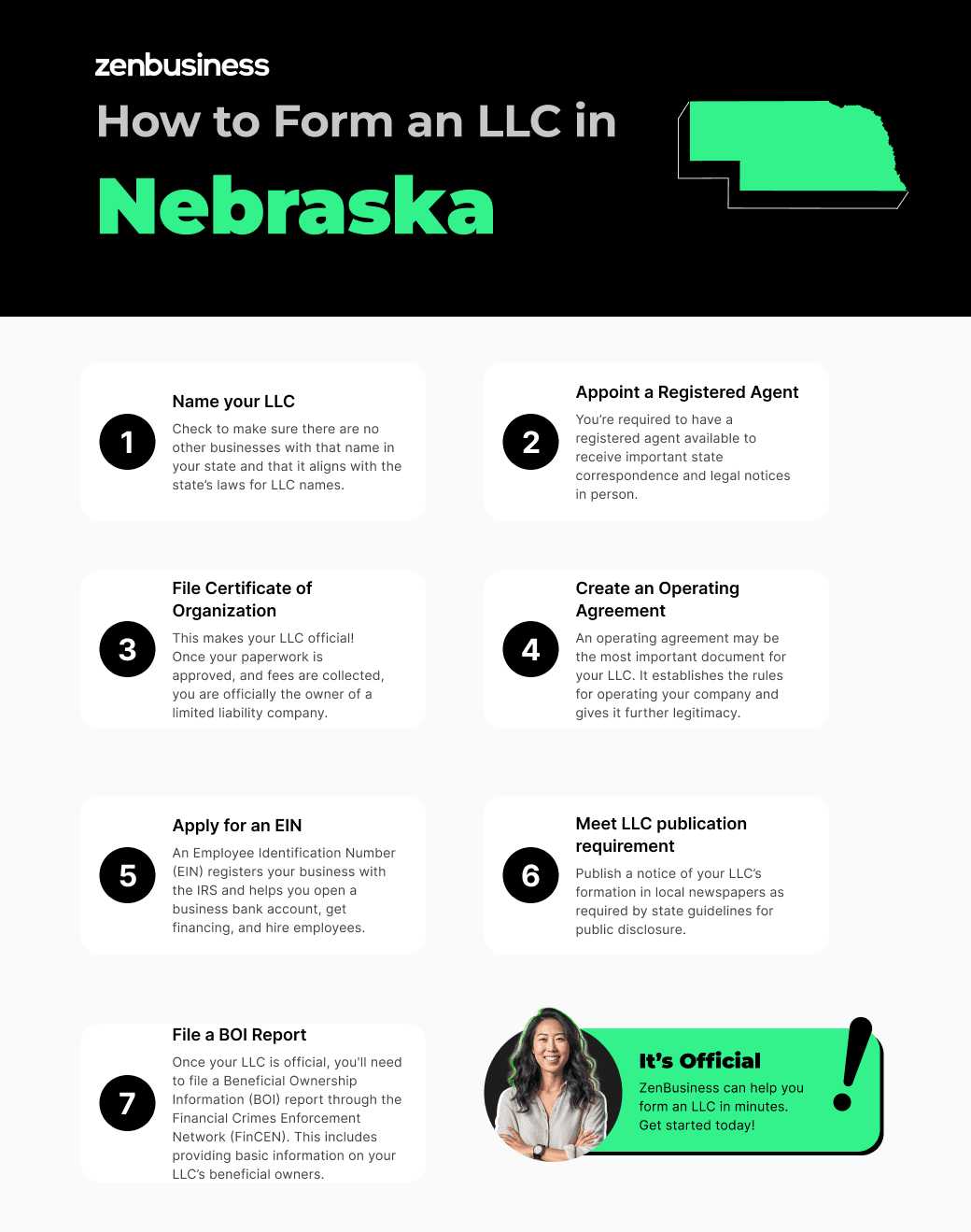
Forming an LLC in Nebraska involves several key steps, each requiring careful attention to detail. Adhering to these steps will ensure your LLC is established correctly and in compliance with state regulations.
Step 1: Choose a Unique Name for Your LLC
The first crucial step is selecting a name for your LLC. Nebraska law requires that your LLC name be distinguishable from other registered business names within the state. This means it cannot be identical or deceptively similar to existing names. It’s also mandatory to include a designator indicating it’s a limited liability company, such as “Limited Liability Company,” “LLC,” or “L.L.C.”
Name Availability Search
Before committing to a name, it’s highly recommended to conduct a name availability search on the Nebraska Secretary of State website. This will help you confirm if your desired name is already in use. You can also reserve a name for up to 120 days if you are not ready to file your formation documents immediately.
Step 2: Appoint a Registered Agent
Every LLC in Nebraska must designate a registered agent. This is an individual or a business entity located within Nebraska that agrees to accept legal documents, such as service of process, on behalf of your LLC. The registered agent’s physical address (not a P.O. Box) must be provided in your formation documents.
Requirements for a Registered Agent
The registered agent must have a physical street address in Nebraska and be available during normal business hours to receive important correspondence. You can appoint yourself as the registered agent, a trusted employee, or hire a professional registered agent service. Choosing a reliable registered agent is critical to ensure your business is properly notified of any legal proceedings.
Step 3: File Articles of Organization with the Nebraska Secretary of State
The formal creation of your LLC begins with filing the Articles of Organization with the Nebraska Secretary of State. This document is the foundational legal document for your LLC.

Key Information Required
The Articles of Organization typically require the following information:
- Name of the LLC: The chosen and confirmed name for your business.
- Name and Address of the Registered Agent: The details of your designated registered agent.
- Principal Office Address: The main business address of your LLC.
- Name and Address of the Organizer(s): The individual(s) who are filing the document.
- Management Structure: Whether the LLC will be member-managed or manager-managed.
You can file the Articles of Organization online through the Nebraska Secretary of State’s website or by mail. There is a filing fee associated with this process.
Step 4: Create an Operating Agreement
While not legally required by the state of Nebraska for LLCs, an Operating Agreement is an essential internal document that outlines the ownership structure, operating procedures, and member responsibilities of your LLC. It’s akin to a company’s bylaws for corporations.
Importance of the Operating Agreement
A well-drafted Operating Agreement can prevent disputes among members, define profit and loss distribution, outline management roles, and specify procedures for admitting new members or dissolving the company. It provides a clear framework for how the business will be run and can be invaluable in situations of disagreement or unforeseen circumstances.
Step 5: Obtain an Employer Identification Number (EIN)
If your LLC plans to hire employees, operate as a corporation for tax purposes, or has more than one member, you will need to obtain an Employer Identification Number (EIN) from the Internal Revenue Service (IRS). An EIN is like a Social Security number for your business and is required for tax purposes.
Applying for an EIN
You can apply for an EIN for free on the IRS website. The process is straightforward and usually results in an immediate issuance of your EIN.
Ongoing Compliance and Best Practices for Nebraska LLCs
Establishing your LLC is just the first step. To maintain its legal standing and operational integrity, you must adhere to ongoing compliance requirements and adopt best practices.
Annual Reports and Fees
Nebraska requires LLCs to file an annual report with the Nebraska Secretary of State. This report updates information about your business, including the registered agent and principal office address. There is a filing fee associated with the annual report. Failure to file these reports on time can result in the administrative dissolution of your LLC.
Maintaining Separate Finances
It is crucial to keep your business and personal finances separate. This means opening a dedicated business bank account for your LLC and using it for all business transactions. Commingling funds can jeopardize the limited liability protection afforded by your LLC.
Business Licenses and Permits
Depending on your industry and location within Nebraska, you may need to obtain specific business licenses and permits at the federal, state, or local level. Researching and securing all necessary licenses ensures your business operates legally and avoids potential penalties. For example, a restaurant operating in Omaha might need different permits than a consulting firm based in Lincoln.
Understanding Nebraska Business Law
Staying informed about Nebraska’s business laws and regulations is vital. This includes understanding employment laws, tax obligations, and any industry-specific regulations that may apply to your LLC. Consulting with an attorney specializing in business law can provide valuable guidance and ensure your LLC remains compliant.
By diligently following these steps and maintaining ongoing compliance, you can effectively establish and manage a Limited Liability Company in Nebraska, setting a strong foundation for your business’s success and personal financial security.
LifeOutOfTheBox is a participant in the Amazon Services LLC Associates Program, an affiliate advertising program designed to provide a means for sites to earn advertising fees by advertising and linking to Amazon.com. Amazon, the Amazon logo, AmazonSupply, and the AmazonSupply logo are trademarks of Amazon.com, Inc. or its affiliates. As an Amazon Associate we earn affiliate commissions from qualifying purchases.