
The legality of Delta-8 THC has been a complex and evolving issue across the United States, and the state of Nebraska is no exception. As travelers and residents alike navigate the landscape of hemp-derived cannabinoids, understanding the specific regulations in each state is paramount. This article delves into the current legal status of Delta-8 THC in Nebraska, exploring the legislative framework, potential implications, and what consumers should be aware of.
The Shifting Sands of Cannabis Legality
The journey of Delta-8 THC from a relatively obscure compound to a widely discussed product has been rapid, largely driven by the 2018 Farm Bill. This federal legislation legalized hemp, defined as cannabis with a delta-9 THC concentration of no more than 0.3% on a dry weight basis. This opened the door for the proliferation of hemp-derived products, including those containing Delta-8 THC, which is chemically similar to Delta-9 THC but is often psychoactive and derived from hemp.
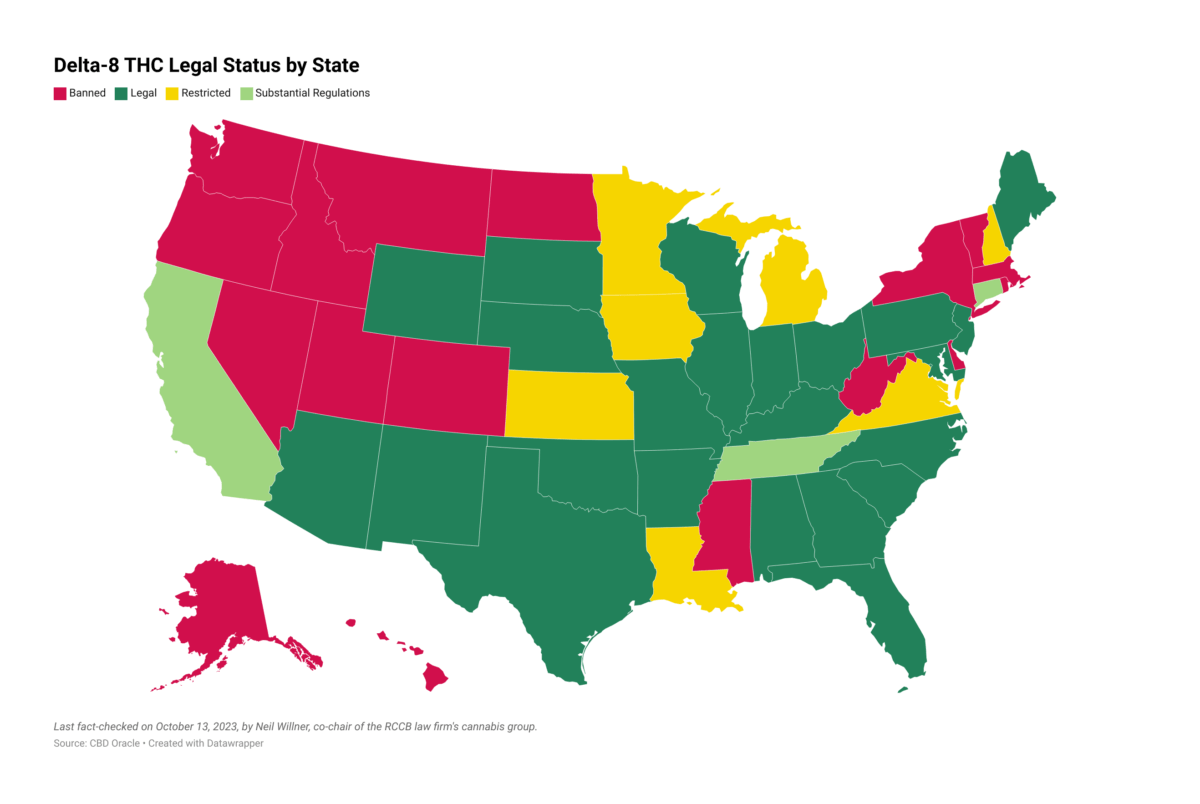
However, the interpretation and implementation of the Farm Bill have varied significantly at the state level. Many states have sought to clarify or restrict the sale and possession of Delta-8 THC, leading to a patchwork of regulations that can be confusing for consumers and businesses. Nebraska has been a focal point in this ongoing discussion, with its unique approach to cannabis laws.
Federal Legality and the Hemp Farm Bill
The 2018 Farm Bill was a landmark piece of legislation that had far-reaching implications for agriculture and drug policy in the United States. Crucially, it removed hemp from the Controlled Substances Act, categorizing it as an agricultural commodity. This reclassification was contingent on hemp containing no more than 0.3% Delta-9 THC by dry weight.
This federal legalization of hemp-derived products created a loophole, or at least an area of ambiguity, for compounds like Delta-8 THC. Since Delta-8 THC can be synthesized from CBD, which is abundant in hemp, and the resulting product typically has a very low percentage of Delta-9 THC, it was argued by proponents that Delta-8 THC products derived from legally grown hemp were also federally legal. This interpretation fueled the rapid expansion of the Delta-8 market.
However, the Drug Enforcement Administration (DEA) has since issued guidance suggesting that any synthetically derived tetrahydrocannabinols (THCs) remain Schedule I controlled substances, regardless of their source. This has created a legal gray area, with the legality of Delta-8 THC often dependent on how it is produced and the specific interpretation of federal law by individual states.
State-Level Regulation in Nebraska
Nebraska has historically maintained some of the strictest drug laws in the nation, particularly concerning cannabis. Unlike many other states that have moved towards medical or recreational legalization, Nebraska has not legalized marijuana for any purpose. This conservative stance has significantly influenced its approach to hemp-derived cannabinoids.
For a period, Nebraska did not have explicit legislation addressing Delta-8 THC. This led to a situation where its legality was unclear, with some believing it to be permitted under the federal Farm Bill’s umbrella, while others were concerned about its psychoactive properties and the state’s general prohibition of THC. Law enforcement and legal experts often advised caution due to this ambiguity.
The situation became clearer with the passage of Legislative Bill 1186 in 2020, which aimed to align Nebraska’s laws with the federal 2018 Farm Bill. This bill legalized hemp and hemp-derived products, provided they contain no more than 0.3% Delta-9 THC. However, the bill also included language that has been interpreted as a prohibition on intoxicating hemp-derived products. Specifically, it states that “no person shall sell, offer for sale, or possess with intent to sell any product containing any amount of tetrahydrocannabinol (THC) derived from the hemp plant, unless the product is a food or beverage that is approved by the United States Food and Drug Administration.”
Navigating the Legal Landscape of Delta-8 THC in Nebraska
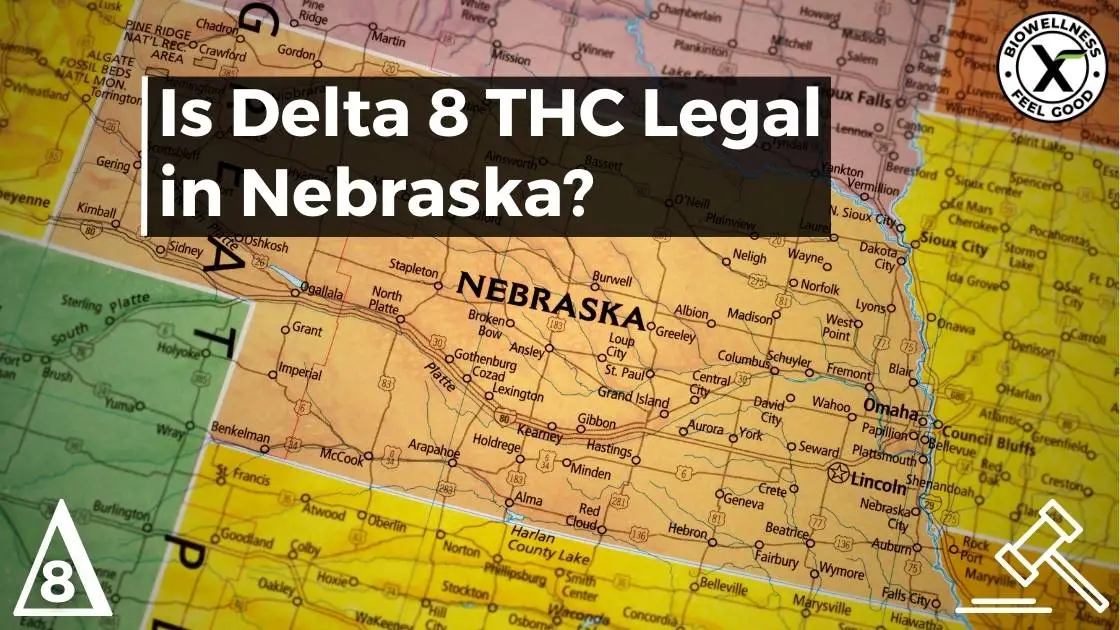
The interpretation of Legislative Bill 1186 has been central to the debate surrounding Delta-8 THC in Nebraska. While the bill legalized hemp, the subsequent clause regarding intoxicating products has cast a shadow over the legality of Delta-8 THC, which is known for its psychoactive effects.
The Intoxicating Effect Clause
The crucial aspect of Legislative Bill 1186 for Delta-8 THC consumers lies in its restriction on “intoxicating” hemp-derived products, with an exception for FDA-approved foods and beverages. Since Delta-8 THC is recognized for its intoxicating properties, and there are currently no FDA-approved Delta-8 THC products in the food or beverage category, this clause effectively places most Delta-8 THC products in a legal gray area that leans towards being prohibited.
This means that while hemp itself is legal, and products derived from it are permitted as long as they meet the Delta-9 THC threshold, the psychoactive nature of Delta-8 THC is a significant factor in its legality within the state. The state appears to be taking a stance that any hemp-derived cannabinoid producing a “high” is not permissible, unless it falls under specific FDA approval which, as of now, is non-existent for Delta-8 THC.
Law Enforcement and Consumer Implications
The ambiguity surrounding the law has created challenges for law enforcement and consumers alike. For law enforcement, distinguishing between legal and illegal hemp-derived products can be difficult, especially when the distinction hinges on the intoxicating nature rather than a specific THC percentage (beyond the Delta-9 limit). This can lead to inconsistent enforcement and confusion.
For consumers, the implication is that purchasing and possessing Delta-8 THC products in Nebraska carries a significant risk. While some businesses may still offer these products, they operate in a legal gray zone, and consumers may find themselves in possession of a substance that could be subject to seizure or legal repercussions. It is crucial for anyone considering the use of Delta-8 THC in Nebraska to be aware of these potential risks and to stay informed about any further legal developments. The safest approach is to assume that intoxicating hemp-derived products are not legally permissible.
Staying Informed: Future of Delta-8 and Legal Developments
The legal status of Delta-8 THC is a dynamic issue, and Nebraska’s position may evolve. As the national conversation around cannabis reform continues, states often re-evaluate their laws. For consumers and businesses in Nebraska, staying informed is key to navigating this evolving landscape.
Monitoring Legislative Changes
It is essential for anyone interested in the legality of Delta-8 THC in Nebraska to monitor legislative developments. Bills are regularly introduced and debated in state legislatures that can alter the legal framework for cannabinoids. Keeping an eye on the Nebraska Unicameral Legislature’s activities, particularly any proposed amendments or new legislation related to hemp or controlled substances, is advisable. Public hearings and legislative summaries can provide valuable insights into the direction lawmakers are considering.
Seeking Legal Counsel and Official Guidance
When in doubt, seeking advice from legal professionals specializing in cannabis law or consulting official state resources is the most reliable way to understand current regulations. The Nebraska Department of Health and Human Services may offer guidance or official statements on the matter. For businesses involved in the sale or production of hemp-derived products, consulting with legal counsel is crucial to ensure compliance with all applicable state and federal laws. For individuals, understanding the potential risks associated with possessing or purchasing substances in a legal gray area is paramount.
In conclusion, while the 2018 Farm Bill legalized hemp federally, Nebraska’s interpretation of this legislation, particularly through Legislative Bill 1186, places intoxicating hemp-derived products like Delta-8 THC in a precarious legal position. Consumers and businesses alike must exercise caution and remain vigilant regarding the evolving legal landscape to ensure compliance and avoid potential legal entanglements within the state.
LifeOutOfTheBox is a participant in the Amazon Services LLC Associates Program, an affiliate advertising program designed to provide a means for sites to earn advertising fees by advertising and linking to Amazon.com. Amazon, the Amazon logo, AmazonSupply, and the AmazonSupply logo are trademarks of Amazon.com, Inc. or its affiliates. As an Amazon Associate we earn affiliate commissions from qualifying purchases.