
The question of whether a state operates under “right-to-work” laws is a significant consideration for businesses looking to establish operations, employees seeking employment, and unions navigating their operational landscape. This legal framework directly impacts labor relations, union membership, and the overall economic environment. Understanding Nevada‘s stance on this matter is crucial for anyone involved in its vibrant and diverse economy, particularly within the booming sectors of tourism, hospitality, and gaming.
Understanding Right-To-Work Laws
At its core, a right-to-work law is a statute that prohibits agreements between employers and labor unions that require employees to join a union or pay union dues as a condition of employment. These laws are rooted in the principle of individual liberty, asserting that no worker should be compelled to associate with or financially support a union against their will.
The Core Tenets of Right-To-Work Legislation
The fundamental principle behind right-to-work laws is the protection of individual choice in matters of union affiliation. This means that even if a union has successfully negotiated a collective bargaining agreement for a workplace, employees within that bargaining unit cannot be forced to become members or pay fees to the union. However, it’s important to note that this does not mean unions are prevented from organizing or representing workers in these states. Unions can still bargain for wages, benefits, and working conditions, and these agreements generally apply to all employees within the bargaining unit, regardless of their union membership status. The key distinction is the absence of mandatory membership or dues payment as a condition of employment.
Historical Context and National Landscape
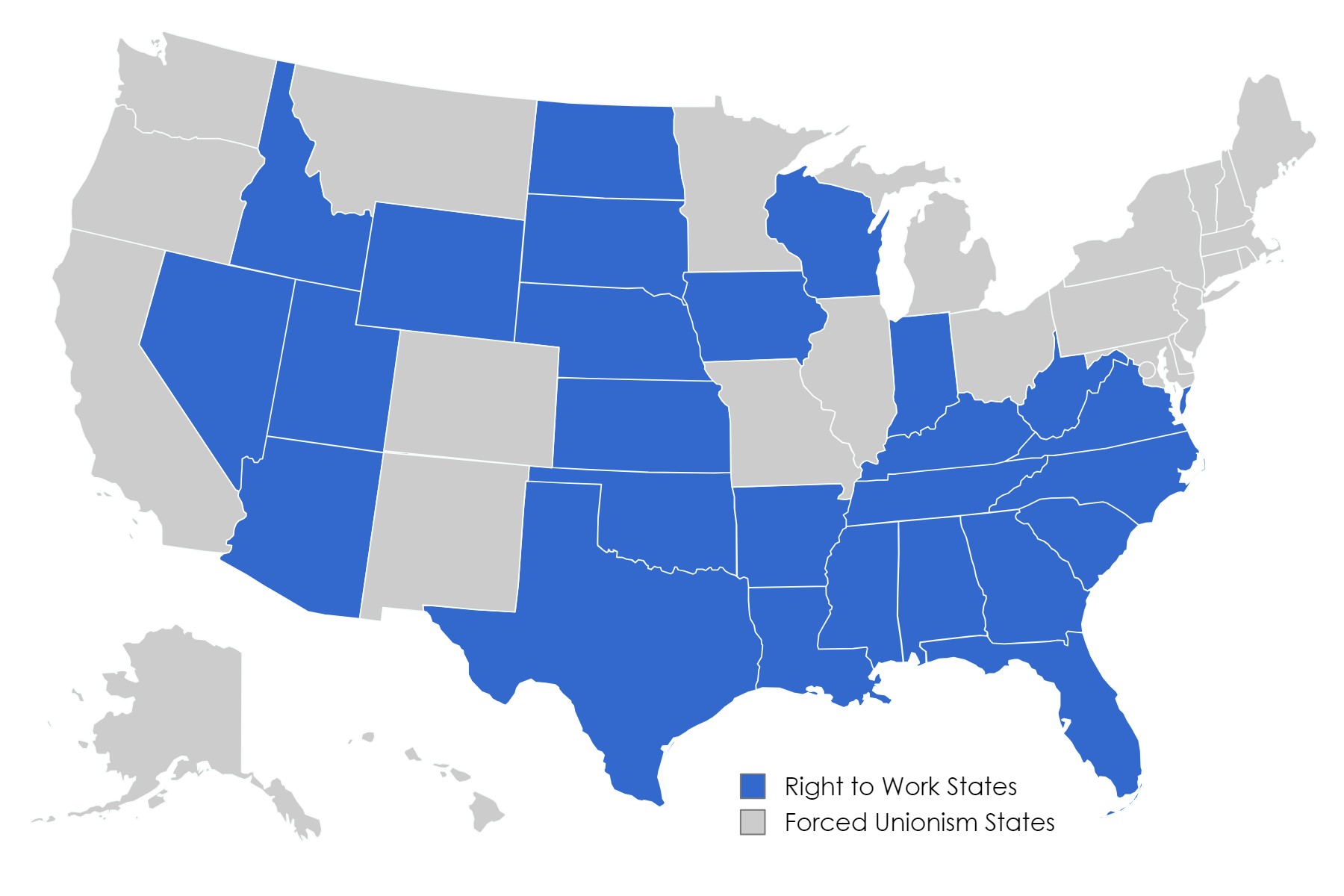
The concept of right-to-work has a long and often contentious history in the United States. The Taft-Hartley Act of 1947, officially the Labor Management Relations Act, is a significant piece of federal legislation that allows states to enact right-to-work laws. Prior to this, union security agreements, which could mandate union membership or dues, were more broadly permissible. Today, a significant number of U.S. states, primarily concentrated in the South and West, have adopted right-to-work laws. This legal framework has a tangible impact on the way businesses operate and how labor unions engage with their membership, influencing decisions regarding site selection, operational costs, and labor disputes.
Nevada’s Legal Framework: A Right-To-Work State
Indeed, Nevada is a right-to-work state. This classification has been a significant factor in its economic development strategy, particularly as it seeks to attract businesses and investment across various industries. The state officially adopted right-to-work legislation, allowing for this legal framework to govern labor relations within its borders.
Legislative History and Implementation in Nevada
Nevada‘s journey to becoming a right-to-work state was not a singular event but rather a culmination of legislative actions and evolving economic policies. The core legislation establishing these rights was enacted to provide a specific environment for businesses and workers. This framework has been a consistent feature of Nevada‘s labor laws for a considerable period, shaping the state’s approach to employment and unionization. Its implementation has allowed for a unique dynamic where employees have the freedom to choose whether or not to join a union, even if a union represents their workplace.
Impact on Labor Unions and Employee Representation
In Nevada, the existence of right-to-work laws means that while unions can still organize and negotiate on behalf of employees, they cannot compel membership or the payment of dues as a condition of employment. This can present challenges for unions in terms of funding and membership engagement, as they must continuously demonstrate their value to attract and retain members. However, it also fosters an environment where union representation is based on voluntary participation and the perceived effectiveness of the union’s advocacy. Workers in Nevada have the autonomy to decide if union membership aligns with their interests and professional goals.
Economic Implications for Nevada’s Industries
The right-to-work status of Nevada has had a discernible impact on its diverse economy, influencing business decisions and the overall employment landscape. This is particularly relevant for sectors that form the backbone of the Nevada economy, such as the hospitality and gaming industries, as well as emerging technology and logistics sectors.
Attracting Business and Investment
Nevada‘s right-to-work status is often cited as a key factor in its attractiveness to businesses seeking to establish or expand operations. Proponents argue that it can lead to lower labor costs and greater flexibility for employers, which can be a significant incentive for investment. This has been particularly true for industries that rely on a large and often seasonal workforce, where the ability to manage labor costs effectively is paramount. Cities like Las Vegas and Reno have historically leveraged this legal framework to position themselves as business-friendly destinations.
Labor Costs and Operational Flexibility
The absence of mandatory union membership or dues can contribute to a more competitive labor market in Nevada. Businesses may find it easier to recruit and retain employees without the added cost or administrative burden associated with mandatory union fees. This can translate into greater operational flexibility, allowing companies to adapt more readily to changing market conditions. For sectors like tourism and entertainment, which are highly sensitive to economic fluctuations, this flexibility can be a critical advantage. For instance, resorts and hotels can potentially manage their staffing needs more dynamically.
The Role of Unions in a Right-To-Work Environment
Despite the limitations imposed by right-to-work laws, labor unions remain active and influential in Nevada. They continue to play a vital role in advocating for workers’ rights, negotiating for fair wages and benefits, and ensuring safe working conditions. Unions in Nevada often focus on highlighting the tangible benefits of membership, such as collective bargaining power, legal representation, and professional development opportunities. Their success in this environment hinges on their ability to effectively communicate their value proposition to individual workers and demonstrate a clear return on investment for union dues. Even in right-to-work states, unions can be a powerful force for employee empowerment.
Navigating Nevada’s Labor Landscape: For Employees and Employers
For both individuals seeking employment and businesses looking to operate in Nevada, understanding the implications of its right-to-work status is essential. This legal framework shapes the dynamics of the workplace, from hiring practices to employee representation.
For Employees: Understanding Your Rights and Choices
As an employee in Nevada, the right-to-work law grants you the freedom to choose whether or not to join a labor union. Even if your workplace is represented by a union, you are not obligated to become a member or pay union dues. However, if a union successfully negotiates a contract that covers your position, you will likely benefit from the terms of that agreement, regardless of your membership status. It is advisable for employees to familiarize themselves with the specific collective bargaining agreements in their workplace and understand the services and benefits that union membership provides, weighing these against any associated costs. This ensures an informed decision about union participation.
For Employers: Strategic Considerations and Best Practices
For businesses operating in or considering Nevada, the right-to-work status offers certain advantages, particularly in terms of labor cost management and operational flexibility. However, it also means that unions will likely continue to advocate for workers’ rights and seek to organize workplaces. Employers are encouraged to foster positive and transparent relationships with their employees and, where applicable, with labor unions. This can involve clear communication about company policies, competitive compensation and benefits, and creating a work environment where employees feel valued and respected. Building a strong employer-employee relationship based on mutual trust can mitigate potential labor disputes and contribute to a stable and productive workforce. This proactive approach is key to successful operations in Nevada.
LifeOutOfTheBox is a participant in the Amazon Services LLC Associates Program, an affiliate advertising program designed to provide a means for sites to earn advertising fees by advertising and linking to Amazon.com. Amazon, the Amazon logo, AmazonSupply, and the AmazonSupply logo are trademarks of Amazon.com, Inc. or its affiliates. As an Amazon Associate we earn affiliate commissions from qualifying purchases.