
The question of distance between Manhattan and Brooklyn, two of New York City‘s most iconic boroughs, is more than just a matter of miles; it’s a gateway to understanding the city’s vastness, its interconnectedness, and the diverse experiences awaiting every traveler. While geographically adjacent, the precise distance varies significantly depending on the specific starting and ending points within each borough. This exploration delves into the nuances of this proximity, focusing on the practicalities for visitors looking to explore the rich tapestry of New York – from its world-renowned landmarks to its vibrant local cultures.

Understanding the Geographical Relationship
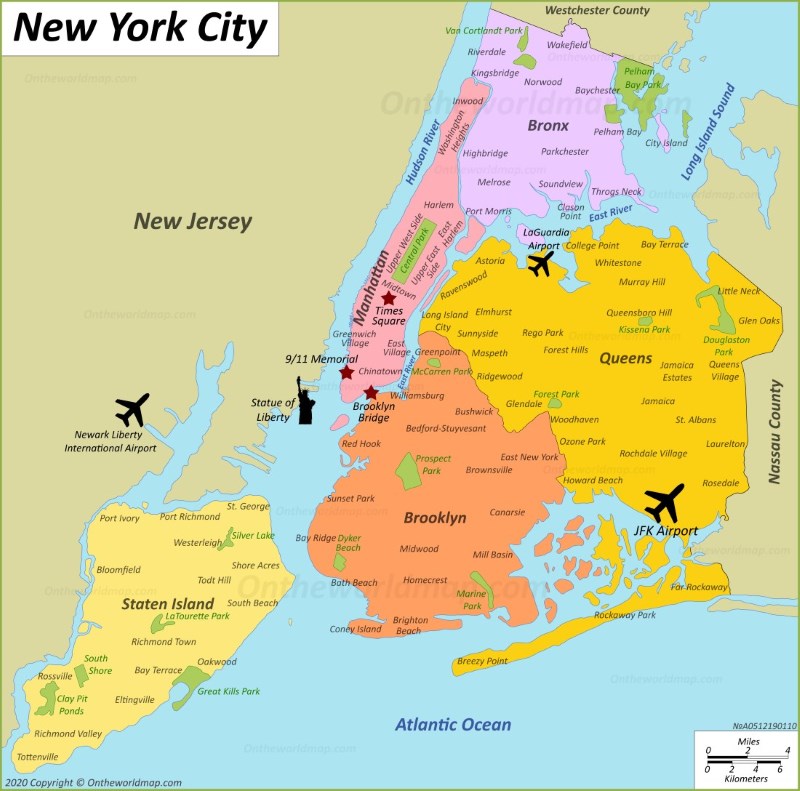
Manhattan and Brooklyn are separated by the East River. The proximity is such that many areas in Brooklyn are directly across the water from parts of Manhattan. This geographical closeness has fostered an intricate web of transportation links, making travel between the two boroughs remarkably efficient, despite the sheer scale of the urban landscape.
Defining “Distance” in a Metropolis
When we speak of distance in New York City, it’s crucial to differentiate between straight-line (as the crow flies) distance and actual travel distance. For a tourist, the travel distance, factoring in roads, bridges, tunnels, and public transit routes, is far more relevant. The “distance” also encompasses the time it takes to traverse this space, which can be influenced by traffic, the mode of transport, and the specific destination.
For instance, the southern tip of Manhattan, near the Financial District, is a stone’s throw from neighborhoods in western Brooklyn like DUMBO or Brooklyn Heights. Conversely, the northern reaches of Manhattan, such as Inwood, are considerably farther from the eastern or southern parts of Brooklyn.
Key Bordering Neighborhoods and Their Proximity
The most commonly traversed routes between Manhattan and Brooklyn involve areas directly across the East River.
- Lower Manhattan to Brooklyn Heights/DUMBO: This is arguably the closest geographical connection. The distance across the East River here is minimal, often less than a mile. The iconic Brooklyn Bridge connects these areas, offering a scenic walk or bike ride that takes approximately 30-45 minutes. Driving or taking public transit can reduce this to under 15 minutes, depending on traffic.
- Midtown Manhattan to Williamsburg: The distance here is slightly greater, with neighborhoods like Williamsburg in Brooklyn being a common destination from areas like Midtown East or Murray Hill. The travel time by subway, such as the L train, can range from 20 to 40 minutes, covering several miles across the river.
- Upper Manhattan to Further Brooklyn: As you move further north in Manhattan, the distance to many popular Brooklyn neighborhoods increases significantly. Reaching areas like Prospect Park or Park Slope from Harlem or Washington Heights often involves subway transfers and can take 45 minutes to over an hour, covering distances of 10-15 miles or more.
Navigating the Journey: Transportation Between Boroughs
The efficiency and variety of transportation options are key to experiencing Manhattan and Brooklyn as interconnected entities rather than distinct locales. Understanding these methods is crucial for maximizing your travel time and exploring as much of New York as possible.
The Mighty Subway System
The New York City Subway is the backbone of inter-borough travel. Numerous lines crisscross the East River via tunnels, connecting every major neighborhood in both Manhattan and Brooklyn.
- Key Crossings: The A, C, E, F, G, J, L, M, N, Q, R, and W lines all provide direct or indirect connections.
- Travel Time: A typical subway ride between adjacent areas can take as little as 10-15 minutes. However, journeys to more distant neighborhoods might require transfers and could extend to 45-60 minutes or even longer. The average commute between popular tourist areas in Manhattan and Brooklyn usually falls within the 20-40 minute range.
Bridges and Tunnels: Driving and Walking
For those who prefer to see the cityscape and feel the pulse of the city, crossing the East River via its iconic bridges and tunnels offers a unique perspective.
- The Brooklyn Bridge: This historic landmark provides a pedestrian walkway and bike lanes, offering breathtaking views of the Manhattan skyline and the Brooklyn waterfront. The walk itself is an experience, taking about 30-45 minutes.
- The Manhattan Bridge: Primarily for vehicular traffic and the B and Q subway lines, it also offers pedestrian access with excellent views.
- The Williamsburg Bridge: Another vital artery for both vehicular and subway traffic (J, M, Z), it also has pedestrian and bike paths.
- Hugh L. Carey Tunnel (formerly Brooklyn-Battery Tunnel): This vehicular tunnel connects Lower Manhattan to Red Hook in Brooklyn.
- Queens-Midtown Tunnel: Connects Midtown Manhattan to Long Island City in Queens, which is adjacent to parts of Brooklyn.
Travel times by car can vary wildly due to traffic congestion, but typically range from 15 minutes to over an hour.

Ferries: A Scenic Alternative
The NYC Ferry system offers a delightful and scenic way to travel between select points in Manhattan and Brooklyn. This mode of transport is particularly appealing for its views and a more relaxed pace.
- Routes: Several ferry routes connect neighborhoods like Wall Street, Pier 11, DUMBO, and Williamsburg.
- Travel Time: A ferry ride typically takes between 10 to 30 minutes, depending on the route and the number of stops, offering a pleasant alternative to the subway or driving.
Exploring the Distances: Planning Your Itinerary
Understanding the physical distance between Manhattan and Brooklyn is fundamental to effective travel planning. It allows visitors to group activities logically and avoid excessive travel time, thereby maximizing their experience of New York City’s diverse offerings.
Grouping Attractions by Location
When planning your itinerary, consider which parts of Manhattan and Brooklyn you wish to visit.
- Lower Manhattan & Western Brooklyn: If your interests lie in historical sites like the 9/11 Memorial & Museum or exploring the charming streets of Greenwich Village, then visiting DUMBO with its stunning views of the Manhattan skyline and Brooklyn Bridge Park, or exploring the brownstone streets of Brooklyn Heights, makes for a very convenient day. The distances are short, and the NYC Ferry or a walk across the Brooklyn Bridge are ideal.
- Midtown Manhattan & Williamsburg/Greenpoint: For those focused on iconic Manhattan attractions like Times Square, Central Park, or world-class museums like the Metropolitan Museum of Art, pairing these with a visit to the trendy neighborhoods of Williamsburg or Greenpoint in Brooklyn is efficient. The L train is a direct and quick link for this purpose.
- Uptown Manhattan & Eastern/Southern Brooklyn: If your exploration includes Harlem, museums along Museum Mile, or the Bronx, and you also want to experience the vastness of Prospect Park or the diverse culinary scene in Crown Heights, be prepared for longer transit times. This might necessitate a full day dedicated to each area or careful planning with multiple subway transfers.
Estimating Travel Times for Day Trips
When planning day trips, accurate estimations of travel time are crucial. A general rule of thumb is:
- Adjacent Neighborhoods (e.g., Lower East Side, Manhattan to DUMBO, Brooklyn): 15-30 minutes by subway or ferry.
- Moderately Distant Neighborhoods (e.g., Midtown, Manhattan to Williamsburg, Brooklyn): 20-40 minutes by subway.
- Far Apart Neighborhoods (e.g., Upper West Side, Manhattan to Bushwick, Brooklyn): 40-60+ minutes by subway, likely with transfers.
Remember to factor in walking time to and from stations, potential delays, and time spent waiting for trains or ferries.
Experiencing the Uniqueness of Each Borough
The perceived “distance” between Manhattan and Brooklyn is also a reflection of their distinct characters and the unique experiences they offer. Understanding these differences can enrich your travel by highlighting why exploring both is essential.
Manhattan: The Global Hub of Culture and Commerce
Manhattan is the undisputed epicenter of global finance, culture, and entertainment. It’s where you’ll find towering skyscrapers, world-renowned museums like the Metropolitan Museum of Art and the Museum of Modern Art (MoMA), legendary theaters on Broadway, and iconic landmarks such as the Empire State Building and Times Square. The energy is palpable, the pace is relentless, and the sheer density of attractions is unparalleled.
Brooklyn: The Borough of Neighborhood Charm and Artistic Spirit
Brooklyn, on the other hand, offers a more diverse and laid-back experience, characterized by its distinct neighborhoods, each with its own unique flavor. From the bohemian vibes of Williamsburg and the historic charm of Brooklyn Heights to the vibrant cultural tapestry of Bedford-Stuyvesant and the vast green expanse of Prospect Park, Brooklyn is a borough of contrasts. It’s known for its burgeoning arts scene, innovative culinary landscape, and a strong sense of community that sets it apart from the bustling metropolis of Manhattan.
By understanding the minimal geographical distance and the robust transportation networks that link them, travelers can effectively navigate the exciting dichotomy of New York City, experiencing the best of both Manhattan and Brooklyn without feeling the miles between them.
LifeOutOfTheBox is a participant in the Amazon Services LLC Associates Program, an affiliate advertising program designed to provide a means for sites to earn advertising fees by advertising and linking to Amazon.com. Amazon, the Amazon logo, AmazonSupply, and the AmazonSupply logo are trademarks of Amazon.com, Inc. or its affiliates. As an Amazon Associate we earn affiliate commissions from qualifying purchases.