
Brooklyn, a borough synonymous with vibrant culture, diverse neighborhoods, and iconic landmarks, is home to a population that is as dynamic and multifaceted as the borough itself. Understanding the sheer number of residents within Brooklyn, New York is not merely an exercise in statistics; it offers a crucial lens through which to appreciate the borough’s scale, its cultural tapestry, and the infrastructure required to support such a densely populated urban environment. This exploration delves into the current population figures, historical trends, and the demographic makeup that defines the human landscape of this beloved New York City borough.

The Pulse of Brooklyn: Current Population and Growth Trends
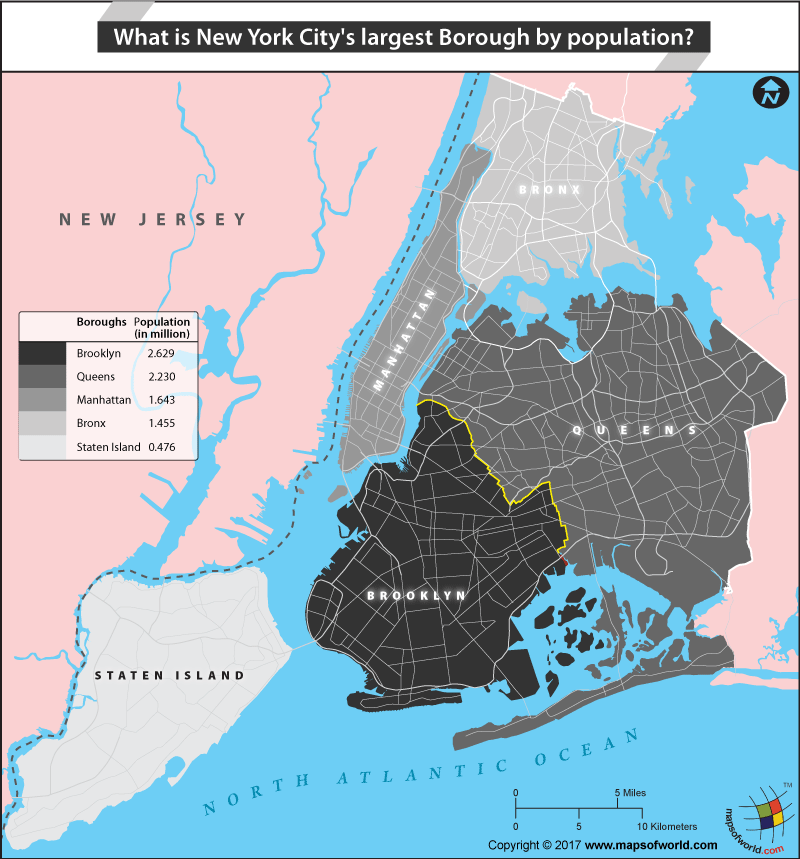
The population of Brooklyn, New York is a constantly evolving entity, reflecting both national demographic shifts and the unique allure of living in one of the most sought-after urban centers in the world. Recent data consistently places Brooklyn as the most populous borough in New York City, a testament to its enduring appeal.
Contemporary Population Figures
As of the latest available census data and reliable estimates, the population of Brooklyn, New York hovers around 2.7 million residents. This figure alone underscores Brooklyn’s status as a major metropolitan hub, comparable in population to many standalone cities in the United States. The sheer density of this population, spread across its diverse neighborhoods, contributes significantly to the borough’s energetic atmosphere and its role as a global cultural influencer. This substantial number also necessitates robust public services, transportation networks, and a thriving local economy.
Historical Population Trajectory
The story of Brooklyn’s population is one of significant growth and transformation. From its origins as a collection of small towns and villages, Brooklyn, New York experienced rapid urbanization throughout the 19th and 20th centuries. The construction of the Brooklyn Bridge in 1883, connecting it to Manhattan, was a pivotal moment, accelerating its integration into the larger city and spurring massive population influxes. While periods of slower growth and even population decline occurred, particularly in the mid-20th century, the last few decades have seen a resurgence, driven by factors such as increasing housing development, a burgeoning job market, and its appeal to a younger demographic seeking a vibrant urban lifestyle. This continuous evolution means that the number of people calling Brooklyn home is not static but a dynamic reflection of economic forces, migration patterns, and the enduring magnetism of urban living.
Understanding the Demographic Mosaic of Brooklyn
Beyond the sheer numbers, the population of Brooklyn, New York is characterized by its extraordinary diversity. This demographic richness is a cornerstone of the borough’s identity, influencing its culture, cuisine, and community fabric.
Racial and Ethnic Composition
Brooklyn, New York is renowned for its mosaic of racial and ethnic groups, making it one of the most diverse urban areas in the world. Significant populations of White, Black or African American, Asian, and Hispanic or Latino residents contribute to this vibrant mix. Neighborhoods within Brooklyn often exhibit distinct ethnic concentrations, reflecting historical immigration patterns and ongoing demographic shifts. For instance, areas like Sunset Park are known for their significant Asian and Hispanic communities, while neighborhoods like Crown Heights have historically been centers for African American and Caribbean populations. This diversity is not just a statistical fact; it translates into a rich tapestry of languages spoken, cultural traditions celebrated, and a culinary landscape that offers flavors from every corner of the globe.
Age Distribution and Household Structures
The age distribution within Brooklyn, New York reflects a dynamic blend of generations. The borough is home to a substantial population of young adults and families, drawn by its creative energy, educational institutions, and a perception of being more affordable than parts of Manhattan. This demographic often contributes to a lively arts scene, a growing number of startups, and a demand for family-friendly amenities and schools. Simultaneously, Brooklyn maintains a significant population of older adults, contributing to the borough’s historical depth and the preservation of its established communities. Household structures are equally varied, encompassing single-person households, couples, families with children, and multi-generational homes, all contributing to the complex social fabric of the borough.
Implications of Brooklyn’s Population Size and Diversity
The substantial population of Brooklyn, New York, coupled with its profound diversity, has far-reaching implications for urban planning, cultural development, and the resident experience.
Urban Planning and Infrastructure Needs
Housing the millions who call Brooklyn, New York home requires an immense and continuously evolving infrastructure. This includes a vast public transportation system, such as the subway lines operated by the Metropolitan Transportation Authority, bus routes, and ferry services, essential for connecting its geographically dispersed neighborhoods and residents to work and amenities. The demand for housing is a perennial challenge, leading to ongoing construction and development projects across the borough, from luxury apartments in areas like Dumbo to more affordable housing initiatives in other districts. Furthermore, the sheer number of residents necessitates robust public services, including schools, hospitals, sanitation, and emergency services, all operating at a scale commensurate with a major city. The maintenance and expansion of parks, recreational facilities, and cultural institutions are also vital to enhancing the quality of life for this large population.

Cultural Vibrancy and Economic Dynamics
The immense and diverse population of Brooklyn, New York is the engine behind its unparalleled cultural vibrancy. This population fuels a thriving ecosystem of artists, musicians, chefs, entrepreneurs, and creative professionals, contributing to the borough’s reputation as a global center for innovation and culture. Neighborhoods like Williamsburg and Bushwick have become synonymous with the contemporary arts scene, while historic areas continue to preserve rich cultural heritage. Economically, this large and diverse workforce supports a wide array of industries, from tech and finance to retail and hospitality. The constant influx of new residents, each bringing their unique skills and perspectives, ensures that Brooklyn remains a dynamic and forward-looking economic powerhouse within New York City and beyond. The scale of consumption and production generated by this population also makes Brooklyn a significant market for businesses and a key driver of regional economic activity.
LifeOutOfTheBox is a participant in the Amazon Services LLC Associates Program, an affiliate advertising program designed to provide a means for sites to earn advertising fees by advertising and linking to Amazon.com. Amazon, the Amazon logo, AmazonSupply, and the AmazonSupply logo are trademarks of Amazon.com, Inc. or its affiliates. As an Amazon Associate we earn affiliate commissions from qualifying purchases.