The vibrant landscape of Texas, known affectionately as the Lone Star State, offers a compelling proposition for entrepreneurs and established businesses alike. With a robust economy, a burgeoning population, and an undeniable charm that attracts visitors from across the globe, Texas stands as a beacon of opportunity in the United States. Its unique blend of diverse cultures, breathtaking natural landmarks ranging from the pristine beaches of the Gulf Coast to the rugged beauty of Big Bend National Park, and its world-class cities like Dallas, Houston, Austin, and San Antonio, makes it not just a place to visit, but a thriving hub for economic activity.
For those dreaming of opening a boutique hotel in Austin, launching a unique tourism experience in San Antonio, or establishing a new tech startup in Dallas, understanding the intricacies of business registration in Texas is the foundational step towards success. The state’s business-friendly environment, characterized by no state income tax on individuals and a relatively low cost of living compared to other major economic centers, further sweetens the deal. Whether you envision a modest sole proprietorship or a sprawling limited liability company (LLC), navigating the registration process effectively ensures your venture is legally sound and poised for growth in this dynamic state. This guide will walk you through the essential steps, ensuring your entrepreneurial journey in Texas begins on firm ground.
The Strategic First Step: Choosing Your Business Structure in Texas
Before embarking on the practical steps of registering your business, a critical decision awaits: choosing the right legal structure. This choice impacts everything from your personal liability and taxation to your ability to raise capital and the administrative burden you’ll face. Understanding the nuances of each option is paramount, especially when considering the long-term lifestyle and financial implications for your entrepreneurial venture.
Understanding Your Options: From Sole Proprietor to Corporation
Texas offers several primary business structures, each with its own advantages and disadvantages. Your choice should align with your business goals, the number of owners, your comfort level with personal liability, and your tax strategy.
Sole Proprietorship: Simplicity and Direct Control
The sole proprietorship is the simplest and most common business structure, particularly for individuals operating independently. If you’re starting a small-scale travel blog, offering freelance photography services for local attractions, or running a modest guesthouse, this might be your initial choice.
Pros: It’s incredibly easy to form, often requiring no formal action beyond obtaining necessary licenses or permits. There are minimal federal forms to file, and you have complete control over all business decisions. For tax purposes, your business income and expenses are reported directly on your personal tax return (Schedule C, Form 1040), making tax compliance straightforward.
Cons: The biggest drawback is unlimited personal liability. There’s no legal distinction between you and your business. This means your personal assets, such as your home or savings, could be at risk to satisfy business debts or legal judgments. This structure can also make it challenging to raise capital, as investors typically prefer more formalized entities.
Partnership: Shared Vision, Shared Responsibility
A partnership is a business structure involving two or more individuals who agree to share in the profits or losses of a business. This can be ideal for co-founders launching a new tour company, a pair of chefs opening a restaurant specializing in Texas barbecue, or partners investing in a vacation rental property.
Pros: Partnerships are relatively easy to establish, often requiring just a partnership agreement. They offer shared financial responsibility, allowing partners to pool resources and expertise. Profits and losses are passed through directly to the partners’ personal tax returns, avoiding corporate-level taxation.
Cons: Like sole proprietorships, general partnerships typically come with joint and several unlimited liability, meaning each partner is personally responsible for the business’s debts and actions, including those of their partners. This necessitates a comprehensive partnership agreement to outline responsibilities, profit distribution, and dispute resolution. There are different types, such as Limited Partnerships (LPs) and Limited Liability Partnerships (LLPs), which can offer some liability protection for certain partners, but they involve more complex formation processes.
Corporation: The Path to Limited Liability and Growth
A corporation (C-Corp) is a separate legal entity from its owners, providing the strongest liability protection. This structure is often favored by larger businesses, those seeking significant outside investment, or those planning for eventual public offering.
Pros: The primary advantage is limited liability, meaning shareholders are only liable up to the amount of their investment. Corporations can raise capital through the sale of stock, making them attractive for high-growth ventures. They also offer perpetual existence, meaning the business can continue regardless of changes in ownership.
Cons: Corporations are the most complex business structure to form and maintain. They incur higher formation costs, significant administrative burdens, and strict regulatory compliance. C-Corps are also subject to “double taxation,” where profits are taxed at the corporate level and again when distributed to shareholders as dividends. An S-Corp offers a workaround for double taxation by allowing profits and losses to be passed through directly to owners’ personal income without being subject to corporate tax rates. However, S-Corps have strict eligibility requirements, such as limits on the number and type of shareholders.

Limited Liability Company (LLC): The Modern Entrepreneur’s Favorite
The Limited Liability Company (LLC) has become immensely popular among small business owners and startups due to its hybrid nature, combining the liability protection of a corporation with the tax flexibility and simplicity of a sole proprietorship or partnership. For instance, an LLC is an excellent choice for a family-owned resort in the Texas Hill Country, a chain of local restaurants, or even a single person managing a portfolio of accommodation options.
Pros: LLCs offer limited personal liability, shielding your personal assets from business debts and lawsuits. They boast significant tax flexibility, allowing owners to choose to be taxed as a sole proprietorship, partnership, S-Corp, or C-Corp, depending on what benefits them most. LLCs are also simpler to establish and manage than corporations, with fewer ongoing compliance requirements.
Cons: Owners of LLCs are typically considered self-employed and must pay self-employment taxes (Social Security and Medicare) on all their earnings. While generally straightforward, the specific rules can vary by state. Despite this, the balance of protection and flexibility makes the LLC an attractive option for many Texas entrepreneurs.
Establishing Your Identity: Naming, EIN, and State Registration
Once you’ve settled on the ideal business structure, the next phase involves giving your venture an identity and making it official. This includes everything from choosing a memorable name to obtaining the necessary identification numbers and formally registering with the state. These steps are crucial not only for legal compliance but also for building your brand and ensuring smooth operation.
Crafting a Memorable Name and Securing Your Identity
Your business name is often the first impression you make. It needs to be distinctive, representative of your brand, and most importantly, legally available.
The Art of Naming Your Texas Venture
When selecting a business name in Texas, you must adhere to specific naming conventions, especially for entities like LLCs and corporations. The name must be distinguishable from other registered entities with the Texas Secretary of State. It cannot be misleading regarding the nature of your business, nor can it imply that your business is a governmental agency. For LLCs and corporations, the name must include an appropriate suffix (e.g., “Limited Liability Company,” “LLC,” “Corporation,” “Inc.”).
To check for availability, the primary resource is the SOSDirect database maintained by the Texas Secretary of State. This online portal allows you to search for existing business names to ensure your chosen name isn’t already in use. A thorough search here can prevent future headaches and potential legal disputes.
Protecting Your Brand: Trademarks and DBAs
Beyond state registration, it’s wise to conduct a broader search with the United States Patent and Trademark Office (USPTO) to see if your desired business name, or any part of it, is trademarked. While this isn’t strictly required for state registration, it’s a critical step if you plan to build a national brand, perhaps a chain of boutique hotels or a unique line of Texas-themed souvenirs. A trademark search helps avoid costly infringement issues down the line.
If you plan to operate your business under a name different from its legal name (e.g., a sole proprietorship named “Jane Doe” operating as “The Texas Travel Agency”), you will need to file an Assumed Name Certificate, commonly known as a “Doing Business As” (DBA), with the county clerk in the county (or counties) where you plan to conduct business. For incorporated entities, you would file this with the Texas Secretary of State. This ensures transparency and allows the public to identify the true owner of the business.
The Employer Identification Number (EIN): Your Business’s Federal ID
An Employer Identification Number (EIN), also known as a Federal Tax Identification Number, is like a Social Security number for your business. It’s a nine-digit number assigned by the Internal Revenue Service (IRS) and is essential for various federal tax purposes.
You will need an EIN if your business structure is a corporation or a partnership. You’ll also need one if you plan to hire employees, file excise tax returns, have a Keogh plan, or withhold taxes on income, other than wages, paid to a non-resident alien. Even sole proprietorships may need an EIN if they plan to hire staff. Many banks also require an EIN to open a business bank account, a crucial step for maintaining financial separation between your personal and business finances.
Obtaining an EIN is a free and relatively straightforward process. The quickest way is to apply online directly through the IRS website, where you can receive your EIN immediately. Alternatively, you can apply by phone, fax, or mail, though these methods take longer.
Formalizing Your Presence with the Texas Secretary of State
For certain business structures, formal registration with the Texas Secretary of State is a mandatory step. This applies to LLCs, corporations, and some types of partnerships (like LPs and LLPs). Sole proprietorships and general partnerships typically do not need to register with the SOS, unless they are filing an assumed name at the state level.
Filing Your Certificate of Formation
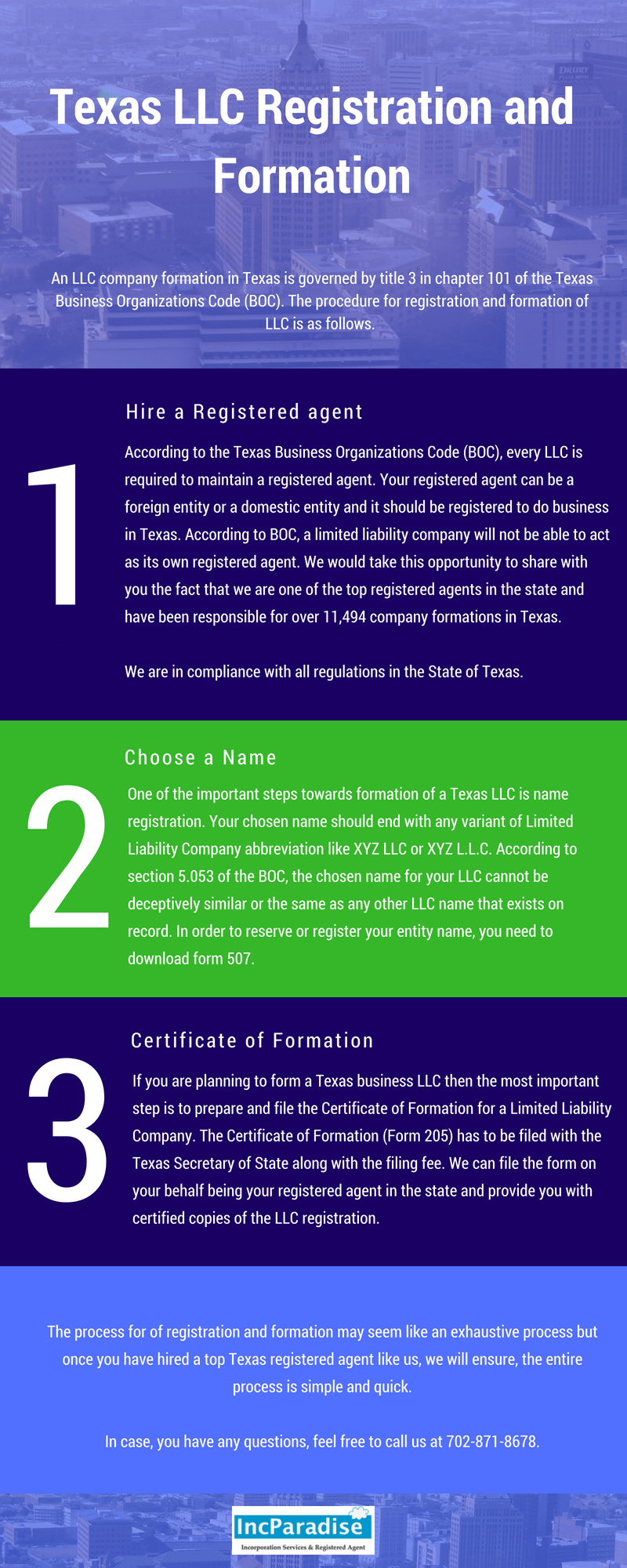
The primary document for registering a new entity in Texas is the Certificate of Formation. This document formally establishes your business as a legal entity in the state. It includes crucial information such as your business name, the type of entity, the name and address of your registered agent, and the purpose of your business. For LLCs, you would file a Certificate of Formation for a Limited Liability Company. For corporations, it’s a Certificate of Formation for a For-Profit Corporation.
You can file your Certificate of Formation online through the SOSDirect system, which is the most efficient method. There are associated filing fees, which vary based on the type of entity. Ensure all information is accurate and complete to avoid delays. Once filed and accepted, the Texas Secretary of State will provide you with a filing receipt, confirming your business’s legal existence.
The Indispensable Registered Agent
Every legal entity registered with the Texas Secretary of State is required to have a registered agent. A registered agent is an individual or entity designated to receive legal documents (such as service of process) and official correspondence on behalf of your business. This agent must have a physical street address in Texas (not a P.O. Box) and be available during normal business hours.
The registered agent plays a vital role in ensuring your business receives important legal and tax notices in a timely manner. You can serve as your own registered agent if you meet the requirements, or you can hire a professional registered agent service. For entrepreneurs who travel frequently or operate their business from a home address they prefer to keep private, a professional registered agent service can be a convenient and discreet option, ensuring consistent compliance.
Beyond Registration: Licenses, Taxes, and Sustained Success
Registering your business is a monumental achievement, but it’s just the beginning. To operate legally and sustainably in Texas, you must also address various permits, licenses, and ongoing tax obligations. These steps ensure your business adheres to industry-specific regulations and contributes its share to the state’s economy, paving the way for long-term lifestyle freedom.
Navigating the Labyrinth of Permits and Licenses
The types of permits and licenses your business needs will depend heavily on your industry, location, and the specific activities you undertake. This can be one of the more complex aspects of business registration, as requirements can vary significantly.
Federal, State, and Local Requirements
- Federal Permits/Licenses: Certain industries are regulated at the federal level. For example, if you’re involved in transportation, agriculture, or alcohol sales, you might need licenses from federal agencies like the Department of Transportation (DOT) or the Alcohol and Tobacco Tax and Trade Bureau (TTB).
- State Permits/Licenses: Texas requires various state-level permits and licenses depending on your profession or industry. For instance, if you operate a restaurant, you’ll need health permits from the Texas Department of State Health Services. If you’re a licensed professional (e.g., real estate agent, cosmetologist), you’ll need specific state board licenses. A useful resource is the Texas Department of Licensing and Regulation (TDLR) website, which provides information on many state licenses.
- Local Permits/Licenses: Don’t overlook local requirements. Your city and county may have their own set of permits, such as zoning permits, occupancy permits, fire department permits, or general business licenses. For example, a new hotel in Austin would need specific city permits related to construction, safety, and hospitality operations. Always check with your local city hall or county clerk’s office for specific requirements in your area.
Understanding Sales Tax and Franchise Tax
- Sales Tax Permit: If your business sells tangible personal property or certain taxable services in Texas, you must obtain a sales tax permit from the Texas Comptroller of Public Accounts. This permit allows you to collect sales tax from your customers and remit it to the state. Even if you sell primarily online, if your business has a physical presence (nexus) in Texas, you are generally required to collect sales tax.
- Franchise Tax: Most businesses in Texas, including LLCs and corporations, are subject to the Texas Franchise Tax. This is not an income tax but a privilege tax imposed on businesses for the privilege of doing business in Texas. Even if your business doesn’t owe any tax, you may still be required to file an annual Public Information Report (PIR) and/or an annual Franchise Tax Report. The thresholds and filing requirements can be complex, so consulting with a tax professional is highly recommended.
Sustaining Your Texas Business: Ongoing Compliance and Growth
Business registration is a continuous process that extends beyond initial setup. Ongoing compliance is crucial for avoiding penalties, maintaining good standing with the state, and ensuring the continued health and growth of your enterprise.
Keeping Records and Renewing Essentials
- Annual Reports and Information Reports: While Texas does not require annual reports for all entity types in the same way some other states do, corporations and LLCs must file an annual Public Information Report (PIR) with the Texas Secretary of State. This report updates information about your business’s officers, directors, or members.
- Maintaining Records: Proper record-keeping is vital. This includes financial records, corporate minutes (for corporations), operational agreements (for LLCs), employee records, and permit/license documentation. Good records simplify tax season, aid in business planning, and protect you in case of audits or legal challenges.
- Registered Agent Consistency: Your registered agent’s information must remain current with the Texas Secretary of State. If your agent moves or you change agents, you must file an updated form to reflect these changes promptly.
- Keeping Permits and Licenses Current: All federal, state, and local permits and licenses have renewal dates. Missing a renewal can result in fines, suspension of operations, or even the revocation of your business’s right to operate. Create a calendar or use a reminder system to track all renewal deadlines.
- Regular Tax Filings: Beyond federal income tax, ensure you’re up-to-date with Texas sales tax, franchise tax, and any other applicable local taxes. Staying current with tax obligations prevents late fees and legal issues.
The Long-Term Vision
Registering a business in Texas is the first step on a potentially rewarding journey. The state’s economic dynamism, coupled with its unique blend of cultural experiences and lifestyle opportunities, makes it an ideal place to launch and grow a venture. By carefully choosing your business structure, diligently completing all registration requirements, and committing to ongoing compliance, you lay a solid foundation for success. Remember, seeking professional advice from attorneys and accountants can provide invaluable guidance, ensuring your business is not only legally compliant but also strategically positioned for thriving in the Lone Star State for years to come. With proper planning and execution, your Texas business can contribute to the state’s vibrant economy and offer you a fulfilling entrepreneurial lifestyle.