
The question of when the State of New York was “founded” is more complex than a single date. Like many of the original thirteen colonies, its origins are a tapestry woven from indigenous claims, colonial ambitions, and eventual nationhood. To truly understand the founding of New York, we must explore its journey from indigenous lands to Dutch settlement, English dominion, and finally, its role as a pivotal state in the nascent United States of America.
Indigenous Roots and Early European Encounters
Long before any European flag was planted on its shores, the land that is now New York was home to diverse indigenous nations. The most prominent were the Haudenosaunee Confederacy, also known as the Iroquois, who controlled vast territories, including much of upstate New York. Their sophisticated political and social structures predated European arrival by centuries, and their presence shaped the landscape and its subsequent history. Other significant tribes, such as the Lenape and Mahican, inhabited the areas closer to the coast and the Hudson River.
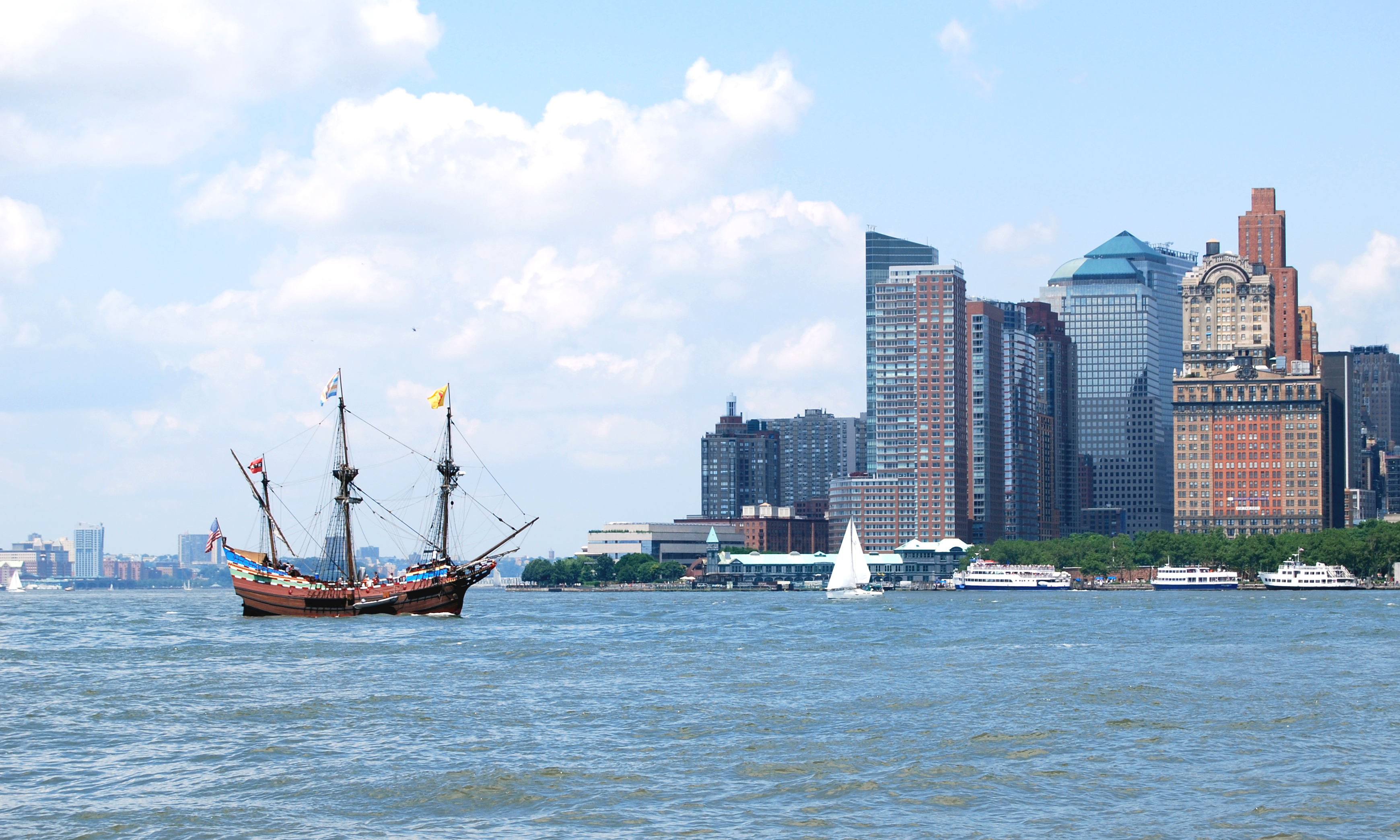
The first significant European contact came in 1609. Henry Hudson, an English explorer sailing for the Dutch East India Company, navigated the river that would eventually bear his name, the Hudson River. His voyage was not one of discovery in the sense of finding unknown lands, but rather a search for a westward passage to Asia. However, his exploration opened the door for Dutch claims and subsequent settlement. The Dutch West India Company soon followed, establishing trading posts and, critically, the settlement of New Netherland.
The Dutch Colony of New Netherland
The Dutch established their first permanent settlement in 1624. This was not a single, unified city but a series of trading posts and settlements that eventually coalesced into a larger colonial enterprise. Fort Orange, near present-day Albany, was established in 1624 as a fur trading center, becoming the administrative heart of the colony. In 1625, the more famous settlement of New Amsterdam was founded on the southern tip of Manhattan Island. This strategic location, with its natural harbor, was intended to be the administrative and commercial capital of New Netherland.
New Netherland was a diverse and relatively tolerant colony for its time. Its population included Dutch settlers, but also Walloons, French Huguenots, Germans, Scandinavians, and Africans, many of whom were enslaved. This early diversity laid the groundwork for the cosmopolitan character of modern New York. The colony’s economy was largely driven by the fur trade, but agriculture and maritime activities also played significant roles. Despite its economic importance, New Netherland remained a relatively small colony compared to its English and French neighbors.
The Dutch administration, led by figures like Peter Stuyvesant, faced challenges from both internal dissent and external threats. Conflicts with indigenous peoples were common, as were disputes over borders with English colonies to the north and south. The colony’s existence was always precarious, a testament to the shifting geopolitical landscape of 17th-century North America.
English Conquest and the Birth of New York
The relationship between the Dutch and the English in North America was one of burgeoning rivalry. In 1664, amidst rising tensions between England and the Netherlands, King Charles II of England granted the territory of New Netherland to his brother, James, the Duke of York. An English fleet arrived in New Amsterdam harbor in August 1664, demanding surrender.
Despite Governor Stuyvesant’s initial defiance, the colony’s inhabitants, weary of Dutch rule and recognizing the overwhelming English military superiority, accepted the terms of surrender. The transition of power was remarkably peaceful, with no significant bloodshed. The Dutch formally ceded the colony on September 24, 1664. In honor of the new proprietor, the colony and its capital city were renamed New York.
The English period brought significant changes. While many Dutch institutions and customs persisted, English law and governance were gradually imposed. The territory was divided into different administrative regions, and new forms of land ownership and taxation were introduced. The name “New York” now encompassed not only the island of Manhattan but also the surrounding mainland territories that had previously been part of New Netherland.
However, this period of English rule was not uninterrupted. In 1673, during the Third Anglo-Dutch War, the Dutch recaptured New York and renamed it New Orange. This recapture was short-lived, as the Treaty of Westminster in 1674 returned the colony to English control, and it once again became New York. This brief Dutch interlude underscores the volatile nature of colonial power struggles.
Colonial Governance and Development

Under English rule, New York developed into a diverse and economically significant colony. Its strategic location along the Hudson River and its excellent harbor at New York City made it a hub for trade, both within the colonies and across the Atlantic. The colony’s economy diversified beyond the fur trade to include agriculture, timber, and shipbuilding.
The political landscape was shaped by the proprietary charter granted to the Duke of York, which provided him with considerable authority. However, over time, demands for greater representation led to the establishment of an assembly, a precursor to the state’s legislative body. The population continued to grow and diversify, attracting immigrants from various European nations, further solidifying the colony’s multicultural character.
New York also played a crucial role in the colonial wars fought between Britain and France. Its position on the frontier with New France (modern-day Quebec) made it a strategic military outpost. The conflicts, such as the French and Indian War, profoundly impacted the colony’s development, fostering a sense of shared identity and resilience among its inhabitants.
The Road to Statehood and Revolution
The mid-18th century saw growing tensions between the American colonies and Great Britain. The imposition of new taxes and laws by the British Parliament, following the costly Seven Years’ War, sparked widespread discontent. New York, with its burgeoning economy and diverse population, was no exception to this growing sentiment of rebellion.
The city of New York became a focal point for revolutionary activities. Public demonstrations, protests, and the formation of patriotic societies marked the escalating conflict. The Stamp Act, in particular, was met with fierce opposition in New York, leading to riots and the formation of groups like the Sons of Liberty.
The Declaration of Independence and the Revolutionary War
When the Continental Congress adopted the Declaration of Independence on July 4, 1776, New York was one of the thirteen colonies that declared their separation from British rule. However, the path to actual independence was fraught with peril. The Revolutionary War saw considerable fighting within the borders of New York. The strategically important city of New York was occupied by British forces for the duration of the war, making it a challenging base for the Continental Army.
The battles fought in New York, such as the Battle of Saratoga in 1777, were pivotal. The American victory at Saratoga is often considered the turning point of the war, as it convinced France to formally ally with the Americans, providing crucial military and financial aid. Despite the occupation of its major city, the spirit of independence thrived in the rural areas and among the patriots fighting for freedom.
Following the British evacuation of New York City on November 25, 1783, after the signing of the Treaty of Paris, the state of New York began the process of establishing its own government as a sovereign state within the newly formed United States of America.

Ratification of the Constitution and Becoming a State
The formation of the United States of America was not solely about declaring independence; it also involved creating a new framework of governance. The Articles of Confederation, the first governing document of the fledgling nation, proved to be weak and ineffective. This led to the Constitutional Convention of 1787, where the U.S. Constitution was drafted.
The ratification of the U.S. Constitution by each state was a crucial step in solidifying the union. New York, with its significant population and economic power, played a vital role in this process. The debates over ratification were intense, with strong Federalist and Anti-Federalist factions arguing their cases. Alexander Hamilton, James Madison, and John Jay authored the Federalist Papers, a series of essays advocating for the ratification of the Constitution, which remain a foundational text in American political thought.
New York officially ratified the U.S. Constitution on July 26, 1788. This date is often considered a key moment in the “founding” of the State of New York as a constituent part of the federal union. While the colony had existed for over a century, its transformation into a state within the republic marked a new era of self-governance and national identity.
The early years of statehood were marked by the challenges of rebuilding after the war, establishing a stable economy, and defining its place within the new nation. New York quickly rose to prominence, driven by its strategic location, its industrious population, and its burgeoning commercial and financial sectors. The city of New York even served as the nation’s first capital from 1785 to 1790, further cementing its importance.
In conclusion, the “founding” of the State of New York is not a singular event but a continuous evolution. It began with the indigenous peoples who first inhabited the land, continued through Dutch settlement and English conquest, and culminated in its embrace of independence and its ratification of the U.S. Constitution, officially becoming a state on July 26, 1788. Each phase contributed to the rich history and distinct character of this influential American state.
LifeOutOfTheBox is a participant in the Amazon Services LLC Associates Program, an affiliate advertising program designed to provide a means for sites to earn advertising fees by advertising and linking to Amazon.com. Amazon, the Amazon logo, AmazonSupply, and the AmazonSupply logo are trademarks of Amazon.com, Inc. or its affiliates. As an Amazon Associate we earn affiliate commissions from qualifying purchases.