
The Florida Keys, a sun-drenched archipelago stretching southwest from the tip of the Florida peninsula, beckon with their unique blend of laid-back charm, vibrant marine life, and breathtaking sunsets. Reaching this tropical paradise requires a journey that is as much a part of the experience as the destination itself. Whether you prefer the convenience of air travel or the scenic allure of a road trip, understanding your options for navigating to the Keys is the first step in planning an unforgettable escape.
The Gateway to Paradise: Miami and Fort Lauderdale
For most travelers flying into Florida to reach the Keys, the journey typically begins at one of South Florida’s major international airports. These hubs offer extensive flight options and serve as crucial springboards for the onward journey south.

Flying into South Florida
Two primary airports dominate the landscape for those heading to the Keys:
- Miami International Airport (MIA): Located approximately 60 miles north of Key Largo, MIA is a major international gateway, offering a vast array of domestic and international flights. Its extensive network often translates to more competitive pricing and flexible schedules. From MIA, travelers can easily access the Florida Turnpike or U.S. 1 South, the direct routes to the Keys.
- Fort Lauderdale-Hollywood International Airport (FLL): Situated about 30 miles north of Miami and roughly 90 miles from Key Largo, FLL is another excellent option, especially for those utilizing budget airlines. While slightly further north, it remains a convenient and often less congested alternative to MIA, with easy access to southbound highways.
While Key West International Airport (EYW) exists and offers direct flights from a limited number of cities, it’s often more expensive and less convenient for travelers originating from diverse locations. The vast majority of Keys-bound visitors will find the best value and flexibility by flying into Miami or Fort Lauderdale and completing the journey by road or other means.
Ground Transportation from Airports
Once you’ve landed in South Florida, several options exist for the final leg of your journey to the Keys:
- Rental Cars: For most visitors, renting a car is the most practical and recommended option. The ability to explore the various Keys at your own pace, stopping at roadside attractions, beaches, and restaurants, is invaluable. Major rental car agencies are readily available at both MIA and FLL. Booking in advance, especially during peak season, is highly advisable.
- Shuttles and Private Transfers: If you prefer not to drive, several shuttle services operate between South Florida airports and various points in the Keys. Companies like Keys Shuttle offer shared-ride services, which can be a cost-effective alternative for individuals or small groups. Private transfer services provide a more personalized and direct experience, albeit at a higher cost. These options are particularly suitable for travelers heading straight to one specific Key and planning to use local transportation (taxis, ride-shares, bikes) once there.
- Ride-Sharing and Taxis: While available from the airports, the cost of a ride-share or taxi to the Keys, especially to Key West, can be prohibitive due to the significant distance. These are generally not recommended for the full journey.
The Scenic Drive: U.S. 1 Overseas Highway
The quintessential Florida Keys experience is undoubtedly the drive down the U.S. 1 Overseas Highway. This iconic route transforms a simple commute into a breathtaking journey across 42 bridges, stretching over emerald waters and connecting the string of islands.
The Iconic Route
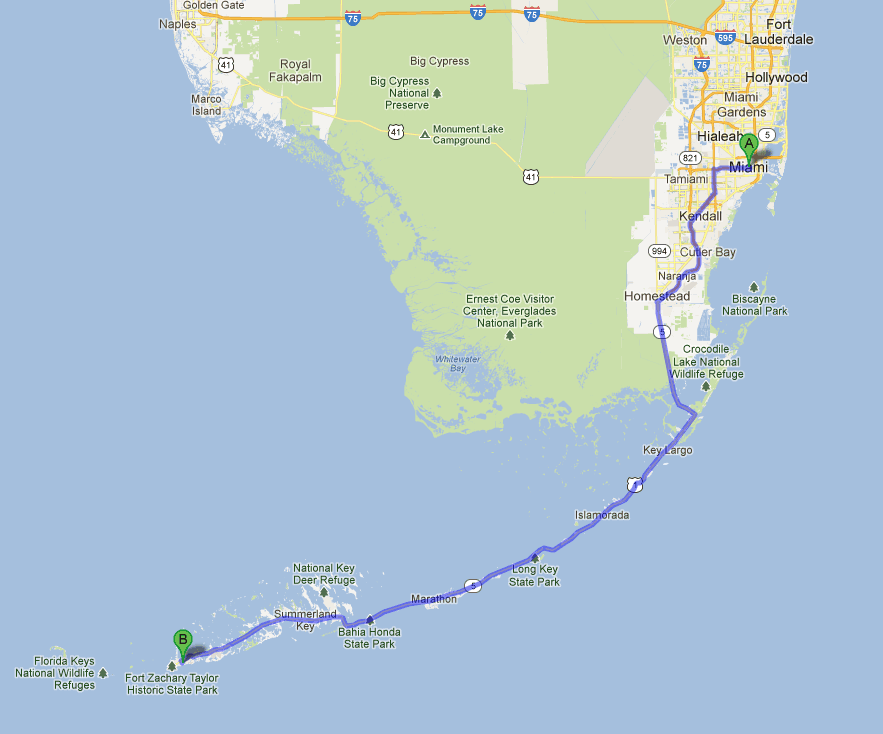
The U.S. 1 Overseas Highway officially begins just south of Florida City, the last city on the mainland before entering the Keys. From this point, a continuous string of islands, each with its unique character, unfolds. The entire length of the Keys is marked by mile markers (MM), beginning around MM 106 in Key Largo and counting down to MM 0 in Key West. These markers are indispensable for navigation, helping you locate specific attractions, restaurants, and your accommodation.
Journey Through the Upper, Middle, and Lower Keys
The drive can be broadly divided into three distinct sections, each offering different vistas and travel times:
- Upper Keys (MM 106 to MM 70): This section includes Key Largo (MM 106-90) and Islamorada (MM 90-70). From Miami, the drive to Key Largo takes approximately 1.5 to 2 hours, depending on traffic. This segment is known for its excellent diving and fishing opportunities, with easy access to sites like John Pennekamp Coral Reef State Park.
- Middle Keys (MM 70 to MM 40): As you continue south, you’ll enter the Middle Keys, encompassing areas like Marathon (MM 53-47) and Grassy Key. The highlight of this section is the magnificent Seven Mile Bridge, a modern engineering marvel that offers unparalleled panoramic views of the ocean. Driving across this bridge is a truly iconic Florida Keys moment. From Miami to Marathon, expect a drive of about 3 to 3.5 hours.
- Lower Keys (MM 40 to MM 0): The final stretch leads you through the tranquil Lower Keys, including Big Pine Key (MM 33-30), home to the unique Key Deer and the National Key Deer Refuge. The journey culminates at Key West (MM 4-0), the southernmost point of the continental United States. The drive from Miami to Key West typically takes 4 to 5 hours without significant stops, though you’ll want to factor in much more time for sightseeing.
Driving Tips and Considerations
While the drive is relatively straightforward, a few tips can enhance your experience:
- Traffic: Weekends, national holidays, and the peak winter season (November to April) can see significant traffic congestion, particularly on the mainland approach and at popular choke points. Planning your drive for off-peak hours (early morning or late evening) or weekdays can save considerable time.
- Speed Limits: Speed limits on the Overseas Highway are strictly enforced, particularly in residential areas and designated wildlife protection zones. Expect limits to range from 35 mph to 55 mph. Enjoy the scenery and avoid rushing.
- Fuel: Gas stations are available throughout the Keys, but it’s wise to keep an eye on your fuel gauge, especially on longer stretches between major towns. Fuel prices can also be slightly higher in the Keys.
- Scenic Stops: Don’t treat this as just a drive. Embrace the journey by stopping at various points of interest, small eateries, or scenic overlooks. The Overseas Highway offers numerous opportunities to pull over and soak in the breathtaking views.
Alternative Transportation Options
While driving is the most popular way to experience the Keys, other methods of travel cater to different preferences and starting points.
Direct Flights to Key West
For those prioritizing speed and convenience, flying directly into Key West International Airport (EYW) is an option. Several major airlines, including American Airlines, Delta Air Lines, and United Airlines, offer service to EYW from various cities like Atlanta, Charlotte, Dallas/Fort Worth, and Miami.
- Pros: Significantly reduces travel time, especially for those whose primary destination is Key West. Offers a direct and hassle-free arrival.
- Cons: Flights to EYW are generally more expensive than those to MIA or FLL. Once in Key West, if you plan to explore other Keys, you’ll still need to arrange local transportation or rent a car, potentially doubling costs.
Ferry Services
For a unique and car-free approach, consider a ferry service to Key West. The Key West Express operates high-speed ferry services from Fort Myers and Marco Island on Florida’s Gulf Coast.
- Pros: Offers a relaxed, scenic journey across the Gulf of Mexico. Avoids the stress of driving and allows passengers to enjoy the open water. A great option for a day trip or an overnight stay in Key West without a car.
- Cons: Operates on a seasonal schedule, typically from October to May. The journey takes several hours (around 3.5 to 4 hours one-way). It’s suitable only for reaching Key West and does not provide transport to the other Keys. You cannot bring a vehicle on the ferry.
Planning Your Journey: Essential Tips
Regardless of your chosen method of travel, a few planning considerations can make your trip to the Florida Keys smoother and more enjoyable.
Best Time to Travel
The peak season for the Florida Keys runs from late November through May, offering ideal weather with comfortable temperatures and lower humidity. This period, however, also sees higher prices and more crowds. The summer months (June to September) are hotter and more humid, with a higher chance of rain and the onset of hurricane season. Traveling during the shoulder seasons (late spring or early fall) can strike a balance between good weather and fewer crowds.
What to Pack for the Drive
If driving, prepare for the journey. Bring plenty of water and snacks, as options can be sparse on certain stretches of the highway. A good GPS or navigation app is essential, though the mile markers on U.S. 1 are also invaluable. Consider a physical map as a backup. Sunscreen, hats, and sunglasses are non-negotiable for exploring once you arrive.
Accommodation and Parking
Booking your accommodation well in advance is crucial, especially during peak season, as options can fill up quickly and prices can escalate. This is particularly true for Key West, where parking can also be a challenge. Many hotels and guesthouses in Key West offer limited parking, often for an additional fee. If staying in Key West, consider if you truly need a car for your entire stay, as walking, biking, and local trolleys are popular modes of transport within the city.

Embracing the “Keys Time” Mentality
Perhaps the most important tip for getting to and enjoying the Florida Keys is to adopt the local “Keys Time” mentality. This means slowing down, taking things easy, and savoring the journey. Whether you’re navigating the iconic Overseas Highway or arriving by air or sea, remember that the relaxation begins the moment you set your sights on this extraordinary destination.
LifeOutOfTheBox is a participant in the Amazon Services LLC Associates Program, an affiliate advertising program designed to provide a means for sites to earn advertising fees by advertising and linking to Amazon.com. Amazon, the Amazon logo, AmazonSupply, and the AmazonSupply logo are trademarks of Amazon.com, Inc. or its affiliates. As an Amazon Associate we earn affiliate commissions from qualifying purchases.