
The story of the founding of the New York Colony is a complex tapestry woven with threads of exploration, commerce, and competing imperial ambitions. Unlike many colonies established by a single individual or a unified charter, New York’s genesis involved multiple European powers, with the Dutch playing a pivotal, albeit ultimately transient, initial role. The land that would become New York was first claimed by the English explorer Henry Hudson in 1609, sailing under the Dutch East India Company’s flag. This foundational voyage, intended to find a westward passage to Asia, instead led to the exploration of the river that now bears his name, and the subsequent establishment of Dutch trading posts.

The Dutch Beginnings: New Netherland
The initial European presence in the region was driven by the lucrative fur trade. The Dutch West India Company, chartered in 1621, was granted a monopoly on trade and settlement in the area. Their primary objective was not necessarily large-scale colonization in the English or French sense, but rather the establishment of trading outposts and the extraction of valuable commodities, primarily beaver pelts.
Fort Orange and New Amsterdam
In 1614, a year before the official formation of the Dutch West India Company, a group of Dutch merchants were granted a charter to explore and trade in the region, leading to the establishment of Fort Nassau near present-day Albany. This was later replaced by Fort Orange in 1624, a more permanent trading post that would become the nucleus of the settlement that grew into Albany.
The most significant Dutch settlement, however, was established on the southern tip of Manhattan Island. In 1624, the first settlers of the colony of New Netherland arrived. The island was officially purchased from the indigenous Lenape people in 1626 by Peter Minuit, the Director-General of New Netherland, for goods valued at 60 Dutch guilders, a transaction that has become legendary. This settlement was named New Amsterdam and quickly grew into a bustling port and administrative center. New Amsterdam was strategically located, controlling access to the Hudson River and the vast interior, making it a vital hub for the Dutch fur trade and a burgeoning commercial center. The colony’s administration was hierarchical, with the Director-General holding significant authority, though a Council of Nine was eventually established to advise him.
English Claims and Imperial Rivalry
The Dutch presence, while dominant for a period, was precarious due to its proximity to English settlements in New England and its challenging position within the larger geopolitical landscape of colonial expansion. The English, particularly under King Charles II, viewed the Dutch presence as an unwelcome intrusion into territories they believed rightfully belonged to them, based on Hudson’s earlier voyages.

The Duke of York’s Patent
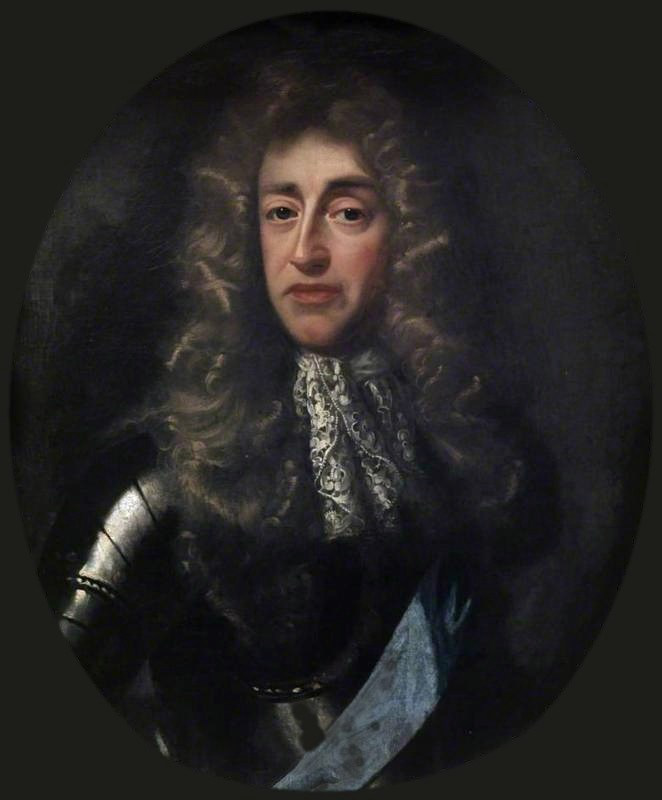
In 1664, King Charles II of England granted a vast tract of land, including the Dutch colony of New Netherland, to his brother, James, the Duke of York (later King James II). This patent was a clear assertion of English sovereignty over the region, setting the stage for a direct confrontation with the Dutch. The English Crown saw the strategic importance of the region for consolidating its North American holdings and saw the Dutch settlement as a barrier to this expansion.
The English Conquest
The English move was swift and decisive. In August 1664, a fleet of English warships arrived in the harbor of New Amsterdam, demanding the surrender of the colony. The Dutch Director-General at the time, Peter Stuyvesant, a proud and autocratic figure, initially vowed to resist. However, he was faced with a populace largely unwilling to fight, a lack of adequate defenses, and the overwhelming naval power of the English. The prospect of a bloody siege and the destruction of their prosperous settlement led Stuyvesant to capitulate without firing a shot.
On September 8, 1664, the Dutch formally surrendered New Netherland to the English. The colony was renamed New York in honor of its new proprietor, the Duke of York. Fort Orange was renamed Albany. The transition of power was remarkably peaceful, and many Dutch settlers remained, integrating into the new English administration. The English governance initially retained some of the Dutch administrative structures and legal traditions, reflecting a pragmatic approach to consolidating control.
A Brief Dutch Return and Final English Control
The Anglo-Dutch rivalry continued, and in 1673, during the Third Anglo-Dutch War, the Dutch recaptured New York, renaming it New Orange. However, this Dutch rule was short-lived. The Treaty of Westminster in 1674 formally ceded New Netherland back to the English, and the colony was once again named New York. This marked the definitive end of Dutch colonial rule in the region and solidified English control, paving the way for further English settlement and development.
The Legacy of Dual Foundations
Therefore, while the title “Who Founded The New York Colony?” might suggest a singular founder, the reality is more nuanced. The Dutch, through the Dutch West India Company and figures like Peter Minuit and Peter Stuyvesant, laid the crucial groundwork by establishing settlements and initiating trade. However, it was the English, under the charter granted to the Duke of York and the subsequent conquest by James, the Duke of York, that ultimately established the New York Colony as it became known. The colony inherited a rich linguistic, cultural, and economic legacy from its Dutch predecessors, a blend that would define its unique character throughout its history and continue to shape New York City and the wider region into the vibrant and diverse metropolis it is today. The founding of New York is thus a testament to the shifting tides of imperial power and the enduring drive for strategic advantage and economic prosperity in the early colonial era.
LifeOutOfTheBox is a participant in the Amazon Services LLC Associates Program, an affiliate advertising program designed to provide a means for sites to earn advertising fees by advertising and linking to Amazon.com. Amazon, the Amazon logo, AmazonSupply, and the AmazonSupply logo are trademarks of Amazon.com, Inc. or its affiliates. As an Amazon Associate we earn affiliate commissions from qualifying purchases.