
Oklahoma, often called the “Sooner State,” boasts a rich and complex history that culminates in its official admission to the United States as the 46th state. The journey to statehood was a long and arduous one, shaped by significant historical events, the displacement of indigenous peoples, and the persistent efforts of settlers. Understanding when Oklahoma was founded as a state requires delving into the territorial periods that preceded its formal recognition.
The Era of Indian Territory
Before Oklahoma became a unified state, its lands were largely designated as Indian Territory. Following the passage of the Indian Removal Act in 1830, numerous Native American tribes were forcibly relocated from their ancestral homelands in the southeastern United States to this designated territory west of the Mississippi River. This forced migration, tragically known as the Trail of Tears, brought tribes such as the Cherokee, Choctaw, Chickasaw, Creek, and Seminole nations to what is now Oklahoma.
These nations, often referred to as the “Five Civilized Tribes,” established their own governments, legal systems, and economies within Indian Territory. They developed distinct cultural institutions and demonstrated a remarkable resilience in the face of adversity. However, their sovereignty and land ownership were constantly under threat from external pressures, particularly the increasing desire of white settlers to acquire land in the region.
The Unassigned Lands and the Land Runs
Adding another layer of complexity to the territorial landscape were the “Unassigned Lands.” These were fertile tracts of land within the boundaries of Indian Territory that were not allocated to any specific Native American tribe. As the westward expansion of the United States intensified, these unclaimed lands became a focal point for settlers eager to claim their own piece of the American West.
To open these lands for settlement, the U.S. government orchestrated a series of “Land Runs.” The most famous and impactful of these was the Land Run of 1889, which occurred on April 22, 1889. At noon on that day, thousands of prospective settlers, often referred to as “Boomers,” lined up along the borders of the Unassigned Lands. At the sound of a gunshot, they surged into the territory on horseback, in wagons, and on foot, staking their claims to tracts of land. This dramatic event led to the rapid establishment of towns such as Guthrie and Oklahoma City, transforming the demographic and economic landscape of the region overnight. Those who entered the territory before the official start time of the land run were known as “Sooners,” a moniker that would later become synonymous with the state.
The Creation of Oklahoma Territory
The influx of settlers following the Land Run of 1889 and subsequent runs necessitated a more formalized governmental structure. In 1890, the U.S. Congress passed the Organic Act, which officially created the Oklahoma Territory. This new territory encompassed the western portion of the lands that would eventually form the state, including the Unassigned Lands and some lands ceded by certain Native American tribes.
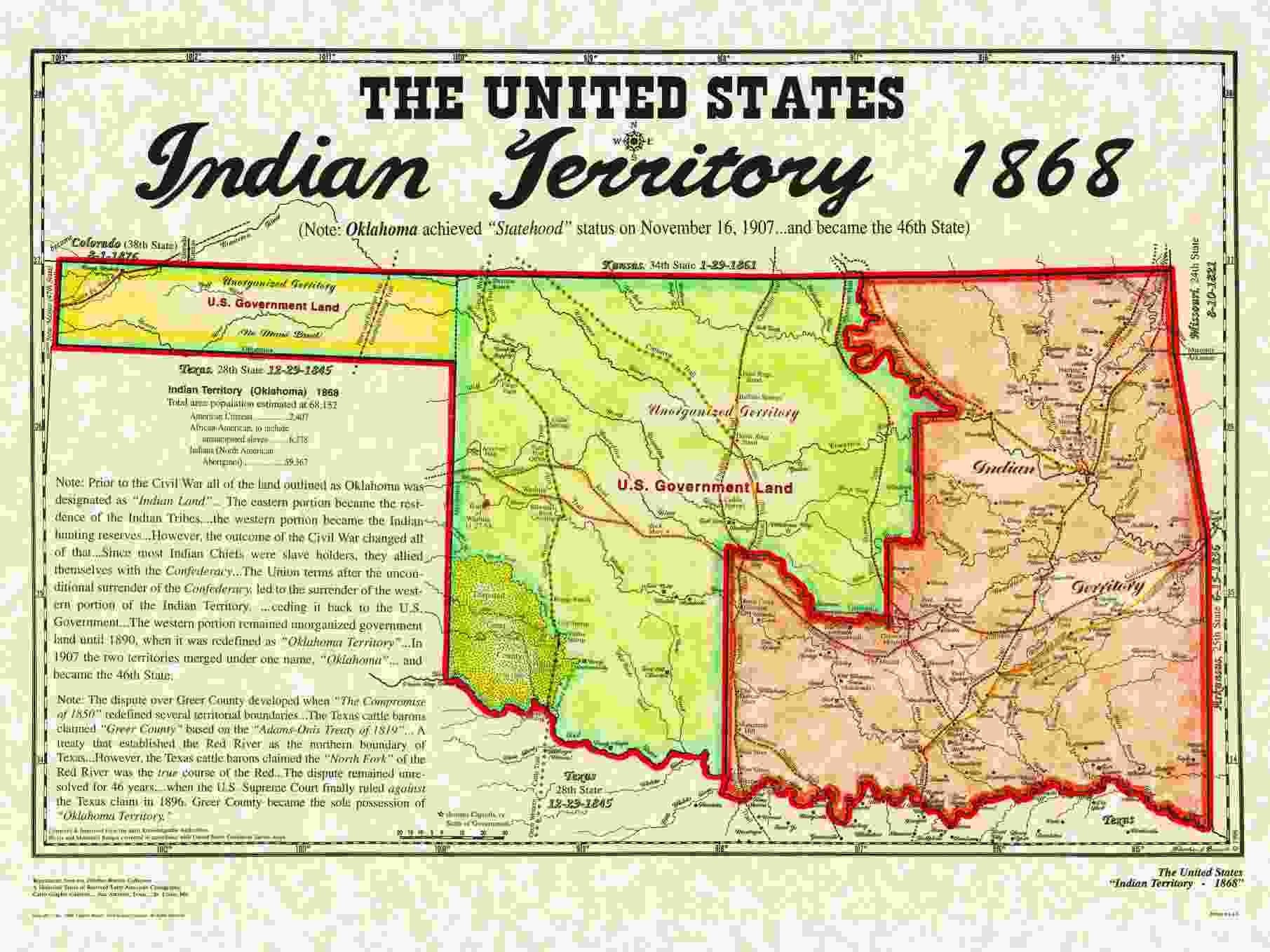
Indian Territory, however, remained a separate entity, governed by its own tribal laws and agreements with the federal government. This division created an unusual situation where two distinct legal and administrative systems coexisted within the same geographical area that would eventually become a single state. The desire for a unified government and full statehood became a driving force for both the residents of Oklahoma Territory and, increasingly, for many within Indian Territory who saw statehood as a path to greater self-determination and economic integration.
The Movement Towards Unification and Statehood
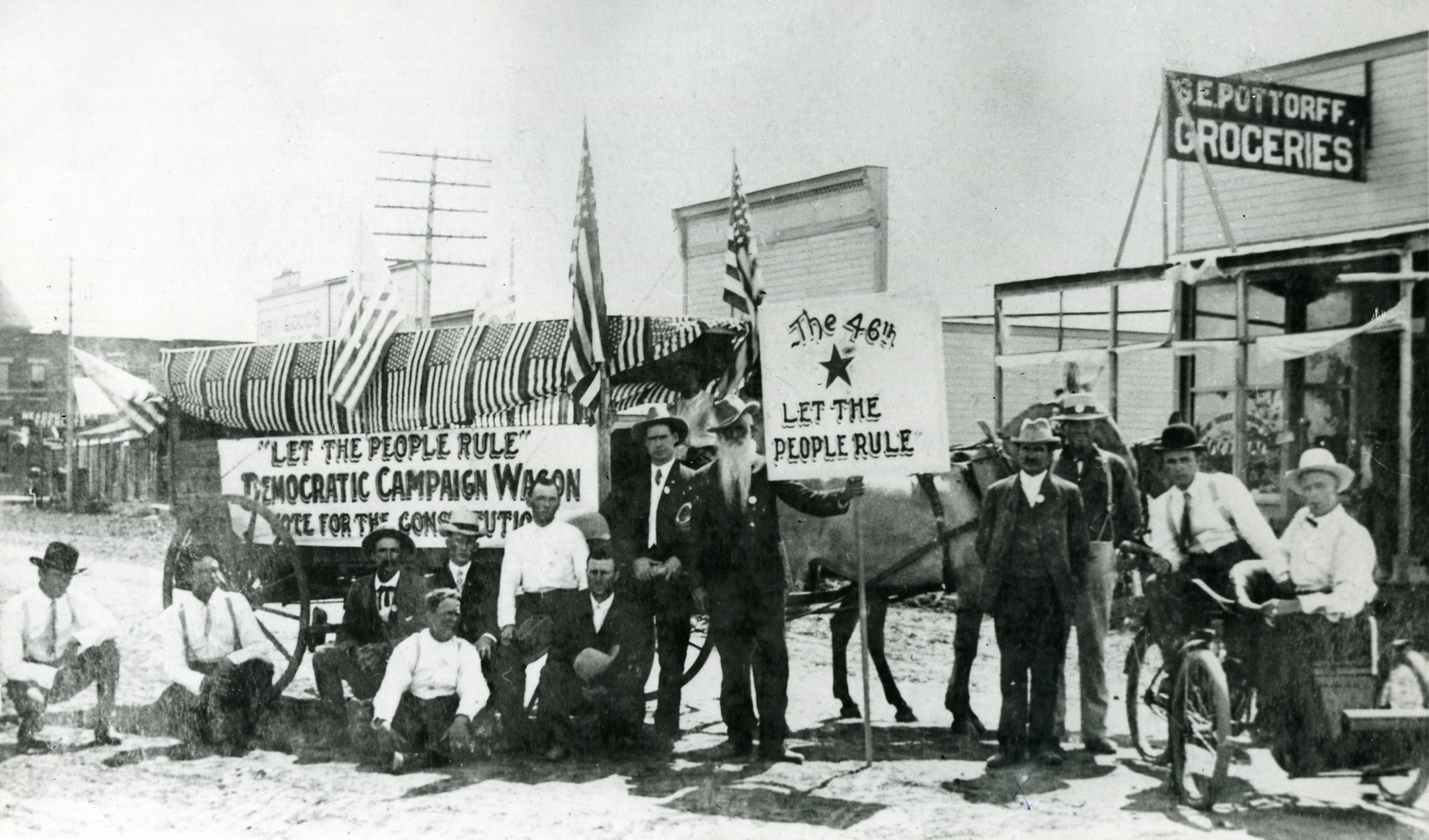
The early 20th century witnessed a concerted push to combine Indian Territory and Oklahoma Territory into a single, cohesive state. This movement was fueled by a variety of factors, including the desire for a unified legal and political system, the increasing assimilation of Native American populations into American society, and the persistent lobbying efforts of political leaders and settlers.
The Enabling Act and the Constitutional Convention
A pivotal moment in the path to statehood arrived in 1906 with the passage of the Enabling Act by the U.S. Congress. This legislation granted permission for the residents of both Oklahoma Territory and Indian Territory to draft a state constitution and elect state officials. The act stipulated that the two territories would be admitted to the Union as a single state.
Following the passage of the Enabling Act, delegates from both territories convened for a constitutional convention in Guthrie, the capital of Oklahoma Territory. This convention, held from November 1906 to July 1907, was a complex and often contentious process. Delegates grappled with issues such as land distribution, civil rights, and the establishment of a new state government that would represent the diverse interests of all its future citizens. The resulting constitution was one of the longest and most detailed in the nation, reflecting the unique historical circumstances of the region.
Statehood Achieved: November 16, 1907
After the ratification of the proposed constitution by the voters and its subsequent approval by the U.S. Congress, President Theodore Roosevelt signed the proclamation admitting Oklahoma to the Union.
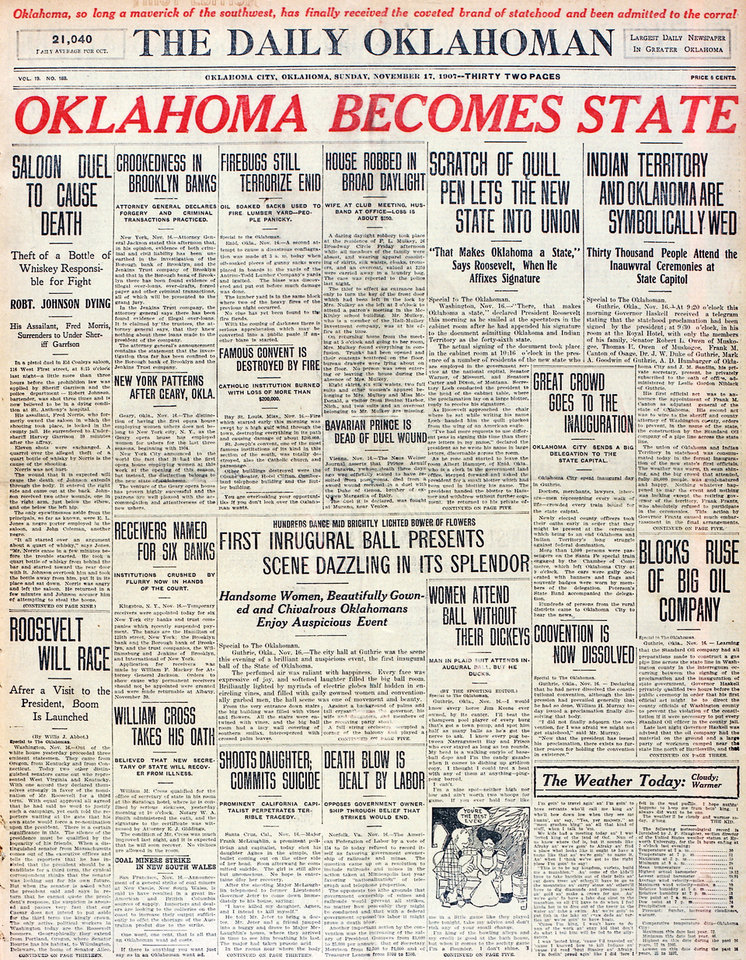
Oklahoma was officially founded as a state on November 16, 1907.
This momentous event marked the culmination of decades of struggle, negotiation, and adaptation. It signified the end of the territorial era and the beginning of Oklahoma’s journey as the 46th state of the United States. The admission was celebrated across the new state, symbolizing a new chapter in its history, one that would continue to be shaped by the legacies of its indigenous peoples and the enduring spirit of its settlers. The name “Oklahoma,” derived from Choctaw words meaning “red people,” serves as a constant reminder of the Native American heritage that is intrinsically woven into the fabric of the state’s identity. The unification of Indian Territory and Oklahoma Territory into a single entity was a significant achievement, laying the groundwork for the future development and cultural richness of the Sooner State.
LifeOutOfTheBox is a participant in the Amazon Services LLC Associates Program, an affiliate advertising program designed to provide a means for sites to earn advertising fees by advertising and linking to Amazon.com. Amazon, the Amazon logo, AmazonSupply, and the AmazonSupply logo are trademarks of Amazon.com, Inc. or its affiliates. As an Amazon Associate we earn affiliate commissions from qualifying purchases.