
Navigating the legalities of matrimony can sometimes feel as intricate as planning a destination wedding. For couples in the Lone Star State, understanding the validity period of a marriage license is a crucial step, impacting everything from their ceremony timing to their future travel plans. While the romance of saying “I do” often takes center stage, the practicalities of the legal document that underpins it are essential for a seamless transition into married life. This guide delves into the specifics of Texas marriage licenses, ensuring couples are well-informed and can proceed with confidence.

The Validity Period of a Texas Marriage License
In Texas, a marriage license is not an indefinite document. It is issued with a specific window of validity, designed to encourage timely union after its acquisition. This period is carefully calibrated to allow couples sufficient time for planning their wedding without enabling indefinite delays that could undermine the intent of the license.
The 90-Day Window
Upon issuance, a Texas marriage license is valid for 90 days. This means that the marriage ceremony must take place within this 90-day period. If the couple does not marry within these 90 days, the license will expire, and they will need to apply for and purchase a new one. This includes paying the associated fees again.
The Waiting Period
A critical aspect of the Texas marriage license system is the mandatory waiting period. Couples must wait 72 hours after the license is issued before they can legally marry. This waiting period is designed to provide a brief, mandatory cooling-off period, allowing individuals to reflect on their decision before solemnizing their union.
Exceptions to the 72-Hour Wait
There are specific circumstances under which the 72-hour waiting period can be waived. These exceptions are narrowly defined and require official documentation or a court order.
- Active Duty Military Personnel: A member of the U.S. armed forces who is on active duty may be exempt from the 72-hour waiting period. Proof of active duty status is typically required, such as a military identification card or a letter from their commanding officer. This provision acknowledges the unique circumstances and potential time constraints faced by military service members.
- Waiver by Court Order: A judge may grant a waiver of the 72-hour waiting period if good cause is shown. This typically involves a situation where there is an urgent need to marry, such as a terminal illness or specific legal or financial implications that necessitate an immediate union. The applicant would need to petition the court and present compelling evidence to justify the waiver.
It is important for couples to be aware of these exceptions and to consult with the county clerk’s office or legal counsel if they believe they qualify for a waiver.
When Does the 90-Day Clock Start Ticking?
The 90-day validity period for a Texas marriage license begins on the day after the license is issued. This distinction is important; the day of issuance itself does not count towards the 90 days. Therefore, if a couple obtains their license on a Monday, the 90-day countdown effectively starts on Tuesday.
Understanding the Expiration Date
Couples should note the exact date their license is issued and calculate the 90-day expiration date carefully. It is advisable to schedule the wedding ceremony well before the expiration date to avoid any last-minute complications. For instance, if the license is issued on January 1st, it will expire on April 1st. However, the ceremony must occur before April 1st, and after the 72-hour waiting period has passed.
Consequences of an Expired License
Marrying with an expired license in Texas is not legally binding. If the 90-day period elapses without a marriage ceremony taking place, the license becomes void. This means:
- The License is Invalid: The document no longer serves its purpose, and any ceremony performed under its authority will not be recognized as a legal marriage.
- Reapplication Required: To get married legally in Texas, the couple will need to return to the county clerk’s office, complete a new application, and pay the marriage license fee again. They will also need to observe the 72-hour waiting period once more, unless an exception applies.
This can be a frustrating and costly experience, especially for couples who have already made wedding arrangements and are unaware of the expiration. Therefore, diligent tracking of the license’s validity is paramount.
Factors Affecting Marriage License Application and Validity
Beyond the expiration date, several other factors can influence the application process and the overall readiness for marriage in Texas.

Residency Requirements
Texas does not have a residency requirement for obtaining a marriage license. This means that individuals who are not residents of Texas are still eligible to apply for and obtain a marriage license in the state, provided they meet all other requirements. This makes Texas a popular choice for couples planning destination weddings.
Age Requirements
Both individuals applying for a marriage license must be at least 18 years of age. If either applicant is 18 years of age or older, they can obtain a marriage license without parental consent.
- Minors (Under 18): If an applicant is 16 or 17 years of age, they may marry with parental consent. This consent must be provided in person by a parent or guardian at the time of application, or through a written, notarized statement. Additionally, a court order is required for individuals under the age of 16 to marry.
Identification and Documentation
Applicants must present valid, government-issued identification when applying for a marriage license. Accepted forms of ID typically include:
- Driver’s license
- State-issued identification card
- Passport
- Military identification
Additionally, applicants will need to provide their Social Security numbers. If either party has been previously married, they will need to provide the date their last marriage ended (divorce, annulment, or death). Proof of divorce, such as a final divorce decree, may be required in some counties, though often simply providing the date is sufficient.
Blood Tests
Texas law does not require blood tests for marriage licenses. This was a requirement in the past, but it has since been abolished, simplifying the application process.
Planning Your Texas Wedding with the License in Mind
The validity period of a marriage license is a critical logistical element for any wedding planned in Texas. Couples should factor this into their timeline from the very beginning of their wedding planning.
Timing of Application
It is generally recommended that couples obtain their marriage license about two to four weeks before their wedding date. This provides a buffer to account for any unexpected delays or issues that might arise during the application process. Applying too early means the license could expire before the wedding, while applying too late could lead to rushed arrangements or missing the wedding date altogether if there are unforeseen circumstances.
Communicating with Your Officiant
Ensure your officiant is aware of your marriage license details, including the issuance date and expiration date. They will need the license to perform the ceremony and will be responsible for returning it to the county clerk’s office after the wedding to be officially recorded.
Destination Weddings and Texas Licenses
For couples planning a destination wedding in Texas but residing elsewhere, understanding the requirements is key. As mentioned, Texas does not have residency requirements. This means they can travel to Texas, obtain their license, and then have their ceremony within the 90-day validity period. However, they must be physically present in Texas to apply for and receive the license. The ceremony itself can be performed anywhere within the state of Texas by a qualified officiant.
The Marriage Certificate
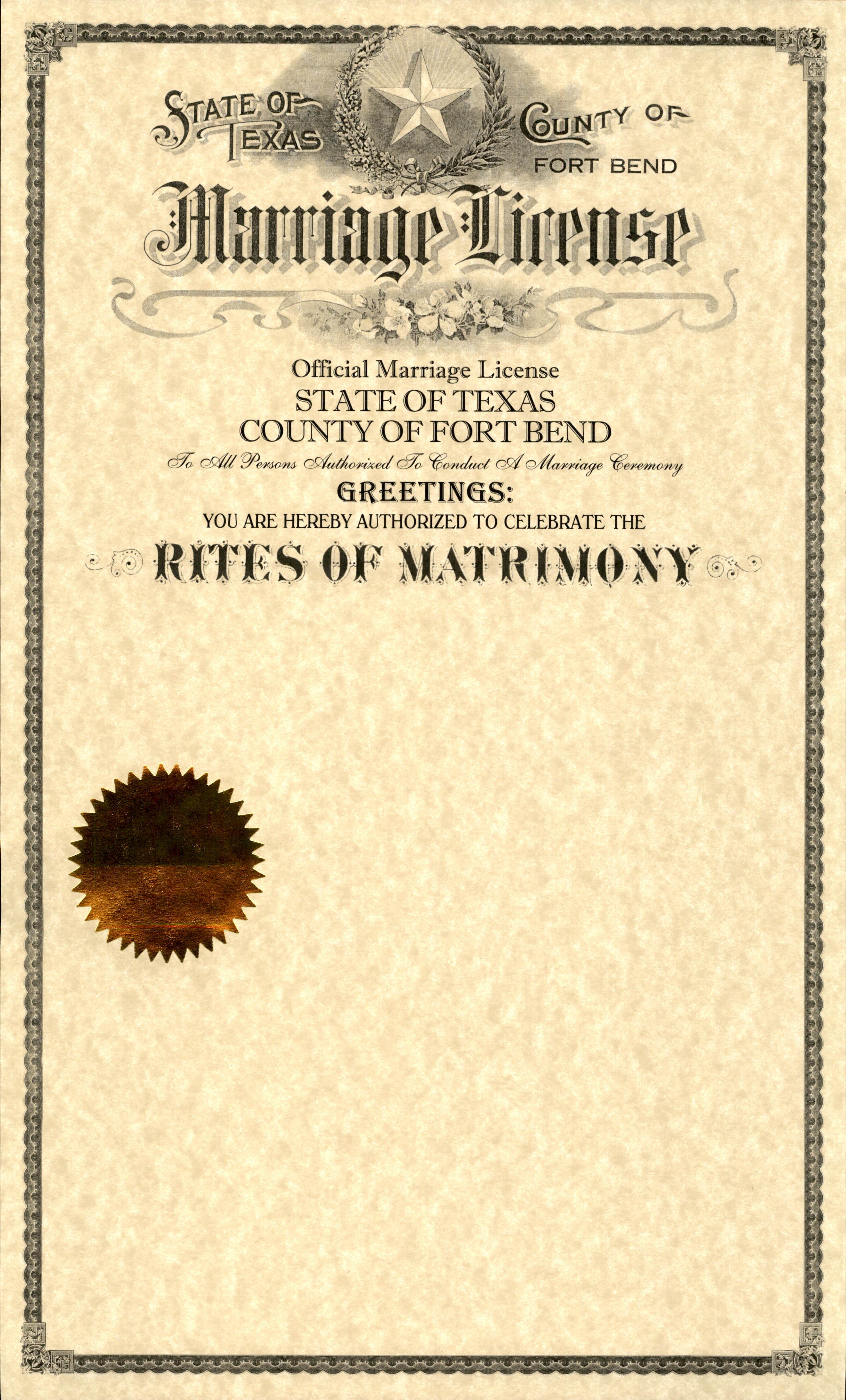
Once the marriage license is signed by the officiant and witnesses (if required by county policy, though Texas law only requires the officiant and the couple) and returned to the county clerk’s office, it is recorded and becomes the official marriage certificate. This is the legal proof of marriage. Couples can then obtain certified copies of their marriage certificate, which will be necessary for name changes, insurance purposes, and other legal and administrative matters. The recording process typically takes a few days to a couple of weeks after the ceremony.
By understanding and adhering to the guidelines surrounding Texas marriage licenses, couples can ensure their journey to marital bliss is legally sound and free from unnecessary complications, allowing them to focus on the joyous celebration of their union.
LifeOutOfTheBox is a participant in the Amazon Services LLC Associates Program, an affiliate advertising program designed to provide a means for sites to earn advertising fees by advertising and linking to Amazon.com. Amazon, the Amazon logo, AmazonSupply, and the AmazonSupply logo are trademarks of Amazon.com, Inc. or its affiliates. As an Amazon Associate we earn affiliate commissions from qualifying purchases.