
Situated in the heart of Central Florida, Stetson University stands as a premier landmark of higher education, architectural beauty, and historical significance. Often referred to as a “hidden gem” nestled away from the high-octane tourist corridors of Orlando, the university is primarily located in DeLand, a city that mirrors the institution’s commitment to heritage and culture. To understand where this landmark is, one must look beyond a simple pin on a map and explore the rich tapestry of its physical environment, its secondary campuses, and its standing within the Sunshine State.
The Heart of Central Florida: Locating the DeLand Campus
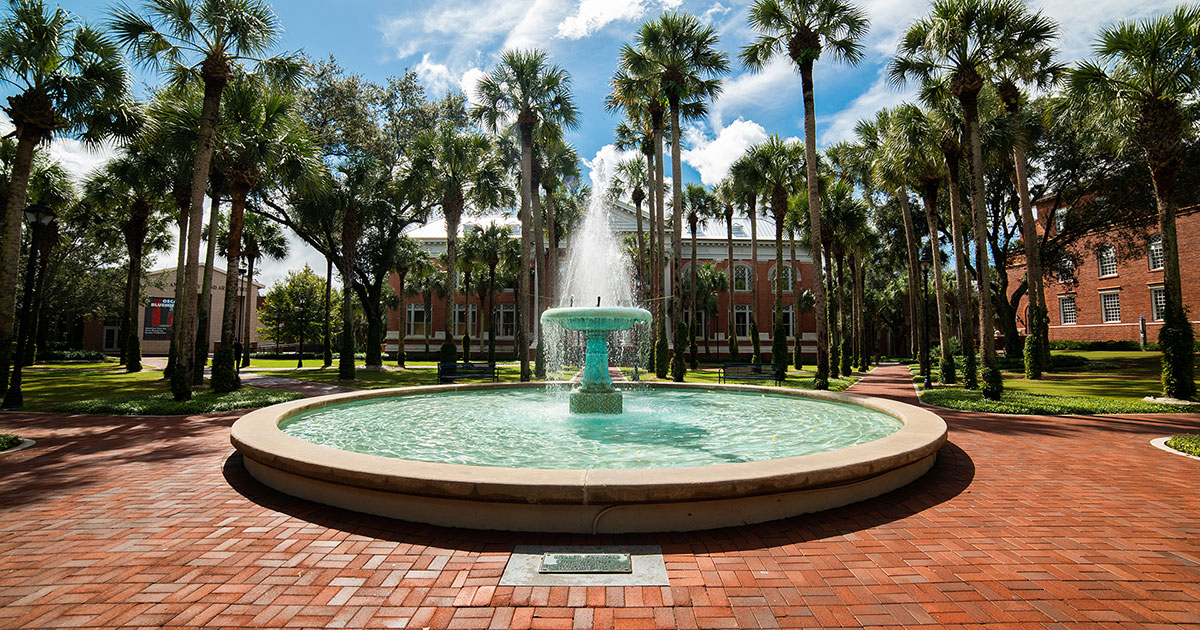
The main campus of Stetson University is found in DeLand, which serves as the county seat of Volusia County. Geographically, it is positioned roughly halfway between the metropolitan skyline of Orlando and the world-famous coastlines of Daytona Beach. This location offers a unique juxtaposition of Florida landscapes: the rolling hills and freshwater springs of the interior and the proximity to the Atlantic Ocean.
DeLand itself is often described as the “Athens of Florida,” a nickname bestowed upon it by its founder, Henry DeLand, who envisioned a center of culture and education in the late 19th century. The university is the cornerstone of this vision, occupying a significant portion of the city’s historic core. Visitors traveling to the landmark often use Interstate 4 or U.S. Route 17 to reach the campus, which is anchored by the vibrant Woodland Boulevard.
The setting is quintessentially “Old Florida.” Unlike the sprawling urbanized areas of Miami or Tampa, the area surrounding Stetson University is characterized by canopy roads, historic residential districts, and the nearby St. Johns River. This geographic placement ensures that the university remains a tranquil sanctuary of learning while staying connected to the state’s major economic hubs.
Architectural Grandeur: A Landmark of the Gilded Age
When asking where Stetson University is, one cannot ignore its designation on the National Register of Historic Places. The campus itself is a physical landmark of Victorian Architecture and early 20th-century design. The Stetson University Historic District comprises numerous buildings that have stood for over a century, providing a visual narrative of Florida’s development.
Elizabeth Hall and the Iconic Red Bricks
The most recognizable landmark on campus is Elizabeth Hall. Named after the wife of John B. Stetson, the famous hat manufacturer and the university’s primary benefactor, this building is a masterpiece of patterned brickwork and classical symmetry. Its towering presence and the Eloise Glockenspiel within its cupola make it a focal point for residents of DeLand and visitors alike. The architecture reflects the Gilded Age’s opulence, brought to the Southern United States by industrialists who fell in love with the climate.
Holler Fountain and Palm Court
At the center of the campus landscape lies the Palm Court, a lush green space framed by the university’s historic halls. Within this space is the Holler Fountain, a landmark that was originally displayed at the 1939 New York Worlds Fair. The fountain is not just a water feature but a symbol of the university’s connection to global events and its ability to preserve historical artifacts. Surrounding the fountain are Sampson Hall and Conrad Hall, both of which contribute to the campus’s atmosphere of academic timelessness.
Hulley Tower
Another significant architectural landmark is Hulley Tower. Originally a much taller structure that housed a carillon, it was damaged by hurricanes and eventually partially dismantled. Today, the remains of the tower serve as a poignant memorial and a site for campus traditions. It represents the resilience of the university against the tropical elements of Florida.
The Legacy of the Founders: Henry DeLand and John B. Stetson
The university’s location in DeLand is no accident; it is the result of a partnership between two influential figures of the 1880s. Henry DeLand, a baking powder tycoon from New York, founded the city in 1876 and established the DeLand Academy in 1883. However, following a series of agricultural freezes that devastated the local citrus industry, the school faced financial ruin.
Enter John B. Stetson, the Philadelphia hat maker who had begun wintering in the area. His financial intervention saved the institution, which was subsequently renamed in his honor. This history makes the campus a landmark of American philanthropy. The influence of John B. Stetson is felt everywhere, from the street names to the very aesthetic of the red-brick buildings, which were designed to withstand the humidity and heat of the Gulf Coast and interior regions.
The university also serves as a landmark for the Florida Baptist Convention, with which it was historically affiliated. While it is now an independent institution, the presence of the First Baptist Church of DeLand adjacent to the campus serves as a reminder of its denominational roots and the cultural history of the Deep South.
Natural Beauty and Environmental Landmarks
Beyond the man-made structures, Stetson University is a landmark of natural beauty. The campus is known for its towering Live Oaks draped in Spanish Moss, creating a “Garden City” feel that is rare in many modern academic settings.
The Gillespie Museum
Located on the edge of the campus, the Gillespie Museum is a landmark for Earth science enthusiasts. It houses one of the largest mineral collections in the Southeastern United States. The museum’s grounds also feature the Rinker Environmental Learning Center, which highlights the university’s commitment to the local ecology. This includes the preservation of the Longleaf Pine ecosystem, which once dominated the Florida landscape.
Proximity to State Parks
The university’s location provides easy access to some of the state’s most significant natural landmarks. Just a short drive away is Blue Spring State Park, a winter refuge for the West Indian Manatee. To the west lies the Ocala National Forest, a massive protected area featuring crystalline springs and diverse wildlife. This proximity allows the university to serve as a gateway for those looking to explore the wilder side of Florida.
Beyond DeLand: The Gulfport and Tampa Footprints
While the heart of the institution is in DeLand, Stetson University is also a significant landmark in the Tampa Bay Area.
Stetson University College of Law in Gulfport
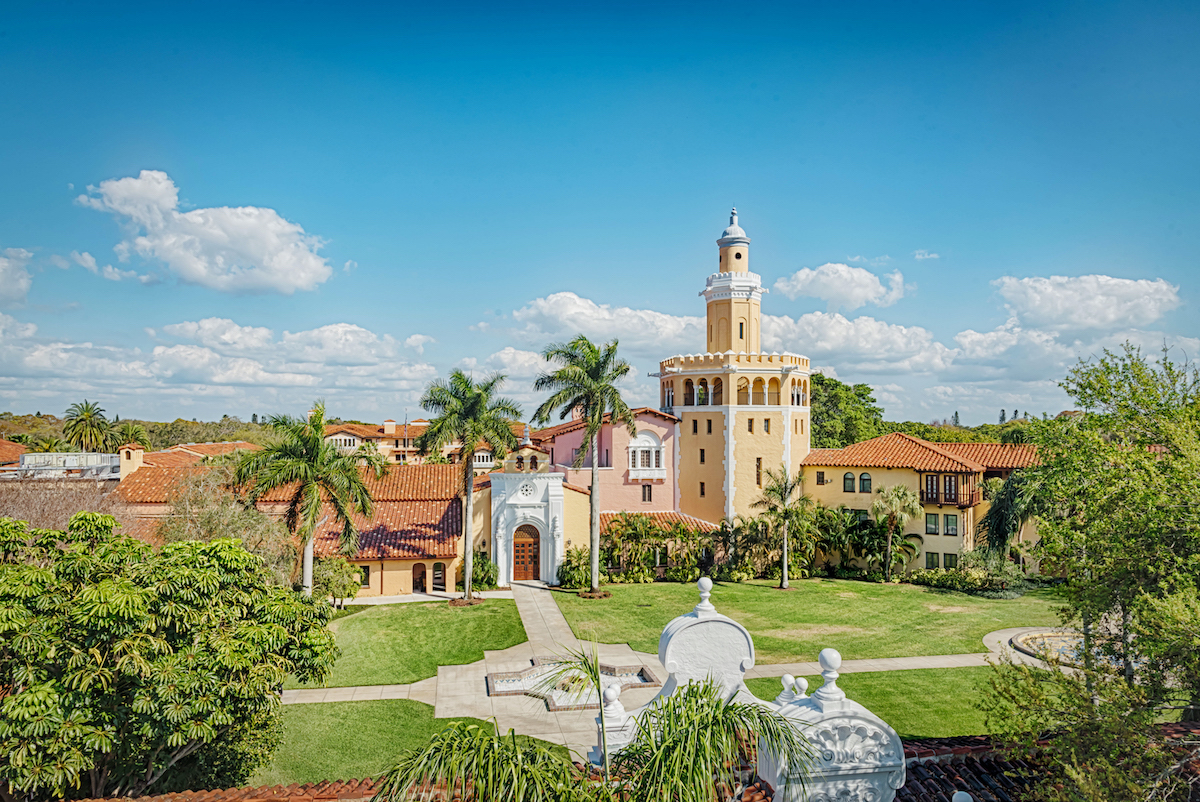
In 1954, the university’s law school moved from DeLand to Gulfport, near St. Petersburg. This campus is a landmark in its own right, housed in the former Rolyat Hotel. The architecture here shifts from the red bricks of DeLand to a stunning Mediterranean Revival style, complete with courtyards, fountains, and ornate tile work. It is frequently cited as one of the most beautiful law school campuses in the country.
The Tampa Law Center
Further expanding its reach, the university established the Tampa Law Center in downtown Tampa. This modern landmark serves as a satellite campus and houses a branch of the Florida Second District Court of Appeal. This presence in the Tampa Bay region ensures that the “Stetson” name is a landmark of legal excellence across the entire state.

Cultural and Athletic Landmarks
The identity of Stetson University is also tied to its athletic and cultural venues. Spec Martin Stadium, located slightly off the main campus in DeLand, is the home of the Stetson Hatters football team and is a gathering place for the local community. Similarly, Melching Field at Conrad Park is a landmark for collegiate baseball, reflecting the deep-seated sports culture of Florida.
Inside the campus, the Hand Art Center stands as a landmark for the fine arts. It houses a permanent collection of works by Oscar Bluemner, a famous Modernist painter. The presence of such a specific and valuable collection makes the university a destination for art historians and critics from around the United States.
In conclusion, Stetson University is located in the charming, historic city of DeLand, Florida. However, it is much more than a point on a map. It is a sprawling landmark of Victorian and Mediterranean Revival architecture, a testament to the philanthropy of the Gilded Age, and a guardian of Central Florida’s natural and cultural heritage. Whether you are exploring the red-brick corridors of Elizabeth Hall or the sun-drenched courtyards of the Gulfport campus, Stetson University remains one of the state’s most enduring and significant landmarks.
LifeOutOfTheBox is a participant in the Amazon Services LLC Associates Program, an affiliate advertising program designed to provide a means for sites to earn advertising fees by advertising and linking to Amazon.com. Amazon, the Amazon logo, AmazonSupply, and the AmazonSupply logo are trademarks of Amazon.com, Inc. or its affiliates. As an Amazon Associate we earn affiliate commissions from qualifying purchases.