
Navigating the complexities of construction law can be a daunting task, especially when it comes to securing payment for labor and materials provided on a project. In Texas, the mechanics lien is a powerful tool designed to protect contractors, subcontractors, and suppliers. This legal instrument allows claimants to place a claim against a property where they have provided services or materials that have not been paid for, ultimately providing leverage to ensure payment or initiate foreclosure proceedings. Understanding the precise steps and requirements for filing a valid mechanics lien in Texas is crucial for anyone involved in the state’s vibrant construction industry.
Understanding the Mechanics Lien in Texas
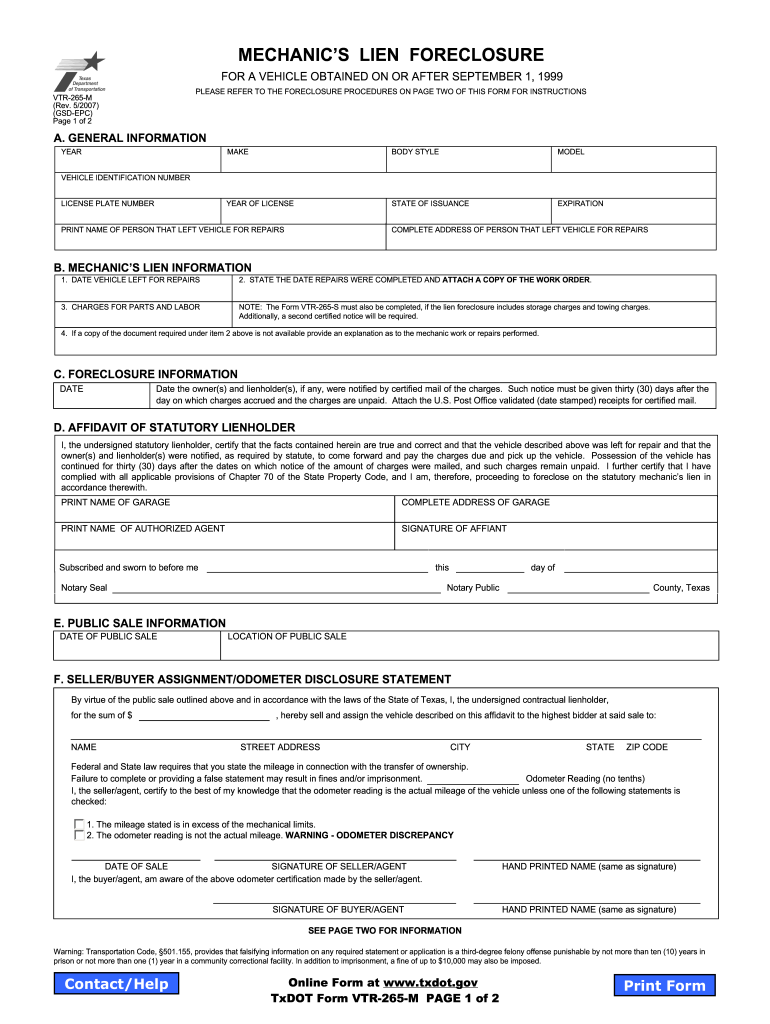
A mechanics lien, often referred to as a construction lien, is a legal claim granted by Texas statute to those who have furnished labor or materials to improve real property. It essentially acts as a security interest in the property itself. This means that if the property owner fails to pay for the work or materials, the lienholder can potentially force the sale of the property to satisfy the debt.
Who Can File a Mechanics Lien?
In Texas, several parties involved in a construction project are eligible to file a mechanics lien. These include:
- Original Contractors: These are parties who contract directly with the property owner. They have the broadest lien rights.
- Subcontractors: Parties who contract with the original contractor to perform labor or provide materials.
- Suppliers: Individuals or companies that furnish materials used in the construction or improvement of the property, even if they do not perform labor directly on-site.
- Laborers: Individuals who perform physical labor on the project.
- Architects and Engineers: Those who provide professional design services for the project.
It is important to note that not all parties involved in a construction project have lien rights. For instance, individuals providing consulting services that are not directly tied to the physical improvement of the property may not qualify.
Types of Mechanics Liens in Texas
Texas law distinguishes between two primary types of mechanics liens:
- Residential Construction Liens: These apply to properties used or intended to be used as a homestead. Strict notice requirements and specific forms are mandated for residential liens to protect homeowners. Failure to comply with these stringent rules can invalidate the lien.
- Commercial Construction Liens: These apply to properties used for commercial purposes. While still requiring adherence to statutory deadlines and notice provisions, they generally have fewer prescriptive requirements than residential liens.
The Pre-Lien Notice: A Crucial First Step
Before a claimant can file a formal mechanics lien affidavit, they are typically required to provide a “pre-lien notice” to certain parties. This notice serves as an official notification to the property owner and, in some cases, the general contractor, that the claimant has performed work or supplied materials and intends to file a lien if payment is not received.
Requirements for the Pre-Lien Notice
The requirements for the pre-lien notice vary depending on whether the claimant is an original contractor or a “derivative claimant” (a subcontractor, supplier, laborer, or architect/engineer who did not contract directly with the owner).
For Derivative Claimants (Subcontractors, Suppliers, etc.)
Derivative claimants must send a statutory pre-lien notice to the property owner and the original contractor. The notice must be sent by certified mail, with return receipt requested, or by any other method that provides proof of delivery.
The content of this notice is highly specific and must include:
- A statement that the claimant has a lien on the property.
- The name and address of the claimant.
- The name and address of the party with whom the claimant contracted.
- A description of the labor performed or materials furnished, or both.
- The amount claimed and unpaid.
- A statement that the claimant may file a lien if the amount is not paid.
- A notice that the owner may pay the claimant directly and deduct that amount from payments due to the original contractor.
For Original Contractors
Original contractors generally do not need to send a pre-lien notice to the owner to perfect their lien rights, provided they have a written contract with the owner. However, they do need to send a statutory notice to any potential lien claimants who have provided services or materials to their project. This is to ensure they are aware of who is working on their project and to avoid potential double payments.
Deadlines for Sending Pre-Lien Notices
The timing of the pre-lien notice is critical. For derivative claimants, the notice must be sent:
- No later than the 15th day of the second month following the month in which the labor was performed, materials were delivered, or work was completed (for monthly notices).
- No later than the 15th day of the third month following the month in which the labor was performed, materials were delivered, or work was completed (for final notices).
For residential projects, the notice must be sent no later than the 15th day of the third month of the second month preceding the month in which the owner occupies or uses the improved property.
Filing the Mechanics Lien Affidavit (Claim of Lien)
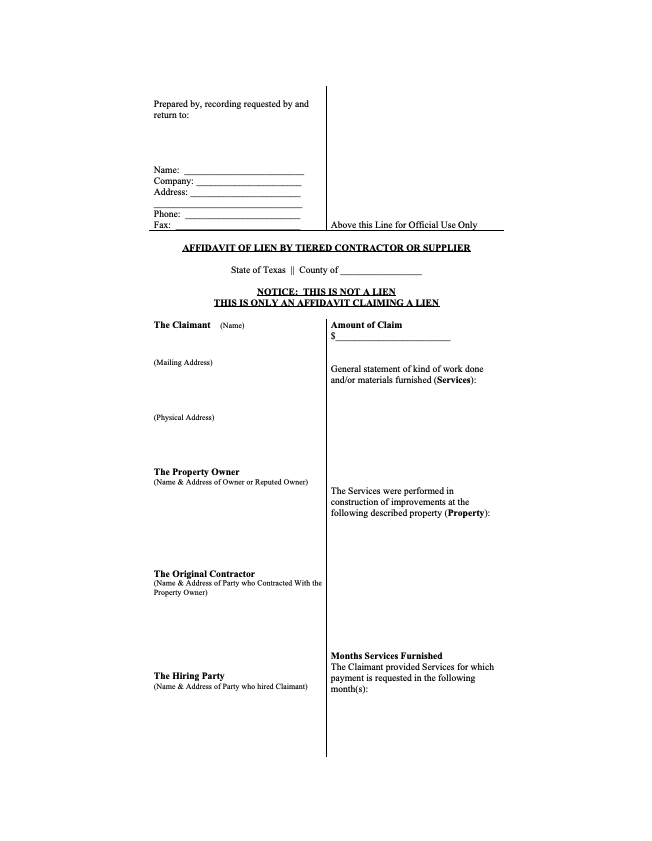
If the pre-lien notice does not result in payment, the next step is to file a formal “Claim of Lien” or “Mechanics Lien Affidavit” with the county clerk in the county where the property is located. This document formally asserts the claimant’s lien against the property.
Deadlines for Filing the Claim of Lien
The deadlines for filing the Claim of Lien are also statutory and depend on the claimant’s relationship to the property owner and the type of improvement.
For Original Contractors
- For a homestead property, the lien must be filed by the 15th day of the third month after the original contract is terminated or completed.
- For a non-homestead property, the lien must be filed by the 15th day of the fourth month after the original contract is terminated or completed.
For Derivative Claimants
- For a homestead property, the lien must be filed by the 15th day of the third month after the 15th day of the month in which the claimant last furnished labor or materials.
- For a non-homestead property, the lien must be filed by the 15th day of the fourth month after the 15th day of the month in which the claimant last furnished labor or materials.
Important Note: If the claimant has a direct contract with the property owner, the “completion” of the project is generally considered the date when the original contractor last furnished labor or materials or performed labor or services under the contract. However, if the claimant is a subcontractor, the deadlines are often tied to the date the claimant last furnished labor or materials, regardless of when the overall project was completed by the original contractor.
Content of the Claim of Lien Affidavit
The Claim of Lien must contain specific information to be legally valid. While the exact wording can vary, it generally must include:
- Statement of Lien: A clear declaration that the claimant claims a lien on the described property.
- Claimant’s Name and Address: The full legal name and current address of the party claiming the lien.
- Contracting Party’s Name and Address: The name of the person or entity with whom the claimant contracted (e.g., the general contractor or the property owner).
- Property Description: A legal description of the property against which the lien is claimed. This is typically the legal description found on the property deed.
- Work Performed/Materials Furnished: A description of the labor, services, or materials provided by the claimant.
- Amount Due: The total amount claimed to be unpaid.
- Date of Last Furnishing: The date on which the claimant last furnished labor or materials to the project.
- Notice to Owner: A statement advising the owner that they may be personally liable and that liens may be filed against their property.
- Signature and Notarization: The affidavit must be signed by the claimant or their authorized agent and notarized by a notary public.
Filing the Lien
The filed Claim of Lien affidavit should be recorded in the real property records of the county clerk’s office where the property is situated. The county clerk will then typically assign a recording number and book and page number, which are essential for future reference. A fee is usually associated with filing the lien.
Enforcing the Mechanics Lien
Filing a mechanics lien is only the first step in securing payment. If payment is still not forthcoming, the claimant may need to take legal action to enforce the lien.
Foreclosure Proceedings
Enforcing a mechanics lien typically involves filing a lawsuit to foreclose on the lien. This lawsuit asks the court to order the sale of the property to satisfy the debt owed to the lienholder.
Deadlines for Filing a Lawsuit to Foreclose
In Texas, a lawsuit to enforce a mechanics lien must generally be filed within one year from the date the Claim of Lien was filed. This deadline is critical, and failure to file suit within this timeframe will result in the lien expiring and becoming unenforceable.
Notice of Lawsuit
When filing a lawsuit to foreclose on a mechanics lien, the claimant must also provide notice to the property owner and potentially other lienholders. This notice ensures that all parties with an interest in the property are aware of the legal action.
Release of Lien
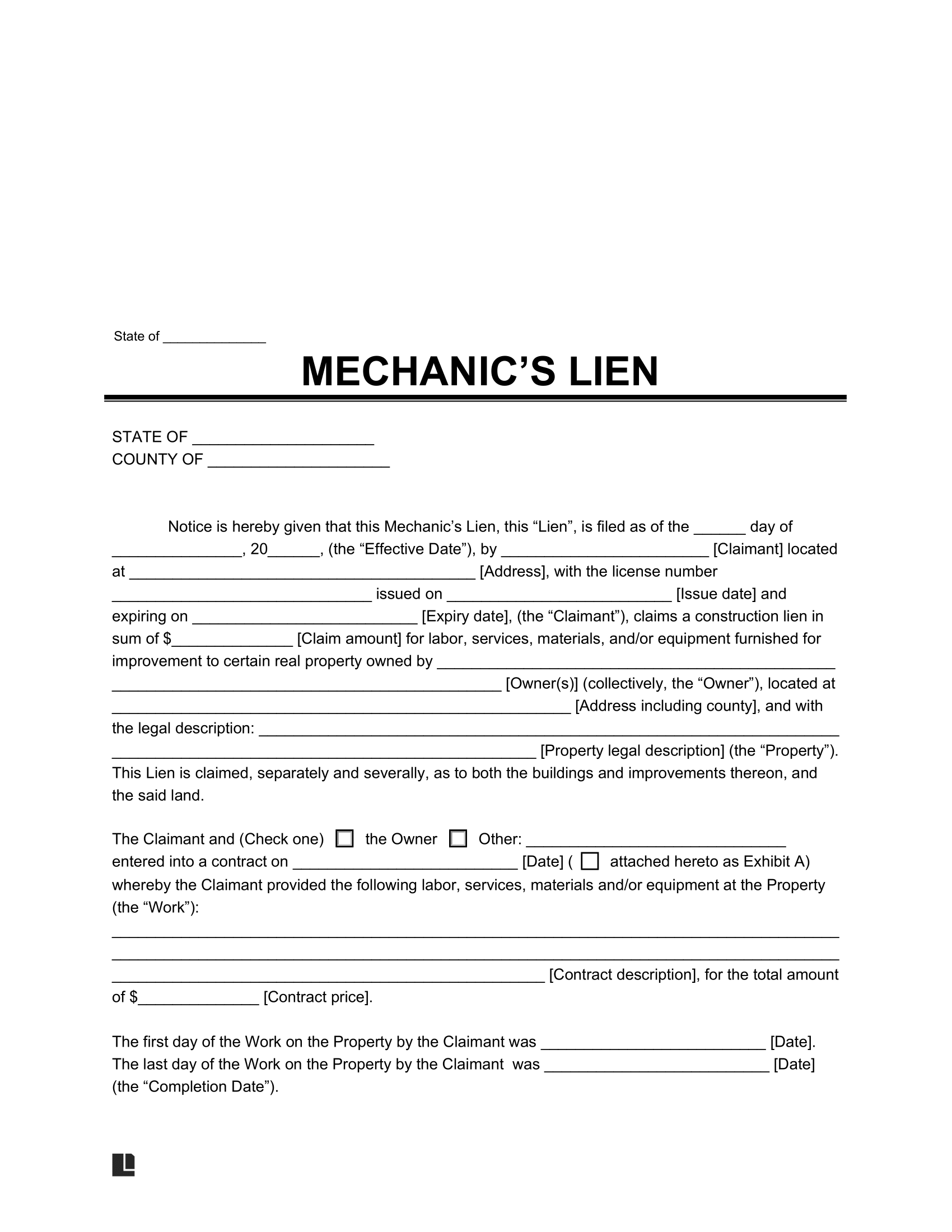
Once the debt has been paid in full, the claimant has a legal obligation to release the mechanics lien. This is typically done by filing a “Release of Lien” or “Satisfaction of Lien” with the same county clerk’s office where the original lien was recorded. Promptly releasing a lien after payment is crucial to avoid potential penalties and maintain good business relationships.
Key Considerations and Best Practices
- Strict Adherence to Deadlines: Texas lien laws are very technical. Missing a deadline for sending a notice or filing a lien can invalidate your rights. Always be aware of the statutory timelines.
- Accuracy is Paramount: Ensure all information provided in notices and lien affidavits is accurate. Incorrect names, addresses, legal descriptions, or amounts can lead to the lien being thrown out by a court.
- Documentation is Key: Maintain thorough records of all contracts, invoices, delivery tickets, communication with the owner and general contractor, and proof of mailing for all notices.
- Seek Legal Counsel: Mechanics lien law is complex and can have significant financial implications. It is highly advisable to consult with an experienced construction attorney in Texas to ensure you comply with all requirements and protect your rights. An attorney can help you draft the correct notices, file the lien properly, and guide you through the enforcement process if necessary.
- Residential Projects Have Stricter Rules: Be especially diligent when working on residential projects. The laws are designed to provide greater protection to homeowners, and deviations from the statutory requirements can be unforgiving.
By understanding and meticulously following the procedures outlined in Texas law, contractors, subcontractors, and suppliers can effectively utilize the mechanics lien to secure payment for their valuable contributions to the state’s built environment.
LifeOutOfTheBox is a participant in the Amazon Services LLC Associates Program, an affiliate advertising program designed to provide a means for sites to earn advertising fees by advertising and linking to Amazon.com. Amazon, the Amazon logo, AmazonSupply, and the AmazonSupply logo are trademarks of Amazon.com, Inc. or its affiliates. As an Amazon Associate we earn affiliate commissions from qualifying purchases.