
Navigating the bureaucratic landscape of any new endeavor can often feel like traversing an uncharted wilderness. For businesses and individuals operating within the Lone Star State, understanding and obtaining the necessary identification numbers is a critical first step towards smooth and compliant operations. This guide focuses on the Taxpayer Identification Number (TIN) within Texas, clarifying its purpose, types, and the process of acquisition, especially for those engaging in business or professional activities that intersect with the vibrant economy of Texas. While the term TIN is often used broadly, it encompasses several specific identification numbers issued by the federal government, primarily the Internal Revenue Service (IRS), which are essential for tax purposes.

Understanding Taxpayer Identification Numbers (TINs)
A Taxpayer Identification Number (TIN) is a unique number used by the Internal Revenue Service (IRS) for tax administration purposes. It is akin to a social security number for individuals, but for entities or for specific individual tax situations. The most common types of TINs are the Social Security Number (SSN), which is issued to U.S. citizens, permanent residents, and some temporary working residents; and the Employer Identification Number (EIN), also known as a Federal Tax Identification Number (FTIN), which is issued to business entities, trusts, estates, and certain other organizations.
Social Security Number (SSN)
The Social Security Number is the most widely recognized form of TIN for individuals. It is issued by the Social Security Administration (SSA) and is primarily used to track an individual’s earnings and contributions to Social Security and Medicare. While primarily for individuals, some business owners who operate as sole proprietors might use their SSN as their TIN if they don’t have employees or other specific business structures requiring an EIN. However, for any substantial business activity, an EIN is generally preferred and often required. Obtaining an SSN requires U.S. citizenship, lawful permanent residency, or an appropriate work-authorized immigration status. The process is managed by the SSA and is distinct from any state-specific tax identification.
Employer Identification Number (EIN)
The Employer Identification Number, or EIN, is the crucial identifier for businesses. It is a nine-digit number assigned by the IRS to business entities operating in the United States. An EIN is required for businesses that operate as a corporation or partnership, have employees, file tax returns for excise, alcohol, tobacco, and firearms, or operate a Keogh plan. Sole proprietors and independent contractors often choose to obtain an EIN even if not strictly required, as it can provide a layer of privacy by separating personal and business finances and may be required by banks for opening business accounts. For businesses established in Texas, securing an EIN from the IRS is a fundamental step. This federal identification number is distinct from any state-level registration or tax ID that Texas might require.
Individual Taxpayer Identification Number (ITIN)
An Individual Taxpayer Identification Number (ITIN) is a tax processing number issued by the IRS to certain resident and nonresident aliens, their spouses, and dependents who cannot get an SSN. An ITIN is for federal tax purposes only. It is used for filing U.S. federal income tax returns. An ITIN is for individuals who are not eligible for an SSN but still have a U.S. tax filing or claiming requirement. Like the SSN, it is used by individuals and not typically for business entities, although a sole proprietor might use it if they are not eligible for an SSN. The application for an ITIN is handled directly by the IRS.
Obtaining a Taxpayer ID Number in Texas
It is crucial to distinguish between federal TINs, which are issued by the IRS or SSA, and any potential state-specific tax identification numbers that might be required by the Texas Comptroller of Public Accounts for state tax purposes. This article specifically addresses the acquisition of federal TINs, as the title implies a federal identification. Texas does not issue its own “Taxpayer ID Number” in the same sense as the federal government. Instead, businesses operating in Texas may need to register with the Texas Comptroller for state tax purposes, such as sales tax, and will receive a state-specific tax identification number for those purposes. However, the foundational identification for federal tax obligations remains the TIN obtained from the IRS or SSA.
Applying for an EIN
For businesses and entities in Texas requiring an EIN, the application process is straightforward and, importantly, free. The IRS offers several methods for applying:
Online Application
The most efficient and recommended method is to apply online through the IRS website. The “Apply for an Employer Identification Number (EIN) Online” application is available on the IRS.gov portal. To be eligible for online application, the entity must have a physical address and a responsible party with a valid Taxpayer Identification Number (which can be an SSN, ITIN, or another EIN). The application takes approximately 15 minutes to complete. Upon successful submission and validation, the EIN is typically assigned immediately.
Eligibility Requirements for Online EIN Application
To apply for an EIN online, the applicant entity must meet certain criteria:
- Business Location: The entity must have a principal business, or office or agency, in the United States or United States possessions.
- Responsible Party: The application must be completed by a “responsible party.” This is generally the person who controls, manages, or directs the applicant entity and the disposition of its funds and assets. The responsible party must have a valid TIN (SSN, ITIN, or EIN).
- No Prior EIN: The entity should not have previously been assigned an EIN. If an entity has had an EIN in the past, it should use that number.
Other Application Methods

While online application is preferred, the IRS also provides alternative methods for those who cannot apply online:
- Fax or Mail Application: Applicants can download Form SS-4, Application for Employer Identification Number, from the IRS website. This form can be completed and faxed or mailed to the IRS. Processing times for faxed applications are typically within 4 business days, while mailed applications can take 4-5 weeks.
- Telephone Application: International applicants (those outside the United States) or entities without a U.S. street address, U.S. PO Box, or U.S. military address may apply by telephone. They can call the IRS toll-free at 800-829-0521 between 7 a.m. and 10 p.m. eastern time, Monday through Friday.
Essential Information for EIN Application
Regardless of the application method chosen, applicants will need to provide specific information about their entity. This typically includes:
- Entity Name: The legal name of the business or organization.
- Trade Name (DBA): If the business operates under a “doing business as” name, this should also be provided.
- Mailing Address: The official mailing address of the entity.
- Physical Address: The street address of the entity’s principal place of business.
- Name and TIN of the Responsible Party: As mentioned, this is a critical component.
- Type of Entity: Such as sole proprietorship, partnership, corporation (S-corp, C-corp), LLC, estate, trust, etc.
- Reason for Applying: For example, starting a new business, hiring employees, changing business structure, etc.
- Date Business Started: The date the business commenced operations.
- Principal Activity: The nature of the business’s operations.
Applying for an ITIN
For individuals in Texas who are not eligible for an SSN but require a TIN for tax purposes, applying for an ITIN is the necessary step. The ITIN is issued by the IRS.
Eligibility for an ITIN
An ITIN is available to individuals who are not eligible for an SSN and meet the following criteria:
- You are a nonresident alien who is required to file a U.S. tax return.
- You are a resident alien who is required to file a U.S. tax return but not eligible for an SSN.
- You are a dependent of a U.S. citizen or resident alien.
- You are a dependent or spouse of a nonimmigrant visa holder.
How to Apply for an ITIN
To apply for an ITIN, individuals must complete Form W-7, Application for IRS Individual Taxpayer Identification Number. This form must be submitted along with original documentation or certified copies of documents to prove identity and foreign status, and a U.S. federal income tax return. The application can be submitted by mail to the IRS, or in person at certain IRS Taxpayer Assistance Centers (TACs) or through a Certifying Acceptance Agent (CAA).
State-Specific Considerations in Texas
While the federal TINs (SSN, EIN, ITIN) are obtained from federal agencies, businesses operating in Texas must also comply with state tax regulations.
Texas Comptroller of Public Accounts
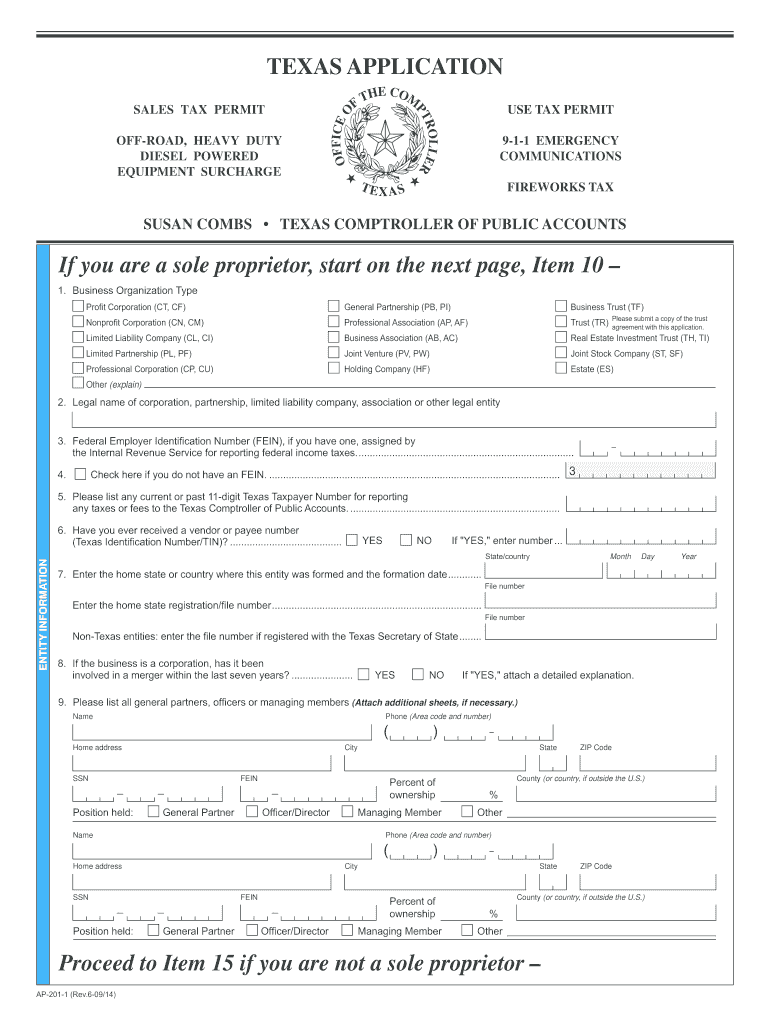
The Texas Comptroller of Public Accounts is the state agency responsible for collecting state taxes. Businesses that sell, lease, or rent tangible personal property in Texas, or provide taxable services, are generally required to obtain a Texas Sales and Use Tax Permit. This permit is often referred to as a seller’s permit or resale certificate and serves as a state-level tax identification number for sales tax purposes.
-
Sales and Use Tax Permit: To apply for a sales tax permit, businesses typically need to register with the Texas Comptroller. This can often be done online through the Comptroller’s website. The information required usually includes the business name, federal EIN (if applicable), ownership details, and details about the business’s sales activities. This permit allows businesses to collect and remit sales tax and to purchase goods for resale without paying sales tax.
-
Other State Taxes: Depending on the nature of the business, other state taxes and registrations might apply, such as franchise tax, unemployment tax, and excise taxes. Each of these may have their own registration requirements and associated identification numbers with relevant Texas state agencies like the Texas Workforce Commission for unemployment insurance.
Conclusion
Securing the correct Taxpayer Identification Number is a foundational element for any individual or business entity operating within Texas and interacting with the U.S. tax system. While the term “Taxpayer ID Number” can be broad, understanding the distinction between federal identification (SSN, EIN, ITIN) issued by the IRS and SSA, and state-specific registrations required by entities like the Texas Comptroller, is paramount. For businesses, obtaining an EIN from the IRS is a critical early step, facilitating tax filing, business banking, and legal compliance. For individuals, an SSN or ITIN serves the same essential purpose. By diligently following the application procedures and understanding the specific requirements for both federal and state authorities, businesses and individuals in Texas can confidently navigate their tax obligations and focus on their growth and success in the dynamic Texas economy.
LifeOutOfTheBox is a participant in the Amazon Services LLC Associates Program, an affiliate advertising program designed to provide a means for sites to earn advertising fees by advertising and linking to Amazon.com. Amazon, the Amazon logo, AmazonSupply, and the AmazonSupply logo are trademarks of Amazon.com, Inc. or its affiliates. As an Amazon Associate we earn affiliate commissions from qualifying purchases.