
Navigating the legal landscape in any situation can be daunting, and when it comes to seeking protection, understanding the process in Texas is paramount. A protective order is a court order designed to safeguard individuals from family violence, dating violence, or sexual assault. This article aims to demystify the procedures, requirements, and considerations involved in obtaining this vital legal recourse within the Lone Star State. Whether you are a resident of Houston, Dallas, or any other corner of Texas, the principles and steps remain consistent, though specific court procedures might vary slightly by county.

Understanding Protective Orders in Texas
A protective order in Texas is a legal tool that prohibits a respondent (the person against whom the order is sought) from engaging in certain behaviors. These behaviors typically include:
- Harassing, stalking, or threatening the applicant or a family member.
- Committing an act of family violence, dating violence, or sexual assault.
- Coming within a certain distance of the applicant’s home, work, or school.
- Contacting the applicant in any manner, including phone calls, emails, or social media.
- Possessing a firearm.
There are two primary types of protective orders available in Texas:
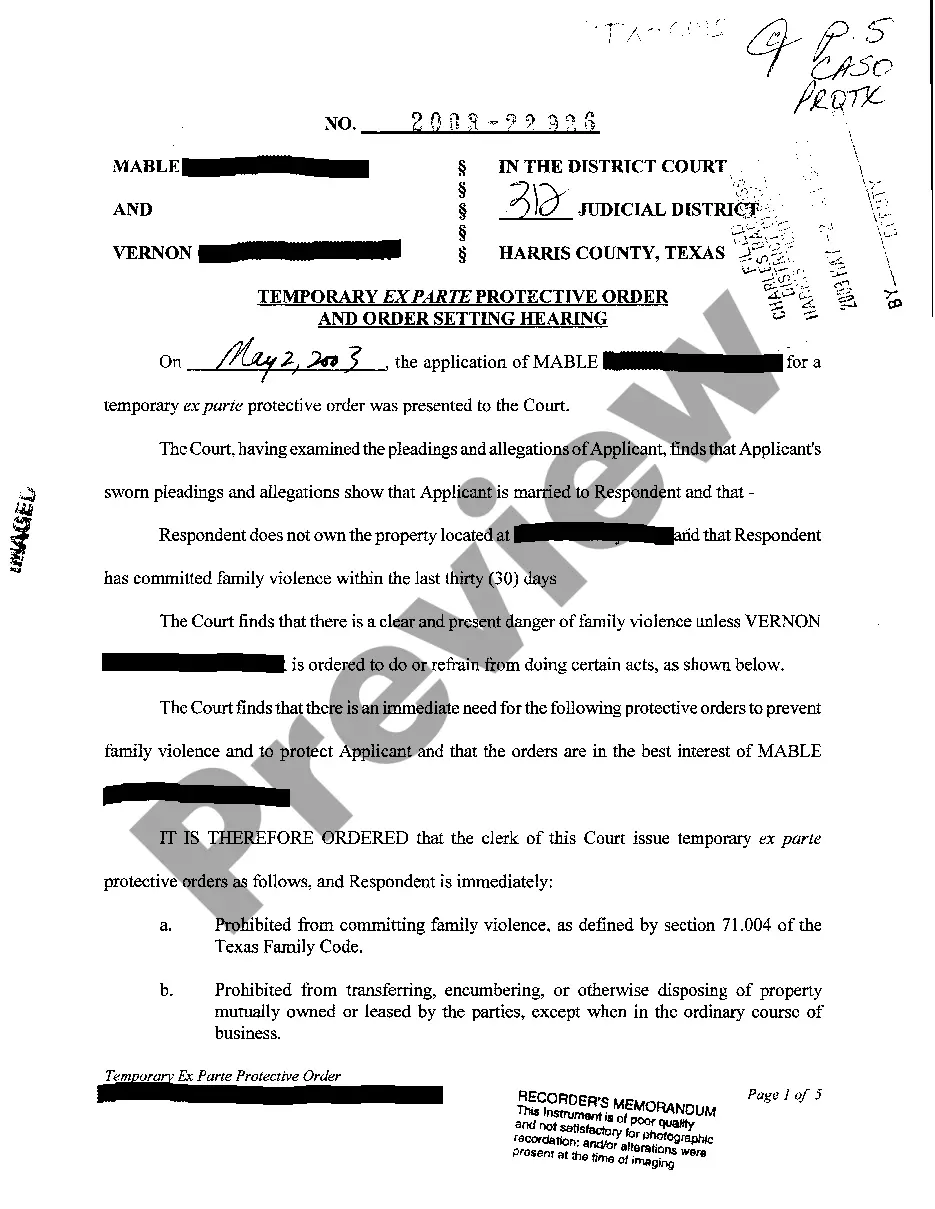
Temporary Ex Parte Orders
A Temporary Ex Parte Order is an emergency order that can be obtained without prior notice to the respondent. This is crucial when there is an immediate threat of harm. To obtain this order, the applicant must convince the court that there is probable cause to believe that family violence has occurred and that the applicant is likely to suffer immediate and irreparable injury if the order is not granted. This order is temporary, typically lasting for a short period (e.g., 14 days), and is designed to provide immediate protection while a more permanent order is considered. A hearing will be scheduled within this timeframe to determine if a final protective order should be issued.
Final Protective Orders
A Final Protective Order is issued by the court after a full hearing where both the applicant and the respondent have had the opportunity to present their case. This order can last for a maximum of two years, though it can be renewed. To secure a final protective order, the applicant must prove by a preponderance of the evidence that family violence has occurred and that it is likely to occur again in the future. The court will consider all evidence presented, including testimony, documents, and witness accounts.
Eligibility and Grounds for a Protective Order
To be eligible to apply for a protective order in Texas, a specific relationship must exist between the applicant and the respondent. The law defines these relationships broadly to encompass various familial and intimate connections.
Qualifying Relationships
The Texas Family Code specifies the relationships that qualify for a protective order:
- Family Members: This includes current or former spouses, parents, children, siblings, grandparents, grandchildren, stepparents, stepchildren, and any other person living in the same household.
- Dating Partners: This category includes individuals who have or have had a dating relationship, regardless of whether they live together or have sexual relations.
- Victims of Sexual Assault: Individuals who have been victims of sexual assault, even if they do not meet the criteria for family violence or dating violence, can seek a protective order.
Grounds for Issuance
The underlying basis for a protective order is the occurrence of family violence. This is defined by statute as an act against another family member that is intended to cause or causes physical harm, injury, assault, or sexual assault, or a threat that places the victim in fear of physical harm, injury, assault, or sexual assault. This definition is quite broad and can include not only physical violence but also actions that create a reasonable fear of harm. Crucially, the acts must have occurred within the two years preceding the filing of the application, though there are exceptions for prior incidents if they are part of a pattern of violence or if there has been a recent separation due to violence.
The Application Process
Obtaining a protective order involves a formal legal process that requires careful attention to detail and adherence to court rules. While the specifics can vary slightly by county and court, the general steps are as follows:
1. Obtaining and Completing the Application Form

The first step is to obtain the necessary application forms. These are typically available from the district clerk’s office in the county where you reside or where the respondent resides, or where the family violence occurred. You can also often find these forms on the Texas Courts website or through legal aid organizations. The application is a sworn statement that requires you to provide detailed information about yourself, the respondent, the nature of the relationship, the specific acts of violence or threats, and the relief you are seeking. It is crucial to be accurate, complete, and truthful in your responses.
2. Filing the Application
Once completed, the application must be filed with the district clerk’s office. There is generally no filing fee for protective order applications, as the state waives these fees for victims of family violence. You will typically need to file multiple copies of the application. The clerk will assign a case number and stamp the documents.
3. Service of Process
After filing, the respondent must be officially notified of the lawsuit. This is called “service of process.” A constable or sheriff’s deputy will serve the respondent with a copy of the application and a notice of the hearing. It is essential that service be completed correctly according to legal requirements, otherwise, the court cannot proceed. If the respondent cannot be located, there are alternative methods of service, but these are more complex and may require court permission.
4. The Temporary Ex Parte Hearing
If you are seeking immediate protection, you will request a Temporary Ex Parte Order. This hearing is usually held very quickly, often within 24 hours of filing the application. You will appear before a judge, who will review your application and hear your testimony. The respondent is not typically present at this hearing. The judge will decide whether to grant the temporary order based on whether there is probable cause to believe family violence has occurred and that immediate danger exists.
5. The Final Hearing
If a Temporary Ex Parte Order is granted, or if you did not seek an emergency order, a final hearing will be scheduled. This hearing is adversarial, meaning both you and the respondent (and your attorneys, if applicable) will be present. You will have the opportunity to present evidence and testify, and the respondent will have the opportunity to do the same. The judge will then make a determination on whether to issue a final protective order.
Presenting Your Case and What to Expect
Preparing for the court hearings is critical. The success of your application hinges on your ability to clearly and convincingly demonstrate to the judge that you meet the legal requirements for a protective order.
Evidence and Testimony
You will need to present evidence to support your claims. This can include:
- Your Testimony: A clear and detailed account of the incidents of violence or threats. Be prepared to answer questions from the judge and potentially the respondent’s attorney.
- Witness Testimony: If there were any witnesses to the abuse or threats, their testimony can be invaluable.
- Photographs: Documenting any injuries, damage to property, or other physical evidence of abuse.
- Medical Records: If you sought medical attention for injuries sustained during an incident.
- Police Reports: Any reports filed with law enforcement regarding the incidents.
- Communications: Texts, emails, voicemails, or social media messages that demonstrate threats, harassment, or stalking.
The respondent will have the opportunity to present their own evidence and argue against the issuance of the protective order. They may claim the violence did not occur, that it was self-defense, or that you are misrepresenting the facts.
Legal Representation
While it is possible to represent yourself in a protective order case, having legal counsel can significantly improve your chances of success. An attorney experienced in family law and protective orders understands the nuances of the law, court procedures, and how to best present evidence. They can also help you navigate the emotional complexities of the process. Many legal aid societies and non-profit organizations offer free or low-cost legal assistance to victims of family violence.
Enforcement of Protective Orders
Once a protective order is issued, it is legally binding. Violating a protective order is a criminal offense in Texas and can result in arrest and criminal charges. Law enforcement agencies are responsible for enforcing these orders. If the respondent violates the terms of the order, you should immediately contact the police and inform them of the violation. You can also file a motion with the court to hold the respondent in contempt.
Obtaining a protective order is a serious undertaking with significant legal implications. It is a process designed to provide safety and security to individuals experiencing or at risk of family violence, dating violence, or sexual assault. By understanding the requirements, diligently preparing your case, and seeking appropriate support, you can navigate this process effectively in Texas.
LifeOutOfTheBox is a participant in the Amazon Services LLC Associates Program, an affiliate advertising program designed to provide a means for sites to earn advertising fees by advertising and linking to Amazon.com. Amazon, the Amazon logo, AmazonSupply, and the AmazonSupply logo are trademarks of Amazon.com, Inc. or its affiliates. As an Amazon Associate we earn affiliate commissions from qualifying purchases.