
Navigating the process of registering a vehicle in Texas can seem daunting, especially for newcomers to the Lone Star State. However, with a clear understanding of the requirements and steps involved, it becomes a straightforward procedure. This guide aims to demystify vehicle registration in Texas, ensuring a smooth and efficient experience. From understanding the initial requirements to navigating the necessary paperwork and fees, we’ll cover all you need to know to get your vehicle legally on Texas roads.
Understanding the Essentials: What You Need to Register
Before you head to your local county tax assessor-collector’s office, it’s crucial to gather all the necessary documentation. The requirements can vary slightly depending on whether your vehicle is new or used, and if it’s being registered for the first time in Texas.
Proof of Ownership and Identity
The cornerstone of vehicle registration is proving you legally own the vehicle and are who you say you are.
- Vehicle Title: This is the most critical document. It serves as legal proof of ownership. If you recently purchased the vehicle, you will need the properly assigned title from the previous owner. For new vehicles, you’ll typically receive a Manufacturer’s Certificate of Origin (MCO), which acts as the initial title. If your vehicle was financed, the lienholder (the bank or lender) may hold the title until the loan is paid off. In such cases, you will need to provide proof of the lienholder’s interest and potentially a letter of authorization.
- Proof of Texas Residency: You must demonstrate that you reside in Texas. Accepted forms of residency proof include a Texas driver’s license or ID card, a utility bill with your Texas address, a lease agreement for a Texas property, or other official mail from government agencies.
- Proof of Identity: A valid government-issued photo ID is required. This can be your Texas driver’s license or ID card, a U.S. passport, or another recognized form of identification.
Vehicle Inspection and Insurance
Texas has specific requirements for vehicle safety and emissions, along with mandatory liability insurance.
- Vehicle Inspection Certificate: Texas requires most vehicles to pass an annual state inspection. This inspection verifies that the vehicle meets safety standards and, in some counties, emissions standards. You will need to present a valid inspection certificate from an authorized Texas inspection station. Keep in mind that newer vehicles may be exempt from inspection for a certain period after purchase, but this varies. It’s always best to check the latest regulations on the Texas Department of Public Safety (DPS) website.
- Proof of Financial Responsibility (Auto Insurance): Texas law mandates that all registered vehicles must have proof of financial responsibility, which is typically an automobile liability insurance policy. You’ll need to provide an insurance card or declaration page showing that your policy meets the state’s minimum coverage requirements. The minimums are often referred to as “30/60/25” – $30,000 of bodily injury liability per person, $60,000 of bodily injury liability per accident, and $25,000 of property damage liability per accident.
The Registration Process: Step-by-Step
Once you have all your documents in order, the actual registration process is relatively simple. It primarily involves visiting your local county tax assessor-collector’s office.
Locating Your Local County Office
The Texas Department of Motor Vehicles (TxDMV) partners with county tax assessor-collectors to handle vehicle registration. You will need to find the office serving your county of residence. A quick search on the TxDMV website or your county’s official government website will provide you with the addresses and operating hours of these offices. Some offices may offer online appointment scheduling, which can save you time.
Submitting Your Application and Documents
Upon arrival at the tax assessor-collector’s office, you will be guided through the application process.
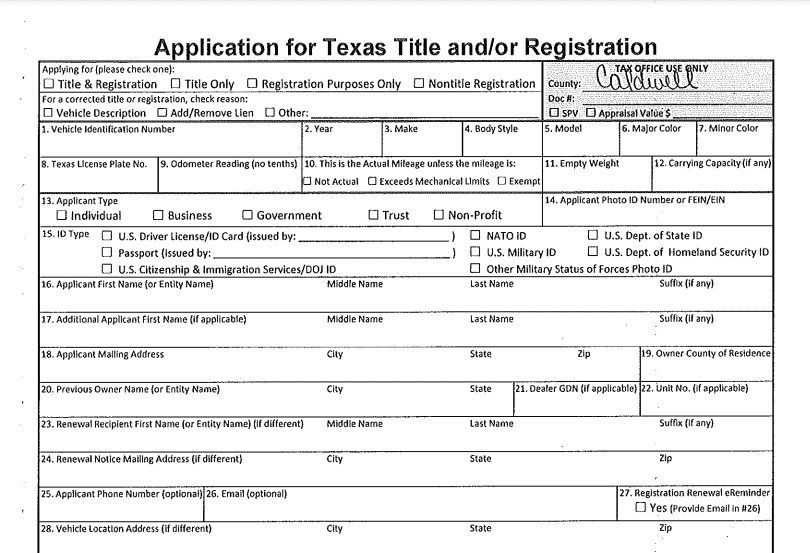
- Form 130-U (Application for Texas Title and/or Registration): This is the primary application form you will fill out. It requires detailed information about you, the vehicle, and its previous ownership. Ensure you complete it accurately and legibly. You can often download this form in advance from the TxDMV website to fill out beforehand.
- Presenting Your Documentation: You will present your completed Form 130-U along with all supporting documents: proof of ownership (title), proof of identity and residency, the vehicle inspection certificate, and proof of financial responsibility (insurance).
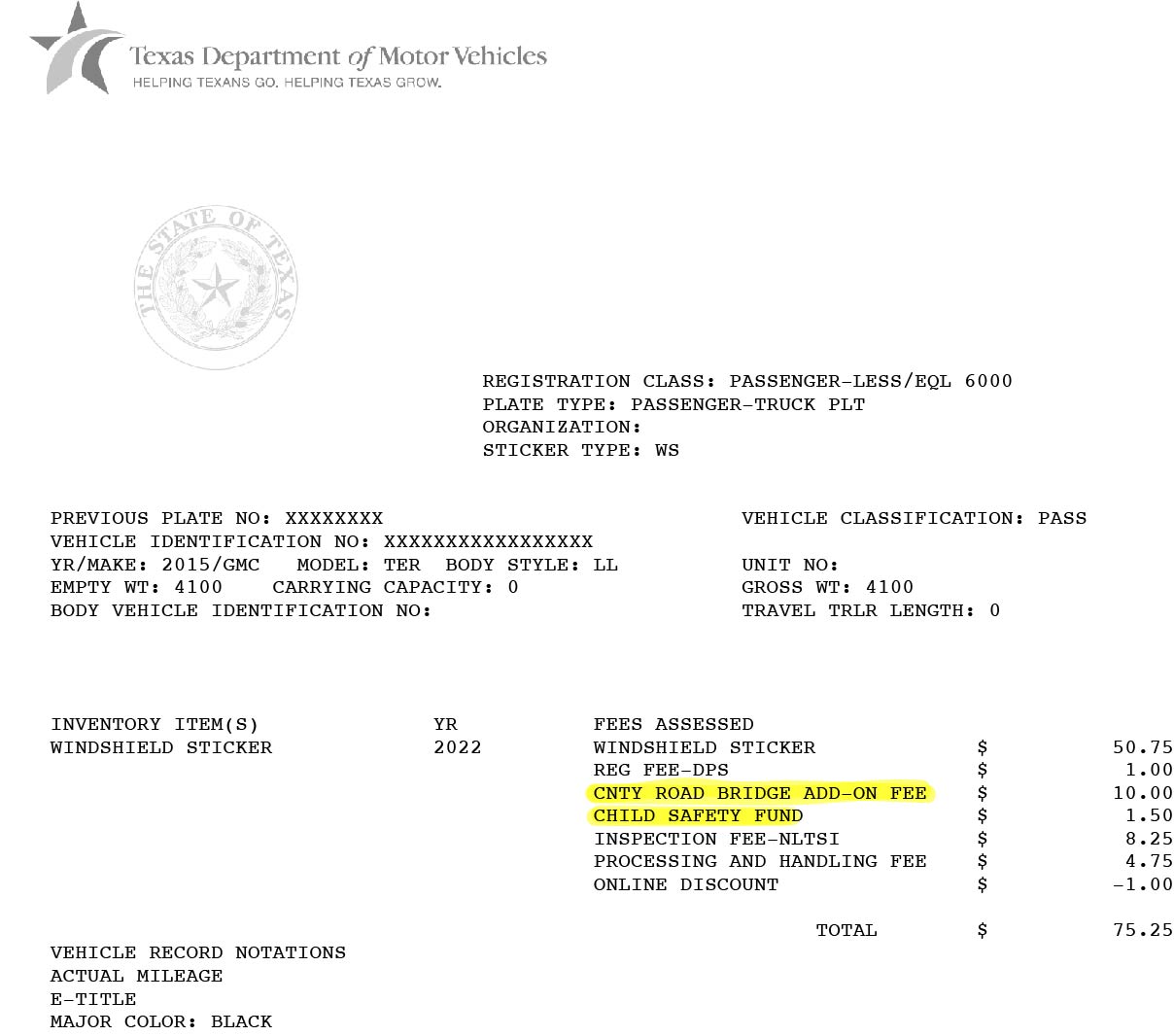
- Paying the Fees: There are several fees associated with vehicle registration. These include:
- Registration Fee: This is the primary fee for registering your vehicle, which varies based on vehicle type, weight, and age.
- Title Fee: A fee is charged for transferring the title to your name.
- License Plate Fee: You’ll pay for the issuance of your license plates.
- County and State Surcharges: Additional fees are often added to support various state and local programs.
- Optional Fees: You may have the option to purchase specialty license plates, which come with an additional cost.
The total amount will be calculated by the office staff. They typically accept cash, checks, and major credit/debit cards.
Receiving Your Registration Sticker and Plates
After successfully submitting your application, documentation, and payment, you will receive your new vehicle registration.
- Registration Receipt: You’ll be given a registration receipt, which you should keep in a safe place.
- License Plates: If you are registering a vehicle for the first time or renewing existing plates, you will receive your new license plates. In some cases, you may be issued temporary plates or have your new permanent plates mailed to you.
- Registration Sticker: The registration sticker, which indicates the expiration date of your registration, will be provided. You must affix this sticker to your vehicle’s license plate as per Texas law. It is typically placed in the upper corner of the rear license plate.
Special Circumstances and Considerations
While the standard registration process applies to most vehicle owners, there are several special circumstances that may require additional steps or considerations.
New Residents Registering a Vehicle
If you are moving to Texas from out of state, you have specific deadlines to meet for vehicle registration. You are generally required to register your vehicle within 30 days of establishing residency in Texas. You will need to obtain a Texas driver’s license within 90 days. For out-of-state vehicles, you will likely need to get a VIN inspection (Vehicle Identification Number inspection) by a law enforcement officer or authorized inspector to verify the vehicle’s identity and origin before you can title and register it in Texas.
Transferring Ownership of a Vehicle
When you buy or sell a used vehicle, the title needs to be transferred. The seller must properly assign the title to the buyer, and the buyer then has 30 days to submit the paperwork to the county tax assessor-collector’s office to transfer the title and register the vehicle in their name. The buyer will need the signed title, proof of identity, proof of insurance, and the vehicle inspection certificate.
Specialty License Plates
Texas offers a wide array of specialty license plates to support various causes, organizations, and interests. These plates often come with an additional annual fee on top of the standard registration fee. You can browse the available options on the TxDMV website and indicate your preference when registering your vehicle. Examples include plates for veterans, universities, wildlife conservation, and more.
Vehicle Registration Renewal
Your vehicle registration is valid for one year and must be renewed annually. You will typically receive a renewal notice by mail or email from the TxDMV a few weeks before your expiration date. You can renew your registration online, by mail, or in person at a county tax assessor-collector’s office. Ensure you have your renewal notice, proof of inspection, and proof of insurance readily available. Online renewals through the official TxDMV portal are often the quickest and most convenient method.
Salvaged or Rebuilt Vehicles
Vehicles that have been declared a total loss by an insurance company and subsequently rebuilt must undergo a specific inspection process in Texas before they can be registered. This involves a title branding inspection and a safety inspection to ensure the vehicle has been properly repaired and is safe to operate on public roads.
Tips for a Smooth Registration Experience
To make your vehicle registration process as seamless as possible, consider these helpful tips:
- Check the TxDMV Website: The Texas Department of Motor Vehicles website is an invaluable resource. It provides up-to-date information on requirements, fees, forms, and office locations. Familiarize yourself with the latest regulations before you go.
- Gather Documents in Advance: Double-check that you have all the required documents before leaving home. Missing paperwork is the most common reason for delays or requiring a second trip.
- Complete Forms Accurately: Take your time filling out Form 130-U. Errors or omissions can lead to delays.
- Consider Online Services: For renewals, the TxDMV offers convenient online options that can save you a trip to the office.
- Be Prepared for Fees: Have your payment method ready and understand the approximate cost of registration and title fees for your vehicle type.
- Arrive Early or Schedule an Appointment: County tax assessor-collector offices can get busy, especially during peak hours. Arriving early or scheduling an appointment, if available, can significantly reduce your wait time.
- Understand Inspection Requirements: Ensure your vehicle has passed its state inspection before heading to the registration office, as this is a mandatory step.
Registering your vehicle in Texas is a vital step in ensuring legal compliance and responsible vehicle ownership. By understanding the documentation, process, and specific requirements, you can navigate this administrative task with confidence and get back on the road swiftly.
LifeOutOfTheBox is a participant in the Amazon Services LLC Associates Program, an affiliate advertising program designed to provide a means for sites to earn advertising fees by advertising and linking to Amazon.com. Amazon, the Amazon logo, AmazonSupply, and the AmazonSupply logo are trademarks of Amazon.com, Inc. or its affiliates. As an Amazon Associate we earn affiliate commissions from qualifying purchases.