
Navigating the bureaucratic landscape of government services can often feel like an intricate journey, especially when it comes to essential documents like a driver’s license. For residents of Texas, the process of renewing a driver’s license is a vital procedure to ensure continued legal driving privileges. This guide aims to demystify the renewal process, offering clear, actionable steps for a smooth and efficient experience. Whether you’re a seasoned driver or new to the Lone Star State, understanding the requirements and options available is key. The Texas Department of Public Safety (DPS) oversees driver licensing and provides several convenient avenues for renewal, catering to different preferences and circumstances.
Understanding Texas Driver’s License Renewal Options
The Texas DPS has modernized its renewal processes to accommodate a variety of needs. Understanding these options is the first step in planning your renewal. The primary methods available are online renewal, renewal by mail, and in-person renewal. Each method has specific eligibility requirements and procedures, ensuring that most Texans can find a convenient way to keep their license current.
Online Renewal
For many Texans, online renewal is the quickest and most convenient option. This method is ideal for drivers who meet certain criteria and have no changes to their personal information.
Eligibility for Online Renewal
To be eligible for online renewal, you must typically meet the following conditions:
- Current License: Your expiring or recently expired license must be a Texas driver’s license.
- Age: You must be under 70 years old.
- No Changes: You cannot be changing your name or address. If you’ve moved within Texas, you’ll need to update your address separately.
- No Medical Issues: You cannot have any medical conditions that might affect your ability to drive safely, which would require a medical evaluation.
- No Suspension/Revocation: Your license cannot be suspended or revoked.
- Previous Renewal: You must have renewed in person or online at least once before, or be renewing a commercial driver’s license (CDL) and meet specific renewal requirements.
- No Outstanding Warrants: There should be no outstanding warrants for your arrest.
The Online Renewal Process
The renewal process through the official Texas DPS website is straightforward.
- Visit the Website: Navigate to the official Texas DPS website for driver license services. Look for the “Renew Your Driver License” section.
- Gather Information: You will need your current driver’s license number, date of birth, and the last four digits of your Social Security number.
- Complete the Application: Fill out the online renewal application form. You will be asked to confirm your personal information and answer questions regarding your eligibility.
- Pay the Fee: A renewal fee is required. Payment can typically be made using a credit card, debit card, or electronic check. The fee amount can vary, so check the current fee schedule on the DPS website.
- Receive Confirmation: Upon successful completion and payment, you will receive a confirmation of your renewal. Your new driver’s license will be mailed to the address on file within a specified timeframe. It is crucial to ensure your address with the DPS is up-to-date.
Renewal by Mail
Renewal by mail offers an alternative for those who cannot or prefer not to renew online or in person. This option is generally available for individuals who meet specific criteria, often related to military deployment or other circumstances preventing in-person renewal.
Eligibility for Renewal by Mail
Eligibility for mail renewal is typically more restricted than online renewal and often applies to specific situations:
- Military Personnel: Active duty military personnel stationed outside of Texas or their dependents residing with them may be eligible.
- Residents Abroad: Texans residing outside the United States may also qualify.
- Specific Circumstances: In rare cases, other extenuating circumstances might be considered, but these usually require documentation and pre-approval.
The Mail Renewal Process
The process for renewal by mail involves obtaining a specific form and submitting it with the required documentation and payment.
- Obtain the Application: Contact the Texas DPS driver license division to request a mail-in renewal application or download it from their website if available for your specific situation.
- Complete the Application: Fill out the application form accurately and completely.
- Provide Documentation: Depending on your eligibility, you may need to provide proof of your situation, such as military orders or proof of residency abroad.
- Submit Payment: Enclose the required renewal fee in the form of a check or money order payable to the Texas Department of Public Safety. Do not send cash.
- Mail the Application: Send the completed application, documentation, and payment to the address specified on the renewal form. It is advisable to use certified mail for tracking purposes.
In-Person Renewal

Renewing your driver’s license in person at a Texas DPS driver license office or an authorized third-party provider is the most traditional method and is required for certain situations, such as first-time renewals after a certain period or when significant changes are needed.
When In-Person Renewal is Necessary
You are generally required to renew in person if:
- You are 70 years of age or older.
- You are renewing a commercial driver’s license (CDL) and your previous renewal was not in person.
- You are changing your name or address.
- You have a medical condition that may affect your ability to drive safely.
- Your license has been expired for more than two years.
- You need to apply for a Texas driver’s license for the first time.
- Your license has been lost, stolen, or damaged, and you need a replacement.
The In-Person Renewal Process
Renewing in person involves visiting a driver license office and completing several steps.
- Locate a Driver License Office: Use the Texas DPS website to find the nearest driver license office or an authorized third-party provider. Some offices allow appointments, which can significantly reduce wait times.
- Gather Required Documents: You will need to bring several documents with you. These typically include:
- Your current Texas driver’s license. If it’s expired, bring proof of identity.
- Proof of U.S. Citizenship or lawful U.S. immigration status. Examples include a U.S. birth certificate, U.S. passport, or Permanent Resident Card.
- Proof of Texas residency. Two documents are usually required, such as a utility bill, lease agreement, or bank statement, showing your name and Texas address.
- Proof of Social Security number. Your Social Security card or a W-2 form.
- Any other required documentation, such as a medical assessment report if you have a medical condition.
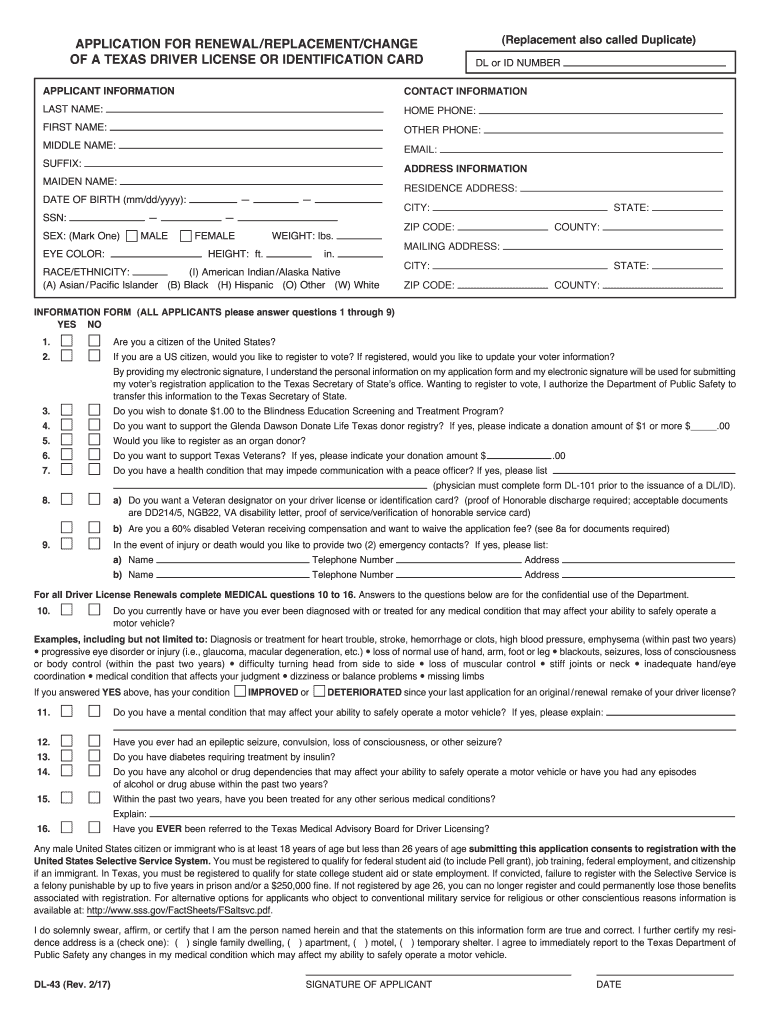
- Complete the Application: You will fill out a driver license application form. Many offices have these available online to complete beforehand.
- Vision Test: You will be required to pass a vision test. If you wear glasses or contact lenses, bring them with you.
- Photograph: Your photograph will be taken.
- Pay the Fee: Pay the required renewal fee. The DPS accepts cash, checks, money orders, and credit/debit cards at most locations.
- Receive Temporary License: You will receive a temporary driver’s license immediately after completing the process. Your permanent card will be mailed to your address on file within a few weeks.
Special Considerations for Renewal
Beyond the standard procedures, several specific situations require particular attention when renewing your Texas driver’s license. These include renewals for older adults, those with medical conditions, and military personnel.
Renewing for Drivers 70 and Older
Drivers in Texas who are 70 years of age or older have slightly different renewal requirements. They are generally required to renew in person every two years. This in-person renewal allows the DPS to ensure continued driving competency.
- In-Person Requirement: You must visit a driver license office.
- Vision Test: A vision test is always administered.
- No Driving Test: Typically, a driving test is not required for renewal unless there are specific concerns about driving ability.
- Medical Information: While not always mandatory, the DPS may request information about any medical conditions that could impact driving.
Military Personnel and Veterans
Texas offers provisions for military personnel and veterans to ease the renewal process.
- Deployment: Active duty military members stationed outside of Texas can renew their license online or by mail, even if their license has expired, as long as they provide proof of deployment.
- Expired License: Military personnel returning from deployment have a grace period after their return to renew their license without penalty.
- Veteran Status: The Texas legislature has introduced provisions to allow veterans to use their military driver’s license or discharge papers as proof of identity and citizenship for obtaining a Texas driver’s license, and to potentially waive certain testing requirements. Specific requirements should be verified with the DPS.
Real ID Compliance
A significant aspect of driver’s license renewal in Texas is compliance with the federal Real ID Act. Since May 7, 2025, a driver’s license or identification card that meets Real ID standards will be required for boarding federally regulated commercial aircraft and accessing certain federal facilities.
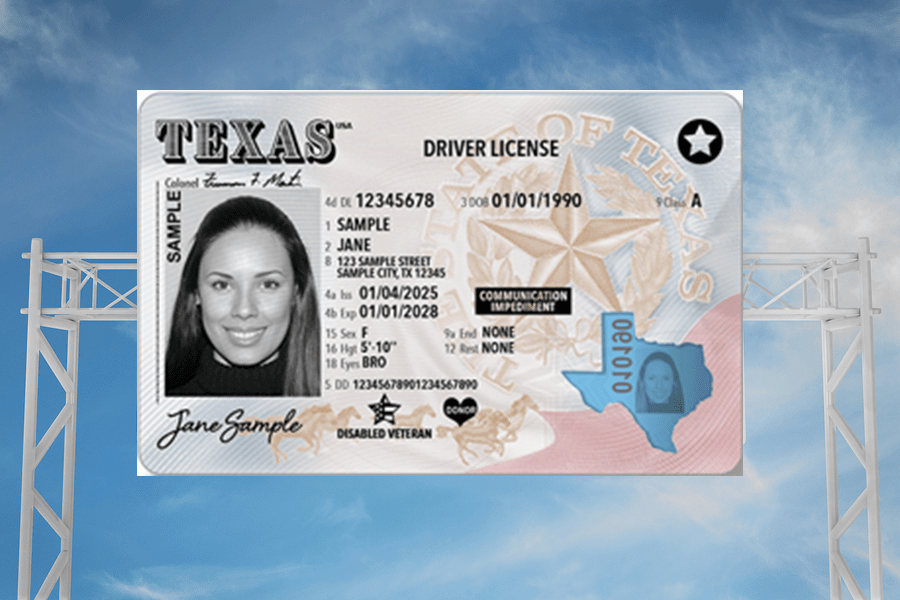
- Identifying a Real ID: Real ID compliant licenses in Texas will feature a star symbol in the upper right corner.
- Application Process: Applying for a Real ID compliant license typically requires an in-person visit to a driver license office, even if you would otherwise be eligible for online renewal. You will need to present original or certified copies of specific documents, including proof of identity, Social Security number, and two proofs of Texas residency.
- Non-Real ID: If you do not plan to use your driver’s license for federal purposes like air travel, you can opt for a standard, non-Real ID compliant license.
Tips for a Smooth Renewal
To ensure your driver’s license renewal in Texas is as seamless as possible, consider these practical tips:
- Start Early: Do not wait until the last minute. Begin the renewal process at least 30 days before your current license expires to avoid any lapse in legal driving privileges.
- Check Your Mail: The Texas DPS typically sends renewal notices by mail. Ensure your address is current with the DPS to receive these important reminders.
- Verify Eligibility: Before choosing a renewal method, carefully check the eligibility requirements on the official Texas DPS website to avoid any last-minute surprises.
- Prepare Documentation: If renewing in person, gather all necessary documents well in advance. Having originals or certified copies readily available will save time.
- Utilize Appointments: For in-person renewals, check if your local driver license office offers appointments. Booking an appointment can significantly reduce your wait time.
- Update Your Address: If you have moved, update your address with the Texas DPS before or during the renewal process. Failure to do so can result in your new license being sent to your old address.
- Understand Fees: Be aware of the current renewal fees. The Texas DPS website provides an up-to-date fee schedule.
- Digital Options: Familiarize yourself with the state’s digital driver’s license options if available. Some states are implementing digital licenses that can be stored on a smartphone, though the physical card remains essential.
By understanding the various renewal options, eligibility criteria, and required documentation, Texas drivers can confidently navigate the process of renewing their licenses, ensuring they remain legally compliant and ready for the road ahead. The Texas Department of Public Safety strives to make this process as accessible as possible, offering solutions for a diverse population of drivers.
LifeOutOfTheBox is a participant in the Amazon Services LLC Associates Program, an affiliate advertising program designed to provide a means for sites to earn advertising fees by advertising and linking to Amazon.com. Amazon, the Amazon logo, AmazonSupply, and the AmazonSupply logo are trademarks of Amazon.com, Inc. or its affiliates. As an Amazon Associate we earn affiliate commissions from qualifying purchases.