
Navigating the Texas Department of Motor Vehicles (DMV) process for renewing a disability placard can seem daunting, but with a clear understanding of the requirements and steps involved, it’s a straightforward procedure. This guide aims to demystify the renewal process for disabled parking permits in the Lone Star State, ensuring continued access to accessible parking for those who need it. Whether you are a resident of Austin, Houston, Dallas, or any other part of Texas, understanding these guidelines will help you maintain your parking privileges without interruption.
The disability placard, often referred to as a handicap placard, provides essential access to designated parking spaces for individuals with mobility impairments or other qualifying disabilities. These spaces are strategically located to reduce travel distance and improve accessibility to public buildings, commercial establishments, and other venues. Ensuring your placard is up-to-date is crucial for maintaining this vital access, whether you are traveling for leisure, visiting local attractions, or attending events.

Understanding Disability Placard Validity and Renewal Requirements
In Texas, disability placards are issued with a specific validity period. For individuals with temporary disabilities, the placard is typically valid for six months. For those with permanent disabilities, the placard is valid for five years. It is the responsibility of the placard holder to initiate the renewal process before the expiration date to avoid any lapse in their parking privileges.
Types of Disability Placards in Texas
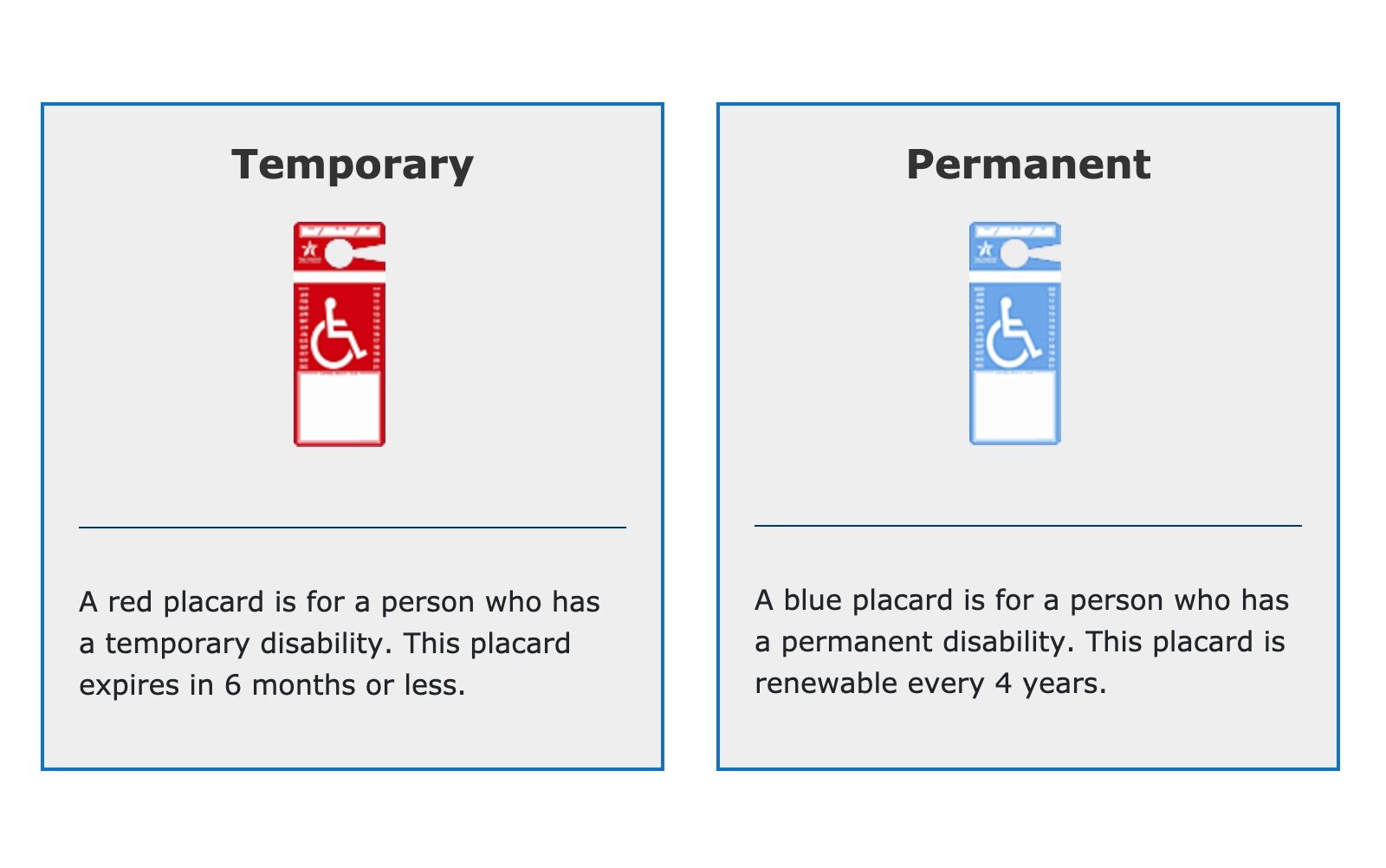
Texas offers two primary types of disability placards:
- The Permanent Disability Placard: Issued to individuals with a disability that is expected to be permanent. These placards are valid for five years.
- The Temporary Disability Placard: Issued to individuals with a disability that is temporary. These placards are valid for six months and may be renewed if the disability persists.
It is important to note that the renewal process differs slightly depending on whether you hold a permanent or temporary placard.
When to Renew
The Texas DMV encourages placard holders to begin the renewal process well in advance of their expiration date. While there isn’t a strict grace period mandated for renewals, allowing at least 30 days before expiration is advisable to account for processing times and potential mail delays. Renewing late can result in the invalidation of your placard, requiring you to reapply for a new one, which can be a more involved process.
Medical Professional Certification
A key component of the renewal process, particularly for permanent placards, involves recertification by a licensed medical professional. Even for permanent placards, the state requires periodic confirmation that the qualifying disability still exists. This is not a new requirement but a continuation of the process to ensure the placard is still necessary.
For temporary placards, renewal will almost always require a new certification from a medical professional, as the temporary nature of the disability needs to be re-evaluated. The certifying physician must be a licensed medical doctor (M.D.), doctor of osteopathy (D.O.), podiatrist (D.P.M.), or optometrist (O.D.) in Texas.
The Renewal Process: Step-by-Step Guide
The renewal of a disability placard in Texas can generally be completed through mail or in person at a local county tax assessor-collector office. Online renewals are not typically available for disability placards, making the physical submission of forms a necessity.
Step 1: Obtain the Application Form
The primary form required for renewal is the “Application for Persons with a Disability Parking Placard” (Form CR-303). This form is available for download from the Texas Department of Motor Vehicles (DMV) website or can be obtained from any county tax assessor-collector office. It’s crucial to download the most current version of the form to ensure all information is accurate and up-to-date.
Step 2: Complete the Application Form
Carefully fill out all sections of the Form CR-303. This includes providing personal information such as your name, address, date of birth, and driver’s license or ID card number.
Section I: Applicant Information
This section requires your basic personal details. Ensure that the information provided matches your official identification documents.
Section II: Medical Information and Certification
This is the most critical part of the application. A licensed medical professional must complete and sign this section, certifying your qualifying disability.
- For Permanent Placards: The medical professional will need to indicate that your disability is permanent. They will also specify the nature of the disability (e.g., inability to walk 200 feet without stopping to rest, severe lung disease, use of a portable oxygen supply, severe limitation in the ability to walk due to an arthritic, neurological, or orthopedic condition, cardiac condition that limits exertion, or a condition that is otherwise disabling as defined by the Americans with Disabilities Act).
- For Temporary Placards: The medical professional will need to indicate the expected duration of the disability, which cannot exceed six months. If a renewal is sought for a temporary placard, a new certification indicating the continued temporary disability is required.
The certifying physician’s signature, printed name, license number, and practice address are mandatory. Without a complete and signed medical certification, your application will be rejected.
Step 3: Submit the Application
Once the application form is fully completed and signed by both you and your medical professional, it needs to be submitted.
Renewal by Mail
You can mail the completed application form to:
Texas Department of Motor Vehicles
Vehicle Titles and Registration Division
P.O. Box 13578
Austin, Texas 78711-3578
It is highly recommended to send the application via certified mail to ensure you have proof of delivery.
In-Person Renewal

Alternatively, you can visit your local county tax assessor-collector office. Bring the completed application form along with a valid form of identification. Some offices may require you to present your current placard for verification. It is a good idea to call your local office in advance to confirm their specific requirements and operating hours. The county tax assessor-collector office can often process your renewal on the spot.
Step 4: Payment of Fees
There is typically no fee for renewing a disability placard in Texas. However, if you are applying for a replacement placard because yours was lost or stolen, there may be a small replacement fee. Always check the latest fee schedule on the Texas DMV website or confirm with your county tax assessor-collector office.
Step 5: Receiving Your New Placard
After your application is approved, your new disability placard will be mailed to the address you provided on the application. For in-person renewals at a county tax assessor-collector office, you might receive your new placard immediately. The new placard will have a new expiration date, and you should destroy your old placard once the new one is received and verified.
Special Considerations and Tips for a Smooth Renewal
Navigating the renewal process can be made smoother with a few practical tips and an understanding of specific scenarios.
Replacing a Lost or Stolen Placard
If your disability placard is lost or stolen, you must apply for a replacement. This requires completing the “Application for Persons with a Disability Parking Placard” (Form CR-303) again, indicating that it is a replacement application. You will need to provide a valid medical certification, and there may be a small fee associated with replacement.
Renewal for Out-of-State Residents
If you have moved to Texas and previously held a disability placard from another state, you will need to apply for a Texas placard. You will need to complete the application form and have it certified by a Texas-licensed medical professional.
Importance of Accurate Medical Information
The accuracy and completeness of the medical certification are paramount. Ensure your physician understands the criteria for disability parking privileges in Texas. If there is any ambiguity or missing information, the application will be delayed or denied.
Keeping Your Contact Information Updated
It is essential to keep your mailing address updated with the Texas DMV. This ensures that your renewed placard reaches you without delay. You can update your address through the Texas DMV website or by visiting a county tax assessor-collector office.
Using Your Placard Responsibly
Remember that the disability placard is intended for the sole use of the person to whom it was issued. Misusing a disability placard is a serious offense and can result in fines and the revocation of parking privileges. When traveling to different cities within Texas, such as San Antonio or Fort Worth, ensure your placard is displayed correctly, hanging from the rearview mirror when parked in a designated space.
By following these guidelines, Texas residents can ensure a hassle-free renewal of their disability placards, maintaining access to essential parking facilities and enabling continued participation in all that the state has to offer, from exploring national parks to enjoying vibrant city life.
Frequently Asked Questions About Placard Renewal
The renewal process for disability placards in Texas can sometimes bring up common questions. Here, we address some of the most frequently asked to provide clarity and ensure a smooth experience for placard holders.
Can I Renew My Placard Online?
Currently, the Texas Department of Motor Vehicles (DMV) does not offer an online renewal option for disability placards. The application must be submitted either by mail or in person at a county tax assessor-collector office. This is primarily due to the requirement for a signed medical certification that needs to be reviewed.
How Long Does It Take to Receive a Renewed Placard?
Processing times can vary. If you mail your application, it typically takes 2-4 weeks to receive your new placard. Renewing in person at a county tax assessor-collector office is often the quickest method, as you may receive your new placard on the same day. It is always best to submit your application well in advance of your expiration date to avoid any potential delays.
What Happens If My Placard Expires Before I Renew It?
If your disability placard expires before you renew it, you will no longer be legally permitted to use designated accessible parking spaces. To regain these privileges, you will need to reapply for a new placard, which involves completing the entire application process, including obtaining a new medical certification. This underscores the importance of timely renewal.
Can Someone Else Pick Up My Renewed Placard for Me?
If you are renewing in person at a county tax assessor-collector office, you may be able to designate someone to pick up your placard. However, this depends on the specific policies of the individual county office. It is advisable to contact your local office beforehand to inquire about their procedures for proxy pickups. When mailing in your application, the placard will be sent directly to the address listed on your form.
Are There Any Special Requirements for International Visitors or Tourists with Disabilities Visiting Texas?
Texas recognizes disability placards and license plates issued by other U.S. states and countries. Visitors from out of state or country can generally use their valid placards for up to 30 days. For longer stays or if you require a Texas placard, you would need to apply for one following the standard procedures, including medical certification from a Texas-licensed practitioner.
What If My Medical Condition Changes?
If your medical condition improves to the point where you no longer meet the criteria for a disability placard, you are required to return your placard to the Texas DMV. Similarly, if your temporary disability has resolved, the placard should be returned. Failure to do so can lead to penalties.
By staying informed and proactive, individuals can ensure their disability placards remain valid, facilitating easier access to parking and enhancing their ability to travel and enjoy amenities across Texas.
LifeOutOfTheBox is a participant in the Amazon Services LLC Associates Program, an affiliate advertising program designed to provide a means for sites to earn advertising fees by advertising and linking to Amazon.com. Amazon, the Amazon logo, AmazonSupply, and the AmazonSupply logo are trademarks of Amazon.com, Inc. or its affiliates. As an Amazon Associate we earn affiliate commissions from qualifying purchases.