
The history of the United States is often defined by vast territorial acquisitions that reshaped the map of North America and the Pacific Ocean. From the Louisiana Purchase orchestrated with France to the Alaska Purchase from Russia, many Americans assume that Hawaii was similarly bought through a formal real estate transaction between two sovereign nations. However, the story of how the Hawaiian Islands became the 50th state is not one of a financial sale, but rather a complex narrative of political upheaval, annexation, and the eventual dissolution of a sovereign monarchy.
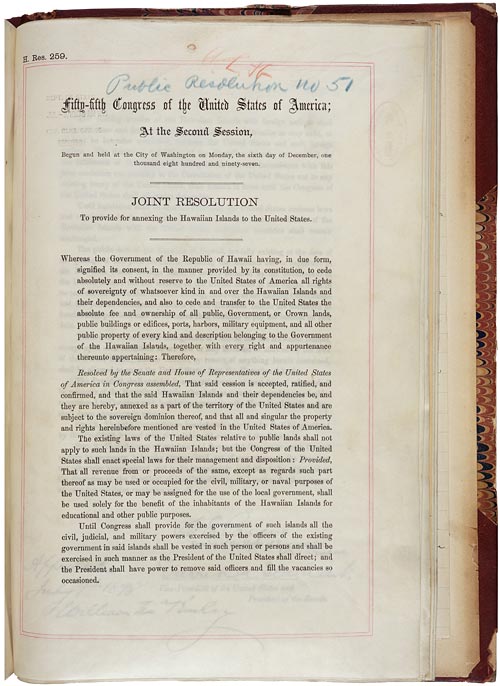
To understand the landmarks and historical sites that define Honolulu and the surrounding islands today, one must first dismantle the myth of the “Hawaii Purchase.” Unlike other territories, the United States did not buy Hawaii from any foreign power. Instead, the islands were annexed in 1898 following a series of internal conflicts involving American businessmen, the Kingdom of Hawaii, and the United States Government.
The Historical Reality of Hawaii’s Annexation
The transition of Hawaii from an independent kingdom to a United States territory is one of the most significant chapters in the history of Pacific landmarks. In the late 19th century, the Kingdom of Hawaii was a recognized sovereign nation with diplomatic ties to major world powers, including Great Britain and the United States. The economy was largely driven by the sugar industry, which was dominated by American and European businessmen.
In 1893, a group of these influential residents, known as the Committee of Safety, orchestrated a coup against Queen Liliuokalani, the last reigning monarch of the islands. This group sought to overthrow the monarchy and seek annexation by the United States to eliminate tariffs on sugar exports. Supported by the landing of United States Marines from the USS Boston, the provisional government seized control.
The Newlands Resolution
For several years, the question of annexation remained a contentious issue in Washington DC. President Grover Cleveland initially opposed the annexation, calling the overthrow an “act of war” and attempting to restore the Queen to her throne. However, by 1898, the geopolitical landscape had shifted. With the onset of the Spanish American War, the strategic importance of Hawaii as a mid-Pacific naval station became undeniable.
Under President William McKinley, the United States Congress passed the Newlands Resolution. This joint resolution officially annexed the islands, creating the Territory of Hawaii. No money was paid to a foreign government for the land; rather, the United States assumed the debts of the former Republic, and in exchange, it took control of all public lands.
Landmark Sites of the Hawaiian Monarchy
The physical legacy of the Kingdom of Hawaii is preserved in several iconic landmarks throughout Oahu. These sites serve as a somber reminder of the sovereign nation that existed before the 1898 annexation.
Iolani Palace
Perhaps the most significant historical landmark in the islands is Iolani Palace. Located in downtown Honolulu, it is the only royal palace on United States soil. Completed in 1882 by King Kalakaua, the palace was a symbol of the kingdom’s modernity, featuring electricity and telephone lines before even the White House.
Today, visitors can tour the palace to see the throne room and the private quarters of the royal family. Most poignantly, the palace includes the room where Queen Liliuokalani was held under house arrest following a failed 1895 counter-revolution by royalists. The palace stands as a grand architectural achievement in the “American Florentine” style and remains a sacred site for the Native Hawaiian people.
Aliiolani Hale
Just across the street from Iolani Palace stands Aliiolani Hale. Originally designed as a palace for King Kamehameha V, it was repurposed to house the government offices of the Kingdom of Hawaii. It is most famous today for the golden Kamehameha Statue that stands in its front courtyard, depicting the king who first unified the islands. During the overthrow of 1893, this building was the site where the proclamation of the provisional government was read, effectively ending the monarchical rule.

Washington Place
Another critical landmark in the story of Hawaii is Washington Place. Built by the father-in-law of Queen Liliuokalani, this elegant Greek Revival mansion served as her private residence for decades. It was here that she was arrested during the 1895 uprising. Later, the building became the official residence of the Governor of Hawaii for much of the 20th century, bridging the gap between the royal past and the American political present.
The Role of Pearl Harbor and Strategic Expansion
While the sugar trade initiated the move toward annexation, the military value of the islands cemented their place within the United States. No site exemplifies this transition more than Pearl Harbor.
USS Arizona Memorial
The USS Arizona Memorial is one of the most visited historical landmarks in the United States. It marks the resting place of 1,102 sailors and Marines killed during the Attack on Pearl Harbor on December 7, 1941. The events at this site were the catalyst for the United States entry into World War II and eventually led to the 1959 statehood movement. The memorial, designed by architect Alfred Preis, straddles the sunken hull of the battleship without touching it, symbolizing the weight of the past and the resilience of the nation.
National Memorial Cemetery of the Pacific
Often referred to as the Punchbowl Crater, this landmark is situated in an extinct volcanic cinder cone in Honolulu. The site was transformed into a national cemetery to honor those who served in the United States Armed Forces. Its location provides a panoramic view of the city and serves as a solemn monument to the sacrifices made in the Pacific Theater. The history of the land itself predates its military use, as it was known to ancient Hawaiians as the “Hill of Sacrifice,” where they performed religious ceremonies and burials.
Preserving the Heritage of the Islands
Beyond the political and military landmarks, Hawaii is home to sites that preserve the indigenous history and natural beauty of the archipelago, illustrating why the islands were so highly valued by the United States.
Bishop Museum
The Bernice Pauahi Bishop Museum is the premier institution for Hawaiian history and culture. Founded in 1889 by Charles Reed Bishop in memory of his wife, Princess Bernice Pauahi Bishop, the museum houses the world’s largest collection of Polynesian artifacts. The landmark’s Victorian-era stone buildings are an architectural marvel, and the exhibits within provide essential context for the “purchase” and annexation debate, showcasing the depth of the culture that existed long before Western contact.
Puukohola Heiau National Historic Site
On the Big Island, the Puukohola Heiau National Historic Site preserves the ruins of one of the last major ancient temples built in Hawaii. Constructed by King Kamehameha I in 1791, this massive stone structure was built to fulfill a prophecy that helped him unite the islands. This landmark represents the pinnacle of the Hawaiian Kingdom at its dawn, contrasting sharply with the late-19th-century sites in Oahu that mark its end.
Diamond Head
Known as Leahi to the locals, Diamond Head is a volcanic tuff cone that defines the skyline of Waikiki. While it is a natural landmark of immense beauty, its history is also tied to the military expansion of the United States. In the early 1900s, the crater was used as a strategic lookout and coastal defense site, known as Fort Ruger. The hiking trails used by tourists today were originally built as part of the military infrastructure.

Conclusion
The answer to “Who did the United States buy Hawaii from?” is that they didn’t. There was no exchange of funds between nations, no signed deed of sale like the Gadsden Purchase or the Treaty of Paris. Instead, the United States acquired Hawaii through a unilateral annexation that dissolved the Kingdom of Hawaii.
By visiting landmarks like Iolani Palace, Washington Place, and Pearl Harbor, travelers and history enthusiasts can gain a deeper understanding of this unique transition. Each stone and statue in these locations tells a part of a story that is much more complex than a simple purchase. From the royal legacies of Maui and Kauai to the bustling corridors of power in Honolulu, the landmarks of Hawaii stand as enduring witnesses to a sovereign nation’s past and its permanent place within the American fabric. Understanding this history is essential for anyone wishing to truly appreciate the culture and spirit of the Aloha State.
LifeOutOfTheBox is a participant in the Amazon Services LLC Associates Program, an affiliate advertising program designed to provide a means for sites to earn advertising fees by advertising and linking to Amazon.com. Amazon, the Amazon logo, AmazonSupply, and the AmazonSupply logo are trademarks of Amazon.com, Inc. or its affiliates. As an Amazon Associate we earn affiliate commissions from qualifying purchases.