
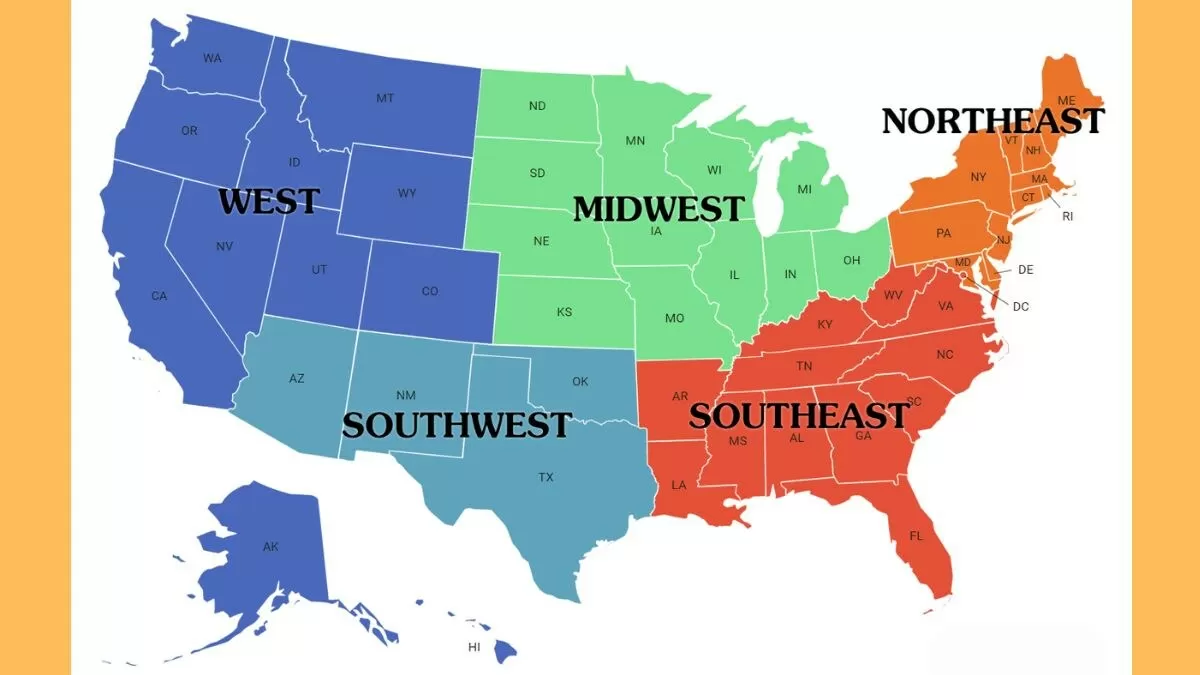
The Lone Star State, a land of vast plains, bustling metropolises, and rugged frontiers, often sparks a geographical debate: is Texas more aptly classified as Southeast or Southwest? This question, while seemingly simple, delves into the nuances of regional identity, historical development, and climatic influences that shape our perception of this immense state. Understanding Texas’s geographical position requires more than just consulting a map; it involves appreciating the cultural, economic, and environmental threads that weave it into both the American South and the American West.
Defining the Regions: A Matter of Perspective
The classification of a state like Texas is rarely a straightforward exercise. Both the Southeast and Southwest regions of the United States are broad and somewhat fluid designations, with definitions often overlapping and varying depending on the criteria used.

The Southeast: A Cultural and Historical Lens
Traditionally, the Southeastern United States encompasses states with a shared history, culture, and economic ties, often rooted in the antebellum South. This region is characterized by its humid subtropical climate, agricultural heritage (particularly cotton and tobacco), and a distinct Southern cultural identity that includes certain culinary traditions, musical genres, and social customs. States like Georgia, Alabama, and Mississippi are unequivocally considered part of the Southeast.
When examining Texas through this lens, certain similarities emerge. East Texas, in particular, shares a climate and landscape reminiscent of the Deep South. The piney woods, rolling hills, and humid conditions of this eastern portion of the state echo the environments found in neighboring Southern states. Furthermore, historical connections, including periods of shared settlement patterns and the legacy of the Confederacy, contribute to a perception of Texas as having strong ties to the Southeast. Cities like Houston and Dallas, with their significant cultural contributions and economic prowess, are often viewed through a Southern cultural prism.
The Southwest: A Frontier and Desert Identity
Conversely, the Southwest is typically associated with arid or semi-arid climates, desert landscapes, and a history of Spanish and Native American influence. States such as Arizona, New Mexico, and parts of California and Nevada are recognized for their distinctive desert ecosystems, vibrant multicultural heritage, and a frontier spirit. The iconic imagery of canyons, mesas, and vast open spaces defines much of the Southwest.
Texas possesses undeniable characteristics that align it with the Southwest. West Texas, with its dramatic desert vistas, vast ranches, and the influence of Hispanic culture, strongly evokes the Southwest. The rugged beauty of Big Bend National Park, the oil fields of the Permian Basin, and the cultural fusion in cities like El Paso all point towards a Southwestern identity. The historical narrative of Texas as a frontier territory, a land of cowboys and independent spirits, also resonates deeply with the perceived characteristics of the Southwest.
Geographical and Climatic Factors
Beyond cultural and historical interpretations, the physical geography and climate of Texas offer crucial insights into its regional placement. The sheer size of the state results in a diverse range of environments, making a singular classification challenging.
A Spectrum of Landscapes
Texas is a state of striking geographical diversity. Its eastern regions are characterized by the aforementioned piney woods and fertile plains, transitioning westward into rolling hills, the Edwards Plateau, and eventually into the arid deserts and rugged mountains of West Texas. The coastline along the Gulf of Mexico provides yet another distinct environment. This geographical spectrum means that different parts of Texas naturally align with the typical landscapes of both the Southeast and the Southwest.
Climatic Transitions
The climate of Texas is equally varied. East Texas experiences a humid subtropical climate with hot, wet summers and mild winters, consistent with the Southeast. As one moves westward, the climate becomes progressively more arid, with hotter summers, colder winters, and significantly less rainfall, characteristic of the Southwest. The Panhandle, for instance, has a semi-arid climate with greater temperature extremes, while South Texas experiences a hot, semi-arid to dry subtropical climate. This climatic gradient underscores the state’s transitional nature between these two broad regions.
Economic and Cultural Crosscurrents
The economic development and cultural evolution of Texas have also been shaped by influences from both the Southeast and the Southwest, creating a unique Texan identity that defies easy categorization.
Historical Development and Settlement
The early settlement of Texas was influenced by migrations from both the American South and, to some extent, from Mexico and further West. Agricultural practices in East Texas mirrored those in the plantation South, while the ranching culture that became synonymous with Texas has strong ties to the Western frontier and Mexican traditions. The state’s economy, historically reliant on agriculture, later experienced a significant boom with the discovery of oil, a resource that fueled industrialization and urban growth, drawing parallels with the economic development seen in other parts of the South.
Cultural Tapestry
The cultural landscape of Texas is a rich tapestry woven from diverse threads. Southern hospitality, a hallmark of the Southeast, is palpable in many Texan communities. Simultaneously, the vibrant Hispanic culture, a defining feature of the Southwest, is deeply ingrained in Texas from its language and cuisine to its art and festivals. The iconic cowboy culture, often associated with the West, also plays a significant role in the state’s identity. This blend of influences makes it difficult to pigeonhole Texas into a single regional box.
The “Texan” Identity: A Synthesis
Ultimately, the question of whether Texas is Southeast or Southwest might be less about finding a definitive answer and more about recognizing the state’s unique position as a bridge between these two iconic American regions. Texas embodies a synthesis, a place where Southern charm meets Western grit, and where desert landscapes coexist with verdant plains.
Navigating the Nuance
Many Texans themselves embrace this duality. For those in East Texas, the connection to the South might feel more pronounced, influencing their dialect, social customs, and even their preferred cuisine. Conversely, residents of West Texas might readily identify with the Southwestern ethos, appreciating the rugged beauty and the independent spirit of the frontier. The sprawling metropolises like Austin, San Antonio, and the aforementioned Houston and Dallas serve as melting pots where these regional influences converge, creating a distinctly Texan culture that is both familiar and unique.

A State of Transitions
Geographers and demographers often place Texas in its own distinct region, acknowledging its exceptionalism. However, when forced to align it with broader classifications, its transitional nature becomes apparent. It is a state that straddles the divide, inheriting characteristics from both the Southeast and the Southwest, and in doing so, forging an identity that is entirely its own. Whether one is exploring the historic missions of San Antonio, the vibrant music scene of Austin, the piney woods of East Texas, or the majestic vistas of Big Bend, the experience is undeniably Texan, a testament to its complex and captivating regional positioning.
LifeOutOfTheBox is a participant in the Amazon Services LLC Associates Program, an affiliate advertising program designed to provide a means for sites to earn advertising fees by advertising and linking to Amazon.com. Amazon, the Amazon logo, AmazonSupply, and the AmazonSupply logo are trademarks of Amazon.com, Inc. or its affiliates. As an Amazon Associate we earn affiliate commissions from qualifying purchases.