
Navigating the initial stages of independent travel is an exciting milestone, and for many, especially younger individuals, this begins with obtaining a learner’s permit. In Texas, this crucial document serves as the first official step towards obtaining a driver’s license and unlocks a world of possibilities for exploration, from weekend getaways to visiting local Texas attractions. Understanding the appearance and security features of a Texas learner’s permit is not just about knowing what to expect; it’s also about recognizing a legitimate form of identification that facilitates responsible travel and personal freedom. This guide will delve into the visual characteristics of this important permit, ensuring you can identify it with confidence.

The Anatomy of a Texas Learner’s Permit
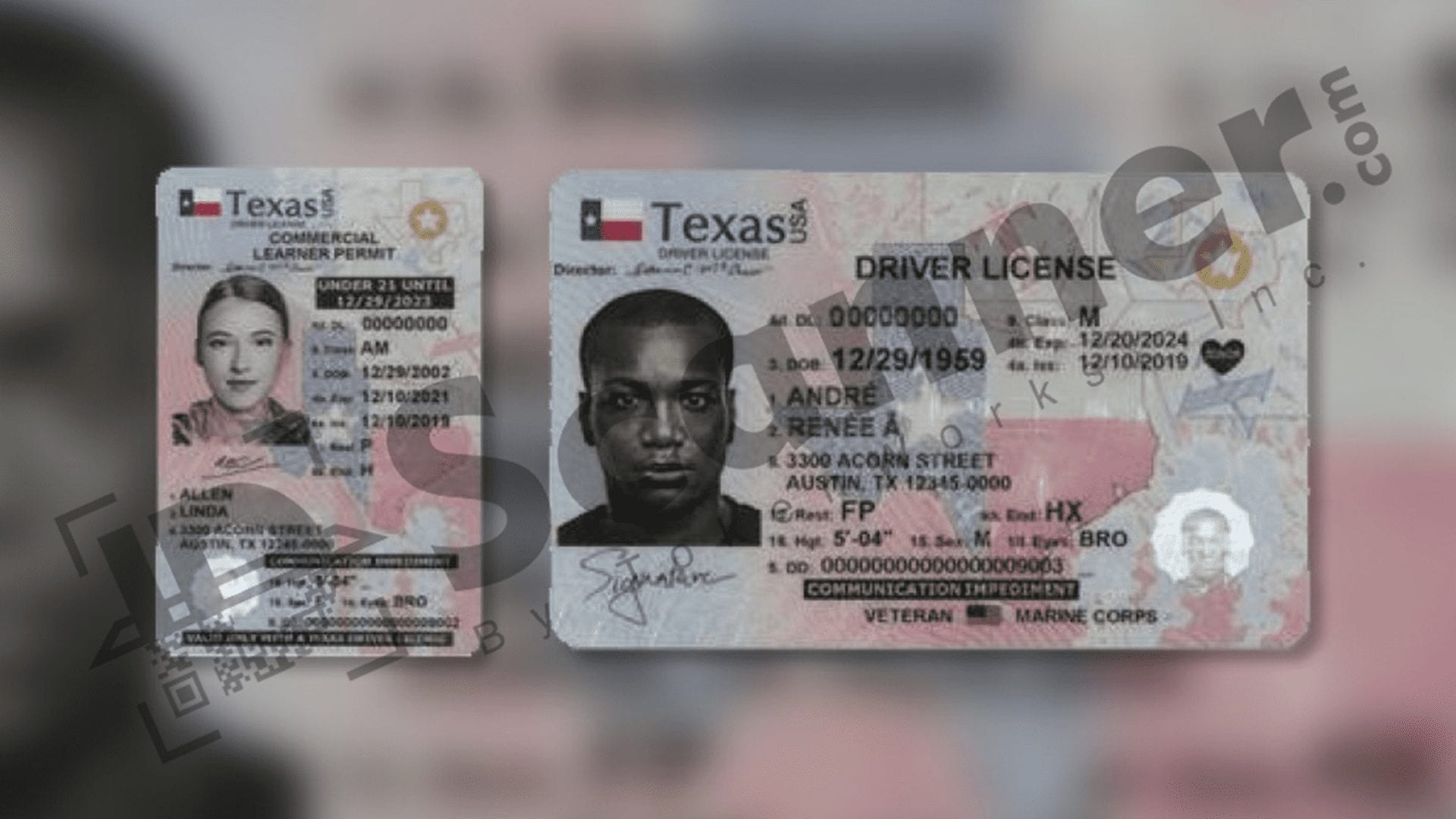
A Texas learner’s permit, officially known as a Provisional Driver License for individuals under 18, is a government-issued identification card designed with multiple security features to prevent fraud and ensure authenticity. While the design has evolved over time, current versions share several key visual elements. The permit is typically the standard credit card size, making it easy to carry in a wallet.
Front of the Permit
The front of the permit displays essential personal information about the permit holder. This includes:
- Photograph: A clear, recent photograph of the applicant is prominently featured, usually on the left side. The background of the photo is typically plain and uniform.
- Name: The full legal name of the permit holder is printed.
- Address: The applicant’s residential address is listed.
- Date of Birth: The permit holder’s date of birth is clearly indicated.
- Sex: The applicant’s sex is specified.
- Height and Weight: These physical descriptors are included for identification purposes.
- Eye Color: The color of the applicant’s eyes is noted.
- License Number: A unique driver’s license number is assigned to the permit holder.
- Issuance and Expiration Dates: The dates when the permit was issued and when it will expire are critical for determining its validity. Learner’s permits in Texas have specific validity periods, often tied to the applicant’s age and progress towards obtaining a full license.
- “Provisional Driver License” or “Learner’s Permit”: The type of license is clearly stated. For those under 18, it will explicitly say “Provisional Driver License,” indicating the probationary status.
- “Under 21” Indicator: A distinctive marking, often a vertical red stripe or the words “Under 21,” is present to signify that the permit holder is below the legal drinking age, a crucial detail for establishments serving alcohol or for age-restricted activities.
Back of the Permit
The back of the permit typically contains additional information and security features:
- State Seal: The official seal of Texas is usually visible, often as a watermark or a raised element.
- Holographic Overlays: Modern permits employ sophisticated holographic images that change appearance when viewed from different angles. These can include images of the Texas state capitol, the state seal, or other thematic designs, making them exceptionally difficult to counterfeit.
- Microprinting: Extremely small text, visible only under magnification, is often incorporated into the design, further enhancing security. This text might spell out “Texas Department of Public Safety” or other relevant phrases.
- UV Ink: Certain elements of the permit may be printed with ultraviolet (UV) ink, which only becomes visible when exposed to UV light. This is a common security measure used by governments worldwide to authenticate official documents.
- Tactile Features: Some permits may incorporate tactile elements, such as raised printing or embossed patterns, that can be felt by touch, adding another layer of security.
- Magnetic Stripe or Barcode: While less common for identification purposes directly, a magnetic stripe or barcode may be present for data storage and retrieval by authorized systems.
Security Features: Beyond the Visual
The security of a Texas learner’s permit is paramount, and the Texas Department of Public Safety (DPS) employs several sophisticated techniques to ensure its integrity. These features are designed to be difficult for counterfeiters to replicate and easy for law enforcement and authorized personnel to verify.
Holograms and OVDs (Optically Variable Devices)
One of the most striking security features is the use of holograms. These are not merely decorative; they are complex optical illusions created by etching microscopic patterns onto a surface. When light hits these patterns, it reflects in specific ways, producing a three-dimensional image that appears to float or change. On a Texas learner’s permit, you might see images of the Texas state capitol building or the Texas star, which shift and shimmer as the card is tilted. These Optically Variable Devices (OVDs) are a strong indicator of authenticity.
Ghost Image and Laser Engraving
Many modern identification cards, including Texas learner’s permits, feature a “ghost image” – a smaller, less distinct version of the holder’s photograph that is often located near the main photo or in a corner. This ghost image is typically created using laser engraving, which leaves a permanent mark on the card material. The combination of the primary photograph and the ghost image makes it more challenging to alter the photo without detection. Laser engraving also allows for the creation of fine details and patterns that are difficult to reproduce with standard printing methods.
Edge-to-Edge Printing and Special Inks
The printing on the permit often extends to the very edges of the card, a technique known as edge-to-edge printing. This makes it harder to tamper with the card by peeling back layers or attempting to replace sections. Furthermore, specialized inks are used, including UV-reactive inks and iridescent inks that change color depending on the viewing angle. These inks require special equipment and materials to replicate, adding a significant hurdle for forgers.

Material and Construction
The card stock itself is designed for durability and security. It’s often made of polycarbonate, a strong and resilient plastic that is difficult to tear or damage. Polycarbonate cards are manufactured through a process of fusing multiple layers together with heat and pressure, embedding the printed information and security features within the card structure. This makes it nearly impossible to alter the information without leaving visible signs of tampering.
The Significance of the Learner’s Permit for Travel
While a learner’s permit is primarily for learning to drive, it also serves as a vital form of identification, which can be surprisingly useful for travel within Texas and beyond. For younger travelers, it’s often the first official document they possess that proves their identity and age.
Domestic Travel
When traveling domestically, especially by air or train, a valid government-issued ID is required. While a driver’s license is the most common form of ID, a learner’s permit can also be accepted, particularly when accompanied by a parent or guardian or for specific age-related travel restrictions. It’s always advisable to check with the specific airline or transportation provider regarding their ID policies for minors. For instance, when traveling to cities like Dallas or Houston for a special event or to visit family, having this permit ensures that age verification for certain activities is straightforward.
Age Verification and Activities
Beyond transportation, the learner’s permit is crucial for age verification in numerous scenarios. This includes:
- Entering age-restricted venues: Many popular tourist attractions, like certain museums or entertainment complexes in San Antonio, may have age restrictions for entry or participation in specific exhibits.
- Purchasing tickets: Obtaining discounted tickets for students or youth often requires proof of age or status.
- Renting equipment: Some recreational activities, such as renting bikes or kayaks at Lake Travis, may require a valid ID for rental agreements.
- Participating in tours: Certain guided tours or adventure activities in areas like the Texas Hill Country might have age requirements for participation.
Responsible Independence
Possessing a learner’s permit signifies a step towards independence. It allows supervised driving practice, which is essential for developing driving skills. This, in turn, opens up opportunities for exploring local parks, visiting friends and family in nearby towns, or even taking supervised trips to national landmarks within Texas. The ability to travel, even with supervision, fosters a sense of autonomy and expands a young person’s horizons, contributing to their overall development and life experiences. Understanding the permit’s appearance and its legitimacy ensures that this newfound freedom is exercised responsibly and legally.
Obtaining and Verifying a Texas Learner’s Permit
The process of obtaining a learner’s permit in Texas is regulated by the Texas Department of Public Safety (DPS). Applicants must meet specific age and educational requirements, pass vision and knowledge tests, and complete an approved driver education program.
Requirements for Applicants
- Age: Applicants must be at least 15 years old.
- Driver Education: Completion of a state-approved driver education course is mandatory. This typically includes classroom instruction and behind-the-wheel training.
- Learner’s Permit Test: Passing a written knowledge test covering traffic laws and safe driving practices is required.
- Vision Test: A vision screening ensures the applicant meets the minimum visual acuity standards.
- Required Documents: Proof of identity, Texas residency, and Social Security number must be presented.
The Importance of Verification
For individuals who may encounter a learner’s permit during their travels or professional interactions, understanding how to verify its authenticity is important. While law enforcement officials have specialized tools, a basic visual inspection can reveal many common signs of counterfeit documents.
- Check the Photo: Does the photo appear to be a genuine, high-quality image, or does it look pasted on or altered?
- Examine Security Features: Look for the holograms, microprinting, and any raised elements. Do they appear as described, or are they flat and poorly rendered?
- Verify Dates: Ensure the expiration date is current and that the issuance date makes sense in context.
- Feel the Card: Is the card made of durable plastic, or does it feel flimsy and easily damaged?
- Look for UV Features: If possible, exposing the card to UV light can reveal hidden security markings.
By familiarizing oneself with the visual characteristics and security enhancements of a Texas learner’s permit, one can confidently identify a legitimate document, facilitating responsible travel and recognizing the initial steps toward independent mobility in the Lone Star State.
LifeOutOfTheBox is a participant in the Amazon Services LLC Associates Program, an affiliate advertising program designed to provide a means for sites to earn advertising fees by advertising and linking to Amazon.com. Amazon, the Amazon logo, AmazonSupply, and the AmazonSupply logo are trademarks of Amazon.com, Inc. or its affiliates. As an Amazon Associate we earn affiliate commissions from qualifying purchases.