
Navigating the complexities of official documentation can often feel like an intricate puzzle, especially when it pertains to significant life events like marriage. For those residing in or having been married in Texas, understanding where to locate the critical marriage record identification or filing number is paramount. This number serves as a unique identifier for your marriage license and the subsequent official record, facilitating various administrative processes, from name changes to genealogical research. This guide aims to demystify the process, providing clarity on the nature of this number and its typical location within the official documentation landscape of Texas.
Understanding the Marriage Record Identification/Filing Number in Texas
In Texas, the concept of a singular “filing number” as one might find on other official documents isn’t always a distinct, standalone identifier for a marriage record itself. Instead, the crucial identifying information is typically integrated within the marriage license and the subsequent Certificate of Marriage. The marriage license, which is the document authorizing the marriage, and the Certificate of Marriage, which is the official record of the marriage having occurred, are the primary documents containing the necessary identifiers.
The Role of the Marriage License
Before a marriage can be officially recorded in Texas, a marriage license must be obtained. This license is issued by a county clerk’s office. While the license itself doesn’t typically have a unique “filing number” in the way a court case might, it is assigned a number or identifier by the issuing county. This number, along with the names of the individuals getting married, the date of issuance, and the date of the ceremony, forms the core of the initial identification.
The marriage license is valid for a specific period, during which the marriage ceremony must take place. Once the ceremony is performed and the license is completed by the officiant and witnesses, it is returned to the issuing county clerk’s office for recording. It is at this point that the license effectively becomes the foundational element of the marriage record.
The Certificate of Marriage: The Official Record
Following the return and recording of the marriage license, an official Certificate of Marriage is generated. This certificate is the definitive legal proof of the marriage. While it may not explicitly label a specific field as “Filing Number,” it contains several key pieces of information that serve as its unique identifiers. These typically include:
- County Clerk’s File Number (or similar designation): This is perhaps the closest equivalent to a filing number. It is a unique identifier assigned by the county clerk’s office when the marriage license is officially recorded. This number is crucial for retrieving and verifying the record.
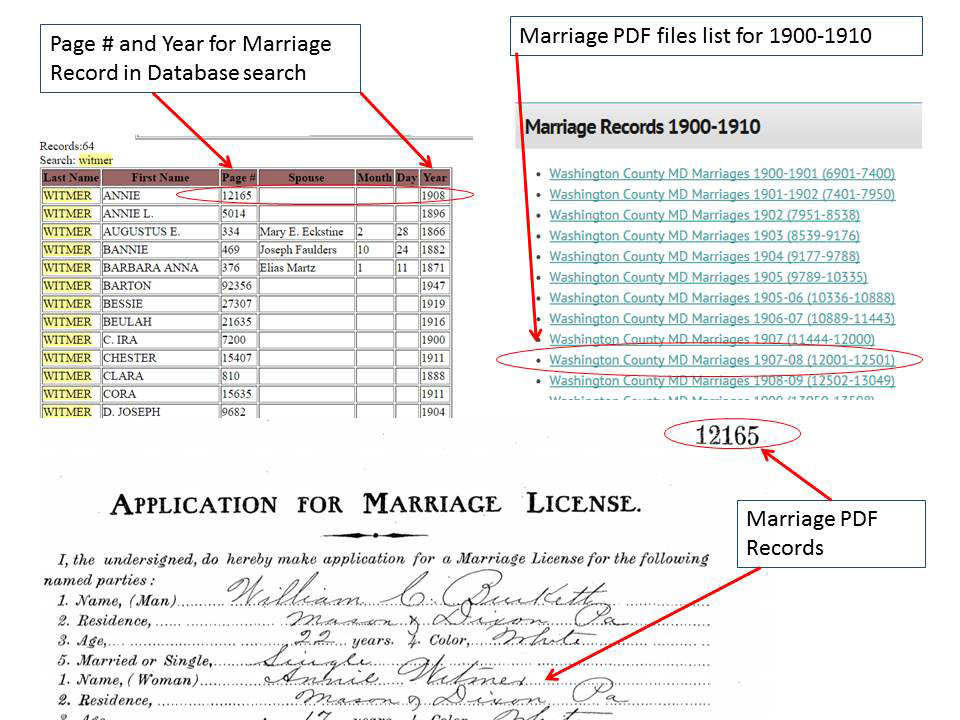
- Volume and Page Number: In some older or more traditional record-keeping systems, marriage records might be cataloged by volume and page number within a larger book of marriages maintained by the county clerk.
- Names of Spouses: The full legal names of both individuals are, of course, a primary identifier.
- Date of Marriage: The specific date the marriage ceremony occurred.
- Date of Recordation: The date the marriage was officially recorded by the county clerk.
- File Date: The date the completed marriage license was filed with the county clerk.
When requesting a certified copy of a marriage record from a Texas county, you will often be asked for as much of this identifying information as possible. Providing the County Clerk’s File Number, if known, will expedite the process significantly.
Locating Your Marriage Record Identification Number
The primary place to find the identification or filing number for your Texas marriage record is on the official Certificate of Marriage itself. If you have a certified copy issued by the county clerk’s office where your marriage license was recorded, carefully examine the document.
When You Have Your Certificate of Marriage
If you possess a certified copy of your Certificate of Marriage, the identification number should be clearly visible. Look for fields that might be labeled as:
- File Number
- County File Number
- Marriage License Number (though this often refers to the license itself, the record number is what is filed)
- Record Number
The specific terminology can vary slightly from county to county within Texas. If you are unsure, a call to the county clerk’s office where you obtained your marriage license can provide clarification. They are accustomed to assisting individuals in locating this information.
If You Don’t Have Your Certificate of Marriage
If you no longer have a copy of your Certificate of Marriage, you will need to request one from the county clerk’s office in the county where you obtained your marriage license. You can typically do this in person, by mail, or sometimes online, depending on the county’s services.
To request a copy, you will generally need to provide:
- Full Names of Both Spouses: Including any maiden names.
- Approximate Date of Marriage: The more precise, the better.
- County of Marriage: The county where the marriage license was issued and recorded.

The county clerk’s office will then search their records and provide you with a certified copy of your marriage record, which will contain the necessary identification numbers.
The Role of the Texas Department of State Health Services
While county clerks are the primary custodians of marriage records, the Texas Department of State Health Services (DSHS) Vital Statistics Section also maintains records for marriages that occurred from January 1, 1966, to the present. However, requests made to the DSHS typically require a specific filing number or more detailed information to locate the record. The DSHS is often more suited for vital record searches when the exact county of marriage is unknown or when you have the specific file number readily available. For routine access to your own marriage record, contacting the county clerk directly is usually the most efficient approach.
Why is the Marriage Record Identification/Filing Number Important?
This seemingly small alphanumeric string plays a significant role in numerous legal and administrative processes. Understanding its importance can highlight why obtaining it accurately is crucial.
Essential for Official Transactions
- Name Change: After marriage, many individuals choose to change their surname. A certified copy of the marriage record, along with its identifying number, is frequently required by entities like the Social Security Administration and the Department of Public Safety (for driver’s licenses and identification cards) to process the name change.
- Benefits and Insurance: For updating beneficiary information on life insurance policies, retirement plans, or accessing spousal benefits, proof of marriage is often necessary. The official record with its identification number solidifies this proof.
- Immigration and International Matters: If your marriage has implications for immigration or international legal matters, a certified marriage record with its unique identifier is a standard requirement.
Genealogical and Historical Research
For those interested in family history, marriage records are invaluable. The identification number can help researchers precisely pinpoint specific documents within vast archives. It ensures they are referencing the correct record for a particular couple. The State of Texas has a rich history, and tracing lineage through marriage records is a common and rewarding pursuit for genealogists.
Legal and Estate Planning
In matters of inheritance, divorce, or other legal proceedings, a marriage record serves as the foundational document. The identification number ensures its authenticity and facilitates its inclusion in legal filings. Estate planning documents often reference marriage status, making the record essential for ensuring wills and trusts accurately reflect family structures.
Navigating County Clerk Offices in Texas
Texas is a large state with numerous counties, and each county’s clerk office operates with its own procedures. While the core process of issuing and recording marriage licenses is standardized, the specific forms, fees, and acceptable methods of request can vary.
Planning Your Visit or Request
Before contacting a county clerk’s office, it’s advisable to:
- Identify the Correct County: Determine the county where your marriage license was issued. If you are unsure, try to recall the city or town where you were married, as this can help narrow down the county.
- Visit the County Clerk’s Website: Most Texas county clerk websites provide information on vital records, including marriage certificates. You can often find details about fees, required documentation, and how to submit a request. Look for sections related to “Vital Records,” “Marriage Licenses,” or “Official Records.”
- Contact Them Directly: If the website is unclear, call the county clerk’s office. Their staff can guide you on the specific requirements for obtaining a certified copy of your marriage record and how to find the identification/filing number.
Some major counties, such as those in large metropolitan areas like Harris County (home to Houston) or Dallas County (serving Dallas), have sophisticated online systems that may allow for easier searching and ordering of records. Smaller, more rural counties might rely more heavily on in-person or mail-in requests.
Fees and Requirements for Certified Copies
There is typically a fee associated with obtaining a certified copy of a marriage record. The amount varies by county. You may also be required to present a valid form of identification to prove your identity, especially if you are requesting your own record or the record of an immediate family member.

Conclusion: The Identifier in Your Life’s Journey
The marriage record identification/filing number in Texas, though not always explicitly labeled as such, is a crucial element embedded within your official Certificate of Marriage. It is your key to unlocking official transactions, pursuing genealogical interests, and solidifying legal matters. By understanding where to find it—primarily on your certified marriage certificate—and how to obtain it from the appropriate county clerk’s office, you can confidently navigate the administrative aspects of your marital journey. Remember, the county clerk’s office is your primary resource for these vital records, and their staff is ready to assist you in securing this important piece of your life’s documentation.
LifeOutOfTheBox is a participant in the Amazon Services LLC Associates Program, an affiliate advertising program designed to provide a means for sites to earn advertising fees by advertising and linking to Amazon.com. Amazon, the Amazon logo, AmazonSupply, and the AmazonSupply logo are trademarks of Amazon.com, Inc. or its affiliates. As an Amazon Associate we earn affiliate commissions from qualifying purchases.