
Planning a trip to the Grand Canyon State often involves meticulously researching destinations, attractions, and accommodation options. Yet, one crucial detail frequently overlooked by travelers is Arizona’s unique approach to time. Unlike most of the United States, Arizona largely does not observe Daylight Saving Time (DST), making it a fascinating exception that can significantly impact everything from flight schedules to dinner reservations. Understanding this peculiarity is key to a seamless and enjoyable visit to one of America’s most captivating states.
For the majority of the year, and indeed, for most of the state’s geographical area, Arizona remains on Mountain Standard Time (MST). This means that during the spring, summer, and early fall months when other states “spring forward,” Arizona stays put. While this might seem like a minor detail, its implications for travelers, tourism operators, and even residents communicating with the outside world are far-reaching. From coordinating a family trip to the Desert Botanical Garden in Phoenix to ensuring you don’t miss your sunset tour at the Grand Canyon National Park, knowing the ins and outs of Arizona’s time zone policy is an essential piece of travel wisdom.
The Unique Case of Arizona Time
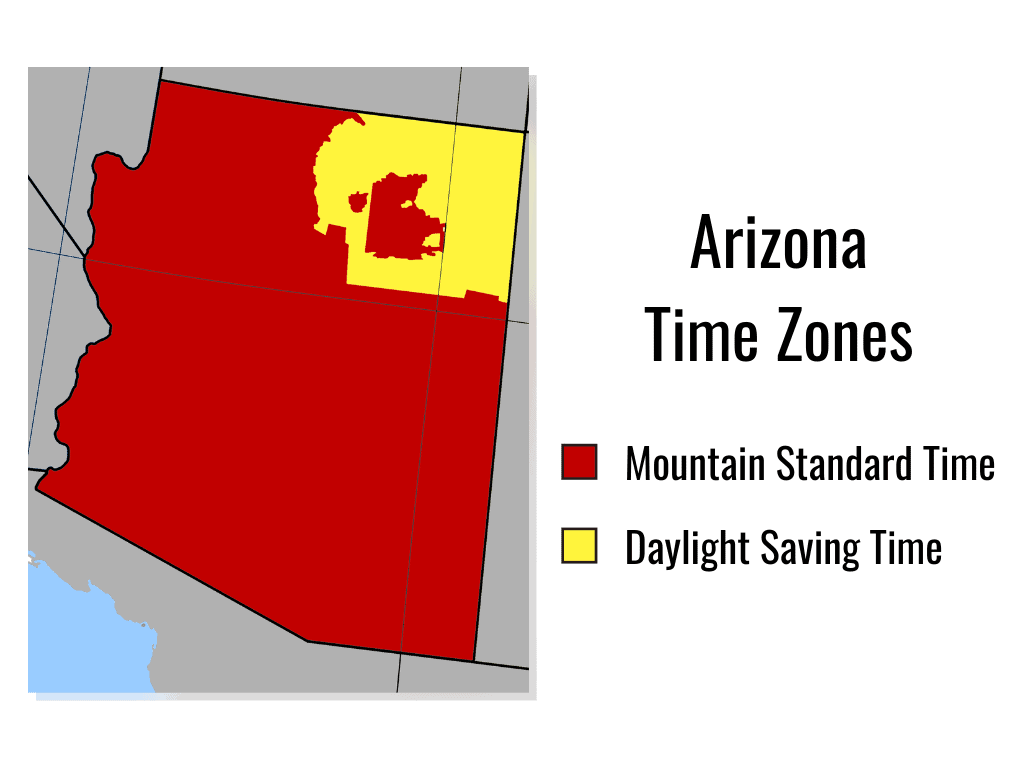
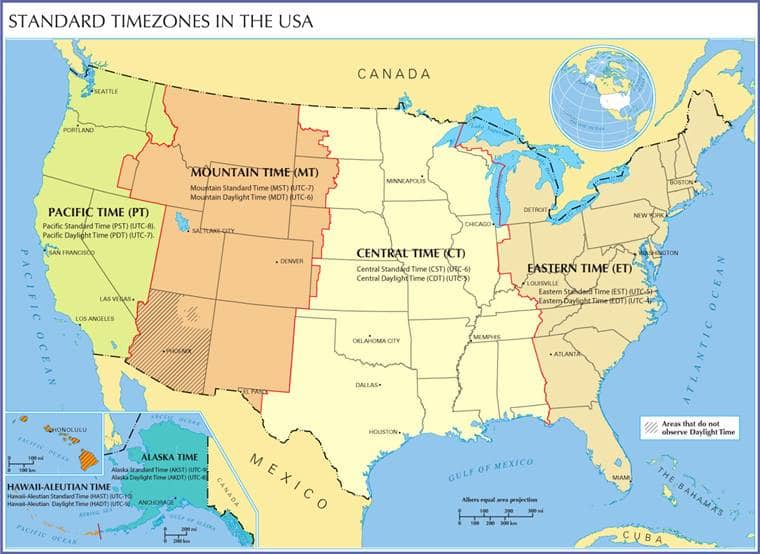
The foundational truth about Arizona’s time zone is its steadfast adherence to Mountain Standard Time (MST) throughout the year. This effectively means that for approximately seven months out of twelve (from mid-March to early November), Arizona operates on the same time as Pacific Daylight Time (PDT), observed in neighboring California and Nevada. However, during the winter months (early November to mid-March), when other states revert to Pacific Standard Time (PST) and Mountain Standard Time (MST), Arizona aligns with Mountain Standard Time, which is an hour ahead of PST and identical to Mountain Standard Time elsewhere.
This creates a dynamic time relationship with its neighbors. When California and Nevada are on PDT, they are effectively on the same time as Arizona’s year-round MST. But when they revert to PST, Arizona becomes an hour ahead of them. Conversely, during the Daylight Saving Time period, states like Utah, Colorado, and New Mexico observe Mountain Daylight Time (MDT), which puts them an hour ahead of Arizona’s MST. In the winter, all these Mountain Time Zone states align, sharing MST. This intricate dance of time means that a traveler driving from Los Angeles to Phoenix in July would experience no time change, but in December, they would gain an hour. Similarly, traveling from Denver to Flagstaff in June would mean “losing” an hour, but no change in November.
A Historical Perspective: Why No Daylight Saving?
The decision to opt out of Daylight Saving Time is deeply rooted in Arizona’s unique climate and lifestyle. The Uniform Time Act of 1966 standardized Daylight Saving Time across the United States, but it also provided an option for states to be exempt. Arizona chose this exemption, primarily due to its intense summer heat. The logic is compelling:
- Energy Conservation: The initial aim of Daylight Saving Time was to save energy by extending daylight into the evening. However, in Arizona, where summer temperatures regularly soar above 100°F (38°C), adding an extra hour of daylight in the evening would mean people run their air conditioning longer, rather than less. Shifting the clock forward would simply push the hottest part of the day, when most people are indoors seeking refuge, further into the evening.
- Daily Routines: Most outdoor activities, from work to recreation, begin earlier in the day to avoid the scorching afternoon sun. Maintaining Standard Time year-round helps keep these routines consistent. Parents appreciate children waiting for school buses in cooler, darker mornings, and outdoor workers can finish their tasks before the peak heat.
- Economic Impact: The state’s large tourism and hospitality industries also benefit from predictable, consistent scheduling. Hotels, resorts, and attractions find it simpler to manage operations and guest expectations without the biannual time shift. From booking a hot air balloon ride over Sedona to reserving a table at a top restaurant in Scottsdale, the consistency simplifies planning for both visitors and businesses.
While there have been occasional proposals to adopt Daylight Saving Time, particularly in more populated areas like Tucson and Mesa, the majority of the population and state legislature have consistently favored the current arrangement, valuing stability and practicality over alignment with national trends.
Navigating Time Zones as a Traveler
For anyone planning a trip to Arizona, understanding its time zone idiosyncrasies is paramount to avoiding confusion and missed appointments. Whether you’re flying into Phoenix Sky Harbor International Airport, checking into a resort in Tempe, or embarking on a scenic drive to Lake Havasu City, a little awareness goes a long way.
- Flights and Transportation: When booking flights, always confirm arrival and departure times in local Arizona time. If flying from a Pacific Time Zone city like Los Angeles during Daylight Saving Time, your clock won’t change upon arrival. However, if flying from Denver during the same period, you’ll effectively “lose” an hour when you land. Rental car pick-up and drop-off times, as well as tour bus departures, should always be double-checked against Arizona local time.
- Hotel Check-ins and Check-outs: Most hotels and accommodations will clearly state their check-in and check-out times. Given the year-round consistency, this is usually straightforward within Arizona. However, if you’re coming from a state that observes DST, make sure your internal clock or device has adjusted correctly to avoid an early departure or late arrival.
- Booking Tours and Attractions: This is where the time difference can become most critical. A sunrise tour of the Grand Canyon South Rim at 5:00 AM Arizona time is significantly different if your brain is still on PDT or MDT. Always confirm the local time for any pre-booked experiences, from hot air balloon rides in Sedona to visits to the Musical Instrument Museum in Phoenix.
- Communicating with the Outside World: If you’re coordinating with friends or family outside Arizona, remember that the time difference will fluctuate. During summer, a 9:00 AM call to Los Angeles is a 9:00 AM call. But that same 9:00 AM call to New York means it’s 12:00 PM Eastern Daylight Time (EDT). In winter, that 9:00 AM call to Los Angeles is to 8:00 AM PST, and to New York it’s 11:00 AM Eastern Standard Time (EST).
The Navajo Nation Exception
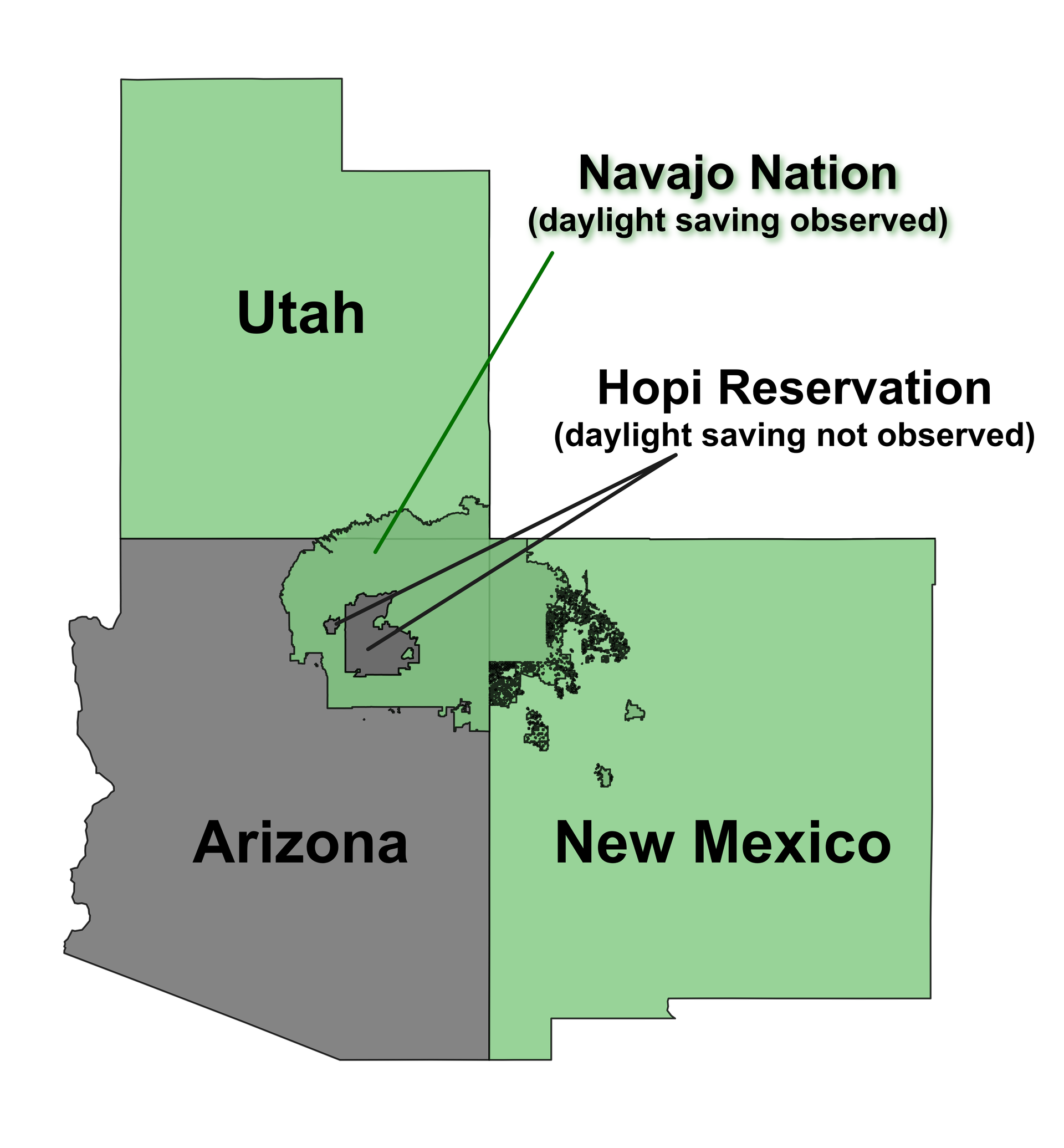
To add a layer of complexity to Arizona’s time zone narrative, there’s a significant exception: the Navajo Nation. This vast semi-autonomous Native American territory spans parts of Arizona, New Mexico, and Utah, and uniquely, the entire Navajo Nation does observe Daylight Saving Time.
This means that during the DST period (mid-March to early November), the Navajo Nation is an hour ahead of the rest of Arizona. For example, if it’s 2:00 PM in Flagstaff, it would be 3:00 PM within the Navajo Nation’s Arizona boundaries. This can be particularly confusing for visitors exploring iconic landmarks like Monument Valley or Canyon de Chelly National Monument, both of which are located within the Navajo Nation and thus observe MDT in summer.
Travelers driving through the Navajo Nation from other parts of Arizona will experience a time jump. It is crucial to reset your watches and consider this when planning visits to tribal parks, booking tours with Navajo guides, or simply arranging to meet someone on the reservation. The Hopi Reservation, an enclave entirely surrounded by the Navajo Nation within Arizona, is another exception that further complicates matters: the Hopi Tribe does not observe Daylight Saving Time, remaining on MST year-round, just like the rest of Arizona. This creates a temporal island within the Navajo Nation’s DST observance. Always verify local times with businesses and attractions when visiting these culturally rich areas.
Impact on Lifestyle and Tourism
Arizona’s unique time zone situation has profound effects on the daily lifestyle of its residents and the bustling tourism industry. For locals, the absence of the biannual clock change is often a source of quiet pride and convenience. There’s no “losing an hour” of sleep in spring or gaining one in fall, leading to a more consistent rhythm for work, school, and social activities. This stability is particularly appreciated in a state where outdoor activities are central to life, making it easier to plan everything from hiking trips in Red Rock Country near Sedona to evening strolls through Old Town Scottsdale.
From a tourism perspective, the consistency offers both benefits and minor challenges. On the upside, hotels, resorts, and tour operators can maintain stable schedules throughout the year, simplifying operations and marketing. Guests appreciate the predictability of opening hours for museums, national parks, and restaurants. Many of Arizona’s most popular activities, such as sunset viewing at Picacho Peak State Park or stargazing events near Kitt Peak National Observatory, are highly dependent on natural light cycles, and the consistent MST helps align these experiences with visitor expectations.
The primary challenge lies in coordination with other states. Business travelers frequently face confusion when scheduling calls or meetings with colleagues in California or on the East Coast. Similarly, planning multi-state road trips, perhaps combining a visit to Las Vegas with Arizona’s natural wonders, requires careful attention to time zones at state borders. However, with modern smartphones and devices that automatically update, much of this potential confusion can be mitigated.
Planning Your Arizona Adventure: Tips for Seamless Travel
To ensure your Arizona adventure unfolds without any time-related hitches, here are some actionable tips:
- Always Confirm Local Times: When booking anything from a luxury resort stay at the Hyatt Regency Scottsdale Resort & Spa at Gainey Ranch to a horseback riding tour, ensure you’re noting the time in local Arizona MST. Double-check confirmation emails and tickets.
- Trust Your Devices (Mostly): Most modern smartphones, GPS devices, and smartwatches will automatically adjust to the local time zone. However, it’s always wise to glance at a reliable clock or ask a local upon arrival to confirm your device is displaying the correct time, especially if you’re near a state border or entering the Navajo Nation.
- Be Mindful of Border Crossings: If your itinerary includes crossing into California, Nevada, Utah, or New Mexico, be acutely aware of the time change. Plan buffer time around border crossings, especially if you have time-sensitive bookings shortly after. This is particularly crucial when visiting parts of the Grand Canyon’s North Rim which is close to Utah.
- Communicate Clearly: When scheduling virtual meetings, calls with tour operators, or rendezvous points with travel companions, explicitly state “Arizona time” or “MST” to eliminate ambiguity.
- Embrace the Uniqueness: Rather than seeing Arizona’s time zone as a hassle, view it as part of the state’s distinctive charm and history. It’s a reminder of how climate and local preferences can shape even something as fundamental as how we measure our days.
In conclusion, while the question “What is time zone for Arizona?” has a straightforward answer – largely Mountain Standard Time year-round – the implications for travel and tourism are nuanced. From the bustling streets of Phoenix to the majestic vistas of the Grand Canyon, Arizona’s consistent clock is a defining feature that shapes the experience for every visitor. With a little foresight and awareness, navigating the Grand Canyon State’s unique temporal landscape will be as smooth and enjoyable as its famously sunny days.
LifeOutOfTheBox is a participant in the Amazon Services LLC Associates Program, an affiliate advertising program designed to provide a means for sites to earn advertising fees by advertising and linking to Amazon.com. Amazon, the Amazon logo, AmazonSupply, and the AmazonSupply logo are trademarks of Amazon.com, Inc. or its affiliates. As an Amazon Associate we earn affiliate commissions from qualifying purchases.