
Navigating the path to becoming a licensed real estate agent in Alabama involves a structured process designed to ensure competency and ethical practice within the industry. This guide will walk you through each essential step, from meeting the initial qualifications to successfully obtaining your license, setting you on the path to a rewarding career in real estate.
Understanding Alabama’s Real Estate Licensing Requirements
Before embarking on your journey to becoming a real estate agent in Alabama, it’s crucial to understand the fundamental prerequisites established by the Alabama Real Estate Commission (AREC). These requirements are in place to maintain a high standard of professionalism and protect the public interest.
Age and Residency
To be eligible for a real estate license in Alabama, applicants must be at least 19 years of age. Furthermore, you must be a legal resident of Alabama or demonstrate a clear intent to establish residency. This residency requirement ensures that licensees are subject to the state’s jurisdiction and regulations.
Educational Background
While a high school diploma or GED is generally a prerequisite for most professional licenses, the AREC specifically requires applicants to have completed at least a high school education or its equivalent. This foundational education is essential for comprehending the complex legal, financial, and ethical aspects of real estate transactions.
Criminal Background Check
A clean criminal record is a significant factor in obtaining a real estate license. Applicants are required to undergo a thorough background check, which typically includes fingerprinting. The AREC will review any criminal history to determine an applicant’s suitability for the profession. Certain offenses may disqualify an individual, while others might require further review or a probationary period. Honesty and full disclosure during this process are paramount.
Honesty and Integrity
Beyond formal qualifications, the Alabama Real Estate Commission emphasizes the importance of honesty, integrity, and fair dealing. Applicants are expected to uphold these principles throughout their careers. Any misrepresentation or fraudulent activity during the application process or in professional practice can lead to denial or revocation of a license.
The Educational Component: Pre-Licensing Courses
A cornerstone of obtaining a real estate license in Alabama is the successful completion of a state-approved pre-licensing education program. This curriculum is designed to equip aspiring agents with the necessary knowledge to pass the licensing exam and to practice real estate ethically and effectively.
Course Content and Structure
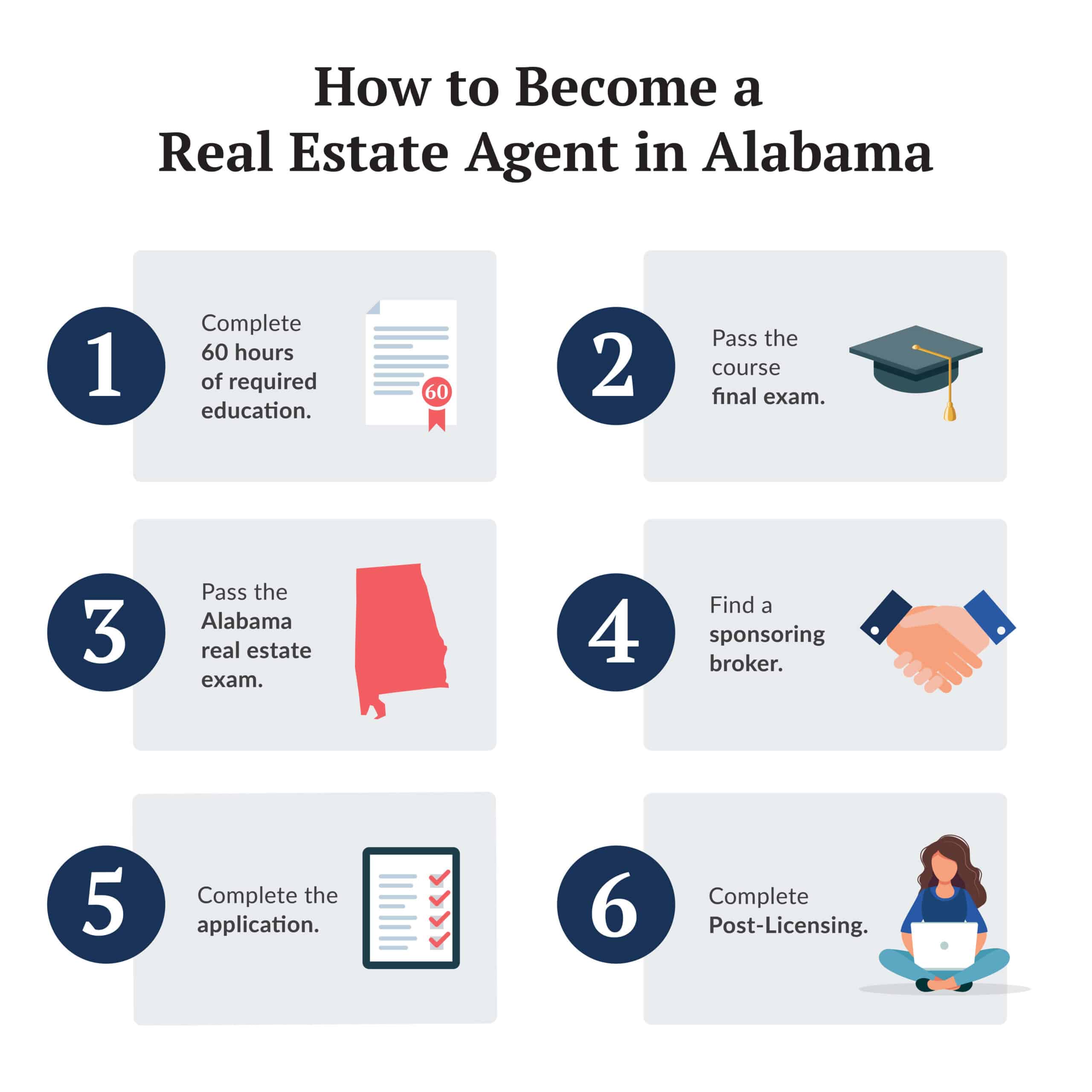
The AREC mandates a specific number of hours for pre-licensing education. Currently, prospective salespersons must complete a 60-hour salesperson pre-licensing course. This course covers a broad range of topics, including:
- Real Estate Principles and Practices: This foundational module introduces fundamental concepts such as property rights, types of ownership, deeds, titles, and land descriptions. It delves into the various aspects of real estate transactions, from listing agreements to closing.
- Real Estate Law: A significant portion of the curriculum is dedicated to the legal framework governing real estate in Alabama. This includes contract law, agency relationships, disclosure requirements, fair housing laws, zoning regulations, and environmental concerns.
- Real Estate Finance: Understanding financing options is critical for both agents and their clients. This section covers mortgages, types of loans, interest rates, closing costs, and the role of lending institutions.
- Real Estate Ethics: Ethical conduct is non-negotiable in the real estate profession. This module emphasizes professional responsibility, fiduciary duties, avoiding conflicts of interest, and adhering to the Alabama Code of Ethics.
- Property Management: Basic principles of managing rental properties, including lease agreements, tenant rights and responsibilities, and landlord obligations, are often included.
- Appraisal and Valuation: Learners will gain insights into methods of appraising property value, understanding market analysis, and factors that influence property worth.
Choosing an Accredited Education Provider
It is imperative to select a real estate school that is officially approved by the Alabama Real Estate Commission. Approved schools ensure that their curriculum meets the state’s standards and that their instructors are qualified. Many Alabama real estate schools offer both in-person classroom settings and online learning formats. Online courses provide flexibility for individuals balancing education with existing commitments. When choosing a provider, consider factors such as instructor experience, student reviews, course materials, and pass rates on the licensing exam.
Course Completion and Certificate
Upon successful completion of the pre-licensing course, students will receive a certificate of completion from the education provider. This certificate is a critical document that must be submitted with your license application to the Alabama Real Estate Commission as proof of fulfilling the educational requirement.
Passing the Alabama Real Estate Licensing Exam
Once you have completed your pre-licensing education, the next significant hurdle is passing the state licensing examination. This comprehensive exam is designed to test your knowledge of real estate principles, practices, and Alabama-specific laws.
Exam Structure and Content
The Alabama real estate licensing exam is administered by a third-party testing service, typically AMP (Assessment & Management Professionals). The exam is divided into two sections:
- National Portion: This section covers general real estate principles and practices that are consistent across the United States. Topics include property ownership, contracts, financing, real estate law, and ethics.
- State Portion: This section focuses on Alabama-specific real estate laws, regulations, and practices, including Alabama license law, license law regulations, and other state-specific legislation.

The exam is typically administered via computer at designated testing centers throughout Alabama. The number of questions and the passing score are determined by the AREC.
Preparing for the Exam
Effective preparation is key to success on the licensing exam. Strategies include:
- Reviewing Course Materials: Thoroughly revisit all notes, textbooks, and practice materials from your pre-licensing course.
- Utilizing Practice Exams: Many real estate schools and independent providers offer practice exams that simulate the actual licensing test. These are invaluable for identifying areas of weakness and becoming familiar with the question format.
- Focusing on State-Specific Content: Pay special attention to the Alabama-specific portion of the exam, as state laws can vary significantly.
- Understanding Key Terminology: Familiarize yourself with real estate vocabulary and definitions, as they are frequently tested.
- Time Management: Practice answering questions within a set timeframe to improve your pacing during the actual exam.
Scheduling and Taking the Exam
After completing your pre-licensing course, you will receive instructions on how to schedule your exam with the testing service. It is recommended to schedule your exam as soon as possible after finishing your coursework, while the information is still fresh in your mind. On exam day, arrive at the testing center early with a valid form of identification.
Exam Results and Retakes
You will typically receive your exam results immediately after completing the test. If you pass, congratulations! You will proceed to the next step of applying for your license. If you do not pass, you will be provided with information on how to retake the exam. There may be a waiting period and additional fees associated with retakes.
The Application Process and Broker Affiliation
With your pre-licensing education complete and the licensing exam successfully passed, the final stages involve submitting your application and affiliating with a licensed real estate broker.
Submitting Your Application
To apply for your salesperson license, you must complete an official application form provided by the Alabama Real Estate Commission. This application will require you to provide personal information, details about your education, and confirmation of your exam results. You will also need to submit supporting documents, such as your pre-licensing course completion certificate and the results of your background check. A licensing fee will also be required at the time of submission. Ensure all information is accurate and complete to avoid delays.
Finding a Sponsoring Broker
In Alabama, newly licensed real estate salespersons cannot operate independently. They must be sponsored and supervised by a licensed real estate broker. This affiliation is crucial as the broker is legally responsible for the actions of their affiliated agents.
When searching for a sponsoring broker, consider:
- Brokerage Reputation: Research the brokerage’s standing in the Alabama real estate market.
- Training and Mentorship: Look for brokerages that offer comprehensive training programs, ongoing support, and mentorship opportunities for new agents. This can significantly impact your early success.
- Company Culture: Find a brokerage whose values and work environment align with your professional goals and personality.
- Commission Splits and Fees: Understand the brokerage’s commission structure, desk fees, and any other associated costs.
- Specialization: Some brokerages focus on specific niches, such as residential, commercial, or luxury properties. Consider where you envision your career heading.
The Affiliation Process
Once you have selected a brokerage, you will enter into an affiliation agreement with them. Your sponsoring broker will then notify the Alabama Real Estate Commission of your affiliation. Upon approval of your application and confirmation of your broker sponsorship, your real estate license will be issued.
Maintaining Your Real Estate License
Obtaining your real estate license is a significant achievement, but it marks the beginning of a continuous commitment to professional development and regulatory compliance. To maintain an active license in Alabama, you must adhere to ongoing education requirements and renewal procedures.
Continuing Education (CE) Requirements
The Alabama Real Estate Commission mandates that licensed salespersons and brokers complete a certain number of hours of continuing education (CE) every two years. This requirement ensures that licensees stay updated on changes in real estate law, market trends, ethical practices, and industry best practices. The specific number of CE hours and the approved topics are subject to AREC regulations. Failure to complete the required CE hours by the deadline can result in penalties, including license suspension or revocation.
License Renewal
Your real estate license will have an expiration date, typically every two years. You must renew your license with the Alabama Real Estate Commission before it expires to continue practicing. The renewal process usually involves submitting a renewal application, paying the required renewal fee, and providing proof of completed continuing education. It is advisable to begin the renewal process well in advance of the expiration date to avoid any last-minute complications.

Staying Informed and Ethical Practice
Beyond formal requirements, successful real estate agents consistently engage in professional development, stay informed about market conditions, and uphold the highest ethical standards. This includes actively participating in industry associations like the Alabama Association of REALTORS®, attending workshops, and networking with peers. Maintaining a reputation for integrity, honesty, and client advocacy is fundamental to long-term success in the Alabama real estate market.
LifeOutOfTheBox is a participant in the Amazon Services LLC Associates Program, an affiliate advertising program designed to provide a means for sites to earn advertising fees by advertising and linking to Amazon.com. Amazon, the Amazon logo, AmazonSupply, and the AmazonSupply logo are trademarks of Amazon.com, Inc. or its affiliates. As an Amazon Associate we earn affiliate commissions from qualifying purchases.