
Embarking on a career in real estate is an exciting prospect, offering the potential for significant financial reward and the fulfillment of helping individuals and families find their perfect homes or investment properties. For those looking to establish themselves within the vibrant Alabama real estate market, obtaining a state-issued license is the crucial first step. This comprehensive guide will walk you through the essential requirements, educational pathways, examination process, and ongoing responsibilities associated with becoming a licensed real estate professional in the Heart of Dixie.
Understanding Alabama Real Estate Licensing Requirements
The Alabama Real Estate Commission (AREC) is the governing body responsible for setting and enforcing the standards for real estate licensees within the state. To be eligible for a real estate license, candidates must meet several fundamental criteria designed to ensure a baseline of knowledge and ethical conduct.
Age and Education Prerequisites
Applicants for an Alabama real estate license must be at least 19 years of age. This age requirement ensures that individuals entering this professional field possess a certain level of maturity and life experience. Furthermore, a high school diploma or its equivalent, such as a GED, is mandatory. This educational foundation is considered essential for comprehending the complex legal, financial, and ethical principles inherent in real estate transactions.
Citizenship and Residency
While not strictly mandatory to be a U.S. citizen, applicants must be legally authorized to work in the United States. There is no specific residency requirement to obtain an Alabama real estate license; however, candidates must understand that their license will be subject to Alabama laws and regulations, and they will likely need to operate within the state to practice effectively. For non-U.S. citizens, proper documentation proving legal residency and work authorization will be required.
Criminal Background Checks
The AREC places a strong emphasis on the integrity and trustworthiness of its licensees. Consequently, all applicants must undergo a thorough background check, including fingerprinting. Any felony conviction, or a misdemeanor involving fraud, dishonesty, or moral turpitude, may disqualify an individual from obtaining a license. The Commission reviews each case individually, considering the nature of the offense, the time elapsed since its occurrence, and evidence of rehabilitation. Full disclosure of any criminal history is paramount; failure to disclose can lead to automatic denial.
Disciplinary Actions and License Status
Individuals who have previously held a real estate license in another state and had it suspended, revoked, or surrendered under adverse conditions may face additional scrutiny. The AREC will review these past disciplinary actions to determine eligibility for licensure in Alabama. Honesty and transparency regarding any past licensing issues are crucial.
The Educational Pathway to Licensure
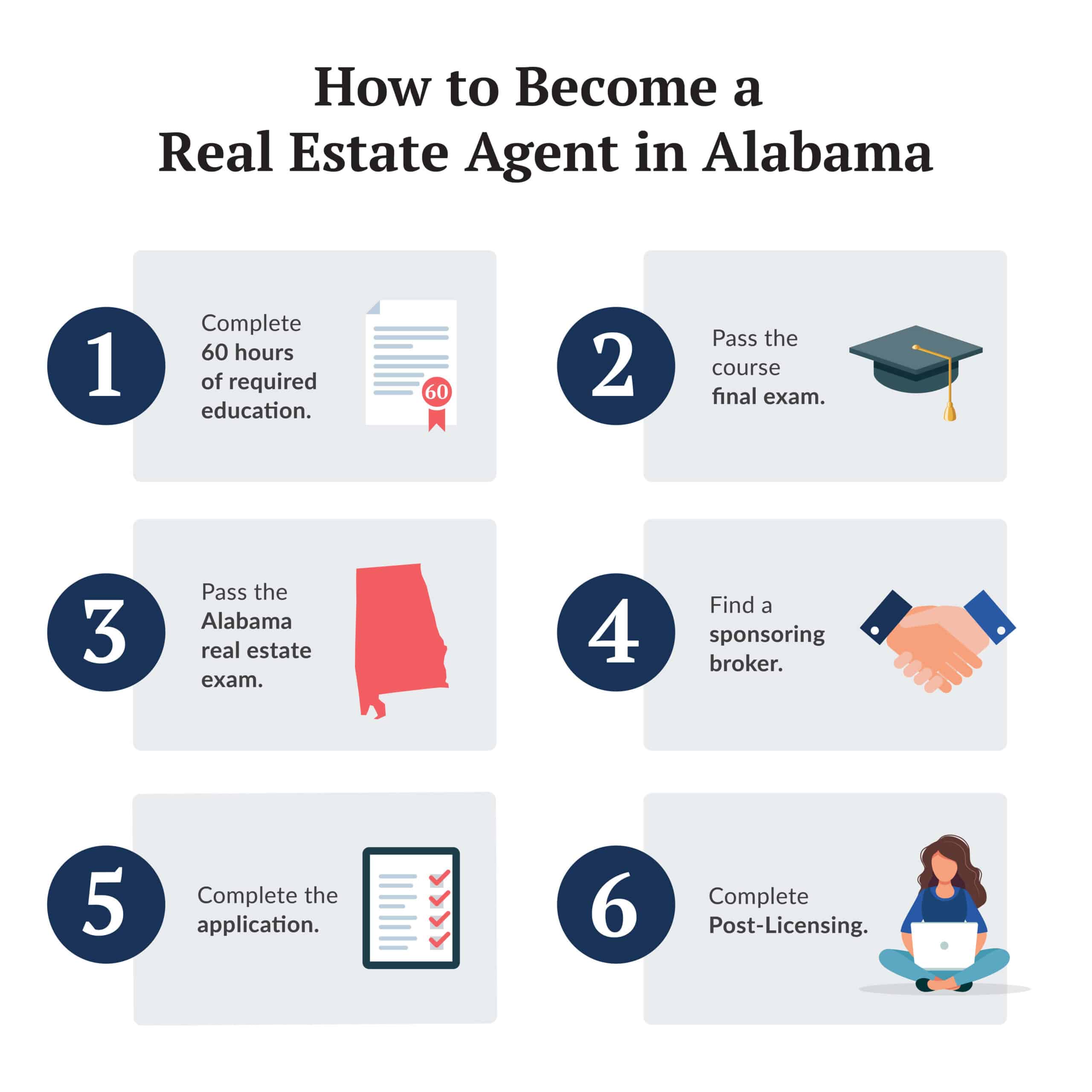
Before you can even think about taking the licensing exam, you must complete a mandatory pre-licensing education course. This curriculum is designed to equip aspiring agents with the fundamental knowledge needed to navigate the real estate industry ethically and legally.
Approved Pre-Licensing Courses
The Alabama Real Estate Commission approves specific educational providers that offer the required pre-licensing coursework. These courses are typically delivered in either an in-person classroom setting or through an online format. The curriculum covers a broad range of topics, including:
- Real Estate Principles and Practices: This foundational module introduces core concepts such as property ownership, types of real estate, legal descriptions, contracts, agency relationships, and the principles of value.
- Alabama Real Estate Law: A critical component focusing on state-specific statutes and regulations governing real estate transactions, licensing, fair housing, and land use.
- Real Estate Finance: Covering mortgage concepts, loan origination, appraisal methods, and financing options available to buyers and sellers.
- Real Estate Ethics and Professionalism: Emphasizing the ethical obligations and professional standards expected of licensed real estate agents.
- Property Management and Construction: Basic understanding of property management principles and common construction elements.
The exact number of hours required for the pre-licensing course can vary, but it is typically around 60 hours for salesperson applicants. It is imperative to choose a course from an AREC-approved provider to ensure your credits are accepted.
Choosing the Right Learning Format
The choice between in-person and online pre-licensing courses often depends on individual learning styles, schedules, and preferences.
- In-Person Classes: These offer the advantage of direct interaction with instructors and fellow students, fostering a collaborative learning environment and immediate clarification of doubts. They can also provide a structured schedule that helps maintain focus.
- Online Courses: Online options offer flexibility, allowing students to learn at their own pace and on their own schedule. This is ideal for individuals balancing the coursework with existing work or family commitments. Many online platforms incorporate interactive elements, video lectures, and practice quizzes to enhance the learning experience.
Regardless of the format, actively engaging with the material, taking thorough notes, and utilizing any available practice exams are crucial for success.
Passing the Alabama Real Estate Licensing Examination
Upon successful completion of the pre-licensing education, the next significant hurdle is passing the state licensing examination. The AREC contracts with a third-party testing service to administer these exams, ensuring standardized and impartial testing.
The Examination Structure
The Alabama Real Estate License Examination is divided into two sections: a national portion and a state portion.

- National Portion: This section covers general real estate principles and practices that are common across the United States. Topics include property ownership, deeds, mortgages, agency, contracts, and fair housing laws.
- State Portion: This part of the exam is specific to Alabama and tests your knowledge of the state’s unique real estate laws, regulations, and practices, including licensing requirements, agency disclosure laws, and contract requirements specific to Alabama.
The examination is typically delivered via computer, and upon completion, candidates often receive their results immediately. The passing score for each section is determined by the testing service and the AREC.
Preparing for the Exam
Effective preparation is key to passing the licensing exam. Merely attending the pre-licensing course is often not enough.
- Review Course Materials: Thoroughly revisit all your notes, textbooks, and any supplementary materials provided during your pre-licensing education.
- Utilize Practice Exams: Most pre-licensing course providers offer practice exams. Take advantage of these as often as possible. They simulate the actual exam format and help identify areas where you need further study. Pay close attention to explanations for incorrect answers.
- Focus on State-Specific Law: The state portion of the exam is where many candidates falter. Ensure you have a deep understanding of Alabama real estate laws, rules, and regulations. Refer to the AREC’s official website for study guides and resources.
- Understand Key Terminology: Real estate is filled with specialized jargon. Make sure you understand the definitions and applications of essential terms.
- Time Management: During the exam, time management is critical. Practice pacing yourself during practice tests to ensure you can complete the exam within the allotted time.
Scheduling and Taking the Exam
Once you have completed your pre-licensing course and feel adequately prepared, you will need to schedule your exam appointment through the designated testing service. This usually involves an examination fee. On the day of the exam, arrive early and bring the required identification as specified by the testing service. Familiarize yourself with the testing center’s policies regarding personal belongings.
Applying for Your Real Estate License
After successfully passing the licensing examination, the final step before you can begin practicing as a real estate agent is to formally apply for your license.
The Application Process
The application for an Alabama Real Estate Salesperson License is typically submitted to the Alabama Real Estate Commission. The application form will require detailed personal information, verification of your completed education, and confirmation of your exam results.
You will also need to:
- Provide Proof of Education: Submit a certificate of completion for your AREC-approved pre-licensing course.
- Submit Exam Results: The testing service will usually transmit your passing scores directly to the AREC, but it’s wise to keep a record of your results.
- Pay Application Fees: There are associated fees for the license application and processing.
- Affiliate with a Broker: As a newly licensed salesperson, you cannot operate independently. You must find a licensed real estate broker in Alabama to sponsor your license. This means you will work under the supervision and guidance of an established broker. The application will require information about your chosen sponsoring broker.
Sponsorship and Broker Affiliation
Choosing the right sponsoring broker is a crucial decision for a new real estate agent. A good broker will provide mentorship, training, and support as you launch your career. They will also be responsible for ensuring that you comply with all real estate laws and AREC regulations. When you apply for your license, you will need to indicate the name and license number of the broker with whom you intend to affiliate. This affiliation must be active before your license can be issued and activated.
License Issuance and Next Steps
Once your application is approved, your license will be issued by the Alabama Real Estate Commission. You will then be officially recognized as a licensed real estate salesperson in Alabama and can begin your professional journey. Remember that your license is typically issued for a specific period and will require renewal.
Maintaining Your License and Continuing Your Career
Obtaining your real estate license is not the end of your journey; it’s the beginning. To maintain an active license and build a successful career, you must adhere to ongoing requirements and professional development.
Continuing Education (CE) Requirements
Like most states, Alabama requires licensed real estate agents to complete a certain number of Continuing Education (CE) hours during each license renewal period. These courses are designed to keep licensees updated on changes in real estate law, market trends, ethical practices, and new technologies. The AREC specifies the number of CE hours required, typically annually or biennially, and the types of courses that qualify. It is essential to track your CE credits and ensure you are meeting these obligations to avoid license expiration or penalties.
License Renewal
Alabama real estate licenses are subject to renewal. The AREC will notify licensees when their renewal period is approaching. The renewal process typically involves submitting a renewal application, paying the required renewal fees, and providing proof of completed Continuing Education. Failure to renew your license by the expiration date can result in its inactivation, and you may be required to go through a more rigorous process to reinstate it.
Ethical Practice and Professional Development
Beyond the formal requirements, a successful real estate career is built on a foundation of ethical practice, continuous learning, and professional development. This includes:
- Adhering to the AREC Code of Ethics: Always conduct business with honesty, integrity, and fairness.
- Staying Informed: Keep abreast of market conditions, new legislation, and industry best practices.
- Networking: Build relationships with other real estate professionals, lenders, inspectors, and other service providers.
- Client Focus: Prioritize the needs and interests of your clients above all else.
- Professional Development: Consider pursuing advanced designations or certifications to specialize in areas like luxury properties, commercial real estate, or relocation services, which can enhance your expertise and marketability.
By diligently following these steps and committing to ongoing professional growth, you can establish a thriving and rewarding career as a licensed real estate professional in Alabama.
LifeOutOfTheBox is a participant in the Amazon Services LLC Associates Program, an affiliate advertising program designed to provide a means for sites to earn advertising fees by advertising and linking to Amazon.com. Amazon, the Amazon logo, AmazonSupply, and the AmazonSupply logo are trademarks of Amazon.com, Inc. or its affiliates. As an Amazon Associate we earn affiliate commissions from qualifying purchases.