
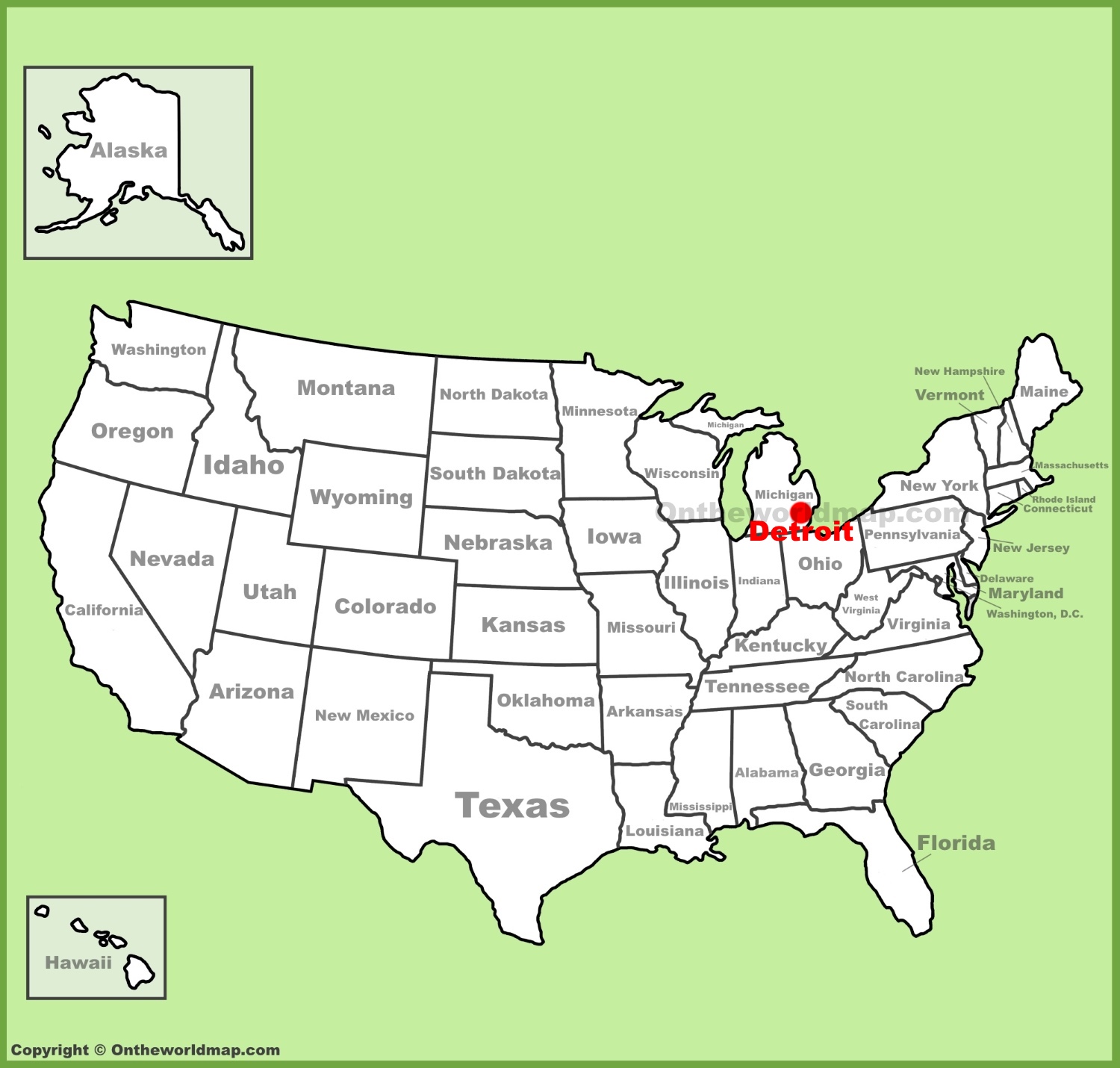
For travelers contemplating a journey through the United States, understanding the geographical placement of potential destinations is the foundational step in planning. Detroit, often recognized globally for its pivotal role in the automotive industry and the birth of Motown, occupies a distinctive and strategic position on the map of the USA. Far from being a mere dot, its location tells a story of industrial prowess, cultural confluence, and natural beauty, making it a compelling destination for diverse travel experiences.
Locating The Motor City: A Geographical Anchor
Detroit is nestled in the Midwest, a region celebrated for its heartland values, agricultural landscapes, and significant industrial hubs. More precisely, it is the largest city in the state of Michigan, situated in the southeastern corner of the Lower Peninsula. This placement is crucial, as it firmly plants Detroit within the Great Lakes region, an area renowned for its freshwater coastlines, maritime heritage, and diverse ecosystems.

Position on the Map: Midwest, Great Lakes Region
To pinpoint Detroit on a map of the USA, one would typically look towards the center-north-east, within the broad expanse of the Midwest. Its exact coordinates place it at approximately 42.33° N latitude and 83.05° W longitude. This position means it experiences four distinct seasons, each offering a unique backdrop for travelers. Summers are warm and inviting, ideal for outdoor activities along the riverfront or nearby lakes. Winters, while cold and snowy, transform the city into a picturesque wonderland, perfect for cozy indoor explorations of its museums and cultural institutions. Spring and autumn provide temperate weather, with vibrant foliage in the fall, making them excellent times for sightseeing and urban exploration. The city’s location within the Great Lakes basin also grants it a climate influenced by these vast bodies of water, moderating temperatures and contributing to significant snowfall in colder months.
Bordering Canada: The Detroit River and Windsor, Ontario
Perhaps one of Detroit’s most unique geographical features is its immediate proximity to an international border. The city sits directly across the Detroit River from Windsor, Ontario, Canada. This makes Detroit one of the few major US cities with a direct land and tunnel connection to Canada via the Ambassador Bridge and the Detroit-Windsor Tunnel. This cross-border relationship has historically fostered a strong economic and cultural exchange, offering travelers the rare opportunity to experience two distinct countries within a short drive or even a ferry ride. From the Detroit Riverwalk, visitors can gaze across at the Canadian skyline, a constant reminder of the city’s international character.
Connectivity: Major Interstates, Airports
Detroit’s role as a major industrial and economic hub has naturally led to the development of robust transportation infrastructure. The city is a nexus for several major interstate highways, including I-75, I-94, and I-96, facilitating easy road access from virtually anywhere in the Midwest and beyond. This connectivity makes Detroit a popular destination for road trippers and those combining their visit with other regional cities. For air travelers, Detroit Metropolitan Wayne County Airport (DTW) serves as a major international gateway, offering direct flights to numerous destinations across the globe. Its modern facilities and efficient operations make arriving in Detroit a seamless experience, positioning the city as an accessible travel hub.
Why Detroit’s Location Matters for Travelers
Beyond simply knowing where Detroit is, understanding the implications of its geography can significantly enhance a traveler’s itinerary and overall experience. Its location offers unique opportunities, from exploring vast natural landscapes to delving into cross-cultural urban adventures.
A Gateway to the Great Lakes: Access to Natural Beauty
Being firmly within the Great Lakes region means Detroit serves as an excellent base for exploring some of North America’s most impressive freshwater environments. Travelers can easily access Lake Erie and Lake Huron, offering opportunities for boating, fishing, swimming, and simply relaxing on lakeside beaches. State parks and natural areas abound just a short drive from the city, providing hiking trails, wildlife viewing, and a tranquil escape from urban life. The Detroit River International Wildlife Refuge, the first international wildlife refuge in North America, is a testament to the region’s commitment to preserving its unique natural heritage, making it a compelling stop for eco-tourists and nature enthusiasts.
Proximity to Major Cities: Chicago, Cleveland, Toronto
Detroit’s central Midwest location places it within a reasonable driving distance of several other significant North American metropolises. Chicago, Illinois, a vibrant hub of culture, architecture, and gastronomy, is approximately a 4-5 hour drive to the west. To the southeast, Cleveland, Ohio, home to the Rock & Roll Hall of Fame, is only about a 2.5-hour journey. And, as mentioned, just across the border lies Toronto, Ontario, Canada’s largest city and a major cultural and economic center, roughly a 4-hour drive. This geographic clustering allows travelers to combine a visit to Detroit with a broader regional exploration, creating multi-city itineraries that showcase the diverse urban landscapes and cultural offerings of the Great Lakes area.
Cross-Border Appeal: Windsor, A Canadian City Just Across The River
The immediate adjacency of Windsor, Ontario, adds an exhilarating dimension to a Detroit trip. Travelers can easily cross the border (with proper documentation) for a day trip or an extended stay in Canada. Windsor offers its own distinct attractions, including beautiful waterfront parks, a thriving casino scene, and a diverse culinary landscape. This dual-country experience is a highlight for many visitors, allowing them to contrast American and Canadian urban cultures within minutes. The convenience of this international crossing point makes Detroit an unparalleled destination for those seeking unique cross-cultural travel opportunities without extensive travel time.
Discovering Detroit: Beyond the Map Coordinates
While its location is undeniably a key aspect, the true allure of Detroit lies in the rich tapestry of experiences it offers. Its history, its resilience, and its ongoing renaissance provide a profound backdrop for any traveler.
The Automotive Heritage: A Journey Through Innovation
Detroit earned its moniker, “The Motor City,” for a reason, and its automotive heritage remains a cornerstone of its identity and a major draw for visitors. The Henry Ford Museum of American Innovation and Greenfield Village in nearby Dearborn offer an unparalleled look into the evolution of industry, transportation, and American life. Here, you can witness the Ford Rouge Factory Tour, see historic vehicles, and explore the workshops of innovators like Henry Ford and Thomas Edison. Equally vital is the Motown Museum, housed in “Hitsville USA,” the original headquarters and recording studio of Motown Records. This museum offers a soulful journey through the history of rhythm and blues, showcasing the global impact of Detroit’s musical genius. These attractions collectively represent the city’s groundbreaking contributions to both manufacturing and culture.
Cultural Resurgence: Arts, Music, Culinary Scene
Detroit is a city experiencing a dynamic cultural resurgence. Its art scene is robust, anchored by the magnificent Detroit Institute of Arts (DIA), which boasts one of the most significant and comprehensive art collections in the United States. Beyond the traditional, public art installations and vibrant murals adorn many neighborhoods, reflecting the city’s creative spirit. The music scene continues to thrive, honoring its Motown and techno roots while embracing new genres. Live music venues across the city offer everything from jazz to rock. The culinary landscape has also exploded, with innovative restaurants, craft breweries, and diverse eateries emerging alongside beloved local institutions. A visit to Eastern Market, one of the oldest and largest historic public markets in the United States, provides a sensory feast of local produce, artisanal foods, and vibrant community life.
Urban Transformation: Revitalized Downtown, New Developments
The narrative of Detroit in recent decades has been one of remarkable transformation. The downtown core and surrounding neighborhoods have seen extensive revitalization, with historic buildings restored, new businesses flourishing, and vibrant public spaces created. The Detroit Riverwalk has transformed miles of industrial waterfront into a stunning recreational area, offering parks, pathways, and stunning views of the Detroit River and Windsor. New residential and commercial developments are continually reshaping the skyline, attracting new residents and businesses. This ongoing evolution provides travelers with a unique opportunity to witness and participate in a city’s renaissance, experiencing both its rich history and its promising future.
Planning Your Detroit Experience: Logistics and Navigation
A successful travel experience in Detroit hinges on practical planning, understanding the best ways to arrive, navigate, and make the most of your visit.
Getting There: Detroit Metropolitan Wayne County Airport (DTW), Road Access
As previously highlighted, Detroit Metropolitan Wayne County Airport (DTW) is the primary air hub, conveniently located just 20 miles southwest of downtown Detroit. It serves as a major base for Delta Air Lines and offers extensive domestic and international connections. For those preferring to drive, Detroit’s central location in the Midwest makes it highly accessible via the comprehensive interstate highway system. Rental car services are readily available at the airport and throughout the city, providing flexibility for exploring the broader Metro Detroit area and venturing into Canada.
Navigating the City: Public Transport, Ride-Sharing, Car Rentals
While a car offers the most freedom for exploring the expansive Metro Detroit region, navigating downtown and Midtown is increasingly manageable without one. The QLine, a modern streetcar system, runs along Woodward Avenue, connecting many key attractions from the riverfront through downtown, Midtown, and the New Center area. The People Mover, an elevated automated light rail, provides a convenient loop service around the central business district. Ride-sharing services like Uber and Lyft are widely available, and a local bus system (DDOT and SMART) serves the city and its suburbs. For specific excursions or exploring further afield, renting a car remains a practical choice.
Best Times to Visit: Seasonal Considerations for Events and Weather
The best time to visit Detroit largely depends on your travel preferences. Summers (June-August) are warm and vibrant, packed with outdoor festivals, concerts, and sporting events. It’s ideal for enjoying the Riverwalk and nearby lakes, but also the busiest tourist season. Autumn (September-November) offers pleasant temperatures and stunning fall foliage, particularly outside the immediate city center, perfect for sightseeing without the summer crowds. Spring (April-May) sees the city reawaken with blooming flowers and the start of outdoor activities, albeit with cooler temperatures. Winters (December-March) can be cold and snowy, but offer a different charm with holiday festivities, ice skating, and fewer tourists, making it an excellent time for museum visits and indoor attractions. Checking the local events calendar before your trip will help align your visit with specific interests, whether it’s the Movement Electronic Music Festival in May or a Detroit Lions game in the fall.
Embracing the Detroit Vibe: Unique Travel Experiences
Detroit’s unique geographical position and historical narrative culminate in a distinctive atmosphere, offering a blend of gritty authenticity and sophisticated urban appeal.
Sports and Entertainment: Little Caesars Arena, Comerica Park
Detroit is a passionate sports town, home to professional teams in all four major North American sports leagues. Watching a game is an electrifying experience, whether it’s the Detroit Red Wings (NHL) or Detroit Pistons (NBA) at Little Caesars Arena, the Detroit Tigers (MLB) at Comerica Park, or the Detroit Lions (NFL) at Ford Field. Beyond sports, the city boasts a vibrant entertainment scene, with historic theaters like the Fox Theatre and the Fisher Theatre hosting Broadway shows, concerts, and comedy acts. Numerous smaller venues showcase local talent, ensuring there’s always something happening after dark.
Outdoor Activities: Parks, Riverfront, Nearby Natural Areas
Thanks to its location on the Detroit River and proximity to the Great Lakes, outdoor enthusiasts will find plenty to do. The award-winning Detroit Riverfront offers miles of walking and biking paths, green spaces, and playgrounds. Belle Isle Park, an urban island park designed by Frederick Law Olmsted (who also designed New York City’s Central Park), features an aquarium, conservatory, golf course, and stunning views of the city skyline and Canada. Just outside the city, numerous Michigan State Parks provide opportunities for camping, hiking, fishing, and boating, integrating natural escapes into the urban experience.

Neighborhood Exploration: Diverse Districts with Unique Character
Detroit is a city of distinct neighborhoods, each with its own character and charm. Downtown buzzes with business, entertainment, and historic architecture. Midtown is the cultural heart, home to museums, universities, and grand boulevards. Corktown, the city’s oldest surviving neighborhood, boasts Irish heritage, historic homes, and a thriving restaurant scene. Mexicantown offers vibrant Latin culture and authentic cuisine. Exploring these diverse districts allows travelers to uncover the multifaceted identity of Detroit, revealing layers of history, community, and innovation that make it a truly captivating travel destination.
Ultimately, knowing “Where is Detroit in the map of USA?” is merely the starting point. Its location in the Midwest, hugging the Canadian border along the Great Lakes, provides a geographical framework for understanding its unique position. But it’s the exploration of its automotive legacy, musical innovation, cultural dynamism, and the spirit of its people that truly defines a travel experience in this resilient and endlessly fascinating city.
LifeOutOfTheBox is a participant in the Amazon Services LLC Associates Program, an affiliate advertising program designed to provide a means for sites to earn advertising fees by advertising and linking to Amazon.com. Amazon, the Amazon logo, AmazonSupply, and the AmazonSupply logo are trademarks of Amazon.com, Inc. or its affiliates. As an Amazon Associate we earn affiliate commissions from qualifying purchases.