
Understanding Demographic Composition in the Heart of Dixie
The state of Alabama, often referred to as the “Heart of Dixie,” possesses a rich and complex history deeply intertwined with its demographics. Understanding the percentage of Black individuals within Alabama is not merely an exercise in statistical analysis; it offers a crucial lens through which to view the state’s cultural tapestry, historical evolution, and ongoing social dynamics. This understanding is vital for anyone seeking to engage with Alabama beyond its surface attractions, whether as a tourist, a historian, or simply an engaged global citizen. The demographic makeup of Alabama has been shaped by centuries of history, from the era of slavery to the Civil Rights Movement and beyond, and continues to inform its present and future.
Historical Roots of Demographic Influence
The demographic composition of Alabama is inextricably linked to its past, particularly the institution of slavery and its enduring legacy. Prior to the Civil War, the state’s economy, especially its burgeoning cotton industry, relied heavily on enslaved African labor. This led to a significant Black population, particularly in the fertile Black Belt region, an area characterized by its rich soil and its historical concentration of plantations.
The Era of Slavery and its Demographic Impact
During the antebellum period, enslaved people constituted a substantial portion of Alabama’s population. This demographic reality was not accidental but was a direct consequence of economic policies and agricultural practices that prioritized cash crops like cotton, which were labor-intensive. The forced migration and enslavement of Africans fundamentally altered the racial and ethnic landscape of the South, and Alabama was at the forefront of this transformation. The social and economic structures built during this period left indelible marks on the state, influencing everything from land ownership patterns to political power dynamics for generations to come.
Reconstruction and the Great Migration
Following the Civil War and the abolition of slavery, the Reconstruction era brought about a period of significant political and social change. While Black citizens gained newfound rights, including the right to vote, these gains were often met with resistance and ultimately curtailed. The subsequent rise of Jim Crow laws and pervasive racial segregation in the late 19th and early 20th centuries created an environment of oppression and limited opportunity.
This challenging environment, coupled with the allure of industrial jobs in the North, spurred the Great Migration. Millions of African Americans left the rural South, including Alabama, seeking better economic prospects and escaping racial persecution. Despite this outward migration, the Black population remained a significant demographic force within the state, continuing to shape its cultural identity and social fabric.
Contemporary Demographic Landscape
In the 21st century, Alabama continues to reflect its historical demographic trends, though with evolving nuances. Understanding the current percentage of Black residents provides insights into the state’s contemporary social, economic, and political landscape. This data is regularly collected and analyzed by various governmental and research organizations.
Census Data and Current Statistics
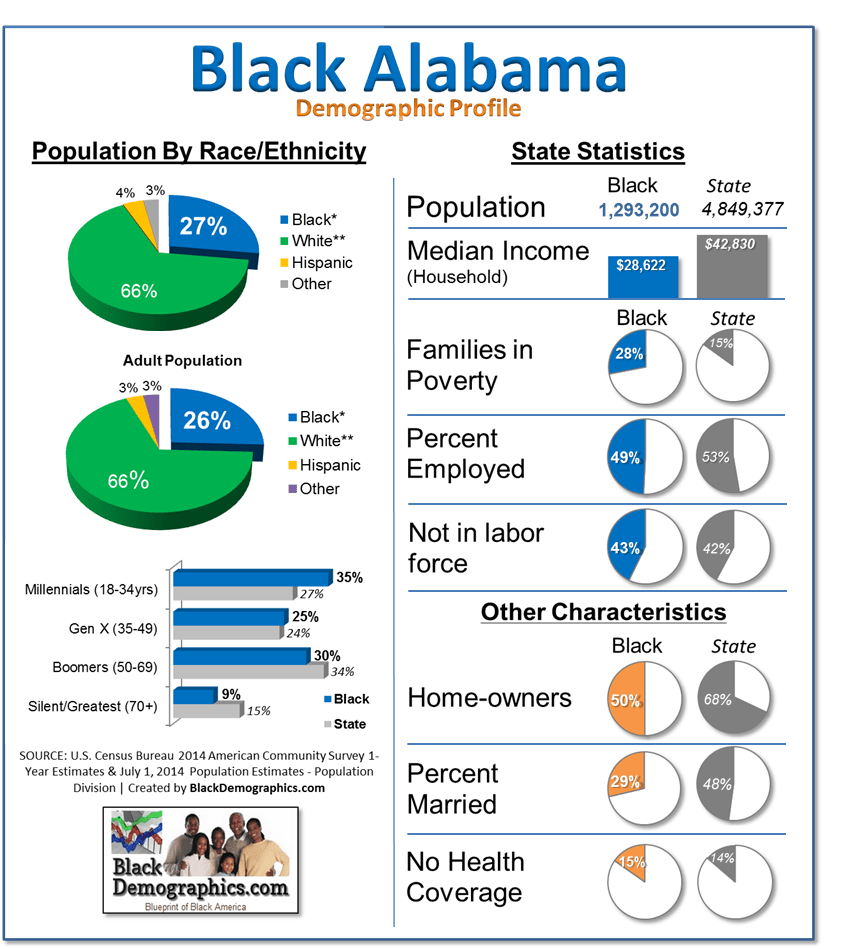
According to the most recent United States Census Bureau data, the Black or African American population constitutes a significant portion of Alabama‘s total population. While the exact percentage can fluctuate slightly with each census and between different data sources, it consistently hovers around one-third of the state’s residents. This makes Alabama one of the states with the highest proportion of Black citizens in the nation.

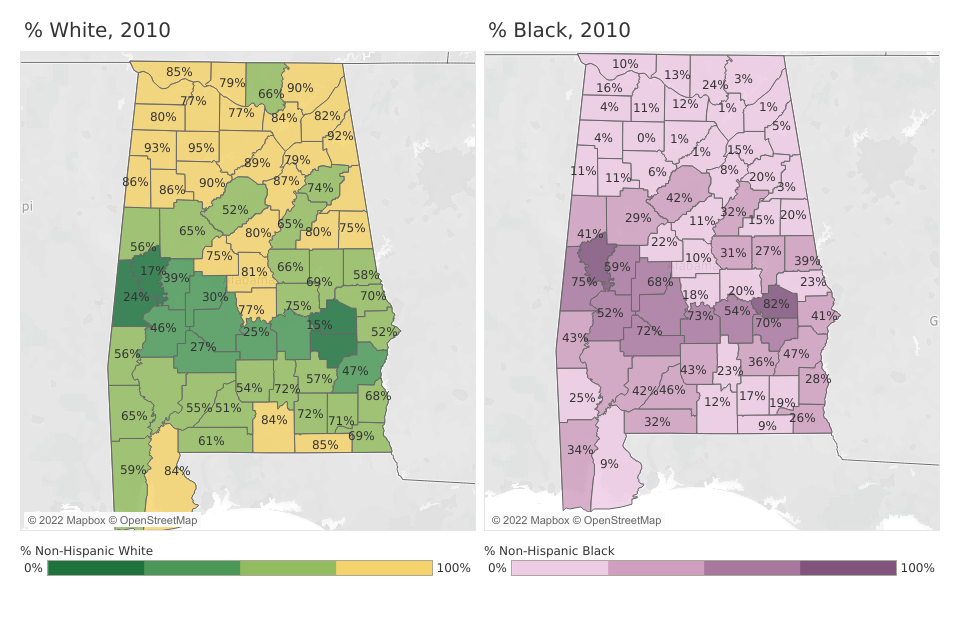
This demographic reality is observable across the state, though concentrations vary. Regions like the aforementioned Black Belt still show a higher proportion of Black residents, a direct echo of historical settlement patterns. However, Black populations are also present and growing in urban centers such as Birmingham, Montgomery, and Huntsville, driven by economic opportunities and the ongoing urban revitalization that is occurring across the state.
Regional Variations within Alabama
The demographic mosaic of Alabama is not uniform. Examining demographic data at the county level reveals significant regional variations.
-
The Black Belt: Historically, this region—comprising counties in west-central Alabama known for their fertile black soil—has maintained a high concentration of Black residents. This is a direct legacy of the plantation economy of the past. Counties here often have Black populations exceeding 50% or even 60%. This demographic concentration has historically influenced the political and cultural landscape of these specific areas.
-
Urban Centers: Major metropolitan areas like Birmingham, Montgomery, and Mobile exhibit more diverse demographic profiles. While each has a substantial Black population, these cities also attract residents from various racial and ethnic backgrounds, reflecting broader national migration patterns and economic opportunities. Birmingham, for instance, has a rich history as a center for Black entrepreneurship and civil rights activism, and its population reflects this legacy.
-
Northern and Eastern Alabama: Other parts of the state, particularly in the northern and eastern regions, tend to have lower percentages of Black residents, though this is a generalization and exceptions exist. These areas often have populations that are more predominantly White, reflecting different historical settlement patterns and economic development trajectories.
Implications for Alabama’s Identity and Future
The demographic composition of Alabama has profound implications for its identity, culture, and future trajectory. The significant percentage of Black residents is not just a statistic but a cornerstone of the state’s heritage.
Cultural Contributions and Heritage
The Black community’s contributions to Alabama’s culture are immeasurable. From music genres like blues and gospel, which have deep roots in the state, to literature, art, cuisine, and political activism, Black Alabamians have played and continue to play a pivotal role in shaping the state’s unique cultural identity. The history of the Civil Rights Movement, with iconic events and figures emerging from cities like Montgomery and Birmingham, is a testament to the courage and resilience of Black Alabamians and is a defining element of the state’s narrative. Visiting historical sites like the Rosa Parks Museum or the Edmund Pettus Bridge in Selma offers a tangible connection to this vital part of American history.
Political and Economic Influence
The substantial Black electorate in Alabama wields significant political influence. Understanding this demographic is crucial for comprehending voting patterns, electoral outcomes, and policy debates within the state. Political representation at local, state, and federal levels often reflects this demographic reality. Economically, the Black community represents a vital consumer base and workforce, contributing to the state’s overall economic vitality. Addressing issues of economic inequality and fostering opportunities for all residents, regardless of race, remains a key focus for the state’s development.
Social Dynamics and Intergroup Relations
The demographic makeup of Alabama also informs its social dynamics and intergroup relations. While progress has been made since the era of segregation, ongoing efforts are needed to foster understanding, promote equality, and address persistent disparities. Recognizing and appreciating the diversity within the state is essential for building a more inclusive and equitable future. Engagements with local communities, understanding diverse perspectives, and supporting initiatives that promote social justice are ways visitors and residents alike can contribute positively.
In conclusion, the question of “What Percent Of Alabama Is Black?” opens a window into the state’s soul. It’s a question that invites a deeper exploration of history, culture, and the ongoing narrative of a state profoundly shaped by the presence and contributions of its Black citizens. This demographic reality is not a static number but a living, breathing element that continues to define and redefine Alabama.
LifeOutOfTheBox is a participant in the Amazon Services LLC Associates Program, an affiliate advertising program designed to provide a means for sites to earn advertising fees by advertising and linking to Amazon.com. Amazon, the Amazon logo, AmazonSupply, and the AmazonSupply logo are trademarks of Amazon.com, Inc. or its affiliates. As an Amazon Associate we earn affiliate commissions from qualifying purchases.