
Delving into the rich historical tapestry of the American South, particularly the pivotal role played by institutions of higher learning during the Civil Rights Movement, often brings to light fascinating connections between prominent figures and these educational hubs. The question of whether Martin Luther King Jr. attended Alabama State University is one that merits careful examination, not only to clarify a historical detail but also to understand the broader landscape of education and activism in Montgomery, Alabama.
The Educational Journey of Martin Luther King Jr.
Martin Luther King Jr.’s academic path is well-documented, tracing a distinguished trajectory through several esteemed institutions. Born in Atlanta, Georgia, he received his early education in the city’s segregated public schools. His collegiate journey began at Morehouse College, a historically black men’s liberal arts college in Atlanta, where he earned his Bachelor of Arts degree in sociology in 1948. Following his graduation, he enrolled at Crozer Theological Seminary in Chester, Pennsylvania, graduating with a Bachelor of Divinity degree in 1951. It was at Crozer that King was elected student body president, a testament to his burgeoning leadership qualities.

His pursuit of advanced theological studies led him to Boston University, where he commenced doctoral studies in systematic theology. He successfully defended his dissertation, “A Comparison of the Conception of God in the Thinking of Paul Tillich and Henry Nelson Wieman,” and was awarded his Doctor of Philosophy degree in June 1955. His time in Boston was also significant for his personal life; he married Coretta Scott in 1953 and continued his work as a pastor.
Alabama State University and its Historical Context
Alabama State University, originally founded as the Lincoln Normal School in Marion, Alabama, in 1867, relocated to Montgomery in 1887. It played a crucial role in educating African Americans during an era of pervasive segregation. By the mid-20th century, Alabama State College (as it was then known) was a vibrant center of intellectual and social activity, particularly for the black community in the capital city. The campus itself became a significant location within the unfolding narrative of the Civil Rights Movement, hosting meetings, rallies, and serving as a hub for student activism.
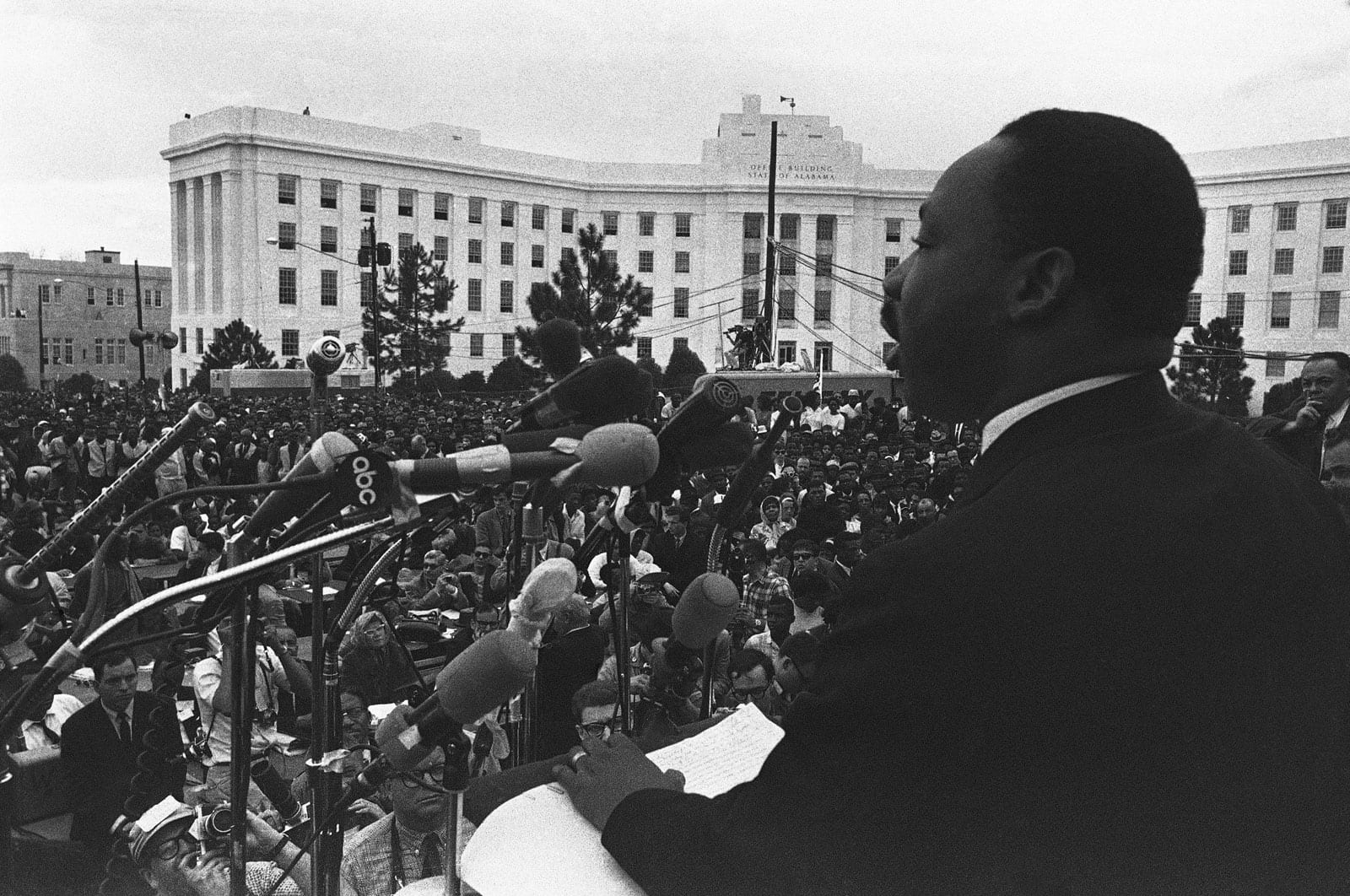
The university’s faculty and student body were deeply involved in the struggles for racial equality. Its proximity to other key institutions and figures in Montgomery during the 1950s and 1960s made it an intrinsic part of the movement’s landscape. Many of its graduates went on to become influential leaders and participants in civil rights organizations.
King’s Presence and Influence in Montgomery
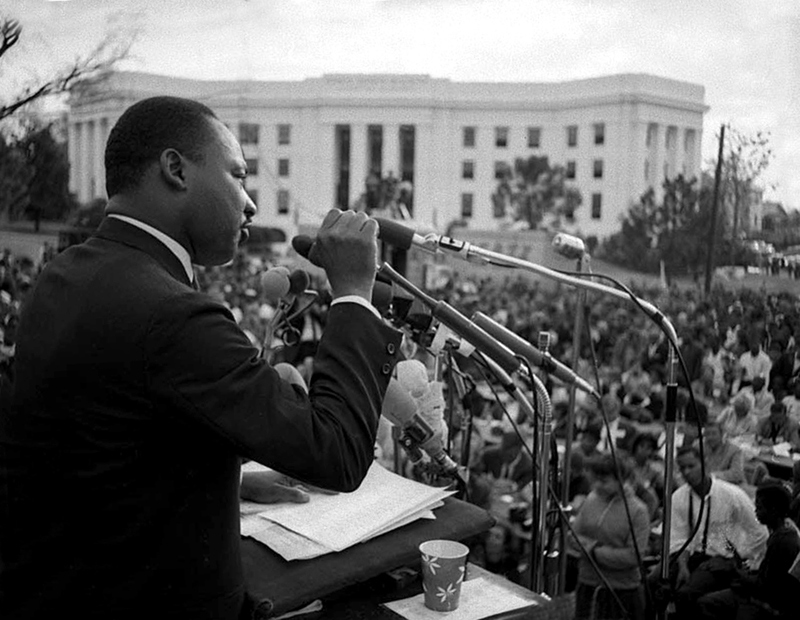
While Martin Luther King Jr. did not formally enroll as a student at Alabama State University, his profound connection to the city of Montgomery and its institutions is undeniable. In 1954, King accepted the pastorship of Dexter Avenue Baptist Church in Montgomery. It was from this pulpit that he would lead the Montgomery Bus Boycott, a seminal event in the Civil Rights Movement that began in December 1955.
During the boycott, King frequently interacted with students and faculty from Alabama State University. The university campus often served as a meeting point for activists, a place where strategies were discussed, and solidarity was fostered. Students and staff from Alabama State were active participants in the boycott and other civil rights initiatives, inspired by King’s leadership and the broader movement. King’s sermons and speeches, delivered in churches across Montgomery, including those attended by Alabama State students and faculty, undoubtedly resonated deeply within the university community.
Clarifying the Record
To definitively answer the question, historical records do not indicate that Martin Luther King Jr. was ever a matriculated student at Alabama State University. His formal higher education was undertaken at Morehouse College, Crozer Theological Seminary, and Boston University.
However, this does not diminish the significant relationship between King and Alabama State University. His leadership during the Montgomery Bus Boycott cemented his status as a national icon, and during this period, Alabama State was an integral part of the city’s social and intellectual fabric. The university community, though not his alma mater, was a crucial supporter and participant in the Civil Rights Movement that King spearheaded in Montgomery. The shared pursuit of justice and equality created a powerful, albeit indirect, bond between the preacher-activist and the institution. The legacy of both Martin Luther King Jr. and Alabama State University is deeply interwoven with the history of civil rights in Alabama and the United States.
LifeOutOfTheBox is a participant in the Amazon Services LLC Associates Program, an affiliate advertising program designed to provide a means for sites to earn advertising fees by advertising and linking to Amazon.com. Amazon, the Amazon logo, AmazonSupply, and the AmazonSupply logo are trademarks of Amazon.com, Inc. or its affiliates. As an Amazon Associate we earn affiliate commissions from qualifying purchases.