
Alaska’s unique geographical position and its history with timekeeping have led to a common question for visitors and residents alike: does Alaska observe Daylight Saving Time? The answer, while seemingly straightforward, involves a nuanced understanding of the state’s relationship with time zones and its past legislative decisions. For travelers planning a trip to the Last Frontier, understanding these temporal shifts is crucial for an accurate itinerary and a seamless experience.
Alaska’s Time Zones and DST Practices
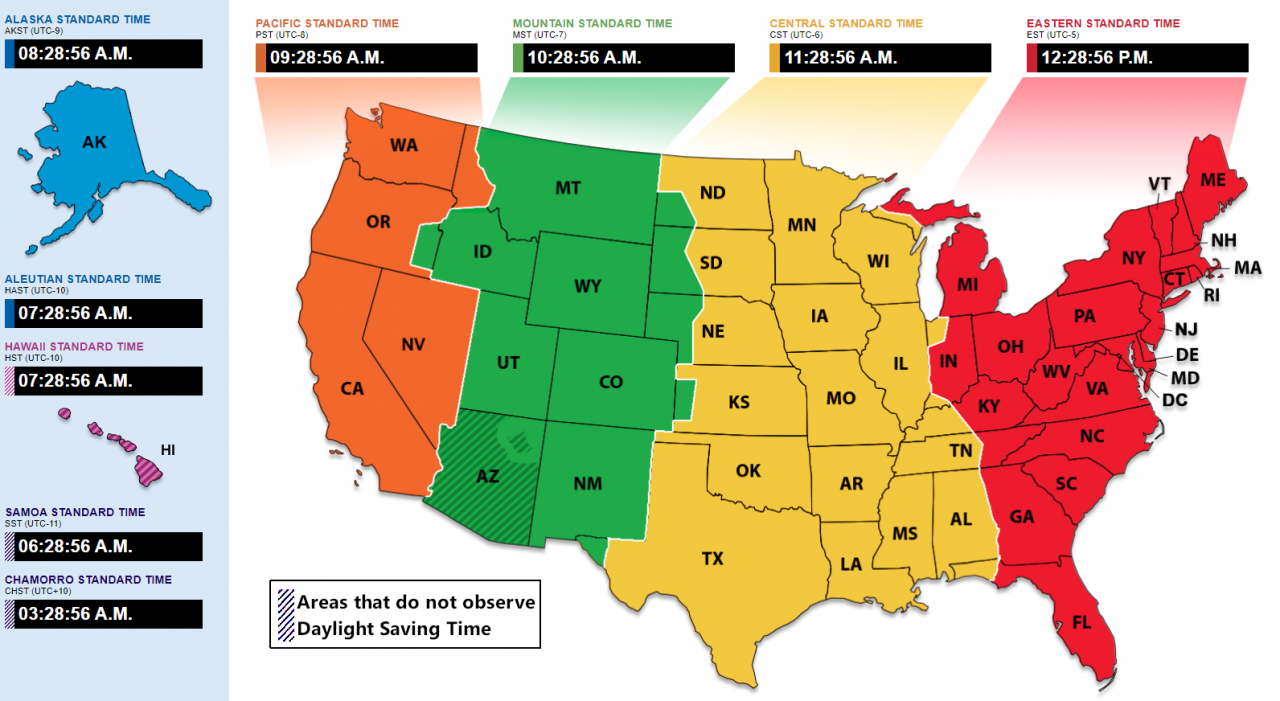
Alaska, a state of vast proportions, is not confined to a single time zone. Its immense landmass spans two of North America’s official time zones: the Alaska Time Zone and the Hawaii-Aleutian Time Zone. This geographical division is the first layer of complexity when discussing Daylight Saving Time (DST) within the state.
The Alaska Time Zone
The primary and most populous area of Alaska operates within the Alaska Time Zone. This zone is UTC-9 during standard time and UTC-8 during Daylight Saving Time. Therefore, much of Alaska does observe Daylight Saving Time. This includes major population centers like Anchorage, Fairbanks, and Juneau.
The transition to and from DST in the Alaska Time Zone typically aligns with the rest of the United States. Clocks are generally set forward one hour on the second Sunday in March and set back one hour on the first Sunday in November. This means that during the spring and summer months, the Alaska Time Zone is synchronized with the Pacific Time Zone (e.g., when it’s 12 PM PST, it’s 12 PM Alaska Daylight Time). This extended daylight in the summer is a significant feature of visiting Alaska during these months, with daylight hours stretching well into the night in many regions.
The Hawaii-Aleutian Time Zone
A portion of Alaska, specifically the Aleutian Islands west of 169°30′ West longitude, falls under the Hawaii-Aleutian Time Zone. This zone observes UTC-10 year-round. Critically, the part of this time zone that extends into Alaska does not observe Daylight Saving Time. This means that throughout the year, the westernmost Aleutian Islands remain on Hawaii Standard Time.
This exception is important for anyone traveling to or doing business with these specific islands. While the majority of Alaska experiences the DST shift, this small but geographically distinct region maintains a consistent time. The rationale behind this has historically been linked to maintaining a stable time for the fishing and maritime industries that are prevalent in these remote areas. For travelers, it’s a subtle point, but one that can affect flight schedules or communication if not accounted for.
Historical Context and Legislative Shifts
The practice of observing Daylight Saving Time in Alaska has not always been a settled matter. Like many regions, Alaska has had its own debates and legislative decisions regarding timekeeping.
Early Timekeeping in Alaska
In its early history, after its purchase by the United States in 1867, Alaska’s timekeeping was largely dictated by the needs of commerce and transportation, often influenced by nearby Canada and the contiguous U.S. The establishment of formal time zones and DST was a gradual process. The Standard Time Act of 1918 introduced time zones and DST to the United States, but its application and adoption in territories like Alaska were subject to local conditions and adjustments.
The Shift Away from DST
A significant shift occurred in 1966 when the Uniform Time Act was passed, establishing the DST practices we largely follow today. However, Alaska was not initially included in the mandatory DST observance. Instead, states and territories could opt out. For many years, Alaska did not observe DST. This was partly due to the already abundant daylight during the Alaskan summer months, particularly in the interior and northern regions, and the desire to avoid the disruption of clock changes in a state with challenging winter conditions.
The Return to DST
The decision to re-adopt Daylight Saving Time was driven by a confluence of factors, including a desire for greater alignment with the rest of the nation for business and trade purposes, and the perceived benefits of extended daylight for recreational activities during the warmer months. In 1983, Alaska officially rejoined the Daylight Saving Time system, with the Alaska Time Zone observing the biannual clock changes. This decision brought the majority of the state in line with the continental United States, simplifying scheduling and communication.
Implications for Travelers
For those planning a visit to Alaska, understanding Daylight Saving Time is more than just a trivia question; it directly impacts travel logistics and the experience of the long summer days.
Planning Your Itinerary
If you are traveling to Alaska during the spring or fall, be aware of the DST transition dates. For example, if your flight lands on the day the clocks spring forward, the local time will be one hour later than expected based on the previous day’s schedule. This is particularly important for early morning or late-night travel arrangements, as well as for booking tours or activities that have specific start times.
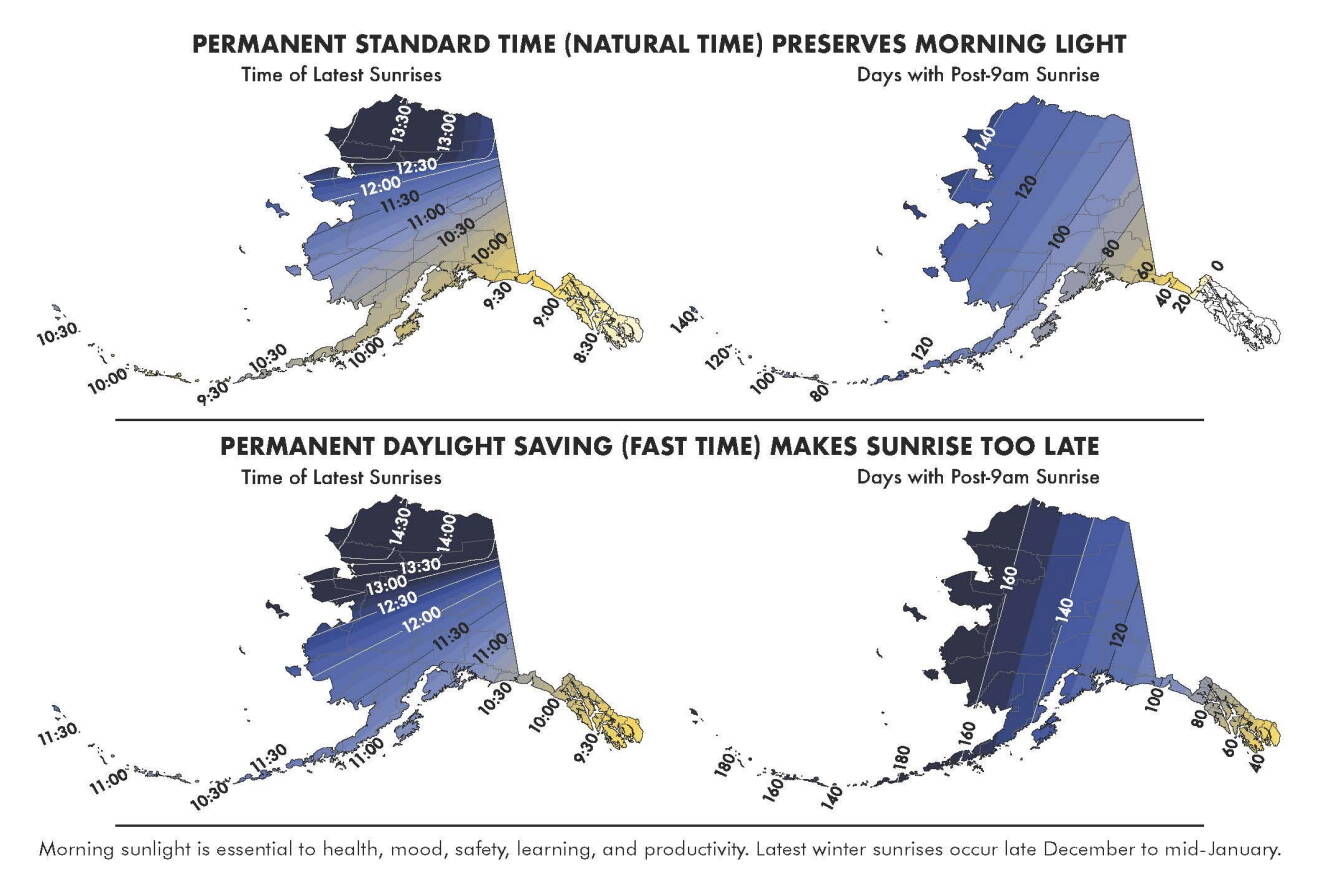
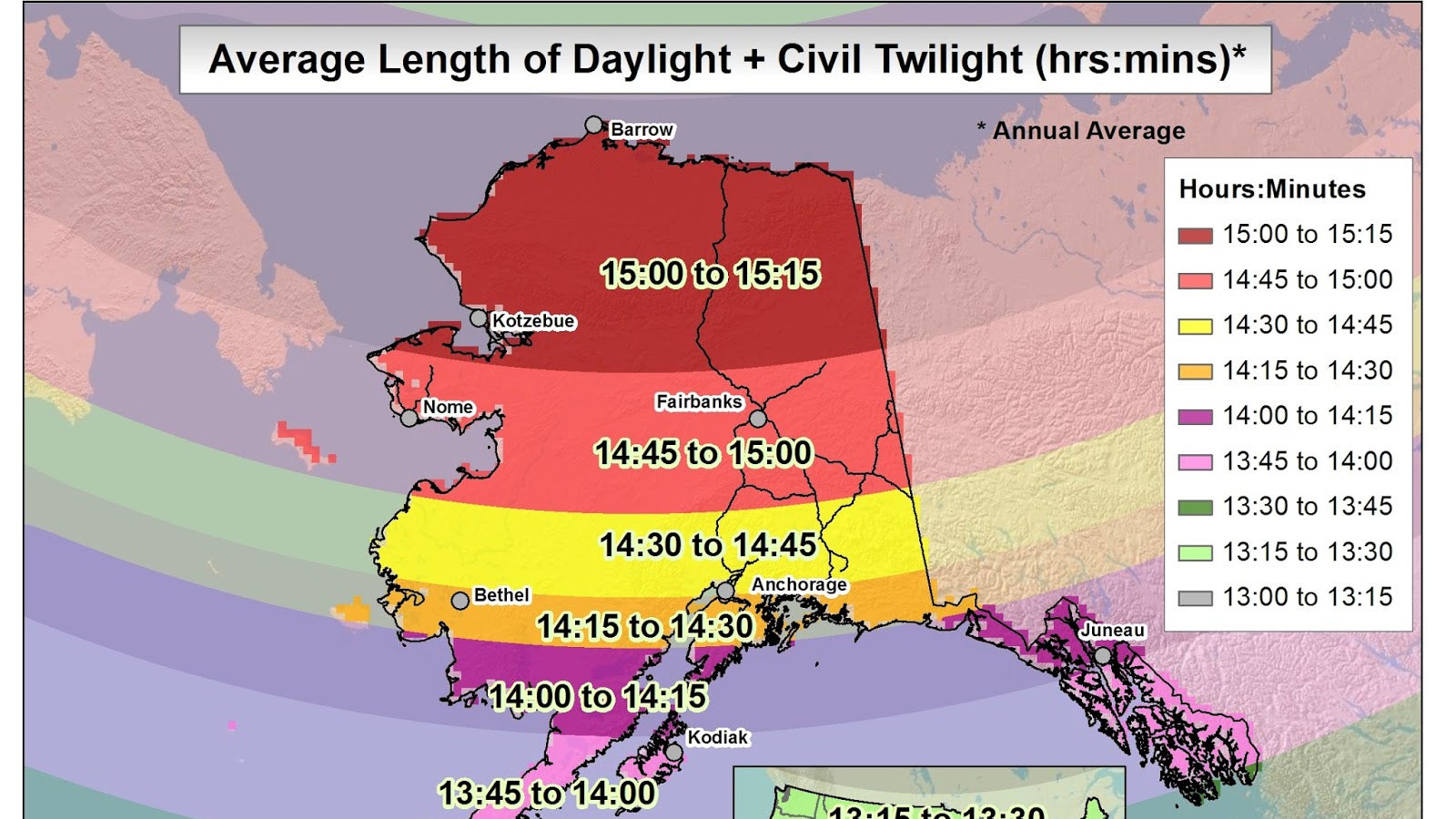
The extended daylight hours in the summer are one of Alaska’s most celebrated features. From late May through July, many parts of Alaska experience “midnight sun,” where the sun barely dips below the horizon. This phenomenon is a direct result of Alaska’s high latitude and is further amplified by Daylight Saving Time during these months. This provides ample opportunity for outdoor adventures, sightseeing, and enjoying the dramatic Alaskan landscapes well into the evening. Conversely, in the winter months, the DST clocks are set back, meaning sunrise and sunset occur earlier, contributing to the shorter daylight hours characteristic of the Alaskan winter.
Navigating Time Differences
When communicating with people in Alaska or coordinating plans, always confirm the current time, especially around the DST transition periods. If you are traveling from a region that does not observe DST, you will need to mentally adjust for the time difference accordingly. For instance, when Alaska is on DST, it is one hour behind California (which is on Pacific Daylight Time) and three hours behind New York (which is on Eastern Daylight Time). When Alaska is on standard time, these differences increase by one hour.
Understanding the nuances of Alaska’s time zones and its adherence to Daylight Saving Time is a small but significant aspect of planning a successful trip to this magnificent state. It ensures that your journey is not only filled with breathtaking scenery and unforgettable experiences but also runs smoothly and efficiently, allowing you to fully embrace the rhythm of Alaskan life.
LifeOutOfTheBox is a participant in the Amazon Services LLC Associates Program, an affiliate advertising program designed to provide a means for sites to earn advertising fees by advertising and linking to Amazon.com. Amazon, the Amazon logo, AmazonSupply, and the AmazonSupply logo are trademarks of Amazon.com, Inc. or its affiliates. As an Amazon Associate we earn affiliate commissions from qualifying purchases.