
For many travelers planning a trip to the Last Frontier, understanding the practicalities of visiting can be as crucial as knowing which trails to hike or which glaciers to marvel at. Among these practical considerations, the question of Daylight Saving Time (DST) often arises, particularly for those accustomed to its observance in other parts of the United States. Alaska, with its unique geographical position and distinct seasons, has its own relationship with DST, which can impact travel planning, especially during the shoulder seasons and the extreme variations in daylight experienced throughout the year.
Understanding Alaska’s Time Zones and DST
Alaska’s vastness necessitates the use of multiple time zones. The majority of the state observes Alaska Standard Time (AKST), which is UTC-9. However, a small portion of the westernmost Aleutian Islands operates on Hawaii-Aleutian Standard Time (HST), which is UTC-10. This division already adds a layer of complexity for those navigating the state, but it’s the observance of Daylight Saving Time that garners the most attention from visitors.
The Current Status of Daylight Saving Time in Alaska
As of the current regulations, Alaska does observe Daylight Saving Time. This means that clocks in the primary time zone, AKST, are advanced by one hour during the spring and set back in the fall. The specific dates for the commencement and termination of DST in Alaska align with those in the contiguous United States: it begins on the second Sunday in March and ends on the first Sunday in November.
This observance means that during the summer months, Alaska Standard Time effectively becomes Alaska Daylight Time (AKDT), which is UTC-8. For travelers, this means that during the period DST is in effect, Alaska is only one hour behind Pacific Daylight Time (PDT) and three hours behind Eastern Daylight Time (EDT). This can be a helpful point of reference when coordinating with family or business contacts back home.
Historical Context and Potential Changes
The question of whether Alaska observes DST isn’t merely a static query; it reflects a dynamic conversation that has occurred across many regions regarding the practice. While Alaska currently adheres to DST, there have been discussions and legislative efforts in the past, and indeed continue to be, about opting out. These discussions are often fueled by the unique experience of daylight in Alaska.
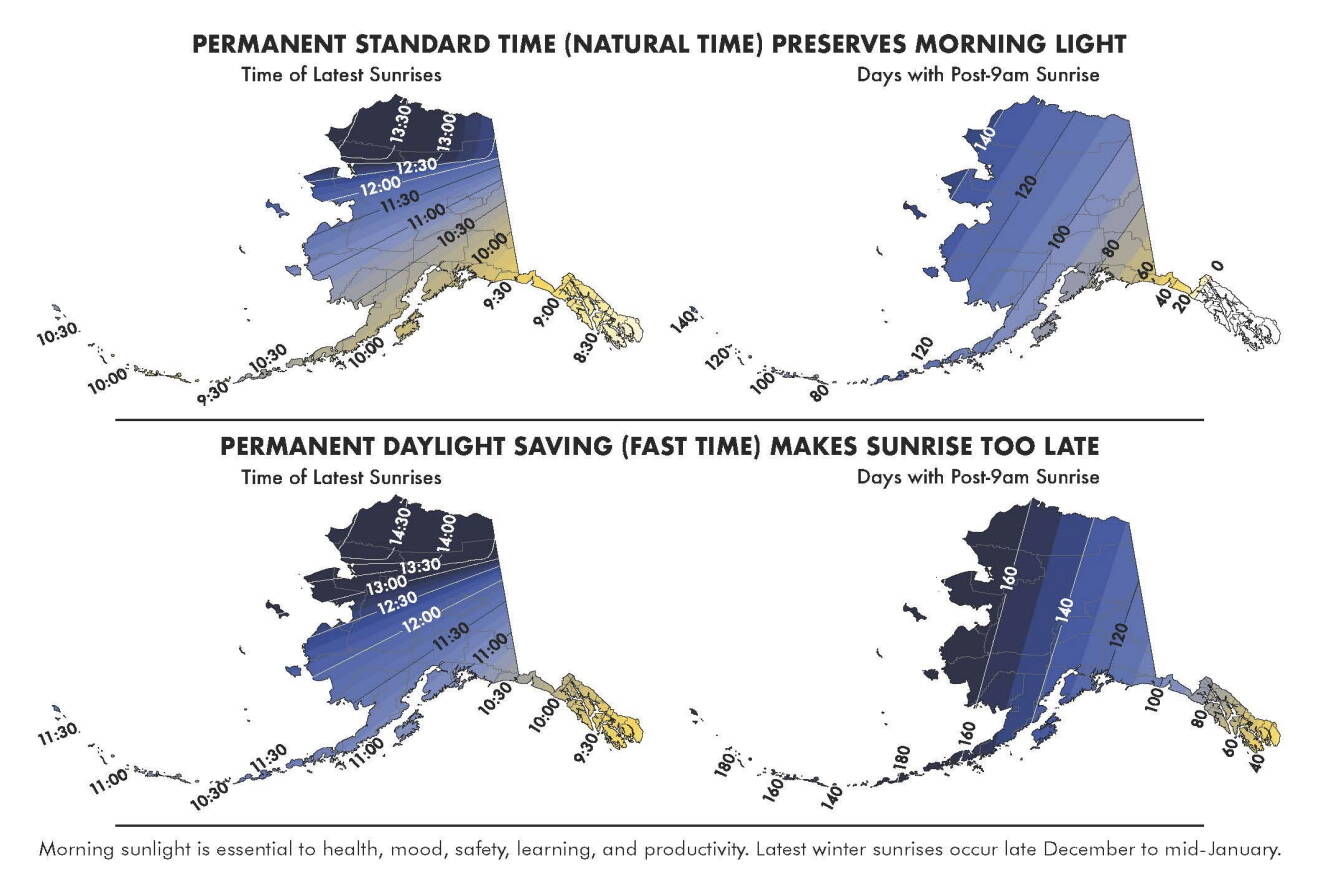
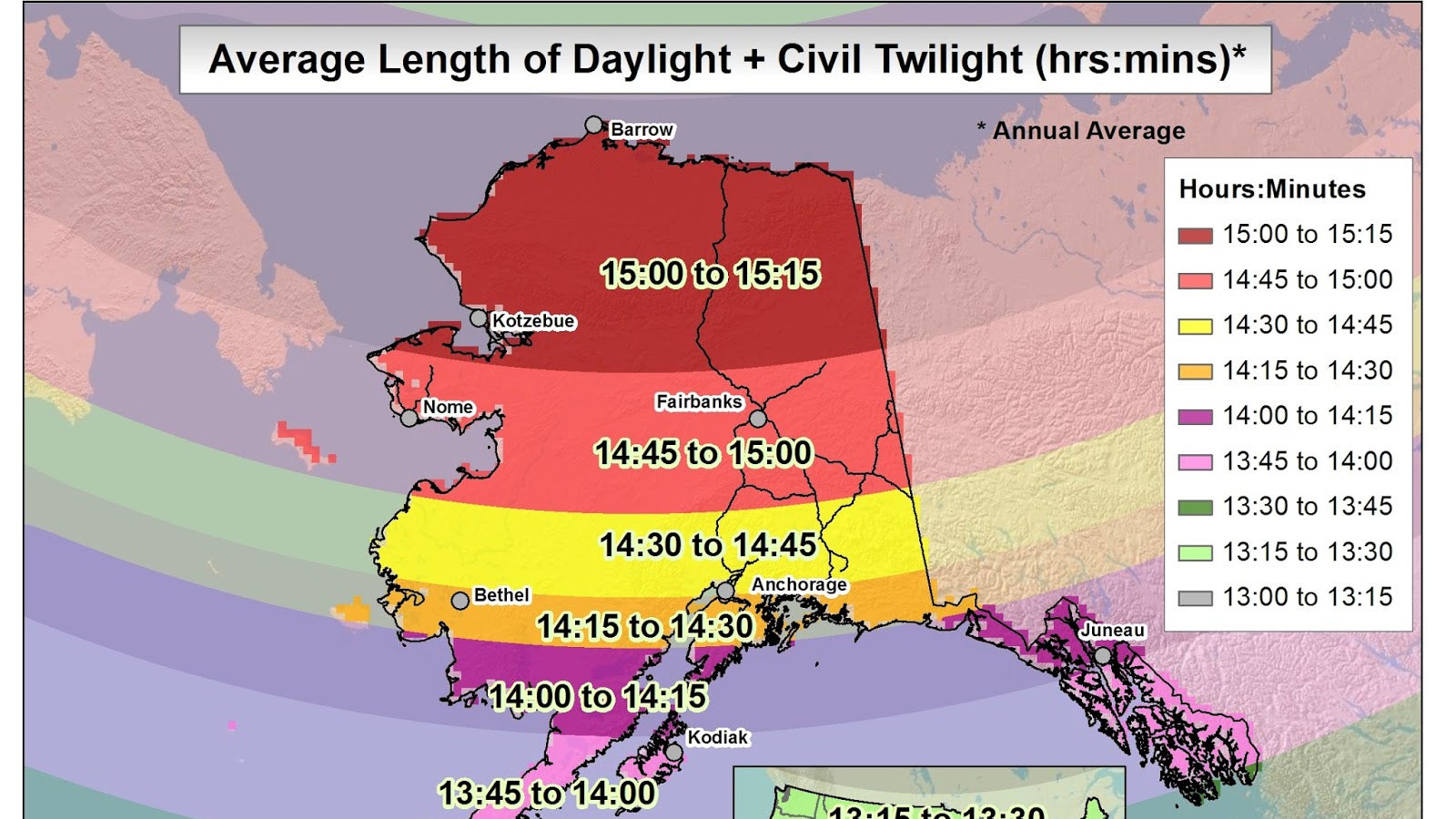
During the summer months, particularly around the solstice, areas like Fairbanks and Anchorage experience incredibly long daylight hours, sometimes up to 20 hours of daylight. In contrast, winter brings very short days, with only a few hours of twilight. Some argue that the benefits of DST, which are primarily to extend daylight into the evening for outdoor activities, are less pronounced in the summer due to the already abundant natural light. Conversely, others point out that pushing the limited daylight further into the evening during the darker months could offer some utility.
Historically, the debate has revolved around various factors, including energy conservation (though modern studies have cast doubt on significant savings from DST) and the impact on sleep patterns and daily routines. The state legislature has, at various times, considered proposals to either cease observing DST or to adopt permanent DST year-round. However, to date, no such changes have been enacted, and the state continues to follow the standard DST schedule.
Implications for Travelers
Understanding Alaska’s observance of Daylight Saving Time is more than just a trivia point; it has practical implications for anyone planning a visit, particularly concerning the timing of their trip and how they manage their schedule.
Planning Your Trip Around DST
The primary impact of DST on a traveler’s experience is related to the perceived length of daylight. When DST is in effect (roughly March through October), the sun sets later in the evening. This is often ideal for tourists who want to maximize their time for outdoor exploration, sightseeing, and enjoying the natural beauty of Alaska. For instance, a late-evening hike in Denali National Park and Preserve or a scenic drive along the Seward Highway can be enjoyed in daylight long after a typical workday might end in other locales.
Conversely, if you are traveling during the period when DST is not in effect (November through March), the days are significantly shorter. This is a crucial consideration for activities that are highly dependent on daylight, such as wildlife viewing tours, glacier hikes, or exploring remote areas. While winter in Alaska offers its own unique charm, with opportunities for dog sledding and viewing the Northern Lights, travelers must be acutely aware of the limited daylight hours and plan their itineraries accordingly to avoid missing out on key experiences due to darkness.
Adjusting to Alaska Time
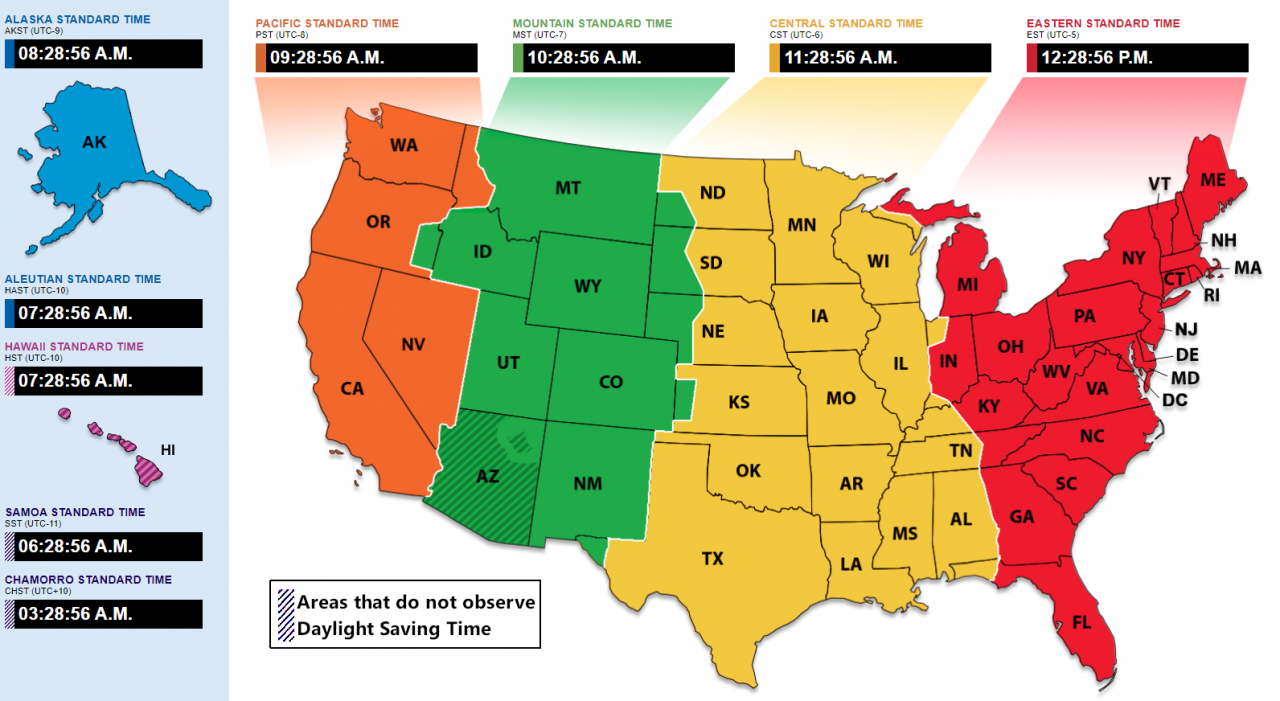
For visitors coming from outside Alaska, the shift to Alaska Standard Time or Alaska Daylight Time can require a minor adjustment. The difference in time can range from a few hours to a significant leap, depending on your departure point.
- From the contiguous U.S. (Pacific Time Zone): During DST, the difference is only 1 hour (Alaska is 1 hour behind). Outside of DST, Alaska is 2 hours behind PST.
- From the contiguous U.S. (Mountain Time Zone): During DST, the difference is 2 hours (Alaska is 2 hours behind). Outside of DST, Alaska is 3 hours behind MST.
- From the contiguous U.S. (Central Time Zone): During DST, the difference is 3 hours (Alaska is 3 hours behind). Outside of DST, Alaska is 4 hours behind CST.
- From the contiguous U.S. (Eastern Time Zone): During DST, the difference is 4 hours (Alaska is 4 hours behind). Outside of DST, Alaska is 5 hours behind EST.
This time difference is an important factor when booking flights, scheduling tours, and communicating with services or individuals in other time zones. It’s always advisable to confirm the local time in Alaska when making arrangements, especially around the periods when DST transitions. Many travel agencies and booking platforms will automatically adjust for DST, but it’s good practice to double-check.
Seasonal Considerations for Activities
The daylight hours, influenced by DST, play a significant role in shaping the types of activities available and the best times to undertake them.
Summer (DST in Effect): This is the peak tourist season, and for good reason. The extended daylight hours, from roughly late spring through early fall, allow for a full day of exploration. Many popular attractions, such as scenic cruises in Glacier Bay National Park and Preserve or exploring the charming streets of Juneau, can be enjoyed into the late evening. Fishing charters, hiking excursions, and wildlife tours often extend well into the evening, providing ample opportunity to witness the grandeur of Alaska’s landscapes and wildlife, from bears fishing for salmon to whales breaching in the ocean.
Winter (DST Not in Effect): The winter months offer a starkly different, yet equally captivating, experience. With DST concluded, the days are very short. However, this limited daylight is often offset by the magic of the auroras. Activities are tailored to the darkness and the snow: dog sledding adventures, ice fishing, snowshoeing, and of course, dedicated aurora viewing tours. The shorter days mean that dusk arrives early, but this also allows for earlier starts to nighttime activities. It’s crucial for travelers to pack appropriate gear for the cold and to be mindful of road conditions, which can be challenging.
Navigating Alaska’s Time Zones and Daylight
For a smooth and enjoyable travel experience in Alaska, it’s beneficial to have a clear understanding of how time zones and Daylight Saving Time influence your plans.
The Importance of Local Time Awareness
When you arrive in Alaska, especially if you’ve flown in from a different time zone, the first thing to do is set your watch to the local time. Most smartphones and modern devices will do this automatically, but it’s always wise to confirm. This ensures you don’t miss flights, tour departures, or important reservations. Remember that the majority of Alaska uses AKST/AKDT, with a small exception in the western Aleutians.
If you are planning to call hotels, tour operators, or friends and family back home, be mindful of the time difference. The shift in DST can sometimes cause confusion, so it’s best to verify the current time difference before making calls. For example, if you’re in Anchorage during DST and call someone in New York, they will be 4 hours ahead. If you’re there outside of DST, they will be 5 hours ahead.
Popular Alaskan Destinations and Time
Alaska is a vast state, and its major tourist hubs are spread across different regions, all generally adhering to the AKST/AKDT schedule.
- Anchorage: The largest city, a major gateway for international and domestic travelers, and a hub for many Alaskan adventures. Its time zone observance is standard AKST/AKDT.
- Fairbanks: Known for its access to the interior and its prime location for Northern Lights viewing, Fairbanks also follows AKST/AKDT. Its extreme latitude means it experiences the most dramatic seasonal shifts in daylight.
- Juneau: The capital city, located in the panhandle, is accessible primarily by air or sea. It operates on AKST/AKDT.
- Seward: A popular port for cruise ships and a gateway to Kenai Fjords National Park, Seward adheres to AKST/AKDT.
- Ketchikan: Another major cruise ship port in the panhandle, following AKST/AKDT.
While the difference between AKST and HST is only one hour, it’s something to be aware of if your itinerary includes venturing far into the western Aleutian Islands, such as to the remote island of Attu. For most tourists, however, the primary focus will be on AKST/AKDT.
Conclusion
So, to directly answer the question: Yes, Alaska does observe Daylight Saving Time. This means that for a significant portion of the year, clocks are adjusted forward. This practice influences the length of daylight, which in turn shapes the travel experience, from the types of activities available to the best times to engage in them. Whether you are planning a summer adventure under the midnight sun or a winter quest for the aurora, understanding Alaska’s time and DST will undoubtedly contribute to a more informed and enjoyable journey through this extraordinary state.
LifeOutOfTheBox is a participant in the Amazon Services LLC Associates Program, an affiliate advertising program designed to provide a means for sites to earn advertising fees by advertising and linking to Amazon.com. Amazon, the Amazon logo, AmazonSupply, and the AmazonSupply logo are trademarks of Amazon.com, Inc. or its affiliates. As an Amazon Associate we earn affiliate commissions from qualifying purchases.