
A Geographic Perspective for the Adventurous Traveler
When planning an expedition to the far north, the sheer scale of the Arctic landscapes often commands attention. Two of the most prominent and alluring landmasses in this region are Greenland and Alaska. For the discerning traveler, understanding their relative sizes is not merely an academic exercise; it provides crucial context for the scope of experiences available, the distances involved in exploration, and the vastness of the natural wonders waiting to be discovered. While both are colossal territories offering unparalleled opportunities for adventure, their dimensions differ significantly, impacting everything from journey planning to the perceived immensity of their wilderness.
The Scale of Arctic Giants: Greenland vs. Alaska
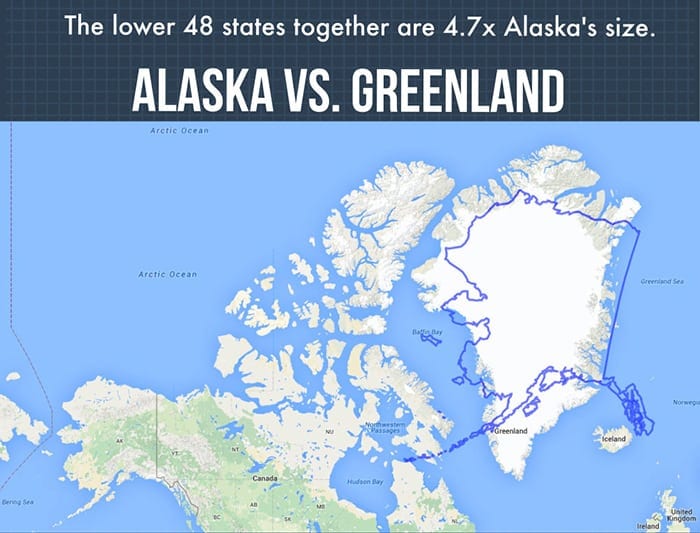
To truly grasp the immensity of Greenland and Alaska, let’s delve into their surface areas. Greenland, an autonomous territory within the Kingdom of Denmark, is the world’s largest island, a title that hints at its prodigious size. It covers an area of approximately 2,166,086 square kilometers (836,330 square miles). This vast expanse is dominated by a massive ice sheet, which covers about 80% of its surface, creating a unique and formidable environment. The ice-free coastal areas, where most of the population resides and where most tourist activities are concentrated, represent a fraction of the total area but still offer substantial regions for exploration.
Alaska, a U.S. state, also boasts an impressive geographical footprint. It spans an area of approximately 1,723,337 square kilometers (665,384 square miles). While it is the largest state in the United States, it is notably smaller than Greenland. However, the comparison in raw numbers doesn’t tell the whole story. Alaska’s terrain is more varied, featuring extensive mountain ranges, vast forests, and a lengthy coastline, with significantly less of its landmass permanently covered by ice compared to Greenland.
Comparing Absolute Landmass
When we juxtapose these figures, Greenland emerges as the larger of the two by a considerable margin. Greenland is roughly 26% larger than Alaska. To put this into perspective, imagine attempting to traverse Greenland coast-to-coast or exploring its interior. The distances are immense, demanding significant logistical planning and time commitments. Similarly, while Alaska is smaller, its sheer size still ranks it among the largest territories on Earth, offering a wealth of diverse landscapes that can take weeks, if not months, to fully appreciate.
Relative Size Considerations for Travelers
For a traveler, this difference in scale has practical implications. A trip to Greenland might involve focusing on specific coastal regions, such as the UNESCO World Heritage site of Ilulissat Icefjord, or venturing inland on guided expeditions. The ice sheet itself presents a formidable barrier, shaping how one experiences the country. In contrast, Alaska offers more varied internal travel options, from driving the Glenn Highway to exploring national parks like Denali or the vastness of the Kenai Peninsula. While both destinations promise epic adventures, the logistical considerations and the nature of exploration will differ due to their distinct geographic characteristics and sizes.
Greenland: A Realm of Ice and Coastal Wonders
Greenland’s immense size is inextricably linked to its dominant feature: the Greenland ice sheet. This colossal ice cap, the second-largest in the world after Antarctica, dictates the accessibility and the experience of visiting this unique destination. The sheer volume of ice, kilometers thick in places, shapes not only the landscape but also the very way of life for its inhabitants and the opportunities for visitors.
The Ice Sheet’s Dominance
The ice sheet is the defining characteristic of Greenland. It covers an area larger than France and Spain combined. Its presence means that extensive travel across the interior is typically reserved for highly specialized expeditions, often involving scientific research or extreme adventure. For the average traveler, the focus shifts to the coastal regions, where the ice meets the sea in dramatic fashion. These areas are dotted with settlements, from the capital city of Nuuk to smaller villages like Ilulissat and Qaqortoq.
Coastal Exploration and Activities
The ice-free areas of Greenland are where the magic of tourism unfolds. These regions offer a stunning contrast between rugged coastlines, fjords, and the ever-present backdrop of icebergs. Activities here are deeply intertwined with the natural environment. Boat tours to witness calving glaciers, kayaking among icebergs, hiking in the low-lying tundra, and experiencing the unique Inuit culture are prime attractions. The scale of the icebergs themselves, calved from glaciers like the Sermeq Kujalleq (Jakobshavn Glacier) near Ilulissat, are a testament to the immense forces at play, and their size can be staggering, often dwarfing even large vessels.
Connectivity and Travel Within Greenland

Due to its vastness and the challenging terrain, travel within Greenland is primarily facilitated by air and sea. Flights connect major settlements, while ferries and smaller boats are essential for reaching more remote locations, especially along the western coast. This reliance on specialized transport underscores the country’s remoteness and the strategic planning required for any itinerary. Even a short journey between towns can involve significant distances and dramatic changes in scenery.
Alaska: A Diverse Wilderness of Mountains, Forests, and Coasts
Alaska, while smaller than Greenland, is a land of incredible geographical diversity. Its vastness is characterized by towering mountain ranges, expansive boreal forests, extensive river systems, and a coastline that stretches for thousands of miles, offering a multitude of environments for exploration and adventure.
Mountain Majesty and Glacial Wonders
Alaska is home to the highest peak in North America, Denali (formerly Mount McKinley), standing at 6,190 meters (20,310 feet). The presence of the vast Alaska Range and other mountain systems, such as the Chugach and Saint Elias Mountains, creates dramatic vistas and provides opportunities for mountaineering, hiking, and scenic drives. While not as dominantly icy as Greenland, Alaska also boasts impressive glaciers, including the Mendenhall Glacier near Juneau and the Bering Glacier, the longest glacier in North America. These glacial landscapes offer unique touring opportunities via boat tours, helicopter excursions, and hiking.
Forests, Wildlife, and Coastal Exploration
Beyond the mountains, Alaska is covered by vast tracts of boreal forest, particularly in its interior. This provides habitat for an incredible array of wildlife, including grizzly bears, moose, caribou, and wolves. The state’s extensive coastline, stretching over 33,904 miles (54,723 km) when including islands, offers dramatic fjords, numerous islands, and opportunities for whale watching, sea kayaking, and exploring coastal towns like Ketchikan and Homer. The accessibility of these natural environments often allows for more varied forms of exploration, from road-based travel to cruising the Inside Passage.
Transportation Networks
Compared to Greenland, Alaska has a more developed transportation infrastructure. A network of highways, including the iconic Alaska Highway, allows for extensive road travel, enabling visitors to experience a wide range of landscapes at their own pace. Rail services, such as the Alaska Railroad, offer a scenic and comfortable way to traverse certain routes. Air travel is also crucial, connecting major cities and remote lodges, but the option of driving or taking a train significantly expands the travel possibilities compared to the more restricted movement within Greenland.
Implications for Adventure Planning
Understanding the relative sizes and geographic characteristics of Greenland and Alaska is paramount for anyone considering an expedition to these northern frontiers. The scale of each destination influences the type of adventures possible, the duration of trips, and the logistical considerations involved.
Duration and Scope of Expeditions
A typical tourist visit to Alaska, whether by car, train, or cruise, can easily span one to three weeks to cover significant ground and experience a variety of its offerings. Longer, more in-depth expeditions, such as multi-week hiking or kayaking trips in remote areas, are also feasible. In Greenland, while a week-long trip might allow for exploration of a specific region like the Ilulissat area, experiencing multiple distinct locations often requires longer travel times, relying heavily on flights between towns or extended boat journeys. The sheer inaccessibility of large parts of its interior means that expeditions are often more focused and specialized.
Types of Adventures and Accessibility
The vast ice sheet in Greenland naturally lends itself to adventures that interact with ice – ice climbing, glacier hiking on guided tours, and boat trips to witness icebergs. The cultural experience in the scattered coastal villages is also a major draw. In Alaska, the diversity of landscapes translates into a broader range of adventure types. From wildlife viewing safaris and bear-watching tours in Katmai National Park to exploring national parks like Glacier Bay by boat, trekking through alpine meadows, and experiencing the gold rush history, the options are varied and often more readily accessible by conventional means of transport.
Preparing for Immensity
Both Greenland and Alaska offer experiences of profound scale and wild beauty. Whether you are drawn to the icy grandeur of Greenland or the diverse, rugged wilderness of Alaska, understanding their comparative sizes and geographical features will profoundly enhance your trip planning and your appreciation for the immense natural wonders awaiting you. Both are destinations that redefine one’s perception of scale and the raw power of nature.
LifeOutOfTheBox is a participant in the Amazon Services LLC Associates Program, an affiliate advertising program designed to provide a means for sites to earn advertising fees by advertising and linking to Amazon.com. Amazon, the Amazon logo, AmazonSupply, and the AmazonSupply logo are trademarks of Amazon.com, Inc. or its affiliates. As an Amazon Associate we earn affiliate commissions from qualifying purchases.