
While the vast, sun-drenched landscapes of Arizona often conjure images of serene deserts, towering red rocks, and vibrant cacti, a lesser-known natural phenomenon occasionally makes its presence felt: earthquakes. The idea of the ground shaking in the Grand Canyon State might surprise some, leading to the natural question, “Does Arizona get earthquakes?” The answer is a resounding yes, though the seismic activity is generally less intense than in regions like California or Alaska. Understanding Arizona’s seismic profile is crucial for both residents and the millions of tourists who visit its renowned attractions each year, offering a more complete picture of this diverse state’s natural environment.
Understanding Arizona’s Seismic Landscape
Arizona is situated in the Basin and Range Province, a geological region characterized by extensive faulting and tectonic activity. While it doesn’t lie on a major plate boundary like the San Andreas Fault, the state experiences tremors primarily due to the stretching and thinning of the Earth’s crust in this area. This gradual extension leads to the formation of numerous faults, which can slip and release energy, resulting in earthquakes.
Historical Seismicity in Arizona
The earliest recorded seismic events in Arizona date back to the late 19th century. While the data from these early periods can be less precise, they indicate a consistent, albeit often minor, level of earthquake activity. More sophisticated monitoring systems in recent decades have provided a clearer picture of where and how frequently earthquakes occur.
- Magnitude and Frequency: The majority of earthquakes in Arizona are of low magnitude, often unfelt by humans. These minor tremors are a natural part of the ongoing geological processes. However, occasionally, moderate earthquakes do occur, capable of causing noticeable shaking. Historically, there have been a few instances of larger, more significant seismic events that have left their mark on the state’s history and infrastructure.
- Notable Seismic Events: While not as frequent or as powerful as those in other seismically active regions, Arizona has experienced notable earthquakes. The 1887 Sonora earthquake, which occurred just south of the border but was strongly felt throughout southern Arizona, is one of the most significant historical events. More recent seismic activity, though generally smaller, is continuously monitored by institutions like the Arizona Geological Survey and Arizona State University’s seismic network.
Factors Influencing Seismic Activity
Several geological factors contribute to Arizona’s earthquake occurrences:
- Basin and Range Tectonics: The extensional forces that shaped the Basin and Range Province are the primary drivers of seismic activity. These forces cause the crust to fracture and move, generating faults.
- Fault Lines: Arizona is crisscrossed by numerous fault lines, some of which are still active. These faults, often buried beneath sediment, can produce earthquakes when stress builds up and is suddenly released.
- Volcanic History: While Arizona has a significant volcanic past, recent volcanic activity is minimal. However, the geological structures left by past eruptions, such as calderas and lava flows, can sometimes be associated with minor seismic adjustments.
Where Do Earthquakes Occur in Arizona?
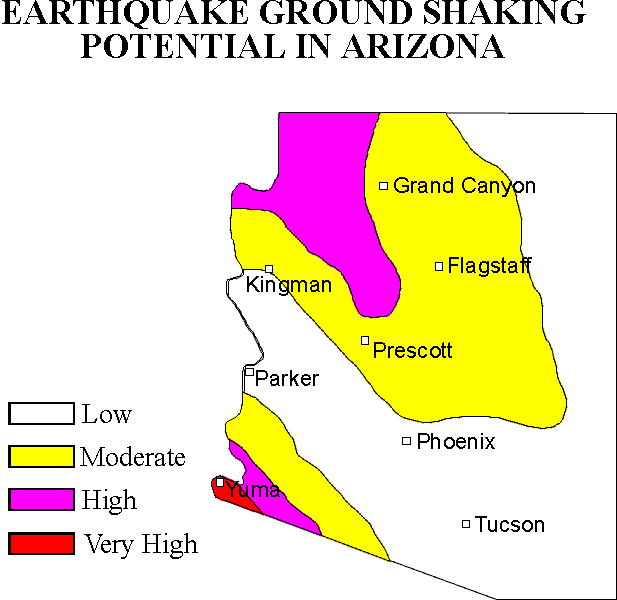
While earthquakes can theoretically occur anywhere in Arizona where fault lines exist, certain areas have historically shown higher seismic activity. Understanding these regions can help inform preparedness and awareness for those living in or visiting these parts of the state.
Northern Arizona
Northern Arizona, home to iconic landmarks like the Grand Canyon and the San Francisco Peaks, is not immune to seismic events. While major earthquakes are rare, minor tremors are recorded periodically. The geological formations in this region, shaped by both volcanic activity and tectonic forces, contribute to this ongoing seismic potential. Visitors to places like Flagstaff or the Grand Canyon National Park should be aware that minor ground movements are possible, though significant disruptions are highly improbable.
Central and Southern Arizona
Central and southern Arizona, including metropolitan areas like Phoenix and Tucson, experience seismic activity more frequently. This is largely due to the presence of active fault systems within the Basin and Range Province. The 1887 Sonora earthquake had a profound impact on this region, and subsequent, smaller earthquakes continue to be detected. While major urban centers are built with seismic considerations in mind, it’s always prudent to be aware of potential ground motion.
Specific Fault Zones

- The Gila River Fault System: This is one of the more active fault systems in southern Arizona, capable of producing moderate earthquakes.
- The Big Chino Valley Fault: Located in central Arizona, this fault zone has also been a source of seismic activity.
Impact on Tourism and Travel
The occurrence of earthquakes in Arizona, even if generally mild, is a factor that can influence travel decisions and preparedness. While the risk of a devastating earthquake impacting tourist activities is low, understanding the geological context adds another layer to appreciating the state’s dynamic natural environment.
Safety and Preparedness for Visitors
For tourists visiting Arizona, the primary message regarding earthquakes is one of awareness rather than alarm. The state is not considered a high-risk earthquake zone compared to many other parts of the world. However, basic preparedness is always advisable.
- Accommodation Safety: Most hotels, resorts, and other accommodations in major tourist areas are built to modern building codes, which often include seismic considerations. This is especially true for larger cities like Phoenix, Scottsdale, and Tucson. Information on emergency procedures is usually available in guest rooms or at the front desk of establishments like the Hyatt Regency Phoenix or the Arizona Biltmore, A Waldorf Astoria Resort.
- During an Earthquake: In the unlikely event of experiencing an earthquake while visiting a natural landmark such as the Grand Canyon or while hiking in areas like Sedona, the “drop, cover, and hold on” procedure is the recommended response. Stay away from cliff edges, loose rocks, or anything that could fall. Park rangers and local authorities at attractions like Monument Valley or Saguaro National Park are trained to provide guidance during emergencies.
- Information Resources: Visitors can stay informed by checking local news and advisories. The Arizona Geological Survey provides valuable information on seismic activity in the state.
Geotourism and Natural Wonders
The seismic activity in Arizona is intrinsically linked to the formation of its spectacular landscapes. The very forces that cause the ground to shake have, over millennia, sculpted the dramatic canyons, fault-block mountains, and volcanic features that draw millions of visitors.
- The Grand Canyon: While the Grand Canyon itself is primarily a result of erosion by the Colorado River, the broader tectonic forces in the region, including the Basin and Range extension, played a role in uplifting the Colorado Plateau.
- Volcanic Fields: Areas like the San Francisco Peaks near Flagstaff are testament to Arizona’s volcanic past, and minor seismic adjustments can still occur in these geologically active zones.
- Desert Landscapes: The faulting associated with the Basin and Range Province has created the distinctive valleys and mountain ranges that characterize the Sonoran Desert and the Mojave Desert, areas frequented by hikers and nature enthusiasts.
Preparing for the Unexpected: Arizona’s Seismic Resilience
While Arizona may not be the first place that comes to mind when discussing earthquakes, preparedness is a key aspect of responsible living and travel. The state’s geological agencies and local governments are engaged in monitoring and educating the public about seismic risks.
Monitoring and Research
Institutions like the Arizona Geological Survey and universities such as Arizona State University and the University of Arizona play a crucial role in monitoring seismic activity across the state. They maintain networks of seismometers that detect even minor tremors, helping scientists to understand fault behavior and assess potential risks.
- Seismic Networks: These networks provide real-time data on earthquake locations, magnitudes, and depths, contributing to a growing understanding of Arizona’s complex seismic system.
- Hazard Assessments: Researchers conduct studies to identify active faults and estimate the probability of future earthquakes, informing building codes and emergency planning.

Public Awareness and Education
Effective public awareness campaigns are vital for ensuring that both residents and visitors understand the potential for seismic events and know how to respond. Emergency management agencies in counties like Maricopa, Pima, and Yavapai work to disseminate information on earthquake safety.
- “Great Arizona ShakeOut”: This annual earthquake drill, part of a larger global initiative, encourages individuals, schools, and businesses to practice how to “drop, cover, and hold on” during an earthquake.
- Information Dissemination: Resources are available online and through public outreach programs to educate people about earthquake preparedness, including creating emergency kits and developing family communication plans.
In conclusion, while Arizona may be more renowned for its heat and majestic deserts than its seismic rumblings, the state does experience earthquakes. These events, largely moderate and infrequent, are a natural consequence of its geological setting. For travelers, this means enjoying the breathtaking landscapes and unique cultural experiences of Arizona with a low level of seismic risk, while always maintaining a prudent awareness of the natural forces that continue to shape this fascinating part of the American Southwest.
LifeOutOfTheBox is a participant in the Amazon Services LLC Associates Program, an affiliate advertising program designed to provide a means for sites to earn advertising fees by advertising and linking to Amazon.com. Amazon, the Amazon logo, AmazonSupply, and the AmazonSupply logo are trademarks of Amazon.com, Inc. or its affiliates. As an Amazon Associate we earn affiliate commissions from qualifying purchases.