
The temporal landscape of the United States is a complex tapestry, woven with the threads of historical precedent, practical necessity, and even a dash of local pride. For many travelers planning a trip to the Grand Canyon State, a seemingly simple question can arise: “Is Arizona Eastern Time?” The answer, while often perceived as straightforward, reveals a fascinating quirk in the nation’s timekeeping, particularly for those accustomed to the rigid adherence to established time zones. This exploration delves into Arizona’s unique temporal position, disentangling it from its neighbors and explaining the rationale behind its distinct approach to daylight saving.
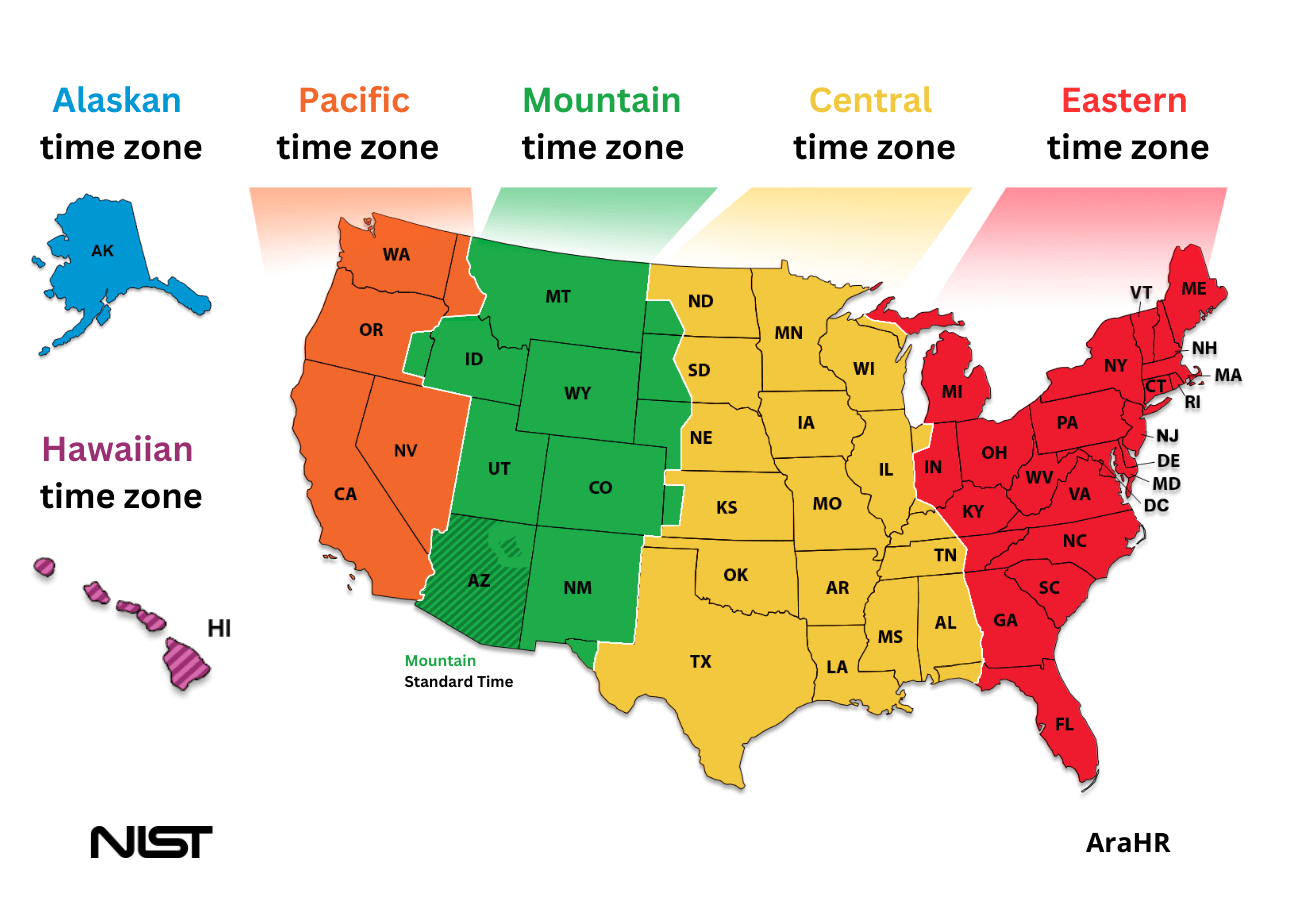
Arizona’s Time Zone Identity
Unlike the majority of the contiguous United States, which observes a standard division into Eastern, Central, Mountain, and Pacific Time Zones, Arizona operates under a slightly different set of rules. The state predominantly falls within the Mountain Time Zone. However, this classification is complicated by Arizona’s decision to opt out of Daylight Saving Time (DST). This choice sets it apart from most of its neighboring states and creates a unique temporal anomaly for a significant portion of the year.
The Mountain Time Zone Baseline
The Mountain Time Zone officially encompasses a vast swathe of the western and central United States. States like Colorado, Utah, and New Mexico are firmly within its geographical boundaries. During the winter months, when DST is not in effect, these states, along with most of Arizona, operate on what is known as Mountain Standard Time (MST), which is UTC-7.
The Daylight Saving Time Exception
The key to understanding Arizona’s temporal peculiarity lies in its non-observance of Daylight Saving Time. While most of the United States shifts its clocks forward by one hour in the spring and back by one hour in the autumn, Arizona remains steadfast on MST year-round. This means that for half of the year, from roughly the second Sunday in March to the first Sunday in November, Arizona is effectively an hour behind its neighboring states that do observe DST.
Why the Opt-Out?
The decision for Arizona to forgo DST is rooted in a combination of historical factors and perceived benefits. Primarily, the state’s arid climate and intense summer heat played a significant role. Proponents of the opt-out argued that extending daylight into the evening during the hottest months would only exacerbate the heat and encourage more outdoor activity during peak temperatures, potentially leading to increased heat-related illnesses. Furthermore, the agricultural industry, historically a significant economic driver in the state, also voiced concerns about the disruption DST could cause to established routines and work schedules.
The state legislature officially exempted Arizona from observing DST in 1968. This was a deliberate choice to maintain a consistent time throughout the year, simplifying daily life and business operations for its residents. The exception was later codified by federal law, allowing states to opt out of DST.
Navigating the Temporal Divide
The consequence of Arizona’s DST policy is that it creates a temporal divide with its neighbors during the DST period.
The Navajo Nation Exception
It is crucial to note that not all of Arizona adheres to this DST exemption. The Navajo Nation, a federally recognized tribal nation located primarily in the Four Corners region, does observe Daylight Saving Time. This means that while most of Arizona remains on MST (UTC-7) during the summer, the Navajo Nation shifts to Mountain Daylight Time (MDT), which is UTC-6. This creates a peculiar situation where a traveler might drive across an invisible time boundary within the state, gaining or losing an hour. Cities like Kayenta and Chinle within the Navajo Nation will be on MDT, while places like Phoenix and Tucson will remain on MST.

Impact on Travel and Business
For visitors to Arizona, understanding this temporal nuance is essential for seamless travel and communication.
- Flights and Transportation: Airlines and other transportation services operating within or through Arizona will typically display their schedules according to local time. However, when making connections or communicating with parties in other states, it’s vital to be aware of the time difference, which fluctuates between March and November.
- Business Meetings and Appointments: Scheduling meetings with individuals or businesses in Arizona requires careful consideration. A call scheduled for 9:00 AM in New York (Eastern Time) would be 6:00 AM in Phoenix during the winter and 7:00 AM during the summer. During the summer months, the difference between Arizona (MST) and New York (EDT) is three hours, whereas in the winter, the difference between Arizona (MST) and New York (EST) is two hours.
- Communication: Simple phone calls or video conferences can become confusing if the time difference isn’t clearly understood. Always confirm the time in the specific location you are calling or being called from.
The Mountain Time Zone in Relation to Arizona
Arizona’s relationship with the Mountain Time Zone is the foundation of its temporal identity. While it resides geographically within the zone, its DST policy creates a unique distinction.
Winter Alignment
From the first Sunday in November to the second Sunday in March, Arizona (excluding the Navajo Nation) and the rest of the Mountain Time Zone states that observe DST are synchronized. Both are on MST (UTC-7). During this period, Arizona is two hours behind Eastern Standard Time (EST, UTC-5) and three hours behind Eastern Daylight Time (EDT, UTC-4).
Summer Divergence
The divergence begins in mid-March when the majority of the country springs forward for DST. At this point, most of Arizona remains on MST (UTC-7), while neighboring states like Utah and Colorado move to MDT (UTC-6). This means that during the summer months, Arizona is effectively on “Pacific Standard Time” (though it’s officially MST) when compared to the rest of the Mountain Time Zone. It is one hour behind its DST-observing Mountain Time neighbors and two hours behind Eastern Daylight Time. The Navajo Nation, however, aligns with the rest of the Mountain Time Zone by observing MDT during this period.
Is Arizona Eastern Time? The Definitive Answer
To directly answer the title’s question: No, Arizona is not Eastern Time. It resides within the Mountain Time Zone and, crucially, does not observe Daylight Saving Time for the majority of the state. This exemption creates a consistent time throughout the year for most Arizonans, but it does lead to a temporal divergence with the Eastern Time Zone and even with parts of its own geographic region during half of the year.
Practical Considerations for Travelers
When planning a trip to the Grand Canyon State, be mindful of the temporal differences:
- When traveling from an Eastern Time Zone state: Understand that during the winter months (EST), Arizona is two hours behind. During the summer months (EDT), Arizona is three hours behind.
- When traveling from a state that observes DST in the Mountain Time Zone: During the winter, your time will match most of Arizona. However, during the summer, you will be one hour ahead of most of Arizona.
- When traveling within the Navajo Nation: Be aware that this region observes DST and will be on a different time than the rest of Arizona from March to November.

Embracing the Arizona Pace
Arizona’s decision to maintain a consistent time, free from the spring and fall clock changes, can be seen as a deliberate choice to foster a sense of stability and a rhythm attuned to its unique environment. While it may require a moment of calculation for visitors, this temporal distinctiveness is an integral part of the state’s character, offering a subtle yet fascinating aspect of its identity to explore. So, while not Eastern Time, Arizona’s time zone is undeniably its own, a testament to its independent spirit and practical approach to daily life.
LifeOutOfTheBox is a participant in the Amazon Services LLC Associates Program, an affiliate advertising program designed to provide a means for sites to earn advertising fees by advertising and linking to Amazon.com. Amazon, the Amazon logo, AmazonSupply, and the AmazonSupply logo are trademarks of Amazon.com, Inc. or its affiliates. As an Amazon Associate we earn affiliate commissions from qualifying purchases.