
The presence of a structure as iconic as the London Bridge in the landlocked state of Arizona is a question that sparks curiosity and often disbelief. It’s not a replica, nor is it a thematic homage; it is, in fact, the original, albeit disassembled and reassembled, bridge that once spanned the River Thames in London, England. This remarkable feat of engineering and historical preservation is a testament to vision, dedication, and a touch of audacious eccentricity, all centered around the burgeoning community of Lake Havasu City.
The Genesis of a Bridge’s Journey
The story begins with a visionary entrepreneur named Robert P. McCulloch, the founder of Lake Havasu City. In the mid-1960s, McCulloch, a successful industrialist and land developer, purchased a vast tract of desert land in western Arizona with the ambitious goal of transforming it into a thriving city. He envisioned a destination that would draw visitors and residents alike, offering a unique living experience in the arid landscape. To achieve this, he understood the need for something extraordinary, a landmark that would capture the imagination and create an immediate sense of destination.
While exploring options for a unique attraction, McCulloch learned that the original London Bridge, built in 1831 and designed by John Rennie, was scheduled for demolition. The historic bridge, a symbol of London for centuries, had become insufficient to handle the increasing volume of modern traffic. It was sinking and cracking under the weight, and the city sought a more robust replacement. The original bridge was, in essence, a relic whose time had passed in its original location.
A Bold Acquisition
McCulloch saw not an aging structure, but an unparalleled opportunity. He recognized the historical significance and the sheer novelty of acquiring such a globally renowned landmark. In 1968, through a series of intricate negotiations and a surprisingly competitive auction, McCulloch successfully purchased the entire London Bridge for $2.46 million. This acquisition wasn’t just about acquiring stone and mortar; it was about securing a piece of history and transplanting it to a place where it would be celebrated and preserved, rather than demolished.
The logistics of transporting a bridge of this magnitude from London to the middle of the Mojave Desert were, to say the least, staggering. The bridge was meticulously dismantled, with each of the approximately 10,276 granite stones numbered and cataloged. This painstaking process ensured that the bridge could be reassembled precisely as it was. The stones were then shipped across the Atlantic Ocean to Long Beach, California, and subsequently transported inland by truck to their new desert home. The journey itself became a significant part of the legend, a logistical marvel that underscored the audacious nature of the project.
Rebirth in the Desert

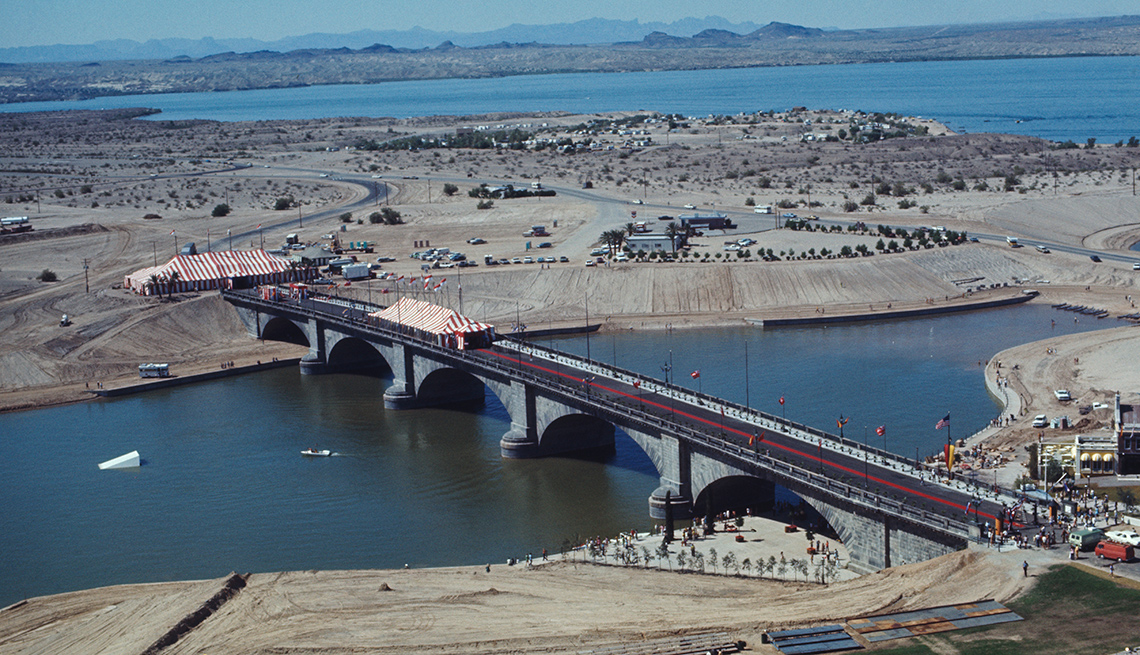
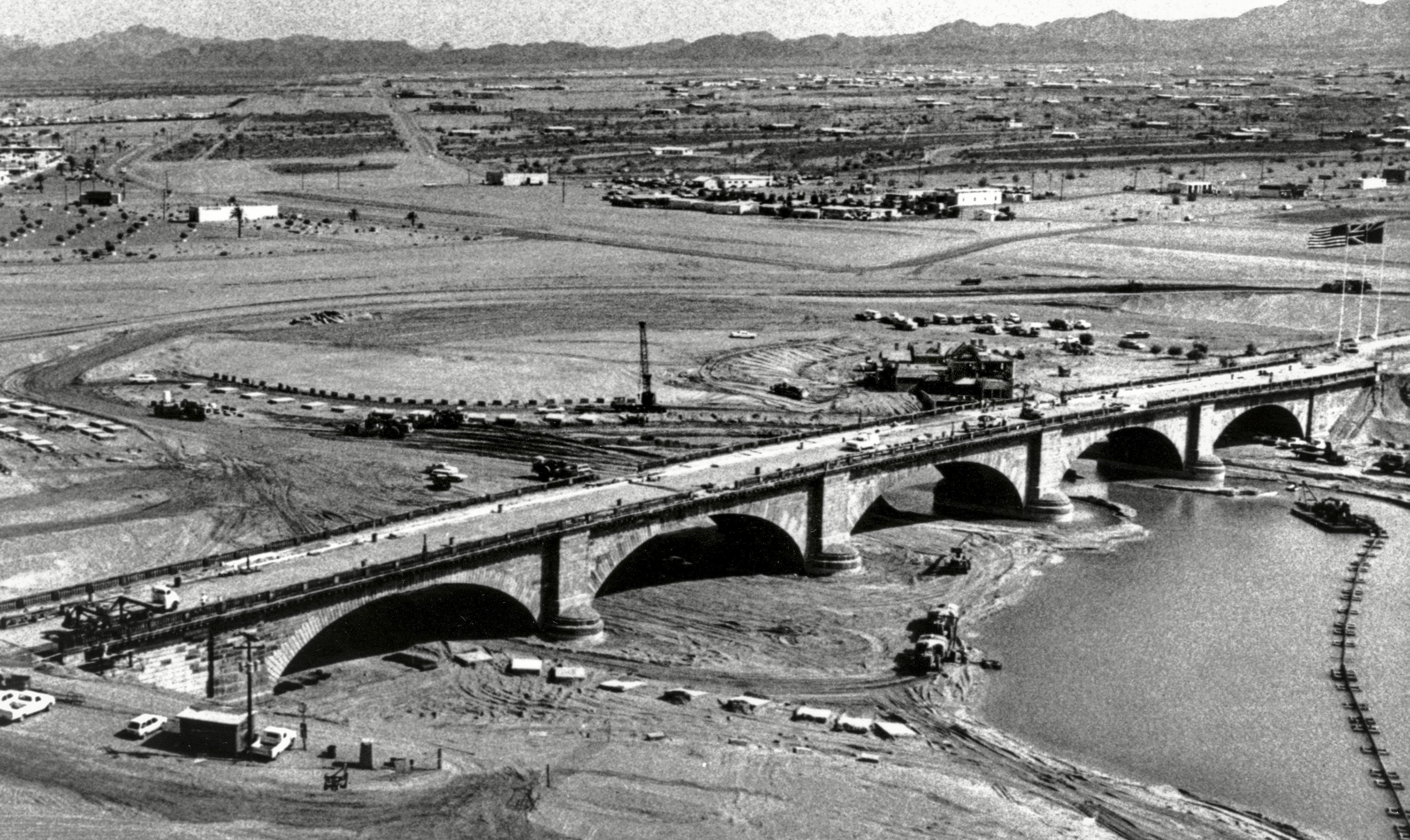
Upon arrival in Lake Havasu City, the monumental task of reconstruction began. The site chosen for the bridge was a narrow isthmus separating a vast, undeveloped parcel of land from the main body of Lake Havasu. This location was strategically important: the bridge would not only serve as a functional crossing but would also create a visually stunning centerpiece for the developing city, drawing attention and visitors to the shores of Lake Havasu.
The reconstruction process was as complex as the dismantling. Engineers and stonemasons worked diligently, using the original plans and the meticulously cataloged stones. The bridge was rebuilt over a specially constructed channel, which was later filled with the waters of Lake Havasu, allowing the bridge to appear as if it were spanning a natural body of water. The entire endeavor cost an additional $7 million, bringing the total investment to nearly $10 million – a substantial sum for the era, reflecting the immense scale and ambition of the project.
A Grand Unveiling
On October 10, 1971, the London Bridge was officially rededicated in Lake Havasu City with a lavish ceremony. Dignitaries from both the United States and the United Kingdom were present, marking the culmination of this extraordinary transplantation. The event was a massive success, generating significant media attention and drawing thousands of spectators, cementing the bridge’s status as a unique tourist attraction.
The rebuilt bridge, stretching 930 feet in length, now connects the mainland of Lake Havasu City to Thompson Bay Island, which is home to various amenities and attractions. The original lamps that adorned the bridge in London were also relocated and now grace the Arizona version, adding to its authentic feel. The reconstruction faithfully recreated the architectural nuances of the original Rennie bridge, making it a remarkable piece of preserved history.
The Impact and Legacy
The arrival of the London Bridge had a profound and lasting impact on Lake Havasu City. It transformed a remote desert outpost into a recognized tourist destination, drawing visitors from around the globe eager to witness this improbable transplanted landmark. The bridge became the lynchpin of the city’s identity, providing a unique selling proposition that no other desert city could match.
A Tourist Magnet
Tourists flock to Lake Havasu City to walk across the historic bridge, marvel at its construction, and learn about its remarkable journey. The area surrounding the bridge has developed into a hub of activity, featuring charming shops, restaurants, and hotels, all capitalizing on the bridge’s allure. Boat tours often navigate beneath its arches, offering a unique perspective of the structure against the backdrop of the Arizona sky and Lake Havasu.
The bridge has become an integral part of the local culture and economy. It serves as a constant reminder of the bold vision that shaped Lake Havasu City and continues to be a symbol of ingenuity and the preservation of historical artifacts. While it may seem an anomaly to find a piece of London in the American Southwest, the London Bridge in Arizona is a remarkable testament to human ambition and the enduring power of iconic landmarks. It stands as a proud, if unexpected, fixture in the desert landscape, inviting all who visit to ponder the incredible story behind its relocation.
LifeOutOfTheBox is a participant in the Amazon Services LLC Associates Program, an affiliate advertising program designed to provide a means for sites to earn advertising fees by advertising and linking to Amazon.com. Amazon, the Amazon logo, AmazonSupply, and the AmazonSupply logo are trademarks of Amazon.com, Inc. or its affiliates. As an Amazon Associate we earn affiliate commissions from qualifying purchases.