
California stands out as one of the states with the most stringent and complex firearm regulations in the United States. For residents and those considering making California their home, understanding these intricate laws is a crucial aspect of responsible citizenship and adapting to the local lifestyle. Whether your interest stems from a commitment to personal defense, a passion for sport shooting, or simply a desire to be well-informed, navigating the legal framework for firearm acquisition in the Golden State requires diligence and attention to detail. This guide delves into the specifics, helping to demystify the process for those whose lifestyle choices intersect with firearm ownership in California.
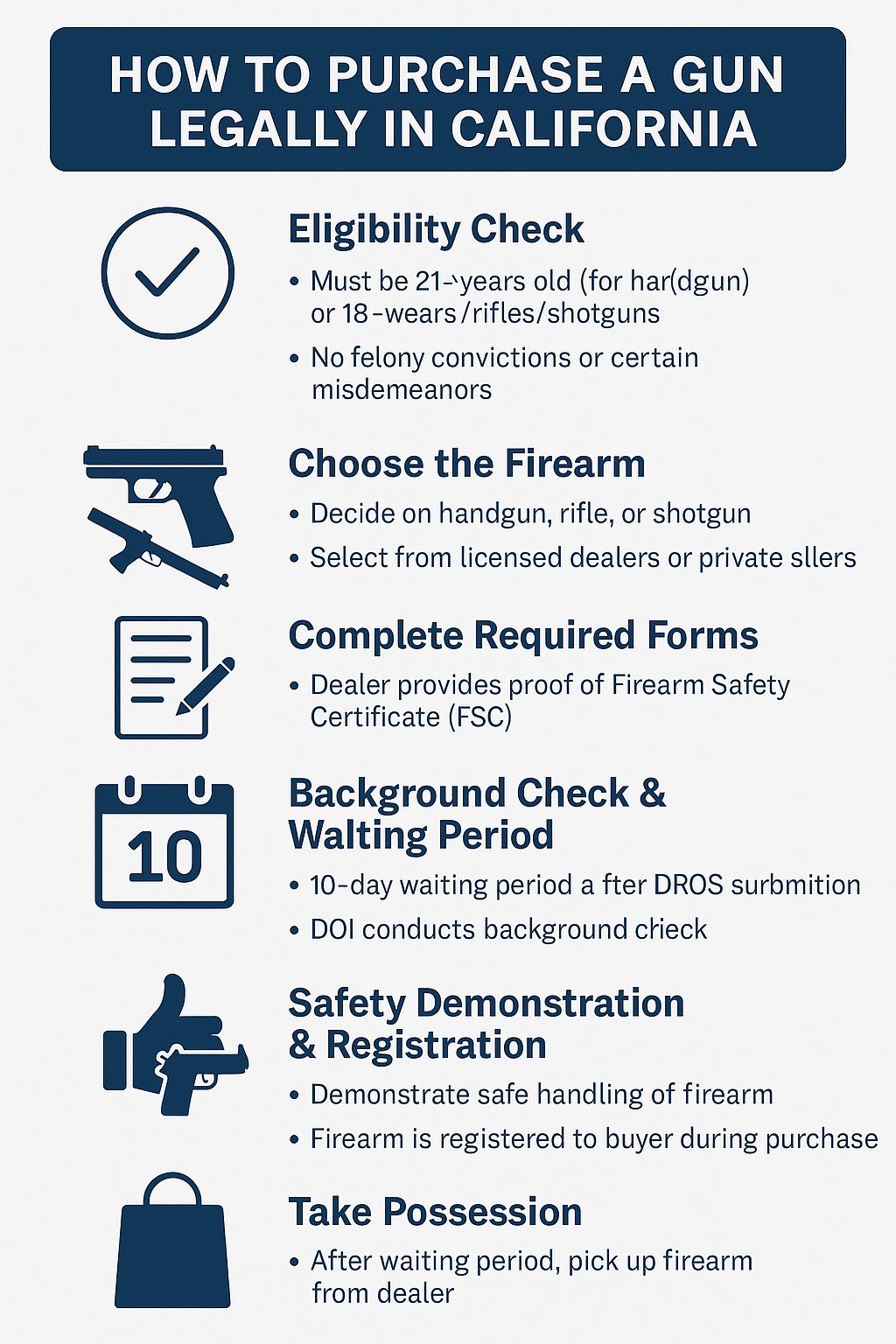
Navigating California’s Unique Firearm Landscape
The regulatory environment surrounding firearms in California is distinct, setting it apart from many other states. The state has proactively enacted a wide array of laws designed to control the sale, ownership, and use of firearms. These laws are continually evolving, reflecting ongoing legislative efforts to balance public safety concerns with the rights of firearm owners. Understanding the overarching philosophy behind these regulations is the first step in comprehending the practical requirements for purchase. The state’s approach emphasizes background checks, safety training, specific firearm characteristics, and secure storage—all elements designed to mitigate risks associated with firearm possession.
The California Department of Justice (DOJ) and Its Role
At the heart of California’s firearm regulatory system is the California Department of Justice (DOJ). The DOJ is responsible for overseeing firearm sales, maintaining records, and enforcing state gun laws. All firearm transactions must go through a Federal Firearms Licensed (FFL) dealer, who acts as an intermediary, processing the necessary paperwork and conducting background checks via the DOJ’s automated system. The DOJ also issues the mandatory Firearm Safety Certificate (FSC) and maintains various lists, such as the Safe Handgun Roster, which dictates which handguns can be sold within the state. Staying informed about DOJ guidelines is paramount for anyone considering firearm ownership in California.
Core Requirements for Firearm Purchase
Before you can even select a firearm, several fundamental requirements must be met. These are designed to ensure that purchasers are legally eligible and have a basic understanding of firearm safety. Adhering to these prerequisites is non-negotiable and forms the bedrock of California’s regulatory framework.
Eligibility Criteria: Who Can Buy?
To legally purchase a firearm in California, an individual must meet several key eligibility criteria:
- Age: You must be 21 years or older to purchase a handgun, rifle, or shotgun. There are very limited exceptions, such as active-duty military personnel, for long guns.
- Residency: You must be a legal resident of California. Proof of residency is a critical component of the purchase process.
- Clean Record: You must not be prohibited from owning firearms under federal or California law. This includes prohibitions based on felony convictions, certain misdemeanor convictions (such as domestic violence), specific mental health adjudications, and active restraining orders. The background check conducted during the purchase process will verify these aspects.
Meeting these basic requirements is the first hurdle in the acquisition process.
The Firearm Safety Certificate (FSC)
A cornerstone of California’s firearm laws is the Firearm Safety Certificate (FSC). With very few exceptions (e.g., active law enforcement, military personnel), every individual seeking to purchase or acquire a firearm in California must possess a valid FSC.
To obtain an FSC, you must:
- Pass a written test on firearm safety rules and laws.
- The test typically consists of 30 questions, and a score of 75% or higher is required to pass.
- The test can be taken at any participating FFL dealer.
- The certificate is valid for five years.
The FSC is designed to ensure that firearm owners have a foundational understanding of safe handling, storage, and the legal responsibilities that come with gun ownership in California.
Proof of Residency and Identification
Accurate identification and proof of California residency are vital for any firearm purchase. When you visit an FFL dealer, you will need to present:
- Primary Identification: A valid California Driver’s License or California Identification Card that is not expired and accurately reflects your current residential address. If the address on your Driver’s License or ID Card is a P.O. Box or does not match your current residence, additional documentation will be required.
- Proof of Residency: For handgun purchases, you must provide a secondary proof of residency. This can include a utility bill (gas, electric, water, trash), a residential lease agreement, property deed, or a valid government-issued license, permit, or registration (e.g., vehicle registration) that lists your current residential address. This second proof must be current and dated within a specific timeframe (often 90 days).
- Proof of Legal Presence (for non-U.S. citizens): If you are not a U.S. citizen, you will also need to provide documentation proving your legal presence in the U.S., such as a green card or a valid visa with an I-94 form and a hunting license.
Ensuring all identification and residency documents are current and correct will prevent delays in your purchase.
The Purchase Process: From Selection to Pickup
Once the eligibility requirements are met, the actual purchase process involves several critical steps unique to California. These steps ensure compliance with state-specific regulations regarding the types of firearms that can be sold and the thoroughness of background checks.
Approved Firearm Rosters and Handgun Safety Features
California maintains an “approved firearms” or “Safe Handgun Roster” list. Only handguns that have passed specific safety tests and incorporate certain features can be sold to the public in California. Over time, these requirements have become increasingly strict. As of recent updates, new handgun models must include specific safety features such as:
- Chamber Load Indicator: Visually indicates whether a cartridge is in the chamber.
- Magazine Disconnect Mechanism: Prevents the firearm from being fired when the magazine is removed.
- Microstamping: This technology, though highly controversial and with limited compliant models, requires that the firearm imprint microscopic characters on spent casings, theoretically allowing law enforcement to trace ammunition to a specific firearm. The practical implementation of this requirement has significantly reduced the number of new handgun models added to the roster.
This means that many popular handgun models available in other states cannot be legally purchased new in California, significantly limiting consumer choice for new firearms. Used handguns, however, may be transferred through private party transfers if they were legally owned in [California](https://lifeoutofthebox.com/california] prior to being added to the roster.
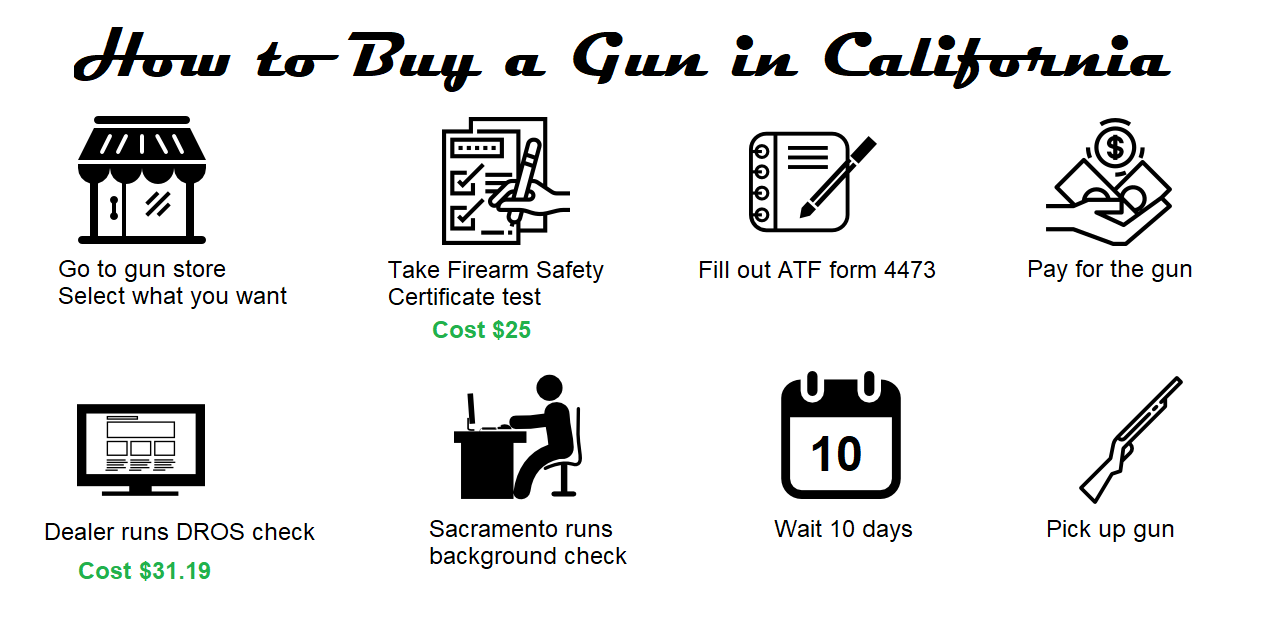
The 10-Day Waiting Period and Background Check
Once you have selected a compliant firearm and completed all necessary paperwork at the FFL dealer, you enter the mandatory 10-day waiting period. This period begins when the dealer submits your information to the DOJ via the Dealer Record of Sale (DROS) system. During this time, the DOJ conducts a thorough background check to ensure you are not a prohibited person.
- DROS System: The DROS is an electronic system used by licensed firearm dealers to submit purchaser information to the DOJ for the mandatory background check.
- 10-Day Hold: Regardless of how quickly the background check clears, you cannot take possession of the firearm until 10 full 24-hour periods have passed since the submission of the DROS. This waiting period applies to all firearm purchases, including private party transfers facilitated by an FFL.
This waiting period is a non-negotiable step in the California firearm acquisition process, designed to provide a “cooling-off” period and allow ample time for the background investigation.
Restrictions on Magazine Capacity and Assault Weapons
California has strict laws regarding magazine capacity and defines “assault weapons” very broadly, making many commonly available firearms in other states illegal to purchase or possess in California.
- Magazine Capacity: It is generally illegal to purchase, import, or manufacture magazines capable of holding more than 10 rounds of ammunition. There have been legal challenges and temporary injunctions related to “high-capacity” magazines, but the general prohibition remains a significant aspect of California law.
- Assault Weapons Ban: California’s Assault Weapons Ban defines certain firearms by specific features (e.g., pistol grips, adjustable stocks, flash suppressors on semi-automatic rifles with detachable magazines). Many popular semi-automatic rifles that are legal elsewhere are classified as assault weapons and cannot be sold in California unless they are “featureless” or utilize a fixed magazine that requires disassembly to reload. This complex area of law often necessitates consulting with an experienced FFL dealer or legal expert to ensure compliance.
These restrictions significantly impact the types of firearms and accessories available to residents, requiring careful consideration during the selection process.
Beyond the Purchase: Storage and Transportation Laws
Acquiring a firearm is only part of the responsibility. California also has explicit laws governing how firearms must be stored and transported, further integrating into the lifestyle of a firearm owner.
Safe Storage Requirements
California’s Safe Storage Law aims to prevent accidental shootings, suicides, and unauthorized access to firearms, especially by children.
- Secure Storage: Firearms must be stored in a locked container or rendered inoperable with a trigger lock or similar device when not in the immediate possession or control of the owner, especially if a minor or prohibited person could gain access to them.
- Child Access Prevention: Stricter rules apply if a minor is likely to gain access to a loaded firearm. Violations of these laws can lead to significant criminal penalties.
These laws underscore the importance of responsible firearm ownership as a lifestyle choice in California.
Transporting Firearms Legally
Transporting firearms within California also comes with specific rules:
- Unloaded and Locked: Generally, handguns must be transported unloaded and in a locked container, separate from ammunition, in the trunk or in a securely locked container that is not readily accessible from the passenger compartment. Rifles and shotguns must also be unloaded during transport.
- Open Carry Restrictions: California prohibits the open carry of loaded or unloaded firearms in most public places.
Understanding and adhering to these transportation laws is critical to avoid legal issues and ensure responsible firearm handling.
Understanding California’s Lifestyle and Firearm Ownership
For individuals whose lifestyle choices include firearm ownership, adapting to California’s robust regulatory environment is essential. It requires more than just knowing the laws; it involves embracing a culture of heightened responsibility and continuous awareness.
Responsible Ownership and Community
Responsible firearm ownership in California means a commitment to ongoing education, strict adherence to safety protocols, and proactive compliance with all state and federal laws. Engaging with local shooting ranges, firearm clubs, and educational programs can provide valuable resources and foster a sense of community among responsible gun owners. These groups often offer courses on advanced safety, marksmanship, and current legal updates, helping individuals stay informed and proficient. Being a responsible owner is an integral part of the lifestyle for those who choose to own firearms in the state.
Resources for New Firearm Owners
The complexity of California gun laws can be daunting for new firearm owners or those new to the state. Fortunately, several resources can assist in navigating this landscape:
- Licensed FFL Dealers: These professionals are your primary point of contact for purchases and are knowledgeable about current state and federal regulations.
- California Department of Justice Website: The DOJ’s Bureau of Firearms provides comprehensive information on laws, forms, and eligible firearms.
- Firearm Rights Organizations: Groups dedicated to protecting firearm rights often offer legal resources, educational materials, and legislative updates.
- Certified Firearm Instructors: For hands-on training and a deeper understanding of safe handling and usage.
Embracing these resources ensures that firearm ownership remains a safe, legal, and responsible lifestyle choice in California. While the process may seem extensive, it reflects California’s unique approach to integrating firearm regulations into the fabric of its diverse society.
LifeOutOfTheBox is a participant in the Amazon Services LLC Associates Program, an affiliate advertising program designed to provide a means for sites to earn advertising fees by advertising and linking to Amazon.com. Amazon, the Amazon logo, AmazonSupply, and the AmazonSupply logo are trademarks of Amazon.com, Inc. or its affiliates. As an Amazon Associate we earn affiliate commissions from qualifying purchases.