
Unveiling California’s Fiery Past and Present
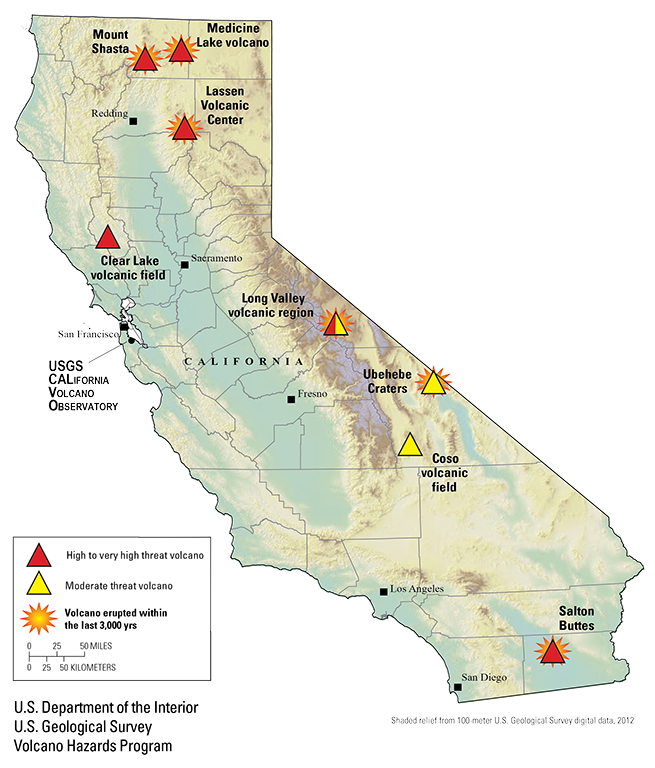
California, often celebrated for its sun-drenched beaches, iconic redwood forests, and sprawling deserts, holds a lesser-known but equally dramatic secret: it is home to a significant number of volcanoes. Far from being a dormant geological relic, the Golden State actively sits within one of the world’s most dynamic seismic zones, a region where the Earth’s fiery breath occasionally surfaces. These natural landmarks, ranging from towering stratovolcanoes to vast collapsed calderas and active geothermal areas, offer profound insights into the planet’s powerful forces, shaping not only the landscape but also the very history and ecosystem of the region. Understanding California’s volcanic landmarks is essential to appreciating the full spectrum of its natural wonders and the ongoing geological processes that define its western edge.
The Pacific Ring of Fire’s Influence
California’s volcanic activity is primarily a direct consequence of its position along the Pacific Ring of Fire, a horseshoe-shaped belt around the Pacific Ocean characterized by frequent earthquakes and volcanic eruptions. This immense zone marks the collision of several major tectonic plates, where the denser Pacific Plate often subducts beneath lighter continental plates, leading to the melting of rock and the ascent of magma. While famous for its seismic activity, the subduction zones and crustal thinning mechanisms at play also fuel a network of volcanic systems stretching from the Cascade Range in the north down to the Salton Trough in the south. These geological forces ensure that volcanic landmarks are an integral, albeit often overlooked, part of California’s diverse natural heritage.
A Landscape Shaped by Earth’s Forces
The volcanic features of California are not merely isolated peaks; they are interconnected systems that have profoundly influenced the state’s geography, hydrology, and even its climate. Over millions of years, eruptions have deposited layers of ash and lava, creating fertile soils in some areas and rugged, desolate landscapes in others. The hydrothermal activity associated with these volcanoes gives rise to unique mineral deposits, hot springs, and fumaroles, which have historically attracted both wildlife and human settlements. For geologists, these landmarks provide a living laboratory to study plate tectonics, magma chambers, and eruption dynamics. For visitors, they offer unparalleled opportunities to witness the raw power of the Earth and explore environments unlike anywhere else, providing a tangible connection to the planet’s deep past and its ever-changing present.
Major Volcanic Landmarks Across the Golden State
California hosts several prominent volcanic landmarks, each with distinct characteristics and geological significance. These sites are not only crucial for scientific study but also serve as awe-inspiring destinations for explorers and nature enthusiasts.
Lassen Volcanic National Park: A Gem of Geothermal Activity
At the northern end of the Sierra Nevada mountain range lies Lassen Volcanic National Park, a unique landmark that showcases all four types of volcanoes found globally: plug dome, shield, cinder cone, and stratovolcano. Its centerpiece, Lassen Peak, is the southernmost active volcano in the Cascade Range and famously erupted between 1914 and 1921. This series of eruptions, while not catastrophic on a global scale, served as a stark reminder of California’s volcanic potential and dramatically reshaped parts of the park. Today, the park is a vivid testament to ongoing geothermal activity, featuring boiling mudpots, steaming fumaroles, and bubbling hot springs, particularly visible in areas like Bumpass Hell and the Devils Kitchen. As a national park, it stands as a preserved natural laboratory, offering accessible trails that lead visitors through landscapes molded by fire and steam, allowing for an intimate experience with Earth’s raw power.
Mount Shasta: California’s Majestic Stratovolcano
Further north, dominating the skyline of Northern California, stands Mount Shasta. This magnificent stratovolcano, rising to an elevation of over 14,000 feet, is not only one of the largest volcanoes in the Cascade Range by volume but also one of its potentially most active. Its symmetrical, glacier-clad cone is an iconic landmark, visible for hundreds of miles. Geologically, Mount Shasta is a complex structure, comprising several overlapping cones and a history of explosive eruptions, the most recent significant one occurring roughly 200 years ago. Beyond its geological allure, Mount Shasta holds profound spiritual significance for numerous indigenous tribes and various new-age communities, who consider it a sacred site and a source of immense natural energy. Its massive presence, diverse ecosystems ranging from alpine to forest, and its potential for future activity make it an ever-watchful sentinel and a powerful natural landmark.
The Long Valley Caldera: A Supervolcano’s Legacy

In the eastern Sierra Nevada, near the town of Mammoth Lakes, lies the Long Valley Caldera — an enormous oval-shaped depression approximately 20 miles long and 10 miles wide. This geological landmark is the remnant of a colossal eruption that occurred about 760,000 years ago, releasing an immense volume of ash and pumice, making it one of Earth’s supervolcanoes. The scale of this ancient event is almost incomprehensible, dwarfing any eruption in recorded human history. Today, the Long Valley Caldera remains one of the largest active calderas in the world, closely monitored by scientists due to its ongoing seismic activity, ground deformation, and extensive hydrothermal features, including hot springs and gas vents. The caldera’s floor, home to lush meadows and the Owens River, contrasts sharply with the stark volcanic features like the Inyo Craters and the Mammoth Mountain ski area, which itself is a lava dome complex on the caldera’s southwestern rim. This vast landmark serves as a powerful reminder of Earth’s capacity for catastrophic events, yet also supports a thriving ecosystem and significant recreational opportunities.
Exploring Lesser-Known Volcanic Features
Beyond the grand spectacles of Lassen and Shasta, and the vastness of Long Valley, California is dotted with numerous other volcanic landmarks that offer equally compelling insights into its geological narrative.
The Mono-Inyo Craters Chain
Extending north from the Long Valley Caldera to just south of Mono Lake, the Mono-Inyo Craters form a geologically young and active volcanic chain. This remarkable linear array of lava domes, cinder cones, and explosion craters represents some of the most recent volcanic activity in California, with eruptions occurring as recently as 600 years ago. The area is famous for its extensive obsidian flows, which were historically used by indigenous peoples for tool-making and trade, highlighting the practical significance of these natural landmarks. Trails wind through surreal landscapes of black volcanic glass and towering pumice formations, offering hikers a chance to literally walk through recent geological history. The distinctive, sharp peaks and barren, yet beautiful, terrain of the Mono-Inyo Craters provide a striking contrast to the surrounding Sierra Nevada granite, cementing their status as unique and educational landmarks.
Salton Buttes and the Southern Frontier
Further south, near the shores of the Salton Sea, a series of five small rhyolite lava domes known as the Salton Buttes marks another significant volcanic landmark. While much smaller and less visually dramatic than their northern counterparts, these buttes are indicative of active geothermal systems deep beneath the Salton Trough. This area is characterized by high heat flow and frequent seismic tremors, making it a critical zone for studying crustal extension and magmatic processes. The Salton Buttes are not just geological curiosities; the intense geothermal activity in their vicinity powers several geothermal energy plants, providing a renewable energy source for California. This demonstrates how these natural landmarks can transition from mere geological features to vital economic assets, illustrating the multifaceted value of California’s volcanic landscape.
The Significance of California’s Volcanic Landmarks
The volcanic landmarks of California are far more than mere geological curiosities; they are fundamental to understanding the state’s natural history, hold significant cultural weight, and provide invaluable resources for both scientific research and recreation.
Geological and Scientific Importance
California’s volcanoes serve as natural laboratories for geologists, volcanologists, and seismologists. Continuous monitoring of sites like the Long Valley Caldera and Mount Shasta provides critical data on magma movement, seismic activity, and ground deformation, helping scientists better understand volcanic systems and improve eruption forecasting. This research is vital not only for hazard mitigation but also for advancing our fundamental understanding of plate tectonics and the Earth’s interior processes. These landmarks are living textbooks, offering accessible formations and ongoing phenomena that illuminate complex geological concepts for students and researchers alike, making them cornerstones of scientific education and discovery.
Cultural and Recreational Value
Beyond their scientific importance, California’s volcanic landmarks are deeply woven into the cultural fabric of the state. Indigenous communities have long revered sites like Mount Shasta as sacred, attributing spiritual significance to their powerful presence. In modern times, these areas provide unparalleled recreational opportunities. Lassen Volcanic National Park offers hiking, snowshoeing, and stargazing amidst unique geothermal landscapes. The Long Valley Caldera is a hub for skiing, fishing, and exploring hot springs. The Mono-Inyo Craters invite trekkers to explore dramatic obsidian flows. These diverse experiences highlight how volcanic landscapes, despite their inherent power, are integrated into human interaction and appreciation, offering both thrilling adventures and serene contemplation.

Preservation and Conservation Efforts
Recognizing the immense value of these unique geological formations, significant efforts are dedicated to the preservation and conservation of California’s volcanic landmarks. Many are protected within national parks, national forests, and wilderness areas, ensuring their natural integrity is maintained for future generations. Conservation efforts focus on managing visitor impact, protecting sensitive geothermal ecosystems, and educating the public about the importance of these sites. By safeguarding these powerful expressions of Earth’s geology, California ensures that its fiery heart continues to inspire, educate, and offer a profound connection to the planet’s enduring natural processes.
LifeOutOfTheBox is a participant in the Amazon Services LLC Associates Program, an affiliate advertising program designed to provide a means for sites to earn advertising fees by advertising and linking to Amazon.com. Amazon, the Amazon logo, AmazonSupply, and the AmazonSupply logo are trademarks of Amazon.com, Inc. or its affiliates. As an Amazon Associate we earn affiliate commissions from qualifying purchases.