
Becoming a Notary Public in California offers a unique pathway to professional development, supplemental income, and a vital role within your community. Far from being a mere administrative task, a notary public serves as an impartial witness to the signing of important documents, verifying identities and administering oaths, thereby preventing fraud and ensuring the integrity of countless transactions. This endeavor can significantly enhance your professional lifestyle, providing flexibility and the opportunity to interact with diverse sectors, from real estate and legal services to personal affairs. Understanding the meticulous process set forth by the California Secretary of State is the first step toward embracing this rewarding career.
Understanding the Role of a Notary Public in California
A Notary Public in California is an officer commissioned by the state to serve the public as an impartial witness. This critical role ensures the authenticity of signatures on documents, administers oaths and affirmations, and certifies copies of specific types of documents. The demand for notary services is consistently high, driven by the state’s vibrant economy and large population. Real estate transactions, legal documents, powers of attorney, medical directives, and various business agreements all require notarization to be legally binding and recognized.
The appeal of becoming a notary public extends beyond merely fulfilling a civic duty; it presents a robust opportunity for individuals seeking to diversify their income streams or embark on an entrepreneurial journey. Many notaries operate as independent contractors, setting their own hours and fees, which can integrate seamlessly with an existing profession or become a primary source of income. For those seeking a flexible professional lifestyle, the ability to offer mobile notary services, traveling to clients’ homes or offices, adds another layer of autonomy and earning potential.
However, the role comes with significant responsibilities and ethical considerations. Impartiality is paramount; a notary must not have any financial or beneficial interest in the transaction they are notarizing. Strict adherence to record-keeping, as mandated by the state, is crucial, requiring a detailed notary journal for every official act performed. Furthermore, a notary must never engage in the unauthorized practice of law, such as offering legal advice or preparing legal documents. Maintaining professional integrity and staying informed about California’s notary laws are cornerstones of a successful and respected notary practice.
Eligibility Requirements and The Application Journey
Embarking on the path to becoming a Notary Public in California begins with meeting a set of fundamental eligibility criteria and navigating a structured application process. The state carefully vets all applicants to uphold the integrity of the notarial office.
Who Can Apply?
To qualify for a notary public commission in California, candidates must meet the following prerequisites:
- Age: You must be at least 18 years of age.
- Residency: You must be a legal resident of California. While you don’t need to be a U.S. citizen, legal residency is mandatory.
- Language Proficiency: You must be able to read, write, and understand English. This is crucial for comprehending legal documents and communicating effectively with signers.
- Background Check: You must pass a criminal background check. Individuals convicted of a felony or a disqualifying misdemeanor may be denied a commission. The California Secretary of State reviews each case individually, considering the nature of the crime and how long ago it occurred.
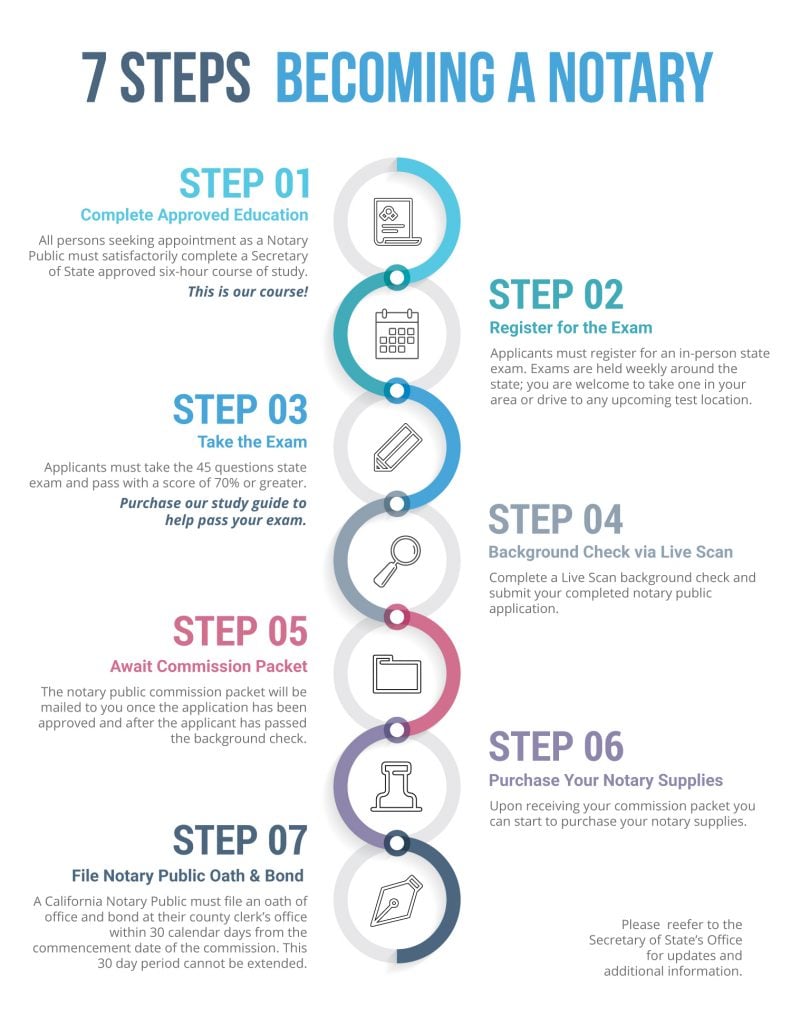
The Application Process: A Step-by-Step Guide
Once eligibility is confirmed, the application journey unfolds through several distinct phases:
1. Education
All prospective notaries in California are required to complete a state-approved 6-hour notary public education course. This comprehensive training covers the intricacies of California notary law, ethical practices, and the proper execution of notarial acts. Courses are widely available through various providers, including online platforms and in-person seminars. For those renewing their commission, a shorter 3-hour refresher course is typically required.
2. Examination
Upon completing the education course, the next critical step is to pass the Notary Public Exam. This examination is administered by the California Secretary of State and covers all aspects of notary law and procedure. Exams are held regularly at various locations across the state, including major cities like Sacramento, Los Angeles, and San Francisco. It’s an open-book exam, but thorough preparation is essential to achieve the passing score. Scheduling for the exam is typically done through the California Secretary of State’s website or designated testing agencies.
3. Background Check (Live Scan Fingerprinting)
Concurrent with the application process, candidates must submit their fingerprints electronically via Live Scan. This crucial step facilitates a thorough criminal background check conducted by the California Department of Justice and the Federal Bureau of Investigation. You will need a Request for Live Scan Service form (BCII 8016) which is provided at the exam site or available from the California Secretary of State’s website. Live Scan services are available at numerous locations throughout California.
4. Application Submission
After passing the exam, you will submit your Notary Public Application to the California Secretary of State. This includes the application form itself, your proof of education, and the exam results. A non-refundable filing fee is also required. The California Secretary of State will then review your application and background check results. If approved, your commission certificate will be mailed to you. This can take several weeks, so patience is key.
Post-Exam Steps and Commissioning

Receiving your commission certificate from the California Secretary of State is a significant milestone, but it doesn’t immediately authorize you to perform notarial acts. Several crucial steps remain to fully activate your commission and equip you for your duties.
Bond and Oath
The cornerstone of a notary’s legal standing in California is the requirement to obtain a notary public bond and file your official oath of office.
Notary Public Bond
You must purchase a $15,000 surety bond. This bond serves as a financial guarantee to protect the public against any damages resulting from a notary’s official misconduct or negligence. It is not an insurance policy for the notary but rather for the individuals who rely on your notarial acts. Surety companies, often affiliated with insurance providers, offer these bonds. You should shop around for competitive rates.
Oath of Office and Filing
Within 30 calendar days of the commencement date of your commission (which is printed on your commission certificate), you must file your official oath of office and your surety bond with the county clerk in your county of principal place of business. For example, if your primary notary work will be in Los Angeles County, you would file with the Los Angeles County Clerk. If you fail to file within this 30-day window, your commission becomes void, and you’ll have to restart the entire application process, including retaking the exam. This deadline is strictly enforced, so prompt action is essential upon receiving your commission certificate.
Notary Supplies
Once your bond and oath are filed, you are ready to acquire the necessary tools of the trade:
Official Notary Seal/Stamp
Every notary public in California is required to possess an official seal, which is used to authenticate all notarial acts. The seal must be an inked stamp (rubber stamp) and adhere to strict design requirements, including:
- The words “Notary Public.”
- Your name as it appears on your commission.
- The county where you filed your oath and bond.
- Your commission expiration date.
- Your commission number.
- The great seal of the State of California.
- The sequential identification number of the manufacturer.
Only approved vendors can create notary seals, ensuring compliance with state regulations.
Notary Journal
Maintaining a notary journal is a legal requirement in California and is indispensable for responsible notary practice. This journal serves as a chronological record of every notarial act performed, documenting details such as:
- Date and time of the notarization.
- Type of notarial act.
- Character of every instrument (e.g., deed, affidavit).
- Signature of the person whose signature was notarized.
- Type of identification used to verify the signer’s identity.
- Notary fee charged.
The journal provides a vital record for both the notary and the public, aiding in fraud prevention and legal accountability.
Errors and Omissions (E&O) Insurance
While not legally mandated, Errors and Omissions (E&O) insurance is highly recommended for all notaries. This professional liability insurance protects you against potential financial losses arising from inadvertent errors, omissions, or negligence in performing your notarial duties. Given the critical nature of documents notarized, even minor mistakes can have significant consequences, and E&O insurance offers invaluable peace of mind.
Building Your Notary Business and Professional Growth
With your commission active and supplies in hand, the next phase involves establishing and growing your notary practice. A notary public career in California can be as expansive as you wish, from a part-time supplement to a full-fledged mobile notary service.
Marketing Your Services
Effective marketing is key to attracting clients and building a sustainable notary business:
- Networking: Connect with professionals who frequently require notary services. This includes real estate agents, loan officers, attorneys, title companies, auto dealerships, and financial advisors. Attending local business association meetings or joining online professional groups can be highly beneficial.
- Online Presence: Create a professional online profile. A simple website detailing your services, fees, and contact information is essential. Utilize platforms like Google My Business to appear in local searches for “notary near me.” Social media, especially LinkedIn, can also be used to promote your services and establish credibility.
- Mobile Notary Services: Many clients prefer the convenience of a notary who can travel to them. Emphasize your availability for mobile services, clearly outlining your travel fees. This niche often commands higher fees and can be particularly attractive to busy professionals or individuals with mobility challenges.
- Community Engagement: Consider partnering with local banks, senior centers, or community organizations that might have a recurring need for notary services. Offering services at flexible hours can also set you apart.

Continuing Education and Renewal
A notary public commission in California is valid for four years. Maintaining your commission and staying current with evolving laws are critical for long-term success:
- Renewal Process: The renewal process mirrors the initial application but typically requires a shorter 3-hour notary public education course instead of the initial 6-hour course. You must still pass the notary public exam, undergo a new background check via Live Scan, and file a new bond and oath of office. It is advisable to begin the renewal process several months before your commission expires to avoid any lapse in your ability to notarize.
- Staying Updated: California notary laws can change. Regularly review updates from the California Secretary of State’s Notary Public Handbook and subscribe to newsletters or professional notary associations to stay informed. Ignorance of the law is not an excuse for improper notarial acts.
- Advanced Certifications: To enhance your professional lifestyle and earning potential, consider advanced certifications. The most popular is becoming a Loan Signing Agent (LSA). LSAs specialize in notarizing loan documents for mortgage refinances, purchases, and other real estate transactions, a highly in-demand and lucrative niche. While California has historically been cautious about Remote Online Notarization (RON), keeping abreast of legislative changes in this area could open new avenues for service in the future.
Becoming a Notary Public in California is a journey that combines rigorous training with significant opportunity. By understanding the requirements, diligently completing each step, and proactively building your professional network, you can establish a successful and impactful notary practice that enriches your professional life and serves the community.
LifeOutOfTheBox is a participant in the Amazon Services LLC Associates Program, an affiliate advertising program designed to provide a means for sites to earn advertising fees by advertising and linking to Amazon.com. Amazon, the Amazon logo, AmazonSupply, and the AmazonSupply logo are trademarks of Amazon.com, Inc. or its affiliates. As an Amazon Associate we earn affiliate commissions from qualifying purchases.