
Embracing the Entrepreneurial Lifestyle in California: Understanding Your Resale License
California has long been a beacon for innovators, dreamers, and those seeking to carve out an independent lifestyle through entrepreneurship. From the bustling streets of Los Angeles to the vibrant communities of San Francisco and the relaxed vibes of San Diego, the Golden State offers a dynamic backdrop for starting a business. For many aspiring entrepreneurs, particularly those venturing into selling tangible goods, securing a resale license — officially known as a Seller’s Permit in California — is a foundational step. This permit isn’t just a bureaucratic hurdle; it’s a crucial component that legitimizes your business, enables you to purchase inventory tax-free for resale, and ensures you contribute correctly to the state’s economy. Understanding and obtaining this permit is a vital part of building a sustainable and compliant business, allowing you to focus on the creative and operational aspects of your desired lifestyle venture.
A California Seller’s Permit essentially grants you the authority to sell tangible personal property at retail or wholesale and obligates you to collect sales tax from your customers. This tax is then remitted to the state. For many, the idea of launching a business is intertwined with a desire for freedom, flexibility, and the ability to pursue a passion. Whether you’re planning an online boutique, a physical storefront, a craft fair presence, or a pop-up shop, navigating the initial setup stages with confidence ensures your entrepreneurial journey is built on a solid, compliant foundation. This permit is not merely a formality; it’s an empowering tool that integrates your business into the broader commercial ecosystem of California, affirming your role as a responsible business owner. It allows you to operate legally and ethically, paving the way for long-term success and peace of mind within your chosen lifestyle.
Paving Your Path: Who Needs a California Seller’s Permit?
The entrepreneurial landscape in California is incredibly diverse, encompassing everything from digital nomads running e-commerce sites to local artisans selling handmade goods at weekend markets. Identifying whether your specific business model requires a Seller’s Permit is the next critical step in your journey. Generally, any individual, partnership, corporation, or other organization that sells or leases tangible personal property ordinarily subject to sales tax in California must hold a Seller’s Permit.
Common Scenarios Requiring a Permit:
- Retail Businesses: This includes traditional brick-and-mortar stores selling clothing, electronics, home goods, books, or any other merchandise.
- E-commerce Ventures: If you operate an online store and ship taxable items to customers within California, you generally need a permit, regardless of your physical location within the state or even if you operate from a home office.
- Craft Fairs and Pop-up Shops: Even temporary or seasonal sellers at festivals, farmer’s markets, or community events are required to have a Seller’s Permit if they sell taxable goods. This is crucial for artisans and crafters who might view their work as a hobby but are engaged in commercial activity.
- Wholesale Businesses: If you sell tangible personal property to other businesses for resale, you still need a Seller’s Permit. While you won’t typically collect sales tax on these transactions (as the purchasing business will provide their own resale certificate), having your own permit is a prerequisite for making wholesale sales.
- Service Businesses with Tangible Goods: If your primary business is providing a service (e.g., hair salon, auto repair) but you also sell related products (e.g., shampoo, car parts), you need a Seller’s Permit for the sales portion of your business.
- Rental Businesses: If you lease or rent tangible personal property (e.g., equipment, tools, party supplies) that remains taxable during the lease period, a permit is required.
Important Exceptions and Clarifications:
- Services Only: If your business exclusively provides services and does not sell any tangible goods (e.g., consulting, web design, massage therapy), you do not need a Seller’s Permit.
- Non-Taxable Sales: Certain items are exempt from sales tax in California, such as most food products for home consumption, prescription medicines, and some agricultural products. If your business solely sells these exempt items, a permit may not be necessary. However, if you sell both taxable and non-taxable items, you will need a permit.
- Out-of-State Sellers: If you are an out-of-state seller with “nexus” (a sufficient physical or economic presence) in California, you are also required to obtain a Seller’s Permit. This could include having employees, physical property, or significant sales into the state.
Understanding these distinctions is paramount to maintaining compliance and ensures that your chosen entrepreneurial lifestyle in California is both rewarding and legally sound. When in doubt, it’s always best to err on the side of caution and consult with the state’s tax authority or a qualified professional.
Navigating the Application: Your Step-by-Step Guide to a California Seller’s Permit
Once you’ve determined that your entrepreneurial venture requires a California Seller’s Permit, the application process is straightforward, primarily handled by the California Department of Tax and Fee Administration (CDTFA). This essential step is your gateway to legal operation, allowing you to purchase inventory for resale without paying sales tax and to properly collect and remit sales tax from your customers. For those committed to an independent lifestyle, efficiently tackling administrative tasks like this ensures a smoother, less stressful journey.
The most convenient and recommended method for applying is online, though mail and in-person options are also available.
Step-by-Step Online Application Process:
- Visit the CDTFA Website: Navigate to the official website of the California Department of Tax and Fee Administration. Look for the section pertaining to “New Business Registration” or “Seller’s Permit.”
- Create an Account: If you don’t already have one, you’ll need to create an online services account. This account will be your portal for managing your permit, filing returns, and making payments in the future.
- Start a New Registration: Select the option to register a new business. You will be guided through a series of questions to determine the permits and licenses you need. Ensure you select “Seller’s Permit.”
- Provide Business Information:
- Legal Business Name: This is the name your business is legally registered under.
- Fictitious Business Name (DBA): If you operate under a name different from your legal business name, provide this.
- Business Entity Type: Specify whether you are a sole proprietor, partnership, corporation, LLC, etc.
- Business Location(s): Provide the primary physical address where your business will operate. If you have multiple locations, you may need separate permits or sub-permits.
- Mailing Address: If different from your business location.
- Description of Business Activities: Clearly state what you will be selling. Be specific (e.g., “retail sale of handmade jewelry,” “online sale of vintage clothing,” “wholesale distribution of automotive parts”).
- Estimated Monthly Taxable Sales: You’ll need to provide an estimate of your average monthly sales that are subject to sales tax. This helps the CDTFA determine your filing frequency.
- Start Date of Business Activities: Indicate when you plan to begin or have begun selling.
- Provide Personal Information (for Owner/Officers):
- Social Security Number (SSN) or Federal Employer Identification Number (FEIN): Depending on your business structure, you’ll need one of these. Sole proprietors and general partners often use their SSN.
- Driver’s License or California ID Number: For verification purposes.
- Contact Information: Phone number and email address.
- Provide Banking Information (Optional but Recommended): You may be asked for your bank account information to set up electronic funds transfers for future tax payments.
- Review and Submit: Carefully review all the information you’ve entered for accuracy. Any errors could delay the processing of your permit. Once satisfied, submit your application.
- Confirmation: You will typically receive immediate confirmation that your application has been received. In many cases, especially for online applications, a temporary Seller’s Permit number is issued immediately, allowing you to start making tax-exempt purchases for resale while your official permit is processed and mailed.
Important Considerations:
- No Fee: There is no fee to apply for a California Seller’s Permit.
- Security Deposit: In some cases, particularly for new businesses or those without an established credit history, the CDTFA may require a security deposit. This is refundable after a period of compliant tax filing.
- Local Business Licenses: Remember that a state Seller’s Permit is distinct from any local business licenses or permits required by your city or county (e.g., Los Angeles Business License). Always check with your local municipal government for additional requirements.
Completing this process efficiently is a rewarding step towards establishing your presence in the dynamic entrepreneurial environment of California, setting the stage for your business lifestyle to flourish.

Beyond Approval: Sustaining Your California Business Lifestyle with Compliance
Obtaining your California Seller’s Permit is a significant milestone, but it’s just the beginning of your responsibilities as a compliant entrepreneur. To truly sustain your business lifestyle in the Golden State, understanding and adhering to ongoing sales tax obligations is paramount. Proper compliance ensures financial stability, avoids penalties, and allows you to maintain the freedom and flexibility you sought when starting your venture.
Collecting Sales Tax
As a Seller’s Permit holder, you are legally required to collect sales tax from your customers on all taxable sales of tangible personal property. The sales tax rate varies depending on the specific city and county where the sale occurs. California has a statewide base sales tax rate, but many local jurisdictions impose additional district taxes. It’s crucial to charge the correct combined rate for each transaction. Tools and software can help automate this process, especially for online businesses.
Filing Sales Tax Returns
Periodically, you will need to file sales tax returns with the California Department of Tax and Fee Administration (CDTFA) and remit the collected taxes. Your filing frequency (monthly, quarterly, or annually) is determined by your estimated taxable sales volume.
- Monthly Filers: Typically businesses with very high sales volume.
- Quarterly Filers: Most common for small to medium-sized businesses.
- Annual Filers: For businesses with very low taxable sales.
The CDTFA will inform you of your assigned filing frequency after your permit is issued. Missing filing deadlines or underpaying taxes can result in penalties and interest, which can significantly impact your business’s profitability and overall stress levels. Many entrepreneurs choose to file their returns online through the CDTFA’s secure portal, which streamlines the process and often provides reminders.
Maintaining Meticulous Records
Accurate and organized record-keeping is the backbone of sales tax compliance. You must keep detailed records of:
- All sales: Both taxable and non-taxable, including sales to out-of-state customers.
- Sales tax collected: Separated from the sales price.
- Purchases for resale: Including vendor invoices and any resale certificates you provided to suppliers.
- Exempt sales: Documentation for sales where you did not collect tax (e.g., sales for resale, sales to tax-exempt organizations).
These records should be maintained for at least four years. In the event of an audit by the CDTFA, comprehensive records will be invaluable in demonstrating your compliance and preventing potential issues.
Understanding Tax Audits
While the thought of a tax audit can be daunting, it’s a standard procedure to ensure fair and accurate tax collection. By diligently collecting the correct sales tax, filing on time, and maintaining impeccable records, you significantly reduce the likelihood of complications during an audit. Proactive compliance is the best defense and a hallmark of a well-managed business, affording you the peace of mind to enjoy the lifestyle you’ve built. Staying informed about any changes to California sales tax laws and rates, typically announced by the CDTFA, is also a vital practice for long-term operational success.
The Resale Certificate Advantage: Empowering Your Business Purchases
One of the most significant benefits of holding a California Seller’s Permit extends beyond merely collecting sales tax; it empowers you to make tax-exempt purchases of inventory that you intend to resell. This is achieved through the use of a “resale certificate.” Understanding and correctly utilizing your resale certificate is crucial for managing your business cash flow efficiently and maximizing your profitability, thereby supporting your desired entrepreneurial lifestyle.
What is a Resale Certificate?
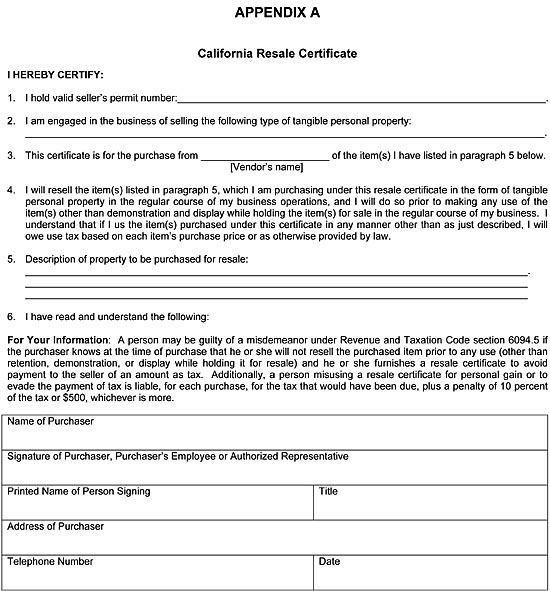
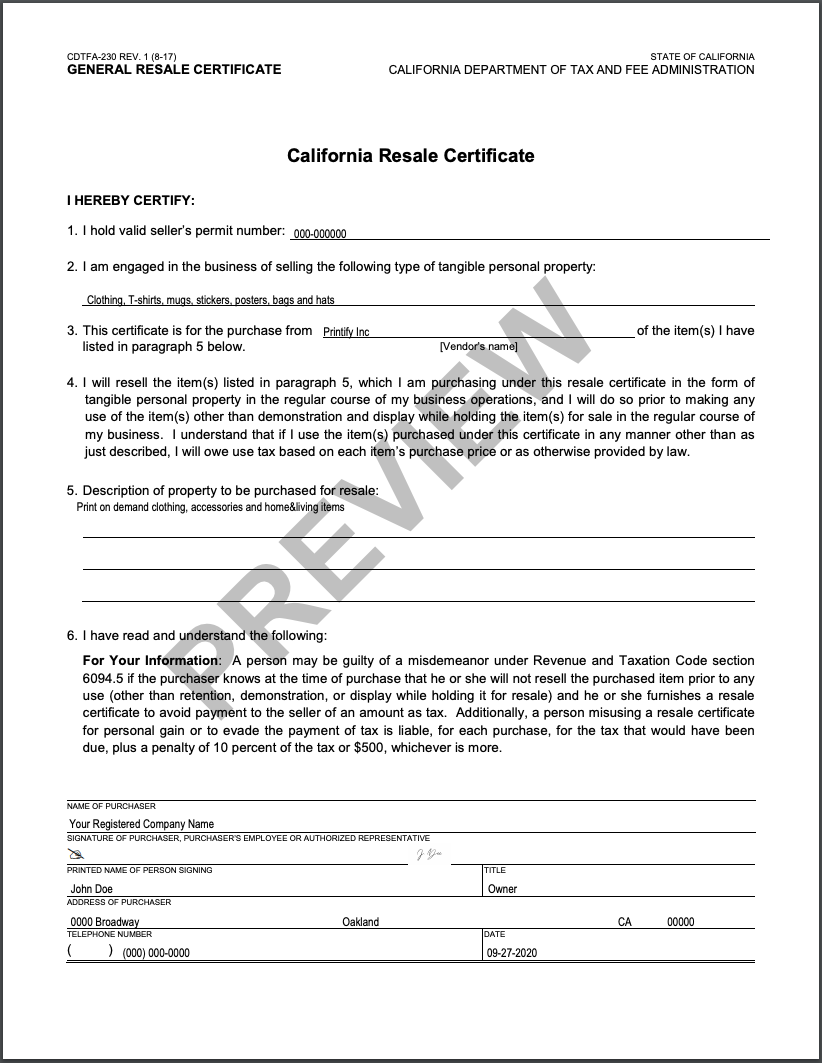
While a Seller’s Permit is issued to you by the state, a resale certificate is a document you provide to your suppliers. It’s a written statement certifying that the items you are purchasing are intended for resale, either in their original form or as a component part of another item that will be sold. By presenting a valid resale certificate to your vendor, you are exempt from paying sales tax on that specific purchase. The responsibility for collecting and remitting sales tax then shifts to you when you eventually sell the item to your end-customer.
How to Use Your Resale Certificate Effectively:
- Identify Resale Inventory: Only items that you genuinely intend to resell to your customers should be purchased with a resale certificate. This includes finished goods, raw materials, or components that become part of a product you sell.
- Provide to Suppliers: When purchasing inventory from a wholesaler, manufacturer, or other supplier, they will typically ask for a copy of your California Seller’s Permit number and may require you to complete their specific resale certificate form. This form usually includes your business name, address, Seller’s Permit number, a description of the items you are purchasing for resale, and your signature.
- Maintain Records: Keep meticulous records of all purchases made with a resale certificate. Your suppliers will also retain copies. In an audit, you must be able to demonstrate that purchases made without paying sales tax were indeed for resale purposes. Misusing a resale certificate (e.g., purchasing items for personal use without paying sales tax) can lead to severe penalties.
- Distinguish from Operating Supplies: It’s important to differentiate between items purchased for resale and items purchased for your business’s operational needs. For example, if you own a clothing boutique, the clothing you buy to sell is purchased with a resale certificate. However, items like hangers, cleaning supplies, office stationery, or display racks are for your business’s use, not resale, and you must pay sales tax on these purchases.
Leveraging the resale certificate effectively is a smart business practice that directly impacts your bottom line. It prevents you from “double-paying” sales tax (once when you buy inventory and again when your customer pays you). This conserved capital can then be reinvested into your business, allowing for growth, innovation, and ultimately, a more robust and sustainable entrepreneurial lifestyle in the vibrant economy of California. It’s a testament to the fact that understanding administrative details can lead to powerful financial advantages for your independent venture.
LifeOutOfTheBox is a participant in the Amazon Services LLC Associates Program, an affiliate advertising program designed to provide a means for sites to earn advertising fees by advertising and linking to Amazon.com. Amazon, the Amazon logo, AmazonSupply, and the AmazonSupply logo are trademarks of Amazon.com, Inc. or its affiliates. As an Amazon Associate we earn affiliate commissions from qualifying purchases.