
California is renowned globally for its diverse landscapes, innovative industries, and vibrant culture. From the sun-drenched beaches of Southern California to the majestic redwoods of the north, the Golden State offers an unparalleled lifestyle. However, this dream lifestyle often comes with a significant cost of living, which can present challenges for residents, including those considering long-term stays, relocation, or simply navigating daily life within the state’s economic landscape. Understanding the available support systems is crucial for maintaining a sustainable and stable existence. Among these, CalFresh, California’s version of the Supplemental Nutrition Assistance Program (SNAP), plays a vital role in ensuring food security for eligible low-income individuals and families. For those who find themselves needing assistance to cover basic food expenses, knowing how to qualify for CalFresh is an essential part of managing a budget and upholding a healthy lifestyle in California.
Understanding CalFresh and Its Role in California Lifestyles
CalFresh is a federally funded program that provides monthly food benefits to assist low-income households in purchasing healthy food. These benefits are issued on an Electronic Benefits Transfer (EBT) card, which functions much like a debit card and can be used at most grocery stores and farmers’ markets. The program is designed to supplement a household’s food budget, making nutritious food more accessible and alleviating food insecurity, a critical component of overall well-being and a stable lifestyle.
Given California’s high cost of living, even individuals who are employed or receiving some form of income can find themselves struggling to afford adequate food. For those new to the state, or for long-term residents facing unexpected financial hardship, CalFresh offers a critical safety net. It allows individuals and families to dedicate more of their limited resources to other essential expenses like housing, transportation, or healthcare, thereby contributing to a more balanced and sustainable lifestyle. Engaging with programs like CalFresh is not just about financial assistance; it’s about empowerment and ensuring that basic needs are met, allowing residents to fully participate in the opportunities California has to offer.
Eligibility Requirements: Income, Household, and Status
Qualifying for CalFresh depends on several factors, primarily related to household income, size, and certain demographic criteria. While the specific numbers are subject to annual adjustments and can vary based on deductions, the general guidelines provide a clear framework.
Income Thresholds and Household Composition
The most significant factor in CalFresh eligibility is a household’s gross and net monthly income relative to the Federal Poverty Level (FPL).
- Gross Income: For most households, the gross monthly income (before any deductions) must be at or below 200% of the FPL. This threshold is higher than in many other states, reflecting California’s higher cost of living.
- Net Income: After allowable deductions (such as a standard deduction, earned income deduction, dependent care, medical expenses for the elderly/disabled, and housing costs), the net monthly income must generally be at or below 100% of the FPL.
It’s important to understand that a “household” for CalFresh purposes is defined as people who live together and customarily purchase and prepare food together. This can include immediate family members, but also unrelated individuals who share food expenses. The specific income limits increase with household size, meaning a larger family can have a higher income and still qualify.
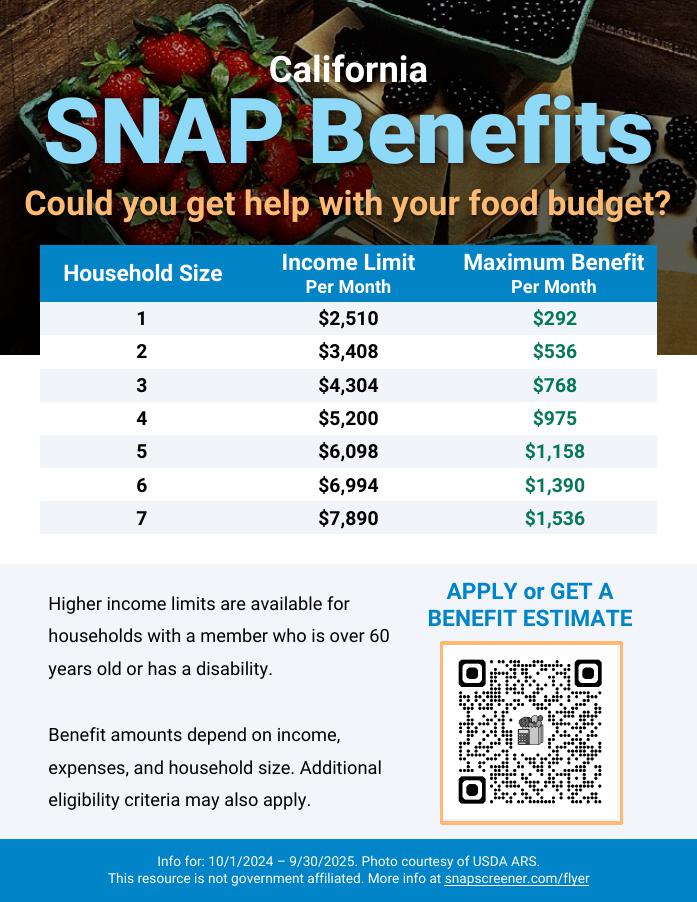
For example, in a recent year, a single individual might have a gross income limit of approximately $2,430 per month, while a household of four might have a limit closer to $5,000 per month. These figures are illustrative and subject to change, so applicants should always check the most current guidelines provided by the California Department of Social Services or their local county welfare office. Deductions play a crucial role, as they can significantly lower a household’s countable net income, thereby increasing their chances of eligibility. These deductions include a standard deduction for all households, a percentage of earned income, dependent care costs, child support payments made to non-household members, and excess shelter costs (when housing expenses exceed a certain percentage of the household’s income).
Residency and Immigration Status
To qualify for CalFresh, an applicant must be a resident of California. This means living in the state with the intention to remain, though specific durations are not typically mandated for proof of residency. For individuals considering relocation to California, establishing residency is a foundational step before applying for benefits.
Regarding immigration status, many non-citizens are eligible for CalFresh, but specific criteria apply. Generally, “qualified non-citizens” are eligible, including:
- Legal Permanent Residents (green card holders) who have lived in the U.S. for five years or are receiving disability-related assistance.
- Refugees, asylees, or those granted withholding of deportation/removal.
- Cuban/Haitian entrants.
- Parolees for at least one year.
- Battered immigrants or victims of human trafficking.
- Certain military members and veterans, their spouses, and dependents.
It’s crucial to note that applying for CalFresh will not negatively affect an individual’s immigration status or public charge determination for most immigrant groups. The rules specifically exempt CalFresh from public charge considerations. This clarification is vital for many seeking a stable life in California and ensures they can access necessary support without fear.
Other Considerations: Work Requirements and Assets
Most able-bodied adults without dependents (ABAWDs) between ages 18 and 50 are subject to specific work requirements. This typically means working, participating in a work program, or volunteering for at least 20 hours per week. However, many exemptions exist for students, caregivers, individuals with disabilities, and those residing in areas with high unemployment.
Unlike some other assistance programs, CalFresh in California has no asset limit for most households. This means that having savings in a bank account, owning a car, or owning a home generally does not prevent an otherwise eligible household from receiving benefits. This policy aims to remove barriers for households that might have some assets but still face income-related food insecurity, further supporting financial stability within a California lifestyle.
The Application Process: Navigating the System for Food Security
Applying for CalFresh in California is a streamlined process designed to be as accessible as possible. Understanding the steps involved and preparing the necessary documentation can significantly expedite receiving benefits and contributing to a more secure lifestyle.
The primary method for application is online through the BenefitsCal portal. This user-friendly platform allows applicants to submit their application, upload documents, and check the status of their case from the convenience of their home or a public library. Alternatively, applications can be submitted in person at a local county welfare office, by mail, or by fax. Many community organizations also offer free assistance with the application process, which can be particularly helpful for those who are new to the system or face language barriers.
Essential Documentation for a Smooth Application
To ensure a smooth application process, applicants should gather several key documents. While a complete list will be provided during the application, generally, you’ll need:
- Proof of Identity: Such as a driver’s license, state ID, or passport.
- Proof of Residency: Utility bills, mail with your address, or a rental agreement.
- Proof of Income: Pay stubs, employer statements, self-employment records, or benefit award letters (e.g., Social Security, unemployment).
- Proof of Expenses: Rent or mortgage statements, utility bills, child care receipts, or medical bills for elderly/disabled household members (these help maximize deductions).
- Proof of Immigration Status (if applicable): Green card, refugee documentation, etc.
- Social Security Numbers: For all household members applying for benefits.
After submitting an application, applicants will typically be contacted for an interview, which can often be conducted over the phone. During this interview, a caseworker will review the submitted information, ask clarifying questions, and inform the applicant of any additional documentation required. It is essential to be responsive and provide information promptly to avoid delays. Once approved, benefits are loaded onto an EBT card, which is mailed to the applicant. The processing time for CalFresh applications is generally 30 days, though expedited services are available for households with very low or no income, who may receive benefits within three days.

Beyond Qualification: Maximizing Your CalFresh Benefits for a Sustainable Lifestyle
Receiving CalFresh benefits is a significant step towards ensuring food security in California. However, understanding how to maximize these benefits is equally important for maintaining a truly sustainable lifestyle. The monthly benefit amount is determined by household size, income, and allowable deductions, aiming to provide a meaningful supplement to a household’s food budget.
Recipients can use their EBT cards at most grocery stores, supermarkets, and a growing number of farmers’ markets across California. Many farmers’ markets even offer programs that double the value of CalFresh dollars, allowing recipients to purchase more fresh, locally sourced produce—a fantastic way to embrace a healthy California lifestyle while supporting local agriculture. Utilizing these resources can significantly enhance the quality and variety of food available to a household.
Furthermore, CalFresh is often just one piece of a broader support system. Many recipients also qualify for other programs, such as Medi-Cal (health care), utility assistance, or free and reduced-price school meals for children. Connecting with local food banks and community pantries can also provide additional support, ensuring that no one in California goes hungry.
For those navigating the complexities of living in the Golden State, understanding programs like CalFresh is not merely about surviving but thriving. It empowers individuals and families to meet their basic needs, freeing up mental and financial resources to pursue educational, professional, and personal goals. This support contributes to a more equitable and resilient community, allowing all residents, regardless of their financial circumstances, to fully engage with and enjoy the unique lifestyle California offers. By knowing how to qualify and effectively use CalFresh, individuals can maintain dignity, health, and stability as they pursue their California dreams.
LifeOutOfTheBox is a participant in the Amazon Services LLC Associates Program, an affiliate advertising program designed to provide a means for sites to earn advertising fees by advertising and linking to Amazon.com. Amazon, the Amazon logo, AmazonSupply, and the AmazonSupply logo are trademarks of Amazon.com, Inc. or its affiliates. As an Amazon Associate we earn affiliate commissions from qualifying purchases.